
India News
BJP crosses 300 in UP; Congress grabs Punjab

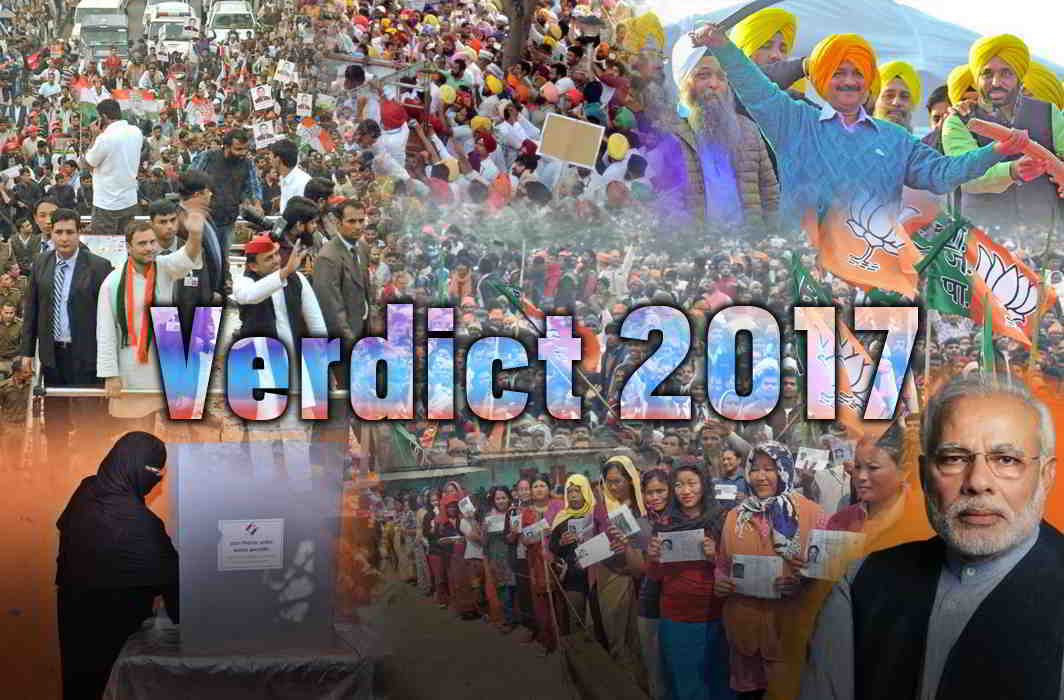
[vc_row][vc_column][vc_column_text]The BJP wave grew into a tsunami and threw all calculations awry. Once considered a small challenger, the saffron party emerged the biggest victor on March 11, crossing the 300 mark in the total 403-member UP assembly. The Samajwadi Party was kept within the 50 mark, while their party in alliance, the Congress, could not even manage to reach double digits.
The Bahujan Samaj Party (BSP) was bewildered, having won 19 seats.
The Aam Aadmi Party (AAP) has failed to find favour with the electorate. It has struggled to find a footing in both Punjab and Goa, where it pushed into, with huge preparations and it certainly failed to become a logical alternative to the BJP except in the urban area of Delhi. It is time for Arvind Kejriwal to introspect and find a reason why it failed at the grassroots.
The Manipur verdict is moving down a path nobody expected it to take. Irom Sharmila’s defeat was a wakeup call, and by the time things started getting less ambiguous, the BJP had crept up into a position where it would not need a helping hand from rebel MLAs.
In Uttar Pradesh, as BJP striding crossed the 300 mark, the results of the infighting of the Samajwadi Party are showing up. Shivpal Yadav, who was removed just before the elections, appeared in victory mode, cheering and saying: “Sabhi logon ko badhai.” Earlier, he had tweeted: “Ye ghamand ke haar hai.”
It was a sad reflection of the way things are, and Mulayam Singh Yadav, yet to make a comment, would not be happy with the way things were handled in a complex state by his son Akhilesh. Shivpal’s comments hit right into the heart of the party.
Congress comes in next, not in numbers, but in accountability. How would Rahul Gandhi explain to the SP their demand for 100 seats and how his party has handled it? Interestingly, Akhilesh wants the alliance to continue.
Mayawati’s party has virtually been washed away. She has claimed that the EVMs had been tampered with; she said she wants to go to court, start a movement. All in vain; because the verdicts have been overwhelming.
In Uttarakhand, all early drama was washed away with Chief Minister Harish Rawat losing both seats he contested. He has resigned.
Here are the basics of each state, with some special quotes.
UTTAR PRADESH
The colour of Holi this year is just one: saffron. So it seems as the Uttar Pradesh results started coming in. All exit polls, as usual, were proved wrong in this state, with the BJP at last reading, having won 304 and leading in eight seats.
Demonetisation has had no effect so far, loss of jobs has not reflected in the showdown and the steady growth of the Modi wave has turned into a tsunami now.
Rahul Gandhi: “I congratulate Shri Narendra Modi and the BJP on their victory in Uttar Pradesh & Uttarakhand.”
Kapil Sibal, Congress: “Just as you can’t blame Modi for BJP’s defeat in Punjab, you can’t blame Rahul Gandhi for our defeat in UP.”
Somnath Bharti: “We don’t indulge in politics of religion or caste and never will. Yes, it’s Modi’s win, but hum log lage rahenge, logon ko aware karne ke liye.”
Surendra Rajput, Congress spokesperson: “It’s Modi’s win and congrats to him for that. But we expect that he will fulfill the promises that he has made, not indulge in jumlas. We do alliances for something constructive. It’s up to the voter to give a stamp of approval on it.”
Pankaj Singh, Rajnath Singh’s son, won from Noida. Says Singh: “BJP going to break its own record. 1991 Kalyan Singh’s record. Responsibilities increased. Kaam bolta hai issue has become non-issue.”
Anila Singh, BJP spokesperson: “The way corruption has become rampant. It’s important to open files to set example. This was our promise. To give them a transparent government.”
MoS Jitendra Singh: “Voters of India have risen above caste, religion and other factors. People have reposed their faith in Modi. It is a new India. The message is at multiple levels.”
Deepak Mishra, SP spokesperson: “Every time SP has lost, it has introspected, worked on its shortcomings and emerged stronger next time.”
Mohsin Raza: “Congress had given them (Muslims) topi andmadarsa. We are giving them Quran in one hand, laptop in another.”
PUNJAB
Congress won 76 seats, leading in 1; BJP won 3: AAP won 20; SAD won 15.
Punjab CM Parkash Singh Badal said he will resign on Sunday.
Navjot Singh Sidhu said: “This is a new year’s gift to Soniaji, Rahul and Captainsaab (Amarinder Singh). People have defeated evil forces and dharma has emerged victorious.”
Amarinder Singh: “Punjab voters have made the right choice/Man of the match in Punjab.”
Ambika Soni: “Many contributed to Punjab results.”
UTTARAKHAND
BJP won 56 seats, leading in 1; Congress won 11.
MANIPUR
BJP won 20 seats, leading in 1; Congress won 26.
Irom Sharmila has lost.
Congress’ Ibobi Singh won.
GOA
The anti-BJP forces were not in the picture with only the Congress still the major force against it.
BJP won 13 seats; Congress won 16, leading in 1.
Laxmikant Parsekar, Goa CM, lost to Congress’ Dayanand Sopte in Mandrem and has resigned.
The final tally of seats in all the five states:
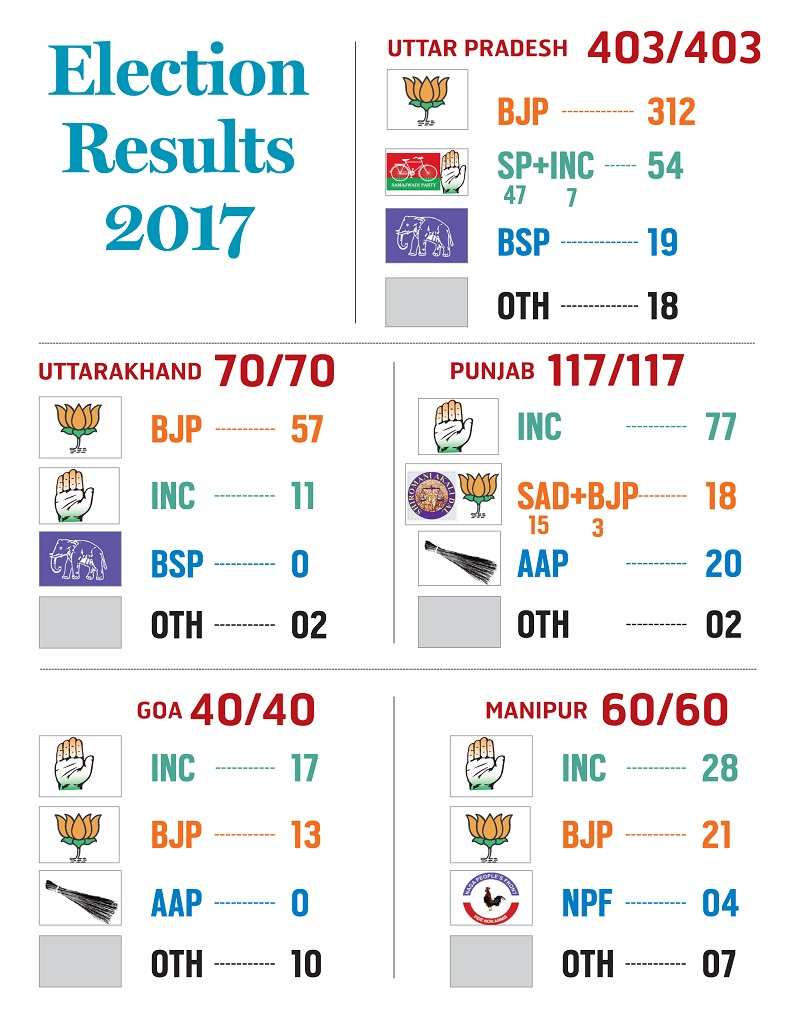
FINAL Election Result 2017
Written with contributions from Sujit Bhar, Meha Mathur, Sucheta Dasgupta,
Prabir Biswas, Punit Mishra, Bhavana Gaur, Kh Manglembi Devi,
Ram Lagan, Anthony Lawrence, Amitava Sen, Anil Shakya, Anubhav Tyagi and Ravi Kumar
[/vc_column_text][/vc_column][/vc_row]








India News
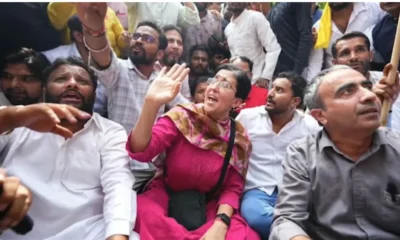
Journalist files police complaint against Rahul Gandhi over push allegation
Journalist Richa Parashar has filed a criminal complaint against Rahul Gandhi and others, alleging that she was pushed while covering the Opposition’s march to the Supreme Court. The Congress has denied the allegation.

India News
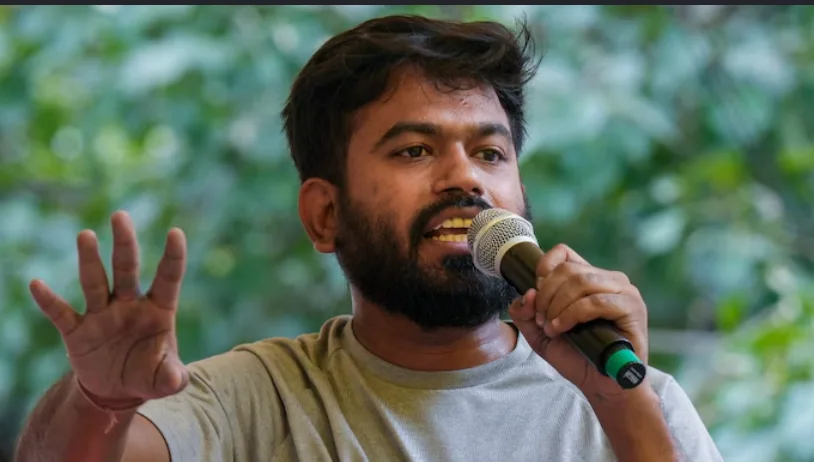
Delhi court orders release of CJP founder Abhijeet Dipke
A Delhi court on Saturday ordered the conditional release of Cockroach Janta Party founder Abhijeet Dipke, who was detained and subsequently arrested ahead of a planned protest march at Connaught Place.
India News
Anirudh Ravichander to marry Kavya Maran in November, reception on November 21
Anirudh Ravichander and Kavya Maran are set to marry in November, with their Chennai wedding reception scheduled for November 21.


LK Advani, 98, hospitalised in Delhi with chest infection
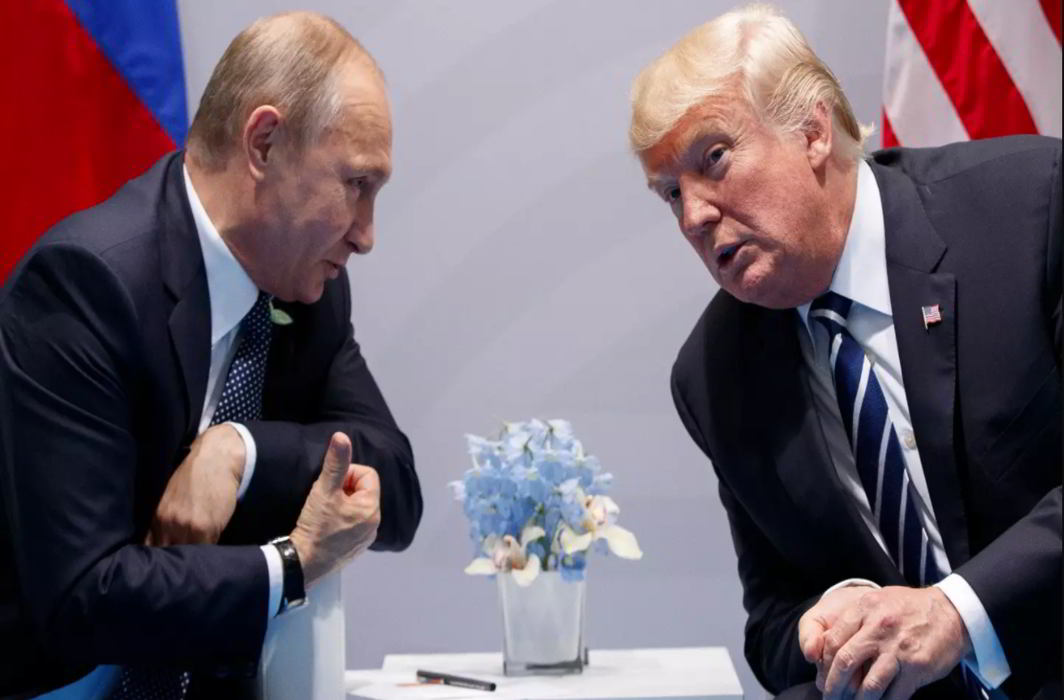
Trump waives Russia-related sanctions, tariffs in relief for India

ED summons Pinarayi Vijayan in money laundering case

Anirudh Ravichander to marry Kavya Maran in November, reception on November 21

Delhi court orders release of CJP founder Abhijeet Dipke

Journalist files police complaint against Rahul Gandhi over push allegation
Delhi court orders release of CJP founder Abhijeet Dipke
Anirudh Ravichander to marry Kavya Maran in November, reception on November 21
ED summons Pinarayi Vijayan in money laundering case
LK Advani, 98, hospitalised in Delhi with chest infection

Afghan Men Try To Hang With The Jet Engine Of The Aircraft in Kabul- Afghanistan News – Kabul News
Trending Top 10 News: 10000 Crore Fine on Flipkart, Apple to Launch Unique Feature, Hdfc Bank Job Ad

Trending Top 10 News: Nokia 6310, Apple sales, Bachpan ka Pyar Video Kid, Dainik Bhaskar IT Raid

Trending Top 10 News: Canada bans Indian flights, Rain in Delhi NCR, AIMIM Twitter hacked, Raj Kundra case

Trending Top 10 News: Shein India, Apple New Service, Pocket Oxygen, Oppo Launched New Phone
-
 India News15 hours ago
LK Advani, 98, hospitalised in Delhi with chest infection
-
Latest world news15 hours ago
Trump waives Russia-related sanctions, tariffs in relief for India
-
 India News13 hours ago
ED summons Pinarayi Vijayan in money laundering case
-
 India News3 hours ago
Anirudh Ravichander to marry Kavya Maran in November, reception on November 21
-
 India News3 hours ago
Delhi court orders release of CJP founder Abhijeet Dipke
-
 India News2 hours ago
Journalist files police complaint against Rahul Gandhi over push allegation
