English हिन्दी
Connect with us

India News

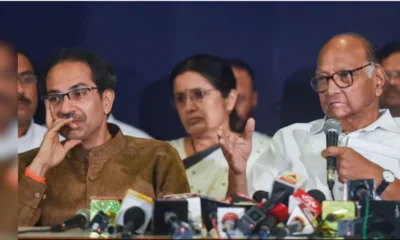
BJP and Shiv Sena reach broad seat-sharing deal ahead of BMC elections

BJP and Shiv Sena are close to finalising seat-sharing for 200 wards ahead of the BMC elections, while opposition parties intensify alliance talks across Maharashtra.

Published

on

BJP Shivsena

The BJP and Shiv Sena have almost sealed their seat-sharing arrangement for the upcoming Brihanmumbai Municipal Corporation (BMC) elections, with an understanding reached on 200 of the total 227 wards in Mumbai, according to sources. The civic body polls are scheduled to be held on January 15.

The agreement was discussed during a late-night meeting of the Mahayuti alliance, which includes the BJP, Shiv Sena and the Ajit Pawar-led NCP. The meeting took place at Maharashtra Chief Minister Eknath Shinde’s residence in Thane and focused on strategy for several key municipal corporations, including Thane, Kalyan-Dombivli and Navi Mumbai.

Sources said similar meetings are lined up for Mumbai and other civic bodies such as Chhatrapati Sambhaji Nagar, Panvel and Mira-Bhayandar, as alliance partners work to finalise ward-level arrangements and campaign planning.

Congress explores new alliances in Mumbai

In Mumbai, Congress leaders are scheduled to meet Prakash Ambedkar’s Vanchit Bahujan Aghadi as the party looks to rebuild its alliance structure after parting ways with the Shiv Sena (Uddhav Balasaheb Thackeray faction). The distancing followed Sena (UBT)’s decision to join hands with the Maharashtra Navnirman Sena led by Raj Thackeray.

Sena (UBT) MP Sanjay Raut has confirmed that the party will contest the BMC elections in alliance with the MNS and the NCP led by Sharad Pawar. The inclusion of the NCP (Sharad Pawar faction) comes after Sharad Pawar rejected a proposal from the Ajit Pawar-led faction that offered limited seat allocation.

Despite the split, sources indicated that discussions may continue, with meetings expected between Sharad Pawar’s daughter Supriya Sule and her cousin Ajit Pawar to determine future political moves.

Local body strategies take shape across Maharashtra

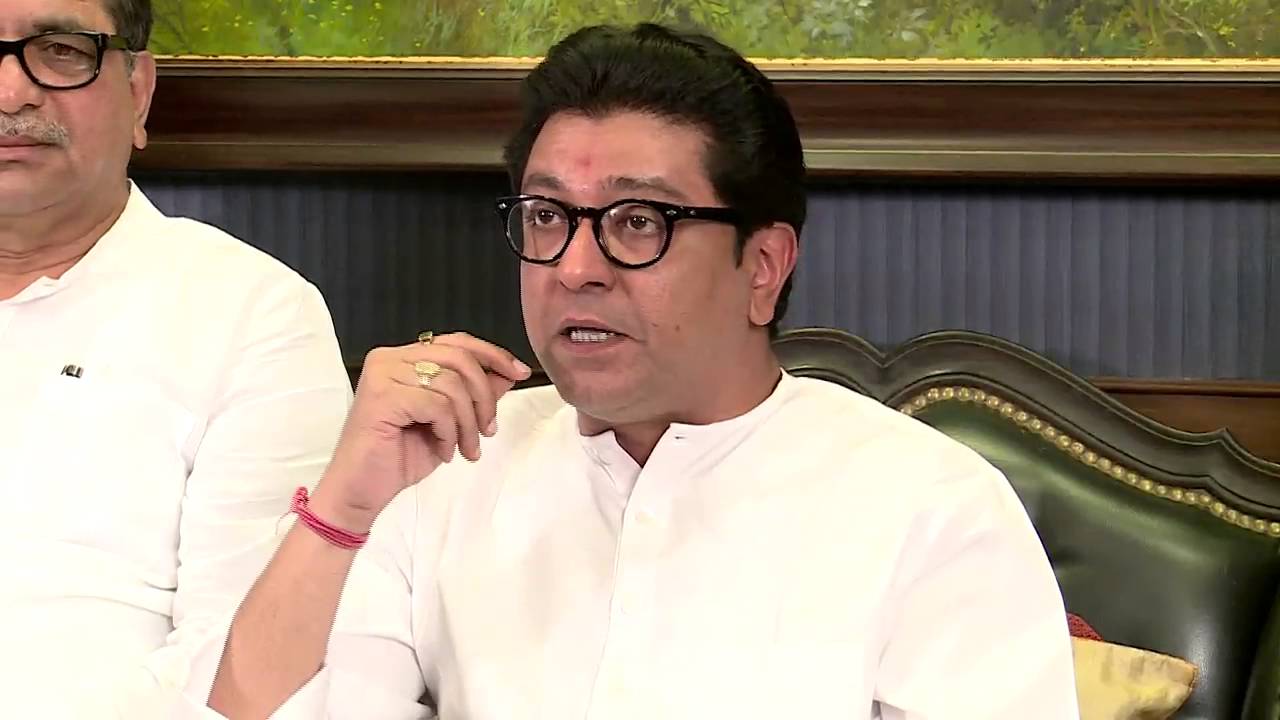
Meanwhile, MNS chief Raj Thackeray is set to hold a meeting with party leaders at his Shivtirth residence to finalise the party’s election strategy, including campaign issues and candidate selection.

In Chhatrapati Sambhaji Nagar, Shiv Sena MLA and minister Sanjay Shirsat will meet BJP leaders, including state ministers Chandrakant Bawankule and Atul Save, to discuss preparations for the civic polls.

Seat-sharing talks are also underway in Mira-Bhayandar, where Shiv Sena leader Pratap Sarnaik and BJP MLA Narendra Mehta are expected to hold discussions. The Ajit Pawar-led NCP, however, is planning to contest the elections independently in the region.

Panvel is set to witness a major opposition meeting involving Sena (UBT), Congress, MNS, NCP (SP), Samajwadi Party and the VBA. The gathering, led by the Peasants and Workers Party, will focus on finalising seat-sharing arrangements and joint election strategies.

India News

Yogi Adityanath announces free LPG cylinders on Diwali and Holi

Uttar Pradesh Chief Minister Yogi Adityanath has announced one free LPG cylinder each on Diwali and Holi for eligible Pradhan Mantri Ujjwala Yojana beneficiaries. The state has allocated Rs 1,500 crore for LPG refill subsidies covering more than 1.89 crore beneficiaries.

Published

on

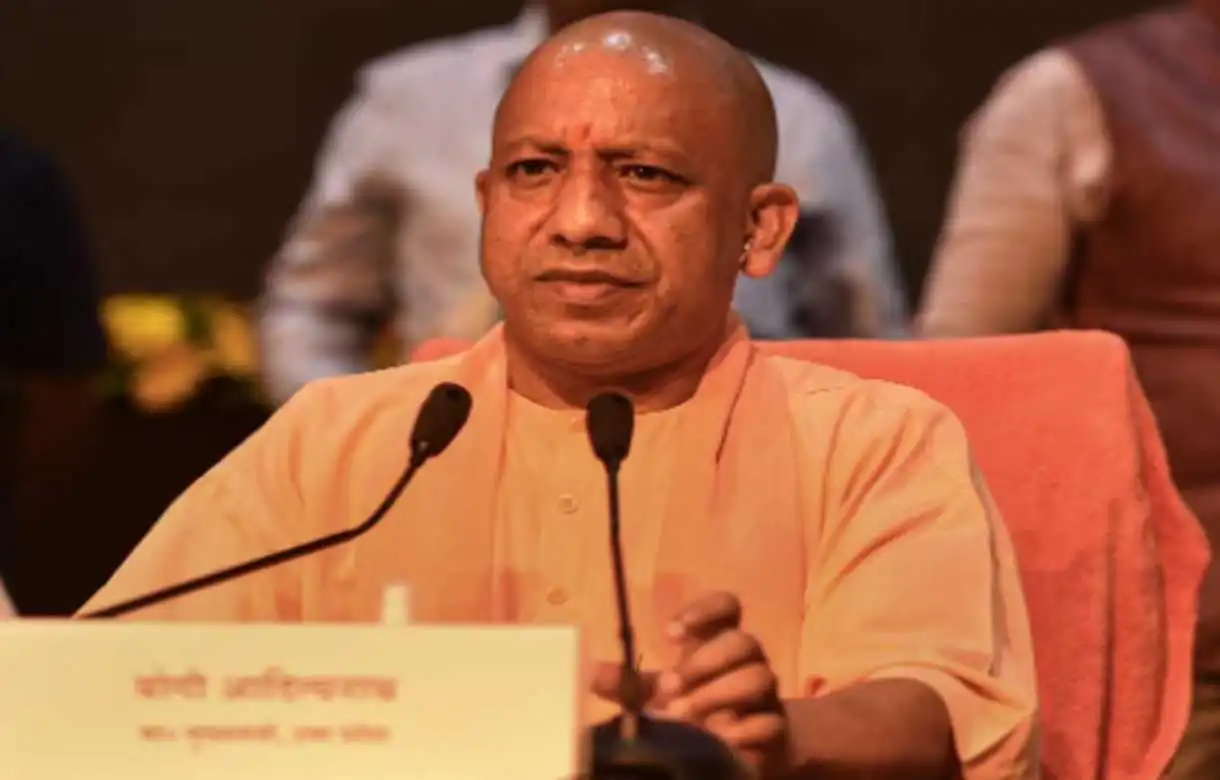
Uttar Pradesh Chief Minister Yogi Adityanath on Tuesday announced that eligible families covered under the Pradhan Mantri Ujjwala Yojana (PMUY) will receive one free LPG cylinder each on Diwali and Holi.

The announcement came as the Chief Minister participated in a programme organised for distributing LPG refill subsidies to more than 1.89 crore beneficiaries across the state.

The Uttar Pradesh government has allocated Rs 1,500 crore for providing subsidies on LPG cylinder refills to eligible families under the scheme.

Addressing the gathering, Adityanath explained the cost of a domestic LPG cylinder and the subsidy provided by the Centre.

“The price of one domestic gas cylinder is Rs 983.45, and out of this, the Government of India provides a subsidy of Rs 335. You have to spend Rs 648.55 from your own pocket,” he said.

The Chief Minister said the state government had decided to provide one cylinder to poor families covered under the Ujjwala scheme on Diwali and Holi.

“With the money you save, you can buy Diwali sweets and lamps,” he said.

Yogi Adityanath targets previous Congress government

During his address, Adityanath also compared the availability of LPG connections under the present government with the situation during the Congress government’s tenure.

He said people previously faced several difficulties in obtaining a single gas connection, while the present government had provided free gas connections to poor families.

The Chief Minister described the initiative as an example of good governance.

Yogi Adityanath on Ayodhya’s Deepotsav

Earlier on Tuesday, Adityanath described Ayodhya’s Deepotsav, scheduled for November 7, as a symbol of social unity.

In a post on X, he said the festival brought together people from different sections of society through shared faith and cultural participation.

He also referred to the Deepotsav tradition initiated by the state government in 2017, saying it had transformed Ayodhya’s cultural heritage into a celebration involving people from different walks of life.

The Chief Minister is scheduled to visit Ayodhya to review preparations for the event.

Continue Reading

India News

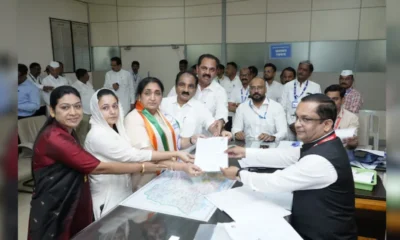
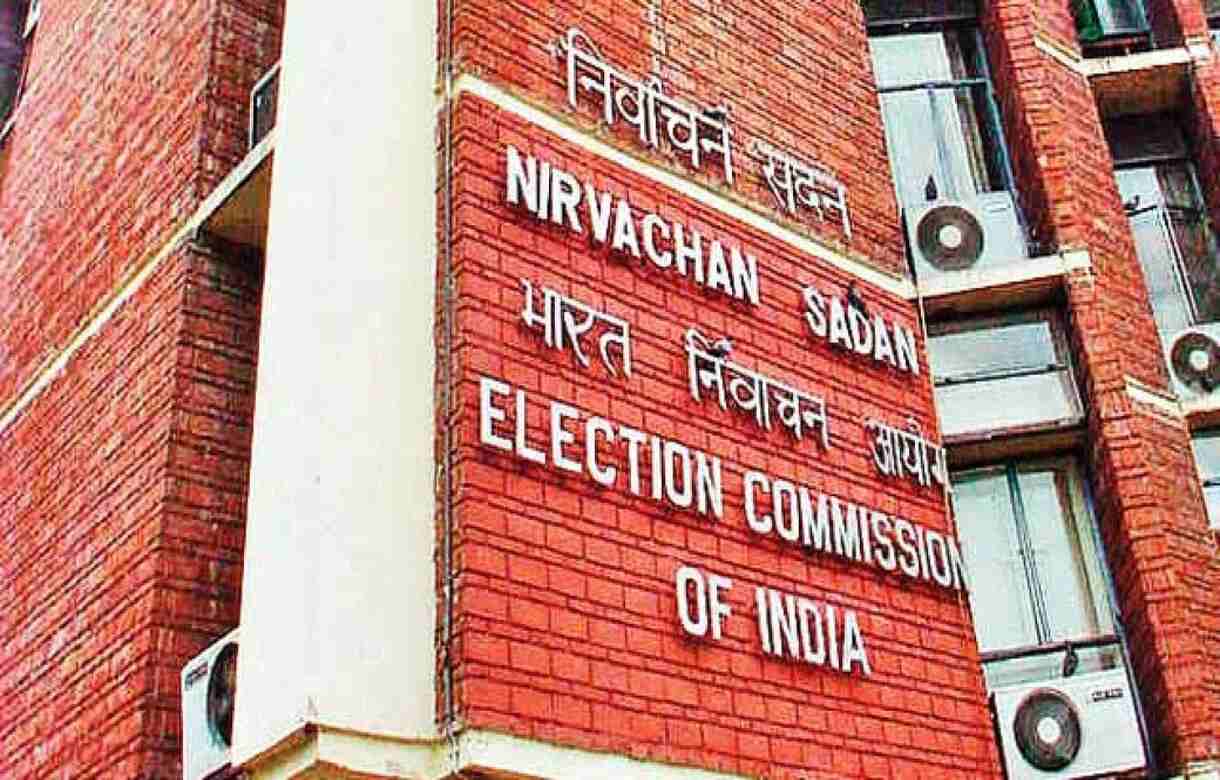
Election Commission clarifies Form 6 rules for existing voters under SIR

The Election Commission has clarified that voters previously enrolled in electoral rolls can submit Form 6 for inclusion if their names are missing from draft lists published during the Special Intensive Revision (SIR).
Published

on

Election Commission of India

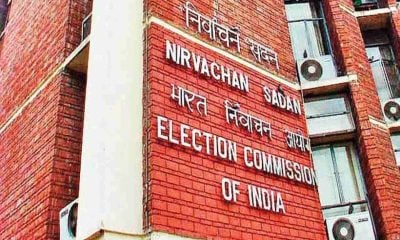
The Election Commission of India (ECI) has clarified that voters whose names appeared in earlier electoral rolls but are missing from draft lists published during the ongoing Special Intensive Revision (SIR) can submit Form 6 to seek inclusion in the final electoral roll.

In a communication issued on November 3 to the Chief Electoral Officers (CEOs) of all states and Union Territories, the poll body addressed concerns among previously registered voters who were hesitant to submit the form because of the declaration required alongside it.

The Commission clarified that submitting Form 6 in such circumstances would not, by itself, amount to making a false declaration merely because the applicant had been enrolled as a voter previously.

It also stated that no action under Section 31 of the Representation of the People Act, 1950, would be initiated against such applicants solely on the ground of their previous enrolment.

However, this protection applies provided the applicant is not already registered in another Parliamentary or Assembly constituency and the declaration submitted is otherwise in accordance with the law.

Why existing voters were hesitant to submit Form 6

The clarification follows concerns that some previously enrolled voters were reluctant to apply for inclusion in the electoral roll after finding their names missing from the draft lists published during the SIR exercise.

Form 6 requires applicants to furnish a declaration stating that their names are being included in the electoral roll for the first time.

This created apprehensions among previously registered voters, who feared that submitting the form despite their earlier enrolment could be treated as a false declaration and expose them to prosecution under Section 31 of the Representation of the People Act, 1950.

The Election Commission has now clarified that earlier registration does not prevent an eligible voter from submitting Form 6 again when their name does not appear in the draft electoral roll.

Election Commission refers to Delhi High Court order

In its communication, the Commission also referred to the Delhi High Court’s October 14 order in the case of Nilotpal Datta and another versus the Election Commission of India and others.

The case concerned an applicant who had previously been enrolled as a voter but was apprehensive about submitting Form 6 because of the declaration that the name was being included in the electoral roll for the first time.

The High Court observed that the petitioners’ apprehension was misplaced and allowed them to submit Form 6, if they wished, for processing in accordance with the law.

The Election Commission’s latest clarification is in line with this judicial observation.

EC asks states and UTs to publicise clarification

The poll body has asked Chief Electoral Officers across all states and Union Territories to ensure that the clarification reaches concerned voters.

It has also requested officials to publicise the information widely through available media platforms and in local languages so that eligible voters are aware of the procedure for seeking inclusion in the electoral roll.

The clarification comes amid ongoing concerns and legal challenges surrounding the Special Intensive Revision of electoral rolls and the process of re-enrolling voters whose names do not appear in draft lists.

Continue Reading

India News

Delhi AQI in very poor category, stubble burning share expected to rise

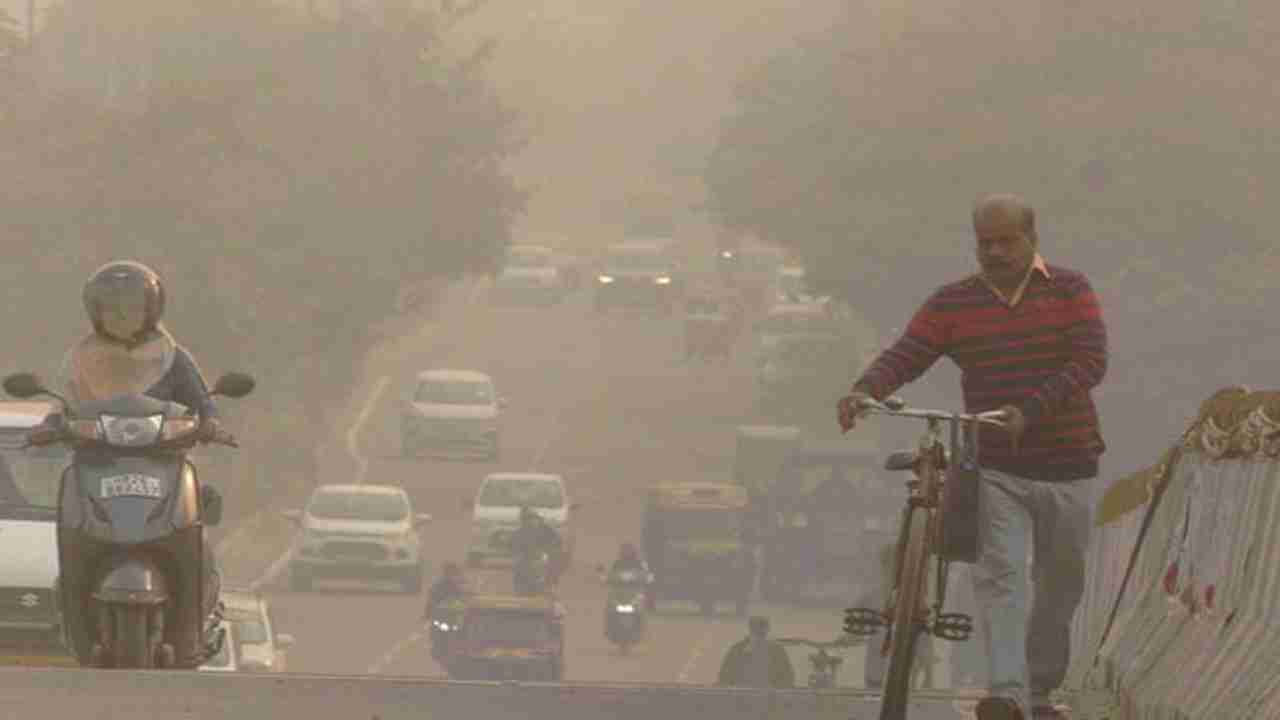
Delhi’s air quality deteriorated further as the AQI reached 348 in the very poor category. Stubble burning’s contribution to PM2.5 pollution is expected to increase to over 22% by November 5.

Published

on

Delhi air quality

Delhi’s air quality deteriorated further on Tuesday, with the Air Quality Index (AQI) climbing to 348 in the ‘very poor’ category. The contribution of stubble burning to the national capital’s PM2.5 pollution is also expected to increase over the next three days, potentially crossing 22% by November 5, according to a forecast.

The city’s AQI stood at 324 on November 2, compared with 261 on November 1, indicating a continuous deterioration in air quality over the two days.

According to the Decision Support System (DSS) for air quality management in Delhi, under the Ministry of Earth Sciences, stubble burning contributed 8.583% to the city’s PM2.5 concentration on November 2. This share was forecast to rise to 15.301% on November 3.

The contribution is expected to increase further to 20.057% on November 4 and 22.207% on November 5, the forecast showed.

Punjab records highest number of farm fires

The rising contribution comes amid continued detection of agricultural residue-burning incidents across neighbouring states.

Satellite data detected 219 paddy residue-burning incidents across the monitored states on November 2. Punjab recorded the highest number at 98, followed by Rajasthan with 67 and Madhya Pradesh with 48.

Uttar Pradesh reported four incidents, while Haryana recorded two. No residue-burning incidents were detected in Delhi or Uttarakhand on the day, according to the Consortium for Research on Agroecosystem Monitoring and Modelling from Space (CREAMS) Lab at the Indian Agricultural Research Institute (ICAR-IARI).

The DSS forecast for the next three days is based on climatological data relating to fire counts and emissions.

Over 3,500 farm fires detected this season

A total of 3,535 farm-fire incidents were detected between September 15 and November 2 this year.

Punjab accounted for the largest share, with 1,612 incidents. Rajasthan followed with 738, while Madhya Pradesh recorded 614.

The remaining incidents included 349 in Uttar Pradesh, 176 in Uttarakhand, 44 in Haryana and two in Delhi.

However, the overall number of detected farm fires has declined considerably compared with previous years.

During the corresponding period in 2020, 51,822 incidents were recorded across the states and regions covered by the bulletin. The figure declined to 24,583 in 2021 and stood at 26,490 in 2022.

It subsequently fell to 18,991 in 2023, 9,668 in 2024 and 4,993 in 2025.

Punjab and Haryana see fewer farm fires than last year

Punjab, which has recorded the highest number of farm fires this season, reported 1,612 incidents until November 2, compared with 2,262 during the corresponding period last year. In 2020, the state had recorded 41,176 incidents during the same period.

Haryana also witnessed a decline, with 44 incidents this season against 122 in 2025 and 2,606 in 2020.

The figures have been compiled using satellite remote sensing under the standard protocol for estimating crop residue-burning incidents.

The stubble-burning season runs from September 15 to November 30. Delhi recorded its first farm-fire incident of the current season on September 19, followed by another on October 24.

While the forecast indicates that stubble burning could account for a larger share of Delhi’s PM2.5 pollution in the coming days, the city’s overall air quality is influenced by several sources. The contribution of farm fires also varies depending on prevailing weather and wind conditions.

Continue Reading

Trending

© Copyright 2022 APNLIVE.com