English हिन्दी
Connect with us

India News

Parliament Winter Session 2022: Uniform Civil Code Bill sparks protest on internet, users call for boycott; here’s WHY

BJP’s Rajasthan MP Kirodi Lal Meena introduced the Uniform Civil Code in India Bill, 2020 in the Rajya Sabha as a Private Member Bill.

Published

on

lok sabha rajya sabha adjourned

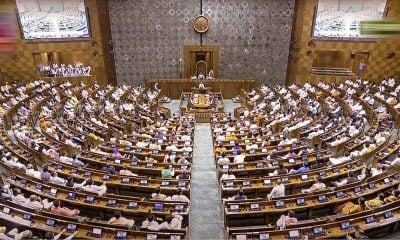
Winter Parliament Session 2022 commenced on December 7. On Friday, the Bharatiya Janata Party’s Rajasthan MP Kirodi Lal Meena introduced the Uniform Civil Code in India Bill, 2020 in the Rajya Sabha as a Private Member Bill.
The opposition demanded the withdrawal of the bill. For those uninitiated, the Bill is a proposal to formulate and implement personal laws of citizens which apply to all citizens of India equally regardless of their religion, sexual orientation, and gender.

The Congress, CPI (M), CPI, and Trinamool Congress protested against the introduction of the Bill citing it will destroy the social unity in diversity in the country. However, Rajya Sabha Chairman Jagdeep Dhankar backed Kirodi Lala Meena and passed the Bill with 63 votes in favour while 23 opposed it.

Why #Boycott_UCC is trending?

Now, the Uniform Civil Code Bill has sparked a protest on social media wherein users are demanding to boycott of the bill leading to the trend #Boycott_UCC on Twitter.

Several users reacted to the Bill and expressed their disappointment. One user wrote the imposition of the Uniform Civil Code on the tribal community by the central government will prove fatal for tribal culture, traditions, and existence.

Another user wrote so many communities will lose their identities, cultures, and historical evidence due to the implementation of the Uniform Civil Code Bill.

The official handle of the Tribal Army slammed PM Narendra Modi and the Supreme Court and wrote the Uniform Civil Code is against the customary law of the tribals and that this Bill is BJP’s biggest attack on tribal culture.

Check out Twitter reactions here:

https://twitter.com/Mahanayok/status/1601490935808159750
https://twitter.com/ajayvi9090/status/1601478094938050560
https://twitter.com/TribalArmy/status/1601465319339720704

Bills are selected for introduction based on a ballot system and around 100 Private Member Bills are introduced every session on any subject. The BJP had earlier promised to implement the Uniform Civil Code Bill in its Gujarat manifesto.

India News

Centre mandates 60% free seat allocation on flights, caps selection fees

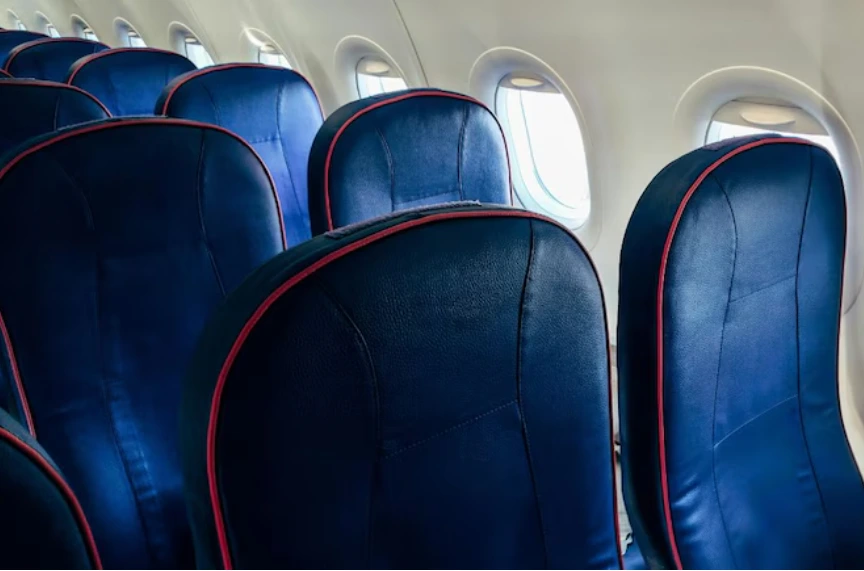
Airlines must now offer 60% seats without extra charges and ensure better seating arrangements for passengers under new government rules.

Published

on

In a significant move aimed at protecting air travellers, the Union Ministry of Civil Aviation has directed airlines to ensure that at least 60 per cent of seats on every flight are offered without any additional selection fee. The decision follows widespread complaints from passengers about hidden charges, particularly for seat selection.

The directive has been issued through the Directorate General of Civil Aviation, which has introduced a series of passenger-friendly norms to enhance transparency and improve the overall flying experience.

Under the new guidelines, airlines have also been instructed to seat passengers travelling on the same PNR together, preferably in adjacent seats. This is expected to address long-standing concerns among families and group travellers, who often face inconvenience due to scattered seating arrangements.

The regulator has further emphasised the need to safeguard passenger rights in situations such as flight delays, cancellations, and denied boarding. Airlines have been asked to prominently display these rights across their websites, mobile applications, booking platforms, and airport counters to ensure better awareness.

In addition, carriers must establish clear and transparent policies regarding the carriage of sports equipment, musical instruments, and pets. The move comes in response to frequent complaints over inconsistent rules and high charges. Airlines have been directed to align such policies with safety and operational standards while ensuring they are communicated in a simple and passenger-friendly manner.

To improve accessibility, the regulator has also asked airlines to share passenger rights information in regional languages.

Continue Reading

India News

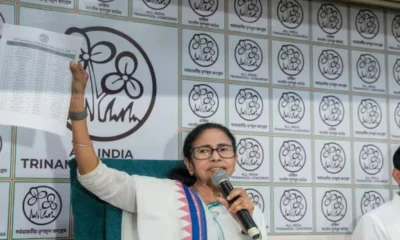
Mamata Banerjee warns BJP, EC over Bengal polls, says they will be accountable

Mamata Banerjee holds BJP and Election Commission responsible for any incidents during Bengal polls, raising concerns over officer transfers.
Published

on

West Bengal Chief Minister Mamata Banerjee has held the Bharatiya Janata Party (BJP) and the Election Commission of India responsible for any untoward incidents in the state during the upcoming assembly elections, following the transfer of key officials.

Addressing concerns over administrative reshuffles, Banerjee said that changes involving senior bureaucrats, including the chief secretary and home secretary, could affect governance and law and order in the state during a crucial period.

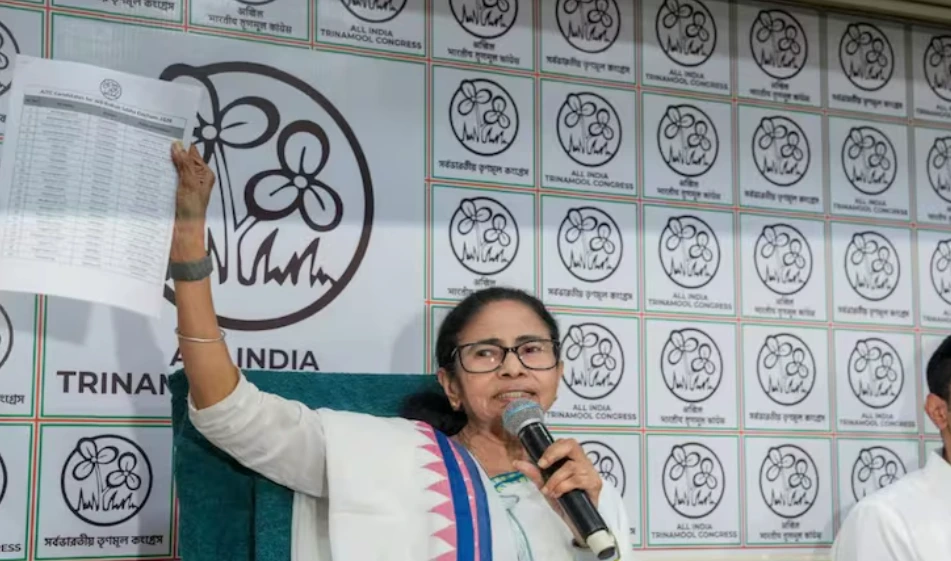
The Trinamool Congress chief also announced candidates for 291 constituencies for the elections scheduled to be held in two phases on April 23 and 29.

Criticising the Election Commission, Banerjee alleged that the transfers were being carried out in a manner that benefits the BJP. She questioned the timing of the decisions and said such actions weaken the state administration at a sensitive time.

She further raised concerns about disaster management and essential services, stating that experienced officials familiar with the state’s situation have been replaced. According to her, this could impact administrative efficiency if any emergency arises before the new government is formed.

Protecting Bengal’s identity

Banerjee emphasised that the election is not merely about forming a government but about safeguarding Bengal’s identity and existence. She accused the BJP of misusing central agencies and attempting to influence the electoral process.

She urged that elections should be conducted peacefully, without external interference, and in line with democratic principles. The chief minister also expressed confidence that her party would return to power with a stronger mandate.

Appealing to voters, she called for support for the Trinamool Congress, asserting that the people of Bengal will ultimately decide the outcome and protect their democratic rights.

Continue Reading

India News

Centre assures action on LPG supply disruption, court closes distributors’ plea

The Bombay High Court closed a plea by LPG distributors after the Centre assured diplomatic efforts to stabilise supply amid global disruptions.

Published

on

LPG cylinder

The Union government on Tuesday informed the Bombay High Court that it is taking diplomatic steps to address disruptions in Liquefied Petroleum Gas (LPG) supply linked to the ongoing Iran-Israel conflict, following which the court disposed of a petition filed by LPG distributors.

Appearing before the Nagpur bench, Solicitor General Tushar Mehta said the Centre was actively engaged in international-level negotiations to stabilise LPG supply. However, he noted that specific measures could not be disclosed due to their sensitive nature.

The matter was heard by a division bench comprising Justices Anil S Kilor and Raj D Wakode. The bench accepted the government’s assurances and closed the plea.

Distributors flagged supply disruption in Vidarbha

The petition was filed by six LPG distributors, including Omkar Sales, who raised concerns over disruptions in supply chains across Maharashtra’s Vidarbha region. They claimed the situation had led to a significant shortage of LPG for domestic consumers.

The distributors, dependent on Confidence Petroleum India Ltd (CPIL), alleged that despite directives prioritising domestic consumption, LPG was being diverted for export to capitalise on high international prices.

Government cites policy compliance, CPIL denies diversion

The petitioners referred to recent orders issued under the Essential Commodities Act and the Natural Gas (Supply Regulation) Order, 2026, which mandate prioritising household LPG supply during crises.

However, CPIL rejected the allegations, stating it was fulfilling pre-existing export commitments and had not violated any policy norms.

Court had earlier termed issue ‘serious’

During earlier hearings, the court had described the matter as “serious” and of “grave importance”, issuing notices to the Centre and the Ministry of Petroleum and Natural Gas.

On Tuesday, the Centre reiterated that macro-level supply challenges arising from global geopolitical tensions were being handled through diplomatic channels. It also said that any localised supply issues could be resolved by state authorities.

Taking note of these submissions, the bench disposed of the petition.

Continue Reading

Trending

© Copyright 2022 APNLIVE.com