English हिन्दी
Connect with us

Top Stories

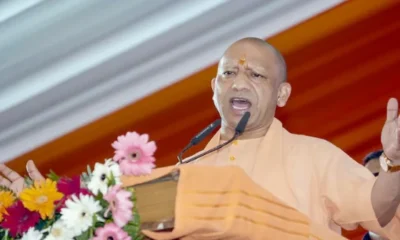
Uttar Pradesh CM Yogi Adityanath’s helicopter makes emergency landing in Varanasi after hitting bird

Yogi Adityanath’s helicopter makes an emergency landing in Varanasi following a bird hit. The incident happened as the helicopter headed for Lucknow from Varanasi’s Reserve Police Lines Ground.

Published

on

Yogi Adityanath

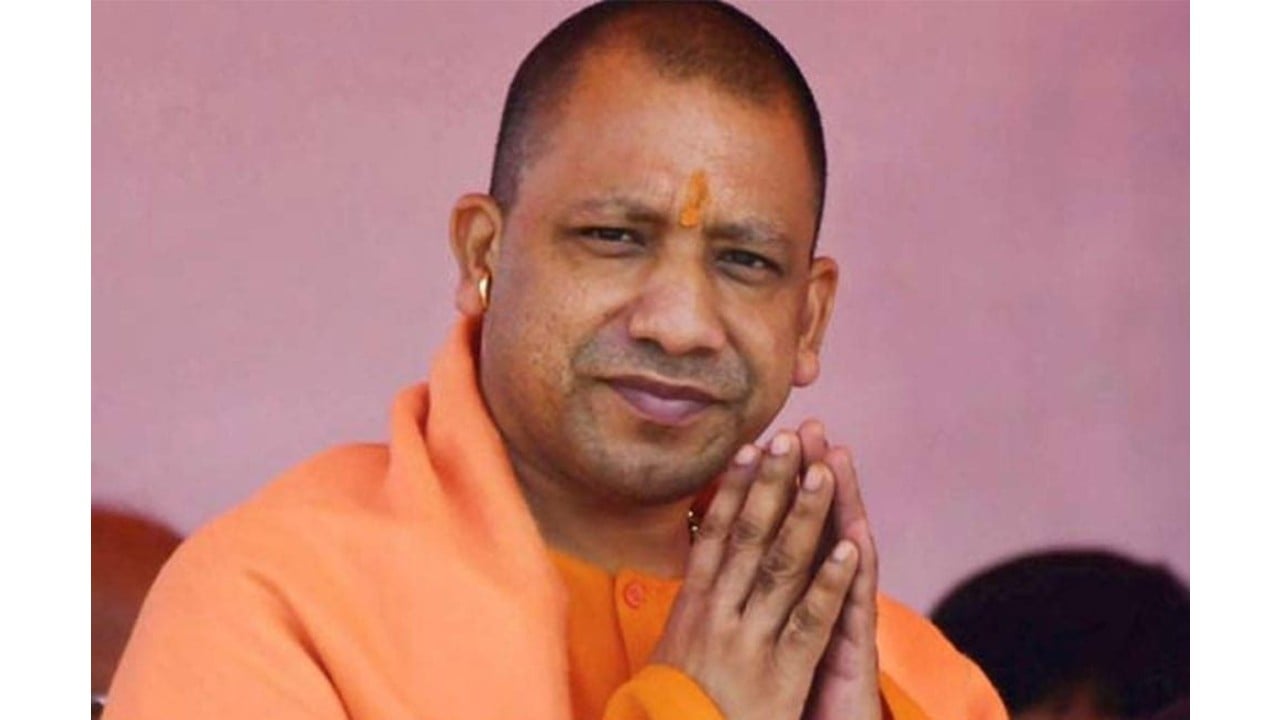
Uttar Pradesh Chief Minister Yogi Adityanath’s helicopter had to make an emergency landing in Varanasi this morning after hitting a bird shortly after taking off. The incident happened as the helicopter headed for Lucknow from Varanasi’s Reserve Police Lines Ground.
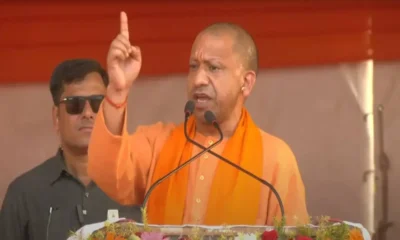
According to the District Magistrate, Kaushalraj Sharma, a bird hit the CM’s helicopter after it took off from here from Lucknow, after which it had to land here. The initial reports state that the chief minister returned to the circuit house after the incident and left for LBSI Airport by road to leave for Lucknow by state plane.

According to officials, a bird struck the helicopter’s window after it took off from the airport and was heading for Lucknow. The helicopter then successfully landed at Varanasi’s Police Lines Ground after the pilot sought an emergency landing.

According to the reports, no injury has been reported due to this accident.

The CM visited Varanasi on Saturday and paid respects at the Kashi Vishwanath temple in addition to inspecting construction projects and law and order. He was departing for Lucknow on Sunday morning after a night’s stay in Varanasi.

Adityanath delivered online rural residential rights documents to 11 lakh families in Lucknow earlier on Saturday as part of the Swamitva campaign. Adityanath handed the documents and emphasized the importance of creating an independent state at a gathering held in the Lok Bhawan auditorium.

India News

TMC faces fresh turbulence as speculation grows over possible breakaway faction in Bengal

The Trinamool Congress is facing fresh internal challenges as reports of dissent and possible plans for a breakaway political formation gain attention following the party’s defeat in the West Bengal Assembly elections.

Published

on

The Trinamool Congress (TMC) is facing renewed signs of internal unrest, with political speculation mounting over the possibility of a breakaway group emerging in West Bengal after the party’s recent electoral setback. Reports of disgruntled legislators distancing themselves from the party leadership have fuelled discussions about a potential new political formation led by rebel leaders rather than by veteran leader Mamata Banerjee.

The buzz comes shortly after the expulsion of two TMC MLAs over alleged anti-party activities. According to reports, concerns within the party have intensified amid claims that several legislators are unhappy with the current leadership structure and the role of the party’s top decision-makers.

Adding to the speculation, a large number of TMC legislators reportedly skipped a scheduled meeting at Mamata Banerjee’s residence, a development that has been interpreted by political observers as a sign of growing discontent within the organisation.

Split rumours gain momentum after election defeat

The developments come in the aftermath of the 2026 West Bengal Assembly election, in which the BJP secured a decisive victory while the Trinamool Congress suffered a major setback after 15 years in power. The defeat triggered debates within the party over its future direction and leadership.

Reports suggest that discussions are taking place among some legislators regarding the possibility of forming a separate political platform. The situation has drawn comparisons with Maharashtra’s political realignments in recent years, though no formal announcement regarding a split has been made.

Meanwhile, Mamata Banerjee has publicly dismissed rebel voices, stating that the party is stronger without those working against its interests. She has also alleged that there are organised efforts to weaken the Trinamool Congress following its electoral defeat.

While speculation continues, there has been no official confirmation of a new party being launched. Political observers say the coming weeks could determine whether the current tensions remain internal disagreements or evolve into a larger organisational challenge for the Trinamool Congress.

Continue Reading

Latest world news

Trump reportedly rebukes Netanyahu over Lebanon strikes amid ceasefire concerns

Published

on

US President Donald Trump reportedly delivered a sharp rebuke to Israeli Prime Minister Benjamin Netanyahu during a phone call over Israel’s military actions in Lebanon, as concerns grow that renewed hostilities could jeopardise fragile diplomatic efforts in the region.

According to multiple reports, Trump expressed frustration over Israeli strikes linked to ongoing tensions with Hezbollah in Lebanon. The reported exchange came at a sensitive time, with Washington attempting to prevent further escalation while also pursuing broader diplomatic discussions involving Iran.

Reports point to unusually tense exchange

Sources cited in international reports said Trump used unusually strong language during the conversation, warning that continued military actions risked damaging efforts to stabilise the situation. One report claimed Trump told Netanyahu that his actions were hurting Israel’s international standing and complicating diplomatic initiatives.

The reported disagreement followed Israeli operations against Hezbollah-linked targets in Lebanon. While Israeli officials argued that the actions were a response to security threats and ceasefire violations, the US administration has been pushing for restraint to avoid a wider regional conflict.

Lebanon fighting threatens broader diplomatic efforts

The latest tensions come amid efforts to maintain a ceasefire framework between Israel and Hezbollah. US officials have been involved in discussions aimed at reducing hostilities and preventing attacks on major Lebanese population centres, including Beirut.

Reports indicate that Trump personally intervened to discourage further escalation and support negotiations intended to preserve regional stability. Hezbollah has reportedly signalled a willingness to consider a broader ceasefire arrangement if reciprocal commitments are made.

Differing public messages after the call

Despite reports of a heated conversation, Trump later suggested publicly that discussions had been constructive and that progress had been made toward reducing tensions. Netanyahu, however, maintained that Israel would continue to respond to security threats and would not alter its overall approach toward Hezbollah if attacks persisted.

The developments highlight growing challenges facing diplomatic efforts in the Middle East, where the conflicts involving Israel, Lebanon and Iran remain closely interconnected. Analysts say any major escalation in Lebanon could further complicate ongoing negotiations and increase instability across the region.

Continue Reading

Latest world news

India, Myanmar reaffirm commitment to stronger security, trade and connectivity ties

India and Myanmar have agreed to deepen ties in security, trade and connectivity, with leaders discussing infrastructure projects, border stability and economic cooperation during talks in New Delhi.

Published

on

India Myanmar

India and Myanmar have agreed to deepen cooperation in the areas of security, trade and connectivity following high-level discussions in New Delhi during Myanmar President Min Aung Hlaing’s official visit to India.

The discussions marked an important step in strengthening ties between the neighbouring countries, which share a 1,643-kilometre border and maintain close strategic, economic and cultural links. Both sides reiterated their commitment to accelerating key connectivity projects, expanding bilateral trade and enhancing cooperation on security-related issues.

The talks were held during President Min Aung Hlaing’s five-day visit to India, his first overseas trip since assuming office earlier this year. The visit included meetings with senior Indian leaders, including Prime Minister Narendra Modi and External Affairs Minister S. Jaishankar.

Focus on connectivity and economic cooperation

India and Myanmar agreed to push forward major connectivity initiatives aimed at improving regional integration and facilitating trade. The two countries emphasized the importance of infrastructure projects that can strengthen links between India’s Northeast and Southeast Asia while boosting economic opportunities on both sides of the border.

Officials also discussed ways to expand bilateral trade and encourage greater economic engagement. Both governments expressed support for increasing cooperation across multiple sectors, including development and infrastructure.

Security and border management remain key priorities

Security cooperation featured prominently in the discussions, with both countries acknowledging the importance of maintaining peace and stability along their shared border. Border management, defence cooperation and measures aimed at ensuring regional stability were among the major topics addressed during the visit.

India has consistently viewed Myanmar as an important partner under its Act East policy, while developments in Myanmar have direct implications for security and connectivity in India’s northeastern region.

Strategic significance of the visit

Analysts view the visit as significant for both countries amid evolving regional dynamics. For India, stronger engagement with Myanmar supports connectivity goals, border security and economic interests. For Myanmar, the visit provides an opportunity to broaden diplomatic and economic engagement with a key neighbour.

The leaders also reaffirmed their commitment to maintaining close cooperation and promoting stability, development and prosperity in the region through continued dialogue and collaboration.

Continue Reading

Trending

© Copyright 2022 APNLIVE.com