English हिन्दी
Connect with us

India News

Centre asks Meta to hold WhatsApp username feature rollout until consultations conclude

The Centre has asked Meta to suspend the rollout of WhatsApp’s username feature in India until consultations are completed and the company provides a detailed explanation of the new functionality.


Published

on

WhatsApp

The Central government has directed Meta not to introduce WhatsApp’s upcoming username feature in India until consultations with the authorities are completed. The company has also been asked to submit a detailed explanation of the proposed feature within three days, according to sources.

The decision temporarily halts the rollout of a feature that would have allowed users to communicate on WhatsApp without sharing their mobile numbers.

Government seeks details on new feature

Sources said the Centre has issued a notice to Meta asking the company to explain how the username feature will function and its potential impact. Until discussions with the government are concluded, the feature cannot be launched in the country.

The directive comes as Meta was preparing to introduce the feature in phases for WhatsApp users.

Feature aims to improve privacy

The proposed username system would enable users to choose a unique username that others can use to connect with them instead of their phone number. The feature is intended to provide an additional layer of privacy by reducing the need to share personal contact details while interacting on the messaging platform.

At present, users generally need a phone number to start a conversation on WhatsApp.

Rollout was planned in phases

Meta had planned to begin the rollout in stages. As part of the initial phase, users were expected to start reserving usernames this week, while the broader launch of the feature was scheduled for later this year.

The company said it opened early reservations due to WhatsApp’s global user base of more than 3 billion people.

Meta says feature protects phone number privacy

Responding to the development, Meta said the username feature has been designed to protect users’ phone number privacy by allowing people to connect without disclosing their mobile numbers.

Whether the rollout timeline changes will depend on the outcome of the government’s consultations with the company.

India News

Delhi Pollution: GRAP-II curbs imposed across NCR as AQI hits 324

Delhi’s air quality deteriorated to the very poor category on November 2, prompting the CAQM to implement GRAP Stage II across Delhi-NCR. The measures aim to control dust and vehicular pollution.
Published

on

Delhi-Pollution

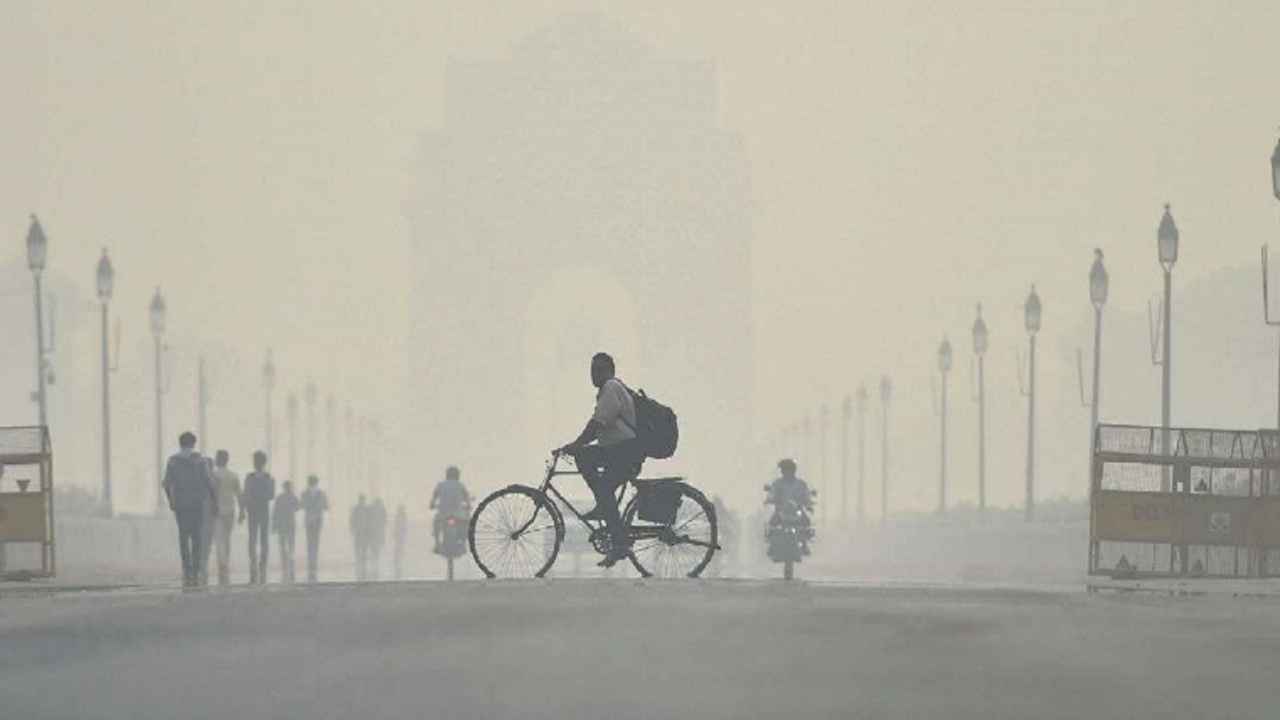
Delhi’s air quality deteriorated to the ‘very poor’ category on Monday, November 2, prompting the Commission for Air Quality Management (CAQM) to invoke Stage II of the Graded Response Action Plan (GRAP) across the National Capital Region (NCR) with immediate effect.

The national capital’s Air Quality Index (AQI) reached 324 at 4 pm, placing it in the very poor category. The deterioration followed a sharp increase in pollution levels over three days, with the AQI rising from 117 on October 31 to 261 on November 1 before crossing the 300 mark on Monday.

The CAQM attributed the worsening air quality to unfavourable meteorological conditions. Forecasts by the India Meteorological Department (IMD) and the Indian Institute of Tropical Meteorology (IITM) also indicated that Delhi’s air quality could remain in the very poor category over the coming days.

What is GRAP Stage II and why has it been imposed?

The Graded Response Action Plan is a set of emergency measures designed to tackle worsening air pollution in Delhi-NCR. It has different stages based on the severity of air quality.

Under the AQI classification, readings between 301 and 400 fall in the very poor category. GRAP Stage II is applicable when air quality reaches this range.

With Delhi’s AQI climbing to 324, the CAQM directed authorities to implement Stage II measures across the NCR. The directions also require agencies to continue implementing measures under the earlier stages of GRAP.

What restrictions come under GRAP Stage II?

The second stage of GRAP focuses on strengthening pollution-control measures, particularly those related to road dust, vehicular emissions and other sources of pollution.

Some of the important measures include:

  • Road cleaning: Authorities are required to intensify mechanical sweeping of roads and water sprinkling to control dust.
  • Traffic management: Traffic police are directed to manage congestion at busy roads and intersections.
  • Vehicle checks: Enforcement teams are required to intensify checks for valid Pollution Under Control (PUC) certificates and take action against visibly polluting vehicles.
  • Parking charges: Higher parking fees are among the measures intended to discourage the use of private vehicles.
  • Diesel generators: The use of diesel generator sets is subject to stricter regulation.
  • Public transport: Authorities are required to encourage the use of public transport to reduce vehicular emissions.

These measures are intended to reduce pollution levels across Delhi-NCR.

Delhi’s AQI worsens over three days

Delhi witnessed a significant deterioration in air quality over a short period.

The AQI stood at 117 on October 31, placing it in the moderate category. It subsequently increased to 261 on November 1, entering the poor category.

On November 2, the reading climbed further to 324 by 4 pm, pushing the national capital into the very poor category.

The situation was also reflected in readings from individual monitoring stations. Several locations recorded AQI levels above 300.

Among the areas reporting high pollution levels were RK Puram, ITO, Akshardham, India Gate, Alipur, Dwarka Sector 8 and Delhi University’s North Campus.

With pollution levels worsening and unfavourable weather conditions expected to persist, authorities have been directed to strengthen enforcement of the prescribed pollution-control measures across the region.

Continue Reading

India News

PM Modi to inaugurate Pune metro pink line, launch Rs 21,800 crore projects

Prime Minister Narendra Modi will inaugurate Pune Metro’s Pink Line and lay the foundation stone for Phase II projects worth around Rs. 13,500 crore on November 3. The combined value of the projects is approximately Rs. 21,800 crore.
Published

on

PM Modi

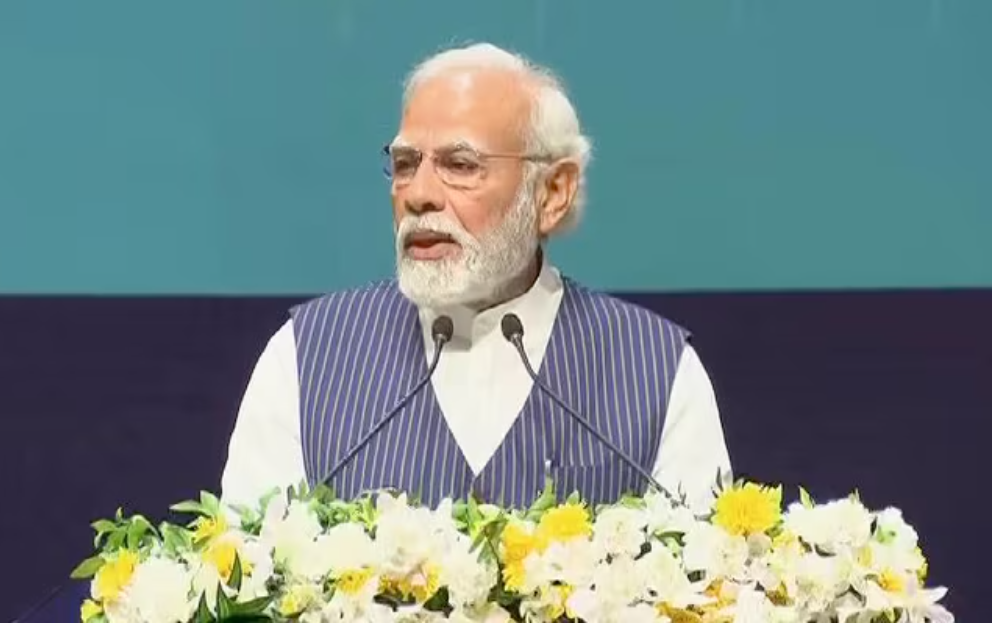
Prime Minister Narendra Modi will inaugurate Pune Metro Line 3, also known as the Pink Line, and lay the foundation stone for four new metro corridors under Phase II on November 3. The projects, taken together, are estimated to be worth around Rs. 21,800 crore.

The inauguration and foundation stone-laying ceremony will take place through video conferencing at 12:30 pm. The Prime Minister will also address the gathering.

The programme includes the inauguration of the approximately 23-km-long Pink Line, developed at a cost of over Rs. 8,300 crore, and the launch of Pune Metro Phase II, which has an estimated cost of around Rs. 13,500 crore.

Pune Metro Pink Line to connect Hinjewadi and Shivajinagar

The Pink Line, officially known as Pune Metro Line 3, will connect Maan with District Court Metro station. The approximately 23-km corridor will provide metro connectivity between Hinjewadi, one of Pune’s major IT hubs, and Shivajinagar.

The new line is expected to improve access to important employment, commercial and residential areas, particularly benefiting IT professionals and other daily commuters.

It will also integrate with Pune’s existing metro network, allowing passengers to travel between different parts of the city more conveniently.

The project is expected to reduce dependence on private vehicles, ease traffic congestion and help lower vehicular emissions.

Pink Line to be operated entirely by women

An important feature of Pune Metro’s Pink Line is that it will be operated entirely by women train operators. The initiative has been highlighted as a step towards women’s empowerment and gender-inclusive public transportation.

The corridor also incorporates renewable energy measures. Around 30 per cent of its total electricity requirements are envisaged to be met through solar power.

Four new corridors planned under Pune Metro Phase II

Along with inaugurating Line 3, PM Modi will lay the foundation stone for Pune Metro Phase II, estimated to cost around Rs. 13,500 crore.

The expansion will comprise four corridors — Lines 2A, 2B, 4 and 4A — aimed at improving connectivity across major residential, commercial and IT hubs.

The proposed routes include:

  • Line 2A: Vanaz to Chandani Chowk.
  • Line 2B: Ramwadi to Vitthalwadi.
  • Line 4: Kharadi to Khadakwasla.
  • Line 4A: Nal Stop to Manik Baug.

Lines 2A and 2B will together cover approximately 12.75 km. Line 4 will span around 25.52 km, while Line 4A will cover approximately 6.12 km.

The eastern extension between Ramwadi and Vitthalwadi is expected to improve connectivity to developing residential, commercial and IT areas in Kharadi and Wagholi.

Key Pune areas to benefit from metro expansion

The proposed Phase II corridors will connect several important locations across Pune, including Kharadi, Magarpatta, Hadapsar, Swargate, Manik Baug, Nanded City, Pune Cantonment and Warje.

The new corridors will also integrate with the existing Pune Metro network and intercity bus services through interchange facilities at Swargate, Nal Stop and Kharadi Bypass.

The expansion is aimed at strengthening public transportation infrastructure and providing commuters with a more integrated urban mobility network across the city.

Continue Reading

India News

Supreme Court allows green crackers in Delhi-NCR for Diwali, sets time limits

The Supreme Court has allowed certified green crackers in Delhi-NCR for two days ahead of and on Diwali. The complete ban on firecrackers will return from November 9.

Published

on

Supreme Court

The Supreme Court on Monday permitted the use of certified green firecrackers across Delhi-NCR for two days ahead of and on Diwali, offering a temporary relaxation of the existing restrictions on fireworks.

Under the court’s directions, green firecrackers can be burst on November 7 and 8, between 6 am and 7 am and again from 8 pm to 10 pm. The complete ban on firecrackers will be restored from November 9, the court said.

The decision comes ahead of Diwali, which falls on November 8 this year. The relaxation is subject to several conditions governing the manufacture, sale and use of firecrackers.

The court also noted that it had not been provided with adequate data to determine whether a complete ban was the most effective solution to Delhi-NCR’s annual air pollution problem. It observed that there had been no significant improvement in Air Quality Index (AQI) readings despite the firecracker ban imposed in 2024.

Supreme Court sets restrictions on firecracker use

The Supreme Court has prohibited the bursting of firecrackers within a 300-metre radius of hospitals, nursing homes, primary and district health centres, old-age homes and notified silence zones.

Educational institutions will also fall under this restriction.

These locations will be designated as ‘No-Cracker Zones’, with authorities directed to mark their boundaries on the ground and publicise the restrictions.

The court has also directed authorities to ensure that the permitted time slots are followed during the two days.

Strict conditions for green cracker sales

The Supreme Court has laid down specific conditions for manufacturers and traders to prevent conventional firecrackers from being sold in the name of green crackers.

Only manufacturers holding valid certifications from the Council of Scientific and Industrial Research-National Environmental Engineering Research Institute (CSIR-NEERI) and the Petroleum and Explosives Safety Organisation (PESO) will be permitted to manufacture approved green crackers during the specified period.

The manufacture and sale of firecrackers joined in series, commonly known as ‘ladis’ and garlands, have been prohibited.

Firecrackers containing barium and those not approved by CSIR-NEERI as green crackers will also not be permitted.

The court has further directed that green crackers must be sold in sealed boxes to prevent conventional or unauthorised firecrackers from being mixed with approved products.

Each box must carry a product-specific QR code linked to the particular product and batch. Scanning the code should provide details of the manufacturer, NEERI registration, PESO or District Magistrate licence, formulation and test certificate.

Online sale prohibited, designated locations identified

The Supreme Court has directed District Collectors and Commissioners across the National Capital Region to identify designated locations for the sale of green firecrackers in consultation with the respective Superintendents of Police.

The sale of firecrackers at any other location, including through online platforms, has been prohibited.

Authorities have also been directed to display banners at designated shops and sale locations explaining how consumers can identify CSIR-NEERI-approved green crackers.

The court has asked authorities to check vehicles entering Delhi-NCR to prevent the transportation of illegal and conventional firecrackers.

It has also directed police and district administration officials to conduct inspections, verify QR codes and confiscate unauthorised firecrackers.

What are green crackers?

Green crackers are developed by CSIR-NEERI and are designed to produce around 30 per cent less pollution than conventional firecrackers.

They contain reduced quantities of certain chemicals, including barium and aluminium, and incorporate additives intended to suppress dust and smoke emissions.

These crackers are also designed to produce less noise, burn for shorter durations and release controlled flames.

Complete firecracker ban to return on November 9

The Supreme Court has clarified that the relaxation is temporary and that the complete ban on firecrackers in Delhi-NCR will be restored from November 9.

The court has also directed manufacturers and traders to furnish monetary security. The security deposit will be forfeited in case of violations of its directions.

The measures are aimed at regulating the use and sale of firecrackers during Diwali while addressing concerns over air pollution in the National Capital Region.

Continue Reading

Trending

© Copyright 2022 APNLIVE.com