English हिन्दी
Connect with us

India News

Delhi-Meerut Namo Bharat corridor set to extend till Haridwar and Rishikesh

The proposed 150-km Meerut-Haridwar-Rishikesh Namo Bharat corridor has received in-principle approval, with DPR survey work underway to expand rapid rail connectivity between Delhi-NCR, western Uttar Pradesh and Uttarakhand.

Published

on

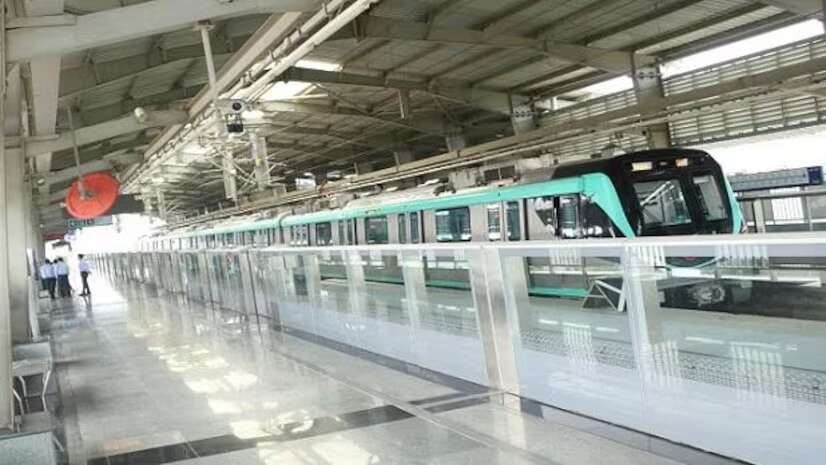
The proposed expansion of the Namo Bharat rapid rail network is set to strengthen connectivity between Delhi-NCR and Uttarakhand, with plans to extend the Delhi-Meerut corridor to Haridwar and Rishikesh.

The upcoming Meerut-Haridwar-Rishikesh Regional Rapid Transit System (RRTS) corridor has received in-principle approval, and work on the Detailed Project Report (DPR) survey is currently underway.

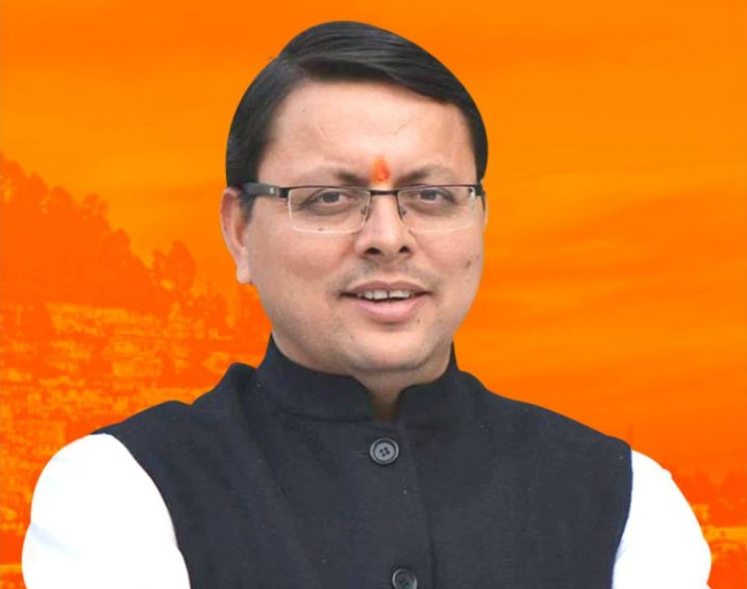
The proposal was approved during a meeting attended by Uttarakhand Chief Minister Pushkar Singh Dhami and Union Housing and Urban Affairs Minister Manohar Lal Khattar.

The National Capital Region Transport Corporation (NCRTC), along with the governments of Uttar Pradesh and Uttarakhand, will jointly work on extending the existing Delhi-Meerut Namo Bharat corridor.

Proposed route to cover around 150 km

The proposed rapid rail extension will be around 150 kilometres long and will begin from Modipuram, the last station of the Delhi-Meerut Namo Bharat corridor.

Of the total distance, approximately 72 kilometres will be in Uttar Pradesh, passing through Meerut and Muzaffarnagar, while the remaining 78 kilometres in Uttarakhand will cover Roorkee, Haridwar and Rishikesh.

According to the proposed alignment, the train will run through Modipuram, Daurala, Khaatauli, Muzaffarnagar, Purkazi and Roorkee before reaching Har Ki Pauri in Haridwar and terminating near Lakshman Jhula in Rishikesh.

To facilitate project implementation, the Uttarakhand government has appointed Additional Secretary Reena Joshi as the nodal officer. NCRTC and the Uttar Pradesh government have also designated coordination officers to expedite land acquisition and route survey work.

Direct link with Delhi-Meerut Namo Bharat corridor

The proposed corridor will connect with the existing 82.15-km Delhi-Ghaziabad-Meerut Namo Bharat corridor through Modipuram station.

Once operational, commuters will get direct connectivity to stations including Sahibabad, Duhai, Guldhar, Anand Vihar and Sarai Kale Khan via the existing rapid rail network. The project is also expected to improve access for passengers travelling from Noida and Ghaziabad to Rishikesh.

Better interchange with upcoming rapid rail corridors

The expansion will also integrate with other planned Namo Bharat corridors across the National Capital Region.

Sarai Kale Khan will serve as the principal interchange hub for the proposed Delhi-Gurugram-Shahjahanpur-Neemrana-Alwar corridor, allowing passengers travelling from Haridwar and Rishikesh to reach destinations such as Gurugram, Neemrana and Alwar through the rapid rail network.

Passengers travelling towards Haryana will also benefit from interchanges with the proposed Delhi-Sonipat-Panipat corridor at Sarai Kale Khan or Hazrat Nizamuddin.

In addition, the planned Ghaziabad-Noida International Airport corridor will enable travellers from Haridwar, Rishikesh and Muzaffarnagar to access Noida International Airport in Jewar through the Ghaziabad interchange.

Metro and rail connectivity to improve

Passengers using the Namo Bharat service will continue to have access to the Delhi Metro’s Blue and Pink Lines from Anand Vihar, along with connectivity to Anand Vihar Railway Terminal and the Inter-State Bus Terminal (ISBT).

The Pink Line also provides direct access to Hazrat Nizamuddin Railway Station and the ISBT.

With the proposed expansion, the Namo Bharat network is expected to enhance regional connectivity by linking religious destinations such as Haridwar and Rishikesh with Delhi, the National Capital Region and the upcoming Noida International Airport.

India News

Ghaziabad schools, colleges to remain closed till August 12 for Kanwar Yatra

Ghaziabad has announced the closure of all schools, colleges and universities from August 4 to 12 due to the Kanwar Yatra. Scheduled examinations will continue as planned.

Published

on

The Ghaziabad district administration has ordered the closure of all schools, colleges, universities and technical institutions from August 4 to August 12 due to the heavy movement of Kanwar pilgrims during the ongoing Kanwar Yatra.

According to the official order issued on Monday, schools from Nursery to Class 12 across all education boards, including Basic Education Council, Secondary Education Council, CBSE, ICSE and Madrasa Board, will remain closed during the period. The decision has been taken to ensure the safety of students amid increased traffic and large gatherings associated with the annual pilgrimage.

The administration has clarified that while educational institutions will remain closed, examinations scheduled during this period will be conducted as per the existing timetable.

Shravan Shivratri to be observed on August 11

The District School Inspector, in an official circular, noted that the main festival of Shravan Shivratri will be celebrated in the district on August 11, 2026. With a large number of Kanwar pilgrims travelling through Ghaziabad since the beginning of the Shravan month on July 30, authorities have imposed the temporary closure as a precautionary measure.

The official order states that the closure applies to all government and private schools affiliated with various education boards across the district.

Colleges, universities also covered

The notification further states that all government and private colleges, universities and technical institutions in Ghaziabad will remain closed from August 4 to August 12. However, institutions conducting previously scheduled examinations have been permitted to hold them as per the announced examination schedule.

The administration has advised educational institutions to comply with the order and ensure the safety of students during the Kanwar Yatra period.

Continue Reading

India News

Parliament panel seeks Zuckerberg’s apology over PM Modi video removal, questions Meta’s accountability

The Parliamentary Standing Committee on IT has sought an apology from Meta chief Mark Zuckerberg over the temporary removal of Prime Minister Narendra Modi’s Facebook video, while raising concerns over accountability, algorithmic bias and safe harbour protection.

Published

on

The Parliamentary Standing Committee on Information Technology has sought an apology from Meta chief Mark Zuckerberg over the temporary removal of Prime Minister Narendra Modi’s Facebook video, saying that a simple expression of regret would not be enough unless accountability is fixed.

The committee, chaired by BJP MP Nishikant Dubey, met representatives of Meta, Google, YouTube, senior officials from the Ministry of Electronics and Information Technology (MeitY), and the Union Home Ministry to discuss issues related to social media regulation, algorithmic transparency and platform accountability.

Panel demands accountability over PM Modi video removal

During the meeting, members questioned Meta over the removal of a Facebook video in which Prime Minister Narendra Modi addressed young people and promised strict action against exam paper leaks.

According to sources, committee members asked who was responsible for taking down the video and why it was removed while other objectionable content remained on the platform. Meta reportedly expressed regret over the incident and offered an apology.

However, members of the panel maintained that the matter should not end with an apology alone. They said responsibility for the lapse must be established and legal action should be considered wherever required.

The committee also questioned what safeguards ordinary Indian users have if the Prime Minister’s content could be removed in such a manner.

Nishikant Dubey warns over safe harbour protection

Speaking after the meeting, Nishikant Dubey said Mark Zuckerberg should personally apologise for the incident.

He also warned that if such an apology is not forthcoming, Meta’s “safe harbour” protection could come under scrutiny. Safe harbour provisions protect online platforms from liability for third-party content, provided they comply with due diligence requirements under Indian law.

Dubey further claimed that the Prime Minister’s video remained unavailable for around five hours and described the matter as serious.

Panel raises concerns over algorithms and child safety

Apart from the video controversy, the committee also questioned Meta over alleged algorithmic bias and the way content is promoted on social media platforms.

Dubey said the committee unanimously discussed concerns regarding algorithm-driven reach and claimed that newer or unregistered groups were receiving greater visibility than recognised political parties. He said understanding how platforms determine content reach was important for the country.

The meeting also included discussions on child sexual abuse material (CSAM) and the responsibilities of social media companies in preventing such content from appearing on their platforms.

MeitY had earlier questioned Meta’s explanation

Last week, MeitY had summoned Meta’s global team over issues related to algorithmic bias, platform processes and their potential impact on public order.

Meta had attributed the temporary removal of the Prime Minister’s video to a technical glitch. However, according to sources, the ministry considered the explanation inadequate.

Separately, Hyderabad Cyber Crime Police have registered cases against Meta India head Arun Srinivas and certain Facebook and Instagram accounts over allegedly morphed and AI-generated posts targeting Prime Minister Narendra Modi.

Continue Reading

India News

Prashant Kishor wins Bankipur bypoll, secures first electoral victory in BJP bastion

Prashant Kishor won the Bankipur Assembly bypoll in Bihar by defeating BJP candidate Neeraj Kumar by 19,324 votes. The victory marks Kishor’s first electoral success and Jan Suraaj’s maiden Assembly seat.

Published

on

Jan Suraaj chief Prashant Kishore

Jan Suraaj Party (JSP) founder Prashant Kishor has registered his maiden electoral victory by winning the Bankipur Assembly bypoll in Bihar, ending the BJP’s long dominance in the constituency. The former election strategist defeated BJP candidate Neeraj Kumar by a margin of 19,324 votes, marking the first Assembly seat won by both Kishor and his party.

According to Election Commission data, Kishor secured 64,151 votes, while Neeraj Kumar polled 44,827 votes. Rashtriya Janata Dal (RJD) candidate Rekha Kumari finished third with 14,273 votes.

Prashant Kishor promises visible changes in Bankipur

After the victory, Prashant Kishor thanked the voters and assured them that development work would begin immediately.

Addressing reporters, he said people would witness visible changes in Bankipur within three months and requested residents to give him that time. He also said his office would remain open not only for the people of Bankipur but for everyone in Bihar.

Kishor described the victory as significant, saying his party had managed to end what he called the BJP’s three-decade hold over the constituency in just 30 days of campaigning.

Says Bihar voters have sent a message to BJP

Speaking after the results, Kishor said the people of Bihar had conveyed a message to the BJP’s central leadership that the state needed a chief minister focused on improving education and creating employment opportunities. He also said voters wanted leadership with a clean public image.

Bihar Chief Minister congratulates Kishor

Bihar Chief Minister Samrat Choudhary congratulated Prashant Kishor on his victory through a post on X.

He said the people had chosen Jan Suraaj in the Bankipur Assembly by-election and extended his congratulations while respecting the democratic verdict.

Why the Bankipur bypoll drew national attention

The Bankipur by-election attracted national attention for several reasons. The constituency has long been considered a BJP stronghold and was represented for multiple terms by senior BJP leader Nitin Nabin, who vacated the seat after moving to the Rajya Sabha.

The contest also gained prominence after Prashant Kishor entered the fray and came in the backdrop of nationwide student protests centred around education-related issues. Political observers had closely watched whether young voters would influence the outcome in the urban Patna constituency.

The BJP also witnessed a last-minute change in candidate after Abhishek Kumar Sinha withdrew before filing his nomination, following which the party fielded youth wing leader Neeraj Kumar. The RJD nominated Rekha Kumari.

Jan Suraaj opens its electoral account

The victory marks a milestone for the Jan Suraaj Party, which had failed to win any seats in the 2025 Bihar Assembly election. Kishor himself had not contested that election.

With the Bankipur result, Jan Suraaj has opened its electoral account, while Kishor has entered the Bihar Assembly for the first time.

Reacting to the outcome, Jan Suraaj’s Bihar chief Manoj Bharti said the people of Bankipur had voted for change. He claimed the party received support across different sections of society and thanked what he described as the party’s “silent voters” for helping secure the victory.

Continue Reading

Trending

© Copyright 2022 APNLIVE.com