
India News
Fine-print of India’s improved EoDB ranking is disturbing, Start Ups faltering


[vc_row][vc_column][vc_column_text]Despite PM Narendra Modi’s Start Up India initiative, World Bank’s Ease of Doing Business rankings show starting new business in India is becoming difficult
As India finished at the 100th spot – improving from last year’s 130 – in the World Bank’s Ease of Doing Business rankings for 190 countries that were surveyed, it was only natural for Prime Minister Narendra Modi and finance minister Arun Jaitley to pat their backs on the supposed endorsement of their handling of the country’s economy.
Access the World Bank’s EoDB rankings report here:
http://www.doingbusiness.org/rankings
The EoDB rankings declared on Tuesday are no doubt a shot in the arm for a government that, for a better part of the past year, has been struggling to justify its economic policies and counter growing criticism over a perceived slump in investor sentiment and job creation. Yet, they also portray another reality; one which doesn’t bode well for the Modi government nor justify the premature celebrations over what the Prime Minister termed as a “historic jump”.
For starters, the survey factors in the ease of doing business only in Mumbai and Delhi while Tier I and Tier II cities which are proposed to emerge as the new business centres of India have not been surveyed in the ‘Doing Business 2018: Reforming to Create Jobs’ report that was released on Tuesday by Annexte Dixon, World Bank vice president for the South Asia region. Considering that the national and financial capital are already choked with existing industries and businesses, the exclusion of Tier I and Tier II cities from across the country should in itself be reason enough to not see India’s improved ranking as a comprehensive endorsement of the overall EoDB scenario across the country.
Dixon attributes the “significant jump” in India’s ranking to “the Indian government’s consistent efforts over the past few years and India’s endeavor to strengthen its position as a preferred place to do business”. The report acknowledges improvements in indicators such as resolving insolvency, paying taxes, protecting minority investors and getting credit as the reasons behind the improvement in India’s ranking.
However, the report skips factoring in disruptions caused in businesses and the overall Indian economy due to two of the biggest and most controversial ‘reforms’ rolled out in the country by the Modi government – demonetisation and implementation of the Goods and Services Tax (GST).
While demonetisation, which flushed out 86 per cent of the cash in circulation from the economic in one single stroke and paralysed the economy, especially in the informal sector, for months, was a decision unique to India and so found no mention in the World Bank report, the EoDB survey was completed a month prior to the GST rollout and hence disruptions caused by the new tax regime were also not factored in while deciding India’s ranking.
Economists within India and abroad, as also Opposition leaders, have hit out at the Modi government over the negative impact of demonetisation and the hasty implementation of the GST regime. However, with the two contentious ‘reforms’ finding no mention among the EoDB parameters, it would perhaps not be wholly incorrect to assume that the rankings do not reflect the impact that they have had on businesses in India.
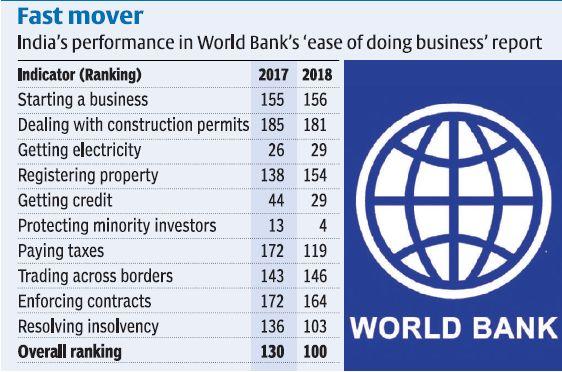
Comparative rankings of India of the current and previous year in the 10 categories on which countries were ranked. Photo credit: Business Line
Another aspect of the report that cannot be brushed aside is the fact that the rankings come as an endorsement of Congress vice president Rahul Gandhi’s charge against the Modi of his government having made it more difficult to start new businesses in India despite the Prime Minister’s pet Start Up India initiative.
Of the 10 broad parameters that the EoDB rankings are based on, three are clearly linked with starting of new business and in each of these parameters, India has slipped from its rankings of the previous year. For instance while on the parameter of ‘starting a business’, the need for Indian entrepreneurs to go through 12 procedures to start a business, as opposed to five in high-income countries, worsened India’s ranking in the category to 156 from 155 last year – out of a total of 190 countries.
A majority of new ventures also need to register their official property that they plan to use as the venue for their business. In the category of ‘Registering property’, India marked its biggest decline, slipping from a rank of 138 last year to 154 in the current year. New ventures also need electricity supply and on that count too, India has slipped although the country’s overall ranking in the category of ‘getting electricity connection’ is better than nearly 70 per cent of the countries that were surveyed. With a 45-day period needed to get a new electricity connection, India ranked 29 in this category as against its previous ranking of 26.
The parameters where the country seems to have done well, marginally or substantially, are all that apply to existing business, be it categories like ‘enforcing contracts’ and ‘resolving insolvency’ or ‘paying taxes’. What the Modi government needs to do, if it really is serious about its Start Up India initiative, is to also make setting up of new business – and not just in Mumbai or Delhi but elsewhere in India too – a much less cumbersome process.[/vc_column_text][/vc_column][/vc_row]










India News
Delhi deploys 25,000 personnel, installs CCTV cameras ahead of CJP march
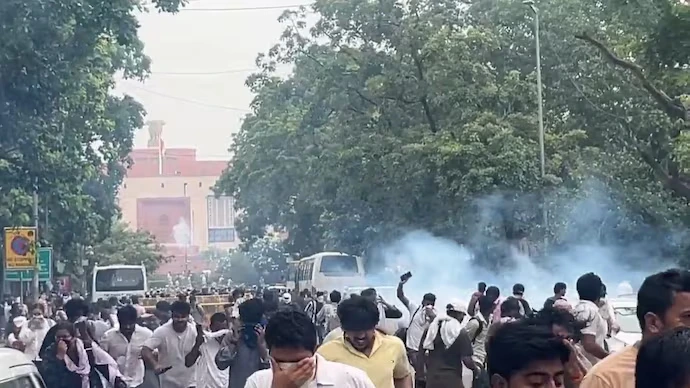
More than 25,000 police and paramilitary personnel have been deployed in Delhi ahead of the CJP’s planned protest march at Connaught Place. Authorities have also imposed restrictions and stepped up CCTV surveillance.

India News
Mallikarjun Kharge’s ‘Your Friends’ jab at Rahul Gandhi over congress exits
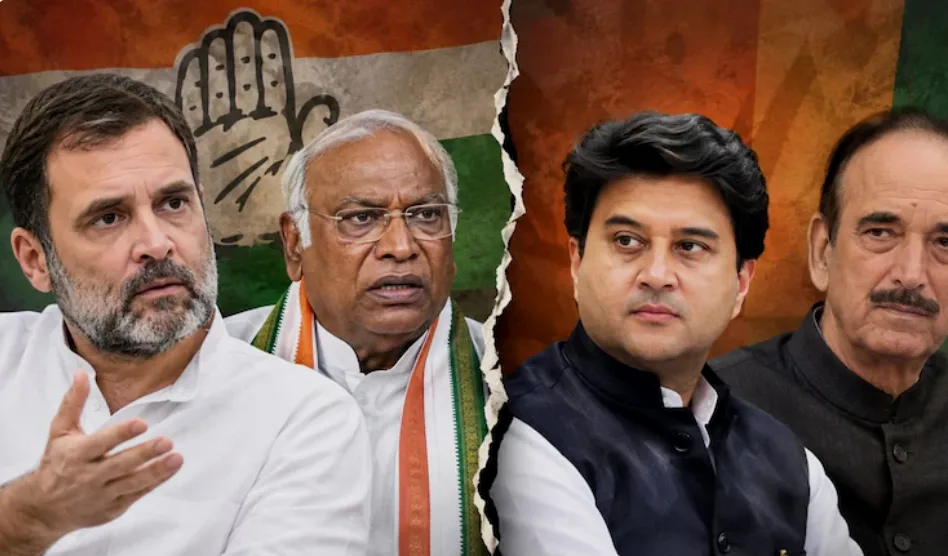
Congress president Mallikarjun Kharge took a dig at Rahul Gandhi after the Leader of the Opposition reportedly described former party leaders Jyotiraditya Scindia and Ghulam Nabi Azad as among those who had left the Congress.
India News
Delhi Police offers 11-person limit for CJP’s Connaught Place protest
Delhi Police has offered to facilitate a group of 11 people at Central Park in Connaught Place for the Cockroach Janata Party’s October 16 protest, while warning that violations of prohibitory orders could invite legal action.


India-US trade deal first phase finalised, drafting underway

Election Commission orders voter roll revision in 17 states, UTs

Delhi Police offers 11-person limit for CJP’s Connaught Place protest

Actor Imran Khan asked to leave India after CJP protest

Mallikarjun Kharge’s ‘Your Friends’ jab at Rahul Gandhi over congress exits

Magnitude 7 earthquake strikes Russia’s Kamchatka Peninsula

Delhi deploys 25,000 personnel, installs CCTV cameras ahead of CJP march
Mallikarjun Kharge’s ‘Your Friends’ jab at Rahul Gandhi over congress exits
Delhi Police offers 11-person limit for CJP’s Connaught Place protest
Actor Imran Khan asked to leave India after CJP protest

Afghan Men Try To Hang With The Jet Engine Of The Aircraft in Kabul- Afghanistan News – Kabul News
Trending Top 10 News: 10000 Crore Fine on Flipkart, Apple to Launch Unique Feature, Hdfc Bank Job Ad

Trending Top 10 News: Nokia 6310, Apple sales, Bachpan ka Pyar Video Kid, Dainik Bhaskar IT Raid

Trending Top 10 News: Canada bans Indian flights, Rain in Delhi NCR, AIMIM Twitter hacked, Raj Kundra case

Trending Top 10 News: Shein India, Apple New Service, Pocket Oxygen, Oppo Launched New Phone
-
 India News24 hours ago
India-US trade deal first phase finalised, drafting underway
-
 India News21 hours ago
Election Commission orders voter roll revision in 17 states, UTs
-
 India News20 hours ago
Delhi Police offers 11-person limit for CJP’s Connaught Place protest
-
 India News21 hours ago
Actor Imran Khan asked to leave India after CJP protest
-
 India News8 hours ago
Mallikarjun Kharge’s ‘Your Friends’ jab at Rahul Gandhi over congress exits
-
 India News8 hours ago
Delhi deploys 25,000 personnel, installs CCTV cameras ahead of CJP march
-
 Latest world news8 hours ago
Magnitude 7 earthquake strikes Russia’s Kamchatka Peninsula
