English हिन्दी
Connect with us

India News

GST council to discuss two-slab structure, daily use items likely to get cheaper

The GST Council is set to discuss a major tax overhaul with a two-slab structure that may lower rates on essential goods, offering relief to middle-class families.

Published

on

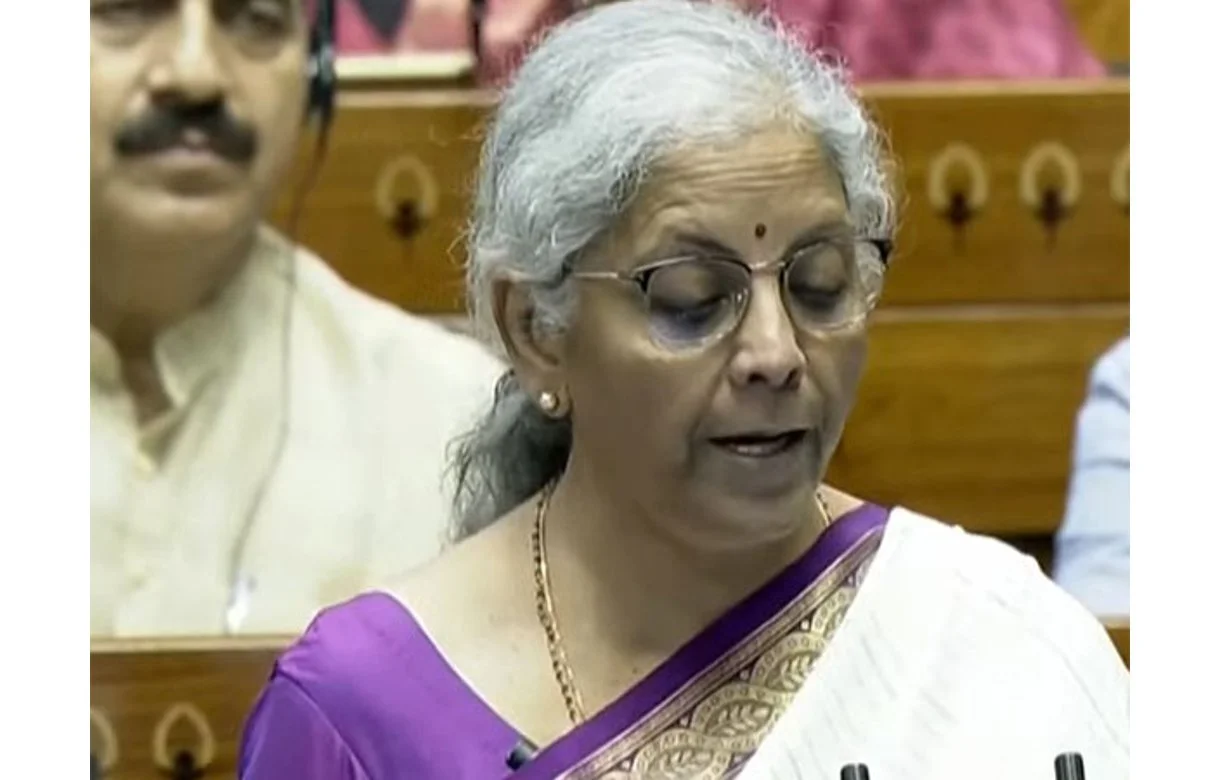
Nirmala Sitharaman

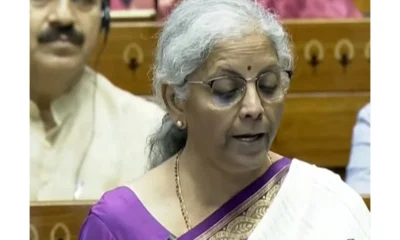
The Goods and Services Tax (GST) Council, chaired by Finance Minister Nirmala Sitharaman, is set to deliberate on major reforms that could lower the tax burden on middle-class households. The key agenda includes shifting to a two-slab structure, aimed at reducing rates on essential goods and boosting consumption.

Two-slab GST proposal on table

The current GST system has four slabs—5%, 12%, 18%, and 28%. The proposed change would replace these with just two: 5% and 18%. Goods will be categorised as “merit” or “standard”, with daily-use items moving into the lower 5% bracket.

Additionally, a special “sin tax” of 40% on items such as tobacco products and luxury cars is expected, covering only a limited set of goods.

Relief for middle class, hit to revenue

Around 90% of goods currently taxed at 28% may shift to 18%, while several daily-use products will move from 12% to 5%. This is expected to ease household budgets and spur demand, particularly among the middle class.

The government anticipates a revenue loss of approximately ₹50,000 crore due to this rationalisation. However, it hopes higher consumption will compensate for the shortfall.

Broader economic push

The reforms are seen as part of the government’s larger economic strategy. Officials believe the GST changes will help cushion the impact of the recent 50% tariff imposed by the US, which could affect $48 billion worth of Indian exports.

A recent report by SBI Research estimated that GST reforms, along with income tax cuts, could lift consumption by ₹5.31 lakh crore, equivalent to 1.6% of GDP.

The government has said the revisions are built on three pillars—structural reforms, rate rationalisation, and ease of living—aligned with its “aatmanirbhar” (self-reliant) vision and goal of becoming the world’s third-largest economy.

Opposition states raise concerns

Several opposition-ruled states, including Tamil Nadu, Punjab and Bengal, have expressed scepticism over the potential revenue loss. They are expected to demand compensation during the meeting. Some have suggested an additional duty on luxury and sin goods to balance state finances.

India News

EC extends SIR deadlines for 6 states, no change for West Bengal

The Election Commission has extended the SIR exercise in six states and a Union Territory, while West Bengal and three others received no extension as the voter roll update process progresses.

Published

on

The Election Commission has revised the timeline for the ongoing Special Intensive Revision (SIR) of electoral rolls in six regions, while keeping the schedule unchanged for West Bengal, Goa, Lakshadweep and Rajasthan. The SIR exercise, aimed at removing inaccuracies and updating voter lists, will now continue for longer in Tamil Nadu, Gujarat, Madhya Pradesh, Chhattisgarh, Uttar Pradesh, and the Andaman and Nicobar Islands.

Revised dates for voter roll revision

According to the Election Commission, the enumeration period has been extended as follows:

  • Tamil Nadu and Gujarat: Till December 14
  • Madhya Pradesh, Chhattisgarh, Andaman and Nicobar Islands: Till December 18
  • Uttar Pradesh: Till December 26

The publication of draft rolls will now be:

  • December 19 for Tamil Nadu and Gujarat
  • December 23 for Madhya Pradesh, Chhattisgarh, Andaman and Nicobar Islands
  • December 31 for Uttar Pradesh

Meanwhile, the SIR period concluded today in Goa, Lakshadweep, Rajasthan and West Bengal, with no extension granted.

As West Bengal heads towards a crucial election expected early next year, the voter list update process has become part of a broader political narrative between the NDA and Opposition parties, especially after the Bihar polls.

Continue Reading

India News

Mamata Banerjee urges women to resist if voter names are deleted during SIR review

At a Krishnagar rally, Mamata Banerjee alleged misuse of the SIR voter list review and urged women to stand firm if their names were removed.

Published

on

Mamata Banerjee

West Bengal Chief Minister Mamata Banerjee, sharpening her attack on the ongoing Special Intensive Revision (SIR) of voter lists, called on women to stand up against any attempt to remove their names from the electoral roll. Addressing a gathering in Krishnagar, she alleged that the process was being misused to target voters ahead of elections.

Mamata accuses BJP of trying to intimidate women voters

Banerjee questioned the removal of names from the voter list under the SIR exercise, asserting that mothers and sisters of the state should not allow such actions to go unchecked. She said women possess the strength and the everyday tools used at home, urging them to be ready if their rights were undermined.

She alleged that attempts would be made to influence the electoral process by bringing police from outside the state and using fear tactics. Banerjee added that during elections, efforts were often made to divide people and misuse money power.

Reaffirming her stance on secularism, she said she wanted to see whether the women of Bengal or the BJP were “more powerful” in this fight.

Continue Reading

India News

Andhra Pradesh High Court orders anti-corruption probe into Tirupati donation theft case

Andhra Pradesh High Court has ordered the CID and ACB to file an FIR and conduct a coordinated probe into the TTD Parakamani theft case, including scrutiny of a Lok Adalat settlement and the complainant’s suspicious death.

Published

on

tirupatitirumala

The Andhra Pradesh High Court has directed the Criminal Investigation Department (CID) and the Anti-Corruption Bureau (ACB) to initiate criminal action and register an FIR in the Tirumala Tirupati Devasthanams (TTD) Parakamani (donation box) theft case. The court instructed both agencies to continue investigating the alleged theft, the suspect’s assets, and the earlier settlement reached at a Lok Adalat.

Court seeks deeper scrutiny and coordination among agencies

The High Court emphasised that the probe must also examine how the case was taken to mediation and settled through a compromise. It ordered the CID and ACB to share information with each other and, if necessary, with the Income Tax Department and the Enforcement Directorate (ED) to ensure a comprehensive investigation.

Taking note of the unexplained death of the complainant, Y Satish Kumar—then part of the TTD vigilance team—whose body was found near a railway track in Anantapur district on November 14, the court asked the CID to submit his post-mortem report in a sealed cover within three days.

The next hearing is scheduled for December 16.

Senior TTD officials questioned; theft traced to April 2023 incident

The CID has already examined several former officials, including ex-TTD chairmen B Karunakar Reddy and YV Subba Reddy, and former executive officer AV Dharma Reddy.

The case began on April 29, 2023, when CV Ravi Kumar, an employee at a mutt linked to TTD, was allegedly caught stealing $900 inside the Parakamani hall—the temple’s donation-counting centre. While a local police case was initially filed, it was soon shifted to a Lok Adalat, where a compromise settlement was reportedly reached. Under this arrangement, Ravi Kumar is said to have offered seven properties worth about ₹40 crore in Tirupati and Chennai as restitution to TTD.

Continue Reading

Trending

© Copyright 2022 APNLIVE.com