English हिन्दी
Connect with us

India News

India gears up for civil defence drill amid Pahalgam fallout and security tensions

India will conduct a sweeping civil defence drill to test readiness amid heightened tensions after the Pahalgam attack. Blackout simulations, evacuation protocols, and first-aid training will be conducted nationwide.

Published

on

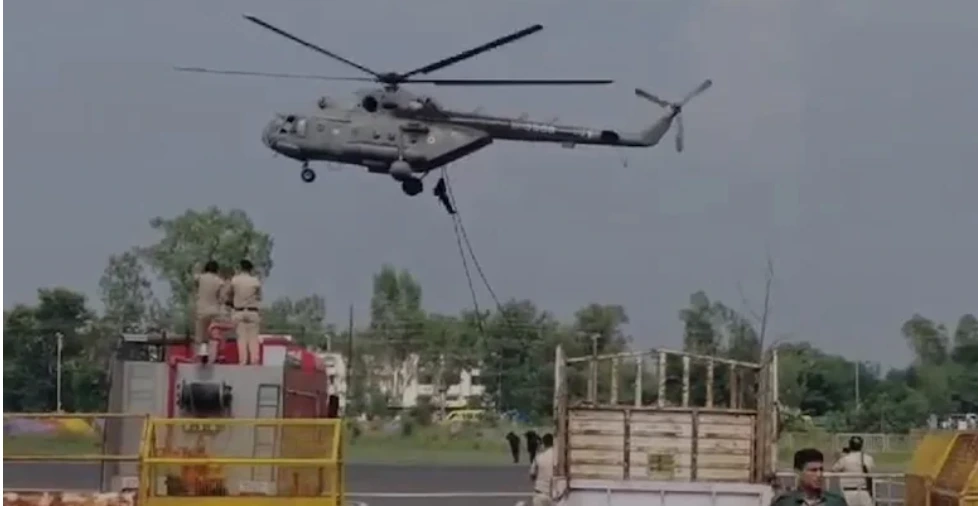
In a major nationwide security preparedness initiative, India will conduct an extensive civil defence drill tomorrow across 244 districts. This comes in the wake of the recent terror attack in Jammu and Kashmir’s Pahalgam, which left 25 tourists and a local pony operator dead, triggering widespread condemnation and calls for a strong response.

While the Centre’s official directive does not explicitly cite the growing tensions with Pakistan, the timing and scale of the exercise point to a strategic posture amid escalating geopolitical concerns.

Who will take part in the drill?

As per the Ministry of Home Affairs’ circular, the drill will involve coordinated participation from various civil and defence volunteer bodies. These include District Controllers, civil defence wardens, Home Guard volunteers, National Cadet Corps (NCC), National Service Scheme (NSS), Nehru Yuva Kendra Sangathan (NYKS), along with college and school students.

The effort is designed to reach even village-level areas, ensuring grassroots awareness and preparedness. Citizens will be trained to handle emergencies, especially those arising from potential hostile actions.

Key goals of the civil defence drill

The Home Ministry outlined nine primary goals for the exercise, aiming to reinforce national readiness in the event of an aerial or ground-level hostile threat. Major components include:

  • Testing air raid warning systems for public alert.
  • Activating hotline and radio communication with the Indian Air Force.
  • Evaluating the efficiency of control rooms and alternate (shadow) control centers.
  • Crash blackout procedures, instructing residents to switch off lights to simulate a blackout during aerial threats.
  • Camouflage training for critical infrastructure like airbases, refineries, and transport hubs.
  • Evacuation drills, simulating safe transfers of civilians from high-risk zones.
  • First-aid, firefighting, and shelter-building instruction for civilian volunteers.

The overarching objective is to boost awareness and equip the general public with basic survival, communication, and safety skills during emergencies.

Strategic backdrop: Aftermath of Pahalgam terror strike

The Pahalgam attack has reignited national security concerns. With investigations reportedly linking the assault to Pakistani elements, the Indian government has initiated a slew of diplomatic and strategic responses. These include freezing cooperation on the Indus Waters Treaty and holding high-level security briefings.

Prime Minister Narendra Modi, joined by Home Minister Amit Shah and Defence Minister Rajnath Singh, has convened multiple meetings with top defence officials, indicating preparations for a broader response. Military chiefs have also briefed the leadership, fuelling speculation over potential retaliatory measures.

The civil defence drill appears to be one of several steps to reinforce civilian readiness ahead of any escalation, recalling preparations not seen since the days leading up to the 1971 Indo-Pak war.

India News

Tamil Nadu Chief Minister C. Joseph Vijay travels to New Delhi for first official meeting with PM Narendra Modi

Newly sworn-in Tamil Nadu Chief Minister C. Joseph Vijay embarked on his first official visit to New Delhi to hold a high-level meeting with PM Narendra Modi, focusing on economic aid, fertilizer supply, and water rights disputes.

Published

on

Tamil Nadu CM Vijay and PM Modi

Marking his maiden official visit to the national capital since assuming office, Tamil Nadu Chief Minister C. Joseph Vijay is scheduled to meet Prime Minister Narendra Modi on Wednesday to deliberate on a wide range of state-specific matters. The Tamilaga Vettri Kazhagam (TVK) chief, who led his fledgling party to a historic victory in the recent assembly elections, took the oath of office on May 10. While the Prime Minister had previously extended his congratulations via social media, this marks the first formal in-person meeting between the two leaders.

According to official sources, the Chief Minister departed from Chennai on a chartered flight at 10:00 AM. The high-profile meeting with the Prime Minister is slated for 4:30 PM, where Vijay is expected to submit a comprehensive memorandum outlining Tamil Nadu’s long-pending welfare and developmental demands.

Key state matters on the table

The core of the discussions is expected to center around financial assistance and clearances for major infrastructure projects in the state. Media reports indicate that the Chief Minister will heavily push for additional funds to bankroll ongoing developmental initiatives.

Furthermore, the interstate Mekedatu water dispute remains a high-priority issue. Chief Minister Vijay has already written to the Prime Minister, urging him to instruct the Union Jal Shakti Ministry and the Central Water Commission (CWC) to reject the Detailed Project Report submitted by Karnataka for a reservoir at Mekedatu.

Other critical administrative concerns to be raised include ensuring an uninterrupted supply of fertilizers for the upcoming Kharif farming season and the removal of the 11 percent import duty on cotton to protect the raw material supply chain for the state’s textile industry.

A packed diplomatic itinerary

Accompanied by a team of senior officials and select cabinet colleagues, the Chief Minister’s itinerary extends beyond the Prime Minister’s Office. Vijay is likely to sit down with Union Finance Minister Nirmala Sitharaman to directly advocate for financial backings for key state portfolios.

The new administration has also drawn national interest for its structural innovations, including retaining critical departments under the Chief Minister—such as Home, Police, and Women Welfare—and carving out a dedicated cabinet-level Artificial Intelligence department, making Tamil Nadu only the second state in the country to do so.

Navigating a complex political landscape, the TVK-led government, which holds 108 seats in the assembly and enjoys backing from coalition partners including the Congress, Left parties, VCK, and IUML, is also using this trip to engage with national opposition leaders. Chief Minister Vijay is scheduled to meet Congress leaders Sonia Gandhi and Rahul Gandhi during his stay in the capital.

Before wrapping up his tour, the Chief Minister is slated to participate in a cultural event at Jawaharlal Nehru University (JNU), where he will formally inaugurate a statue of the revered Tamil poet-saint Thiruvalluvar installed by the Tamil Nadu government. Sources indicate that Vijay will conclude his official engagements and return to Chennai on Thursday.

Continue Reading

India News

Assam clears Uniform Civil Code bill, becomes third state after Uttarakhand and Gujarat

Assam has officially become the third state in India to pass the Uniform Civil Code bill. The legislation was cleared by the state assembly on Wednesday despite strong objections raised by opposition lawmakers who claimed it impacts minority rights.

Published

on

himanta

The Assam Legislative Assembly on Wednesday passed ‘The Uniform Civil Code, Assam, 2026 Bill’, making it the third state ruled by the Bharatiya Janata Party (BJP) to adopt a uniform legal framework after Uttarakhand and Gujarat.

Opposition flags concerns over rights during house debate

The bill was taken up for final passage in the state assembly on Wednesday, sparking a heated discussion among lawmakers. During the legislative floor debate, opposition MLAs strongly voiced their concerns regarding the proposed law, stating that the legislation will hurt and compromise the fundamental rights of a certain section of society.

Despite objections from the opposition benches, the treasury benches cleared the passage of the bill, cementing Assam’s position as the latest state to move away from diverse personal laws in favor of a uniform code. Media reported that the legislative move follows extensive political discussions in the state surrounding civil regulations. With this enactment, Assam joins Uttarakhand and Gujarat, which have previously passed their respective uniform civil codes.

Continue Reading

India News

Case registered against Mamata Banerjee over controversial 2025 religion remark

A formal police case has been registered against Trinamool Congress supremo Mamata Banerjee in Siliguri, West Bengal. The complaint alleges that her 2025 “Ganda Dharm” remark targeted Hinduism and hurt the religious sentiments of the community.

Published

on

Mamata Banerjee

A formal police complaint has been lodged against Trinamool Congress (TMC) chief Mamata Banerjee in West Bengal’s Siliguri. The legal action stems from an alleged derogatory remark regarding Hinduism made during an Eid congregation in Kolkata in 2025.

The case was registered following a complaint filed by a local lawyer, Rinki Chatterjee, who alleged that the former Chief Minister’s comments deeply hurt the religious sentiments of Hindus globally.

Legal charges and complaint details

The police have invoked multiple sections under the Bharatiya Nyaya Sanhita (BNS) against Banerjee, including Section 351(1) for criminal intimidation, Section 352 for intentional insult with intent to provoke breach of peace, and Section 353 for promoting feelings of enmity, hatred, or ill will between different communities.

According to the complaint, the controversy traces back to an Eid event organized on Kolkata’s iconic Red Road in 2025. While delivering a speech targeting the Bharatiya Janata Party (BJP), Banerjee purportedly referred to the version of Hinduism championed by the political rival as “Ganda Dharm” (filthy religion).

Chatterjee stated in her complaint that labeling Sanatan Dharma in such a manner at a religious gathering was “absolutely unacceptable”. The complainant also pointed to other instances where senior TMC leaders allegedly targeted Hinduism, adding that Banerjee made indirect threats to the Hindu community during the 2026 West Bengal Assembly election campaign to influence voters through intimidation.

Political responses to the FIR

The reported statements had previously drawn sharp criticism from the state BJP leadership last year, including strong objections from current Chief Minister Suvendu Adhikari. However, this FIR represents the first formal legal action taken regarding the speech.

When approached for a response, Atri Sharma, a lawyer and general secretary of the TMC’s Darjeeling unit, declined to comment officially as a party spokesperson. However, he noted that many within the party internal circles found the remarks inappropriate at the time they were spoken. Sharma acknowledged that holding a high public office required restraint and affirmed that every individual holds the moral right to pursue legal remedies.

Continue Reading

Trending

© Copyright 2022 APNLIVE.com