English हिन्दी
Connect with us

India News

India demands end to ‘Special Terrorist Zones’ beyond Afghanistan’s border

Published

on

India’s Deputy Permanent Representative told UN that Afghanistan’s security and stability is tied to that of the entire region.

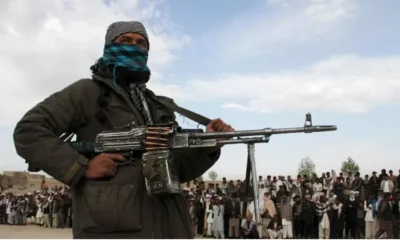
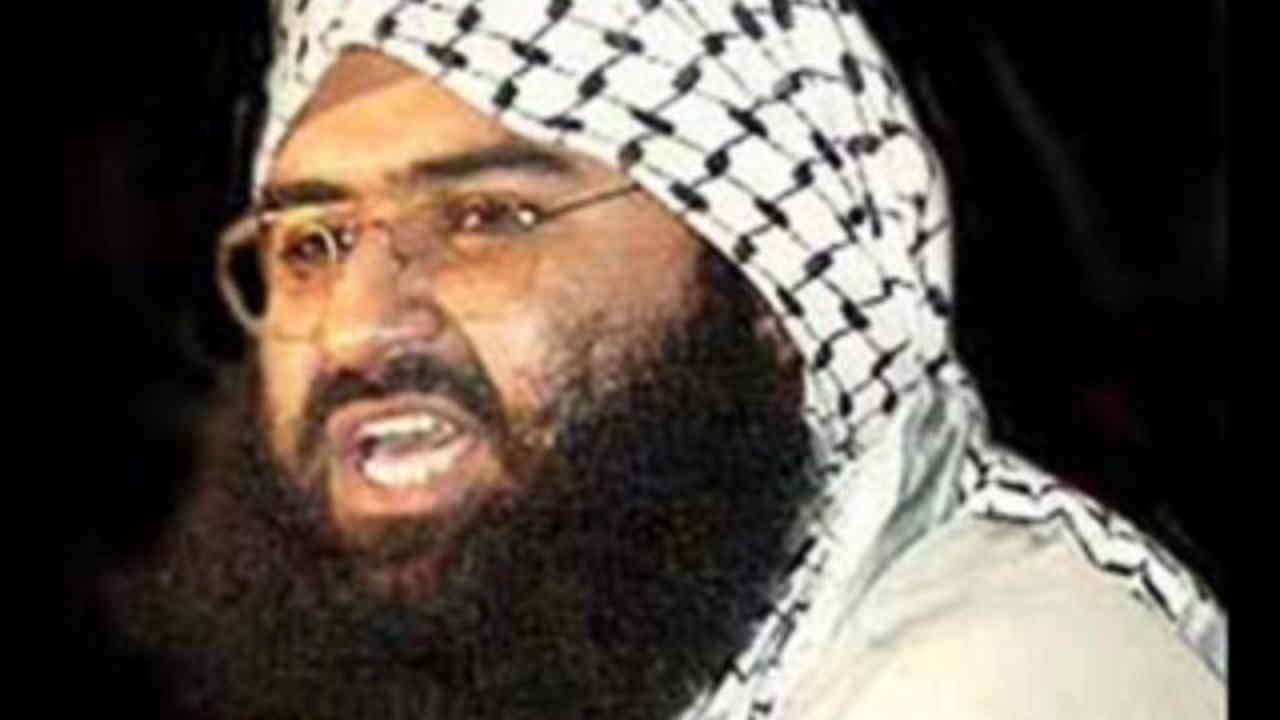
Once again hitting out at Pakistan over the continuing debate on terror sponsoring in the neighboring country, India has now demanded for an end to “Special Terrorist Zones” – which protects and backs terror outfits like Lashkar-e-Taiba (LeT) and Jaish-e-Mohammed (JeM).

Addressing the General Assembly on Monday, India’s Deputy Permanent Representative to United States, Tanmaya Lal said, “It is imperative to address the support that terrorist organizations like the Taliban, Haqqani Network, Islamic State (IS), Al Qaeda and its designated affiliates such as the LeT and JeM operating outside the fabric of international law, draw from outside Afghanistan.”

Without directly naming Pakistan for funding or protecting terrorist groups, Lal further said, “Addressing global terrorism needs a comprehensive, uncompromising and a cohesive response from the international community. Afghanistan‘s security and stability is tied to that of the entire region. The Special Terrorist Zones, safe havens and sanctuaries beyond Afghanistan’s border must end.”
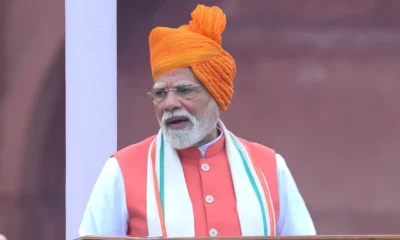
Also taking a jibe at the United Nations for not doing much to counter terrorism in the region, Lal said, “Even as this debate is going on, we find the new threats being posed by the IS in Afghanistan. While the cowardliness and the frequency of terror attacks in Afghanistan have reached new heights, and the terrorists continue to gain territory and resources of Afghan people, unfortunately, here in this body, we have witnessed little change.

The Indian representative further stated that the Security Council is still unsure on whether or not to designate new leaders as terrorists or to freeze the assets of the slain leader of Taliban.

In its latest move to curb terrorism in the region, Afghanistan has asked the United Nations to add Taliban’s new leader, Mullah Haibatullah – who succeeded slain Taliban leader Akhtar Mohammad Mansour – in the sanctions list.

India News

Putin begins two-day India visit today, defence, energy and trade talks on agenda

Russian President Vladimir Putin arrives in New Delhi today for a two-day visit that will focus on defence, energy and trade, including S-400 deliveries and crude oil supply discussions.

Published

on

Russian President Vladimir Putin arrives in New Delhi today for a two-day visit that is set to focus on defence cooperation, energy supplies, mobility agreements and trade expansion. His trip includes a private dinner hosted by Prime Minister Narendra Modi and the 23rd India-Russia Annual Summit.

Key highlights of the visit

President Putin is scheduled to land in the capital this evening, where an informal dinner with PM Modi will set the stage for formal discussions on Friday. He will receive a ceremonial welcome in the morning before visiting Rajghat to pay homage at Mahatma Gandhi’s memorial. The two leaders will then meet at Hyderabad House for the annual summit, followed by a working lunch.

India is expected to raise the issue of pending military hardware deliveries, which have slowed since the Ukraine conflict began. The agenda also includes additional S-400 air defence systems — part of a USD 5 billion contract under which three squadrons have already been delivered. Two more units are expected by mid-next year.

Kremlin spokesperson Dmitry Peskov has indicated that talks may also touch upon India’s interest in the Su-57 fifth-generation fighter aircraft, with New Delhi currently assessing several next-generation platforms.

Energy cooperation will be another crucial component of the dialogue. Russia is expected to update India on efforts to maintain steady crude oil supplies amid US sanctions that have impacted shipments. Peskov noted that supplies may dip briefly, but Moscow is working to stabilise flows.

On the sidelines, Defence Minister Rajnath Singh and his Russian counterpart Andrey Belousov are expected to hold discussions on key military programmes.

President Putin’s visit comes as India navigates recent friction with Washington, including steep tariffs — 50 per cent across several categories and an additional 25 per cent linked to Russian crude oil imports.

The Russian President is also expected to brief PM Modi on the latest US diplomatic moves concerning the Ukraine conflict. India continues to advocate for a resolution based on dialogue and diplomacy while refraining from criticising Moscow.

Continue Reading

India News

IndiGo flight cancellations deepen as crew shortage hits operations nationwide

IndiGo’s flight operations across major cities were severely hit on Thursday as crew shortages and updated duty norms forced widespread cancellations, drawing regulatory intervention.

Published

on

IndiGo flight

India’s largest airline, IndiGo, faced another day of widespread disruption on Thursday as hundreds of passengers across major cities were left stranded due to continued flight cancellations triggered primarily by a shortage of crew under revised duty norms.

Flight disruptions worsen across major airports

IndiGo’s operations remained heavily impacted in Delhi, Mumbai, Bengaluru, Hyderabad, and Ahmedabad, with airports witnessing long queues and frustrated travellers. More than 30 departures from Delhi were scrapped early in the day, while Hyderabad recorded about 33 cancellations. Bengaluru airport confirmed that 73 IndiGo flights were cancelled on Thursday, and Mumbai also saw significant disruptions.

Sources told media that the total cancellations could exceed 170 flights through the day.

Passengers took to social media to highlight severe delays, with some alleging they were kept waiting for more than 12 hours without accommodation or timely updates.

IndiGo cites operational challenges, promises stabilisation

Acknowledging the strain on its vast network of over 2,200 daily flights, IndiGo apologised to customers and attributed the disruptions to multiple factors, including technological issues, winter schedule adjustments, harsh weather, airspace congestion and the new crew rostering rules known as Flight Duty Time Limitations (FDTL).

The airline said it has initiated “calibrated adjustments” to stabilise operations over the next 48 hours.

Crew shortage under revised FDTL rules behind the crisis

A key driver of the ongoing chaos is the shortage of flight crew, especially pilots, following the implementation of the second phase of updated FDTL norms on November 1.

The revised rules mandate longer rest periods, extend night hours, and reduce allowable night landings. Airlines had initially opposed the changes but were required to comply following a court directive.

According to the aviation regulator, IndiGo cancelled 1,232 flights in November alone — 755 of them due to crew and FDTL constraints.

DGCA seeks answers as OTP plunges

The Directorate General of Civil Aviation (DGCA) has summoned IndiGo officials for a review meeting. The regulator said it is assessing the reasons for continuing disruptions and the airline’s recovery plan.

IndiGo’s on-time performance dipped to 67.7% in November, down from 84.1% in October, driven by constraints from crew availability, ATC system failures, airport restrictions and weather factors.

Continue Reading

India News

12 Maoists killed, 3 security personnel lose lives in major anti-Naxal operation in Chhattisgarh

A major anti-Naxal operation in Chhattisgarh’s West Bastar region resulted in the killing of 12 Maoists, while three DRG personnel lost their lives amid intense gunfire.

Published

on

Security forces have intensified their combing operations in the dense West Bastar forests after a fierce encounter left 12 Maoists dead and claimed the lives of three DRG personnel.

A coordinated offensive involving teams of DRG Bijapur-Dantewada, STF, CRPF and CoBRA unfolded deep inside Maoist-dominated terrain early Wednesday. According to Bijapur SP Dr Jitendra Yadav, the forces came under sustained Naxal gunfire around 9 am, triggering a prolonged encounter.

By afternoon, the bodies of 12 Maoist cadres had been recovered, while weapons seized from the area included SLR rifles, INSAS rifles, .303 rifles and other ammunition. Bastar Range IG Sundarraj P confirmed that identification of the deceased Maoists is still underway.

Three DRG personnel killed, two injured

The operation came at a grave cost, with three DRG personnel — Head Constable Monu Waddi, Constable Dukaru Gonde and Jawan Ramesh Sodi — losing their lives. Two others sustained injuries but are reported to be out of danger after receiving medical care.

Chief Minister Vishnu Deo Sai paid tribute to the fallen personnel and lauded the forces, stating that the action reflects a clear weakening of Maoist networks in the region. He said arrangements for treatment of the injured have been ensured and reiterated the government’s commitment to ending Maoist violence.

Forces strengthen search and area sealed

SP Yadav said additional reinforcements have arrived and the encounter zone has been fully cordoned off for intensified operations. Continuous combing is underway to locate remaining Maoist cadres.

Chhattisgarh Home Minister Vijay Sharma noted that forces have been consistently making gains in anti-Naxal missions, calling the latest action a significant strike against Maoist groups.

Continue Reading

Trending

© Copyright 2022 APNLIVE.com

Left Menu Icon