English हिन्दी
Connect with us

India News

Mobile phone users in India receive Emergency alert message today, details inside

Several mobile phone users in India received a message Emergency Alert: Severe on Thursday.

Published

on

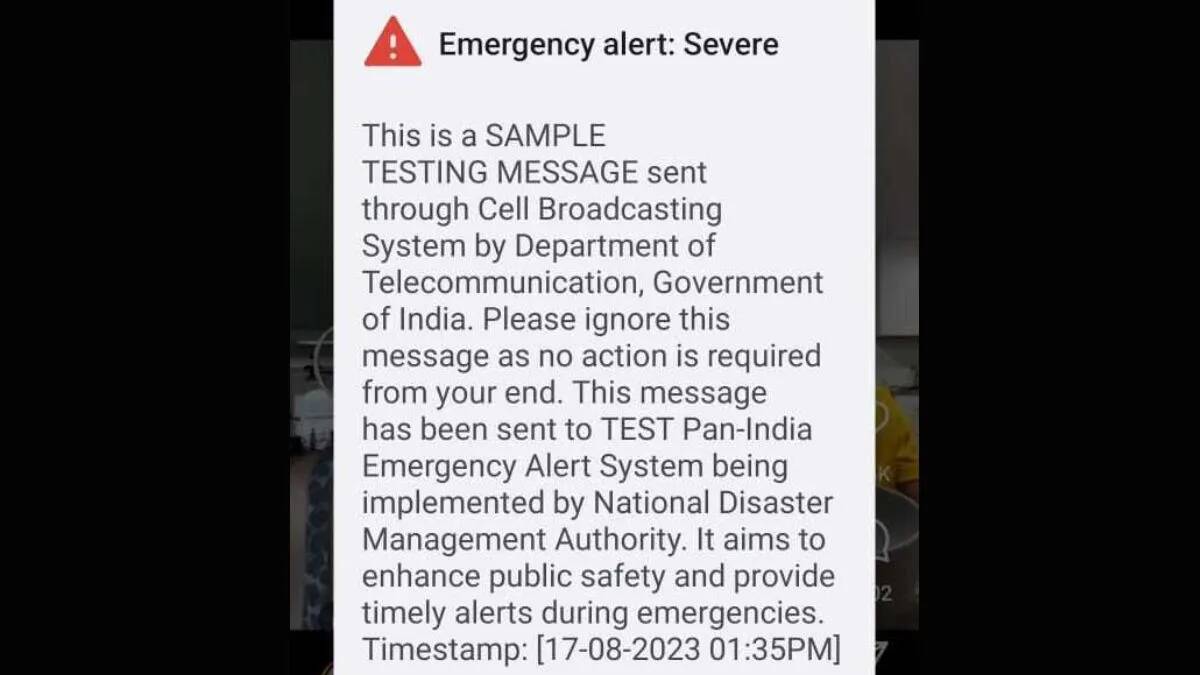
Several mobile phone users in India received a message, Emergency Alert: Severe, on Thursday. The message was regarding the ongoing test of the emergency alert system by the Department of Telecommunication, Government of India.

This is a sample testing message sent through Cell Broadcasting System by Department of Telecommunication, Government of India. Please ignore this message as no action is required from your end. This message has been sent to TEST Pan-India Emergency Alert System being implemented by National Disaster Management Authority. It aims to enhance public safety and provide timely alerts during emergencies, as per the flash message.

The Department of Telecommunications announced that it will conduct periodic tests in different regions throughout the country to evaluate the emergency alert broadcasting capabilities of Mobile Operators and Cell Broadcast Systems. The goal is to determine the efficiency and effectiveness of the existing systems.

The alert message was received by several mobile users around 1:35 pm today.  

The government can now send critical and time-sensitive messages to all mobile devices within a designated geographical area using the cell broadcast alert system, regardless of whether the recipients are residents or visitors.

This technology is an essential tool for disaster management and ensures that necessary emergency information reaches the maximum number of people in a timely manner. It is widely used by government agencies and emergency services to inform the public about potential threats and keep them informed.

Cell Broadcast is commonly used to deliver emergency alerts, such as severe weather warnings like tsunamis, flash floods, earthquakes etc.

On July 20, last month a similar message was flashed on people’s phones in India. The notification was sent by the Department of Telecommunications, Government of India, as a test of the country’s Emergency Alert system.

Twitter was bombarded with screenshots of an emergency alert that was sent out by the Department of Telecommunications. Multiple people panicked as the notification was completely random and it whizzed many devices. 

India News

Cockroach Janta Party gives CEC Gyanesh Kumar 48 hours to resign, warns of nationwide protests

Cockroach Janta Party founder Abhijeet Dipke has demanded the resignation of Chief Election Commissioner Gyanesh Kumar within 48 hours, warning of a nationwide agitation if the demand is not met.

Published

on

Cockroach Janta Party (CJP) founder Abhijeet Dipke has demanded that Chief Election Commissioner Gyanesh Kumar resign within 48 hours, warning that the organisation will launch a nationwide agitation if he does not step down.

The demand was made during a press conference on Thursday amid a wider controversy surrounding the Election Commission’s handling of electoral-roll-related matters and the ongoing Special Intensive Revision (SIR).

Dipke alleged that the functioning of the Election Commission under Kumar had raised concerns over the electoral process. These claims are allegations made by Dipke and should not be treated as established facts.

What did Abhijeet Dipke demand?

Dipke called for Gyanesh Kumar’s resignation within 48 hours. He warned that the CJP would begin a nationwide protest if the Chief Election Commissioner did not step down within the deadline.

The organisation said the proposed agitation would follow the lines of its earlier protest at Delhi’s Jantar Mantar.

The CJP also raised other demands related to the electoral process, including a halt to ongoing electoral exercises and the Special Intensive Revision of electoral rolls.

Why is CJP demanding Gyanesh Kumar’s resignation?

The demand comes amid a controversy over the Election Commission’s electoral-roll processes.

The demand came amid a controversy over the Election Commission’s handling of the Special Intensive Revision (SIR) of electoral rolls, following a report that Election Commissioners Sukhbir Singh Sandhu and Vivek Joshi had raised questions about the exercise. 

However, the Election Commission has rejected the suggestion that these differences represented a division within the three-member poll panel. The Commission said that differing views, written notes and internal checks are part of its deliberative process and maintained that decisions, including those concerning SIR, were taken unanimously.

What has Abhijeet Dipke alleged?

Dipke has alleged that more than 13 crore votes were deleted from electoral rolls and questioned the reasons behind the deletions.

He also alleged that voter deletions had affected Opposition leaders and referred to several political figures while making his claims.

These figures and allegations were presented by Dipke during the press conference. They should therefore be attributed to him rather than stated as independently verified facts.

Dipke also questioned whether the alleged deletions could affect the political balance in elections.

What happens if Gyanesh Kumar does not resign?

According to Dipke, the CJP will launch a nationwide agitation if the Chief Election Commissioner does not resign within 48 hours.

He said the organisation would continue its campaign until its demand for Kumar’s resignation was met.

The CJP has also announced a broader campaign against the Election Commission, while warning of further protests.

Continue Reading

India News

Rahul Gandhi attacks CEC Gyanesh Kumar, says vote chori leads to kanoon chori

Rahul Gandhi accused the Election Commission of failing to protect voters and linked his “vote chori” allegation to what he called “kanoon chori”.

Published

on

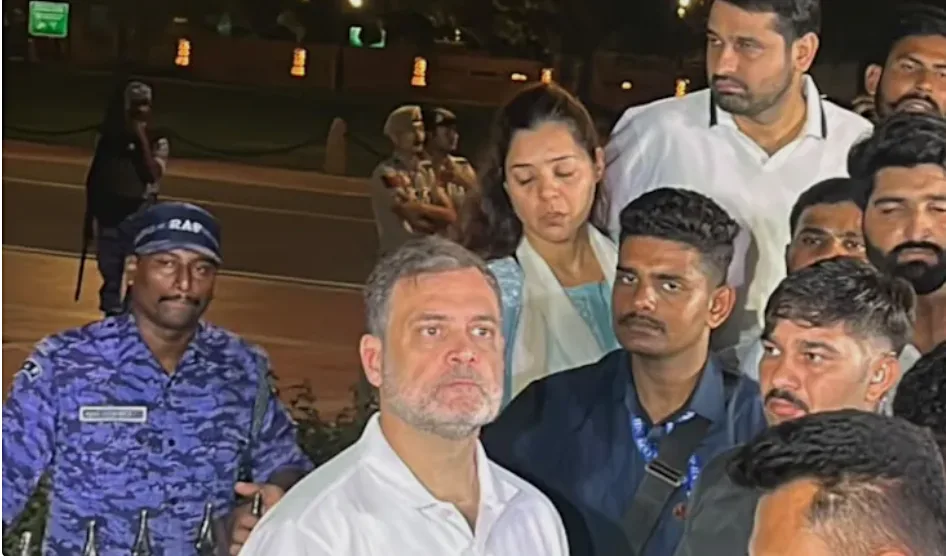
Congress leader and Leader of Opposition in the Lok Sabha Rahul Gandhi on Thursday launched a fresh attack on Chief Election Commissioner Gyanesh Kumar and the Narendra Modi government, alleging irregularities in India’s electoral process.

Addressing a press conference in Delhi, Mr Gandhi linked his earlier allegations of “vote chori” with what he described as “kanoon chori”, arguing that alleged manipulation of votes would have consequences for the country’s law-making and institutional systems.

“From vote chori comes kanoon chori,” Mr Gandhi said, arguing that if votes had been stolen, laws and institutional changes made by lawmakers elected through those votes would also be affected.

Rahul Gandhi attacks Gyanesh Kumar

Mr Gandhi specifically targeted Chief Election Commissioner Gyanesh Kumar and questioned the Election Commission’s handling of the electoral process.

His remarks came amid reports of differences within the poll body over the Special Intensive Revision (SIR) exercise. Mr Gandhi referred to reported concerns involving the Election Commission and alleged that questions raised about the functioning of the poll panel had not been adequately addressed.

He also alleged that the Election Commission had failed in its responsibility to protect the vote, which he described as the foundation of India’s democratic and constitutional system.

‘Vote chori’ claim

Mr Gandhi reiterated his allegations of irregularities in elections and said the issue went beyond individual voters.

He argued that the vote gives power to the Constitution, while the Constitution provides the basis for laws and institutions. On that basis, he said alleged destruction of the voting process would have wider consequences for the country’s constitutional system.

Mr Gandhi also questioned what he described as the disappearance of anti-incumbency in elections involving the BJP, comparing recent electoral outcomes with earlier political trends.

He alleged that the 2024 Lok Sabha and Assembly elections had been manipulated. These remain allegations made by Mr Gandhi and should not be presented as established facts.

Attack on Modi and Amit Shah

During the press conference, Mr Gandhi also targeted Prime Minister Narendra Modi and Union Home Minister Amit Shah while making his allegations about the electoral process.

He questioned the role of the Election Commission and its leadership, and called for accountability over what he described as irregularities affecting India’s voting system.

Mr Gandhi said he was presenting evidence for his allegations and maintained that the issue concerned not only elections but also the functioning of democratic institutions.

The Election Commission’s reported internal differences over the SIR exercise formed part of the backdrop to his remarks. The claims made by Mr Gandhi concern his interpretation of those developments and are distinct from established findings about election manipulation.

Continue Reading

India News

Ram Temple donation theft case chargesheet filed, trustees not named

A chargesheet has been filed in the Ram Temple donation-theft case in Ayodhya. The temple trust’s trustees have not been named as accused.

Published

on

A chargesheet has been filed in the case involving alleged theft of donations at the Ram Temple in Ayodhya. The chargesheet, however, does not name the trustees of the temple trust as accused.

The development comes after an investigation into several instances of alleged theft of donations at the temple complex. The probe had examined CCTV footage and other evidence related to the incidents.

Chargesheet filed in donation theft case

The chargesheet has been submitted against those accused in connection with the alleged theft of donations at the Ram Temple.

Importantly, the trustees of the Shri Ram Janmabhoomi Teerth Kshetra Trust have not been named as accused in the chargesheet.

The investigation had focused on incidents in which donations were allegedly stolen from the temple premises. CCTV footage was examined as part of the probe into the reported thefts.

Investigation into 105 theft incidents

An earlier investigation had identified 105 instances of alleged donation theft through CCTV footage. The probe examined the incidents and the people allegedly involved in them.

The case had also led to arrests of accused persons named in the FIR. The investigation subsequently examined the role of individuals connected with the incidents.

The filing of the chargesheet marks a further step in the criminal proceedings related to the alleged theft of donations at the Ram Temple.

Trustees not named as accused

The chargesheet does not name the temple trust’s trustees as accused. This distinction is significant because the filing concerns the individuals against whom the investigating agency has proceeded in the case.

The chargesheet will now form part of the legal proceedings, while the matter will be dealt with through the appropriate judicial process.

Continue Reading

Trending

© Copyright 2022 APNLIVE.com