English हिन्दी
Connect with us

India News

5-judge Constitution Bench to decide fate of same-sex marriages from April 18, proceedings to be live-streamed: Supreme Court

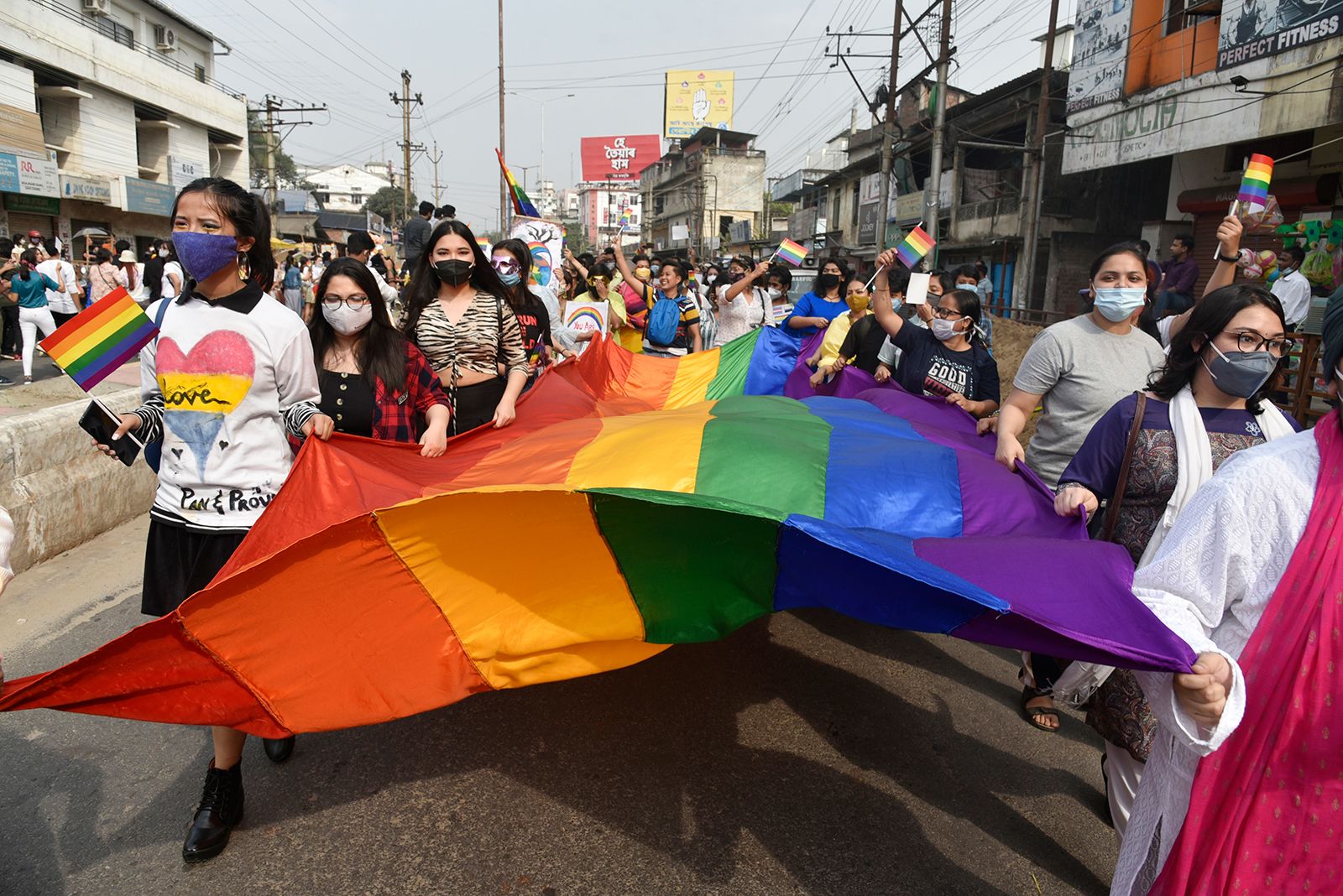
A five-judge Constitution bench will decide upon legalizing same-sex marriages in India on April 18 and proceedings of the hearing will be streamed live as the issue of “seminal importance”, the Supreme Court said on Monday

Published

on

same-sex marriages

A five-judge Constitution bench will decide upon legalizing same-sex marriages in India on April 18 and proceedings of the hearing will be streamed live as the issue of “seminal importance”, the Supreme Court said on Monday.

A bench comprising Chief Justice of India DY Chandrachud, Justice PS Narasimha, and Justice JB Pardiwala, which today heard the combined pleas seeking the legalization of the gay marriages under the Special Marriage Act in the country said that a constitution bench of five judges would on April 18 further decide the fate of such matrimonies.

Noting that the issue was of “seminal importance” and any decision on the same would have a huge impact on the Indian society and will impact entire social fabric as a whole, the apex court noted Article 145(3) mandates that such a matter of law, which requires interpreting the constitution, must be decided by a five-judge Constitution bench of the Supreme Court.

The Centre has opposed the pleas arguing that gay marriages are incompatible with the “Indian family unit” consisting of a husband, a wife and their children which inevitably presupposes a biological man as a ‘husband’, a biological woman as a ‘wife’ and the children born out of the wedlock reared by the biological man as father and the biological woman as mother.

The BJP-led central government, in its affidavit filed before the top court, said that the petitioners cannot claim a fundamental right for same-sex marriage to be recognised under Indian laws despite consensual gay being decriminalized in the Supreme Court’s landmark 2018 judgement.

The government further argued that legalizing gay marriages would wreck the delicate balance between personal laws and accepted societal values in the country. Law Minister Kiren Rijiju, Monday, noted that the institution of marriage is a matter of policy, even though doesn’t disturb personal freedom and activities of individuals.

Representing the Centre, Solicitor-General Tushar Mehta argued that giving legal status to gay marriages would trigger legal issues as marriage is a contract between a biological male and biological female in every major religion, not just among Hindus, but also in Islam.

The Centre’s council raised the legal status of adoption by a gay couple saying that the Parliament will have to examine will of the people and child’s and decide whether it can be raised in a such environment.

He said that the Parliament will have to factor in societal ethos while taking such a decision.

However, CJI Chandrachud retorted that the adopted child of a gay or lesbian couple does not have to be a gay or lesbian solicitor.

On January 6, the apex court had transferred and clubbed to itself, all such pleas pending in different high courts, including the Delhi High Court.

In its January 6 order, it had asked Advocate Arundhati Katju—representing the petitioners—and the Central government’s counsel, to prepare together a common compilation of the written submissions, documents and precedents on which reliance would be placed during the course of the hearing.

The petitioners’ counsel had requested the Supreme Court bench to transfer all such cases itself for an authoritative pronouncement on the issue and that the Centre can file its response in the top court.

Earlier, on January 3, the Supreme Court had said it would hear on January 6 the pleas seeking a transfer of petitions for recognition of same-sex marriages pending before the high courts to the top court.

The Supreme Court had in December last year sought the Centre’s response to two pleas seeking a transfer of the petitions pending in the Delhi High Court for directions to recognize same-sex marriages to itself.

Earlier on November 25 last year, the top court had sought the Centre’s response to separate pleas moved by two gay couples seeking enforcement of their right to marry and a direction to the authorities concerned to register their marriages under the Special Marriage Act.

A bench headed by CJI Chandrachud, who was also part of the Constitution bench that decriminalised consensual gay sex in its 2018 landmark judgement, issued a notice to the Centre in November last year, besides seeking Attorney General R Venkataramani’s assistance in dealing with the pleas.

The petitions have sought a direction that the right to marry a person of one’s choice be extended to LGBTQ (lesbian, gay, bisexual, transgender and queer) people as part of their fundamental right. One petition seeks a reinterpretation of the Special Marriage Act, 1954 in a gender-neutral manner where a person is not discriminated against due to his sexual orientation.

On September 2018, a five-judge Constitution bench of the Supreme Court, issued a landmark judgement wherein it decriminalized consensual gay sex among adults. It struck down a part of the British-era penal law under Article 377, on grounds that it violated the constitutional right to equality and dignity.

In its pathbreaking judgement, the apex court ruled that section 377 of the Indian Penal Code (IPC) that criminalised consensual gay sex was “irrational, indefensible and manifestly arbitrary”. The top court had said that the 158-year-old law had become an “odious weapon” to harass the LGBTQ community by subjecting its members to discrimination and unequal treatment.

India News

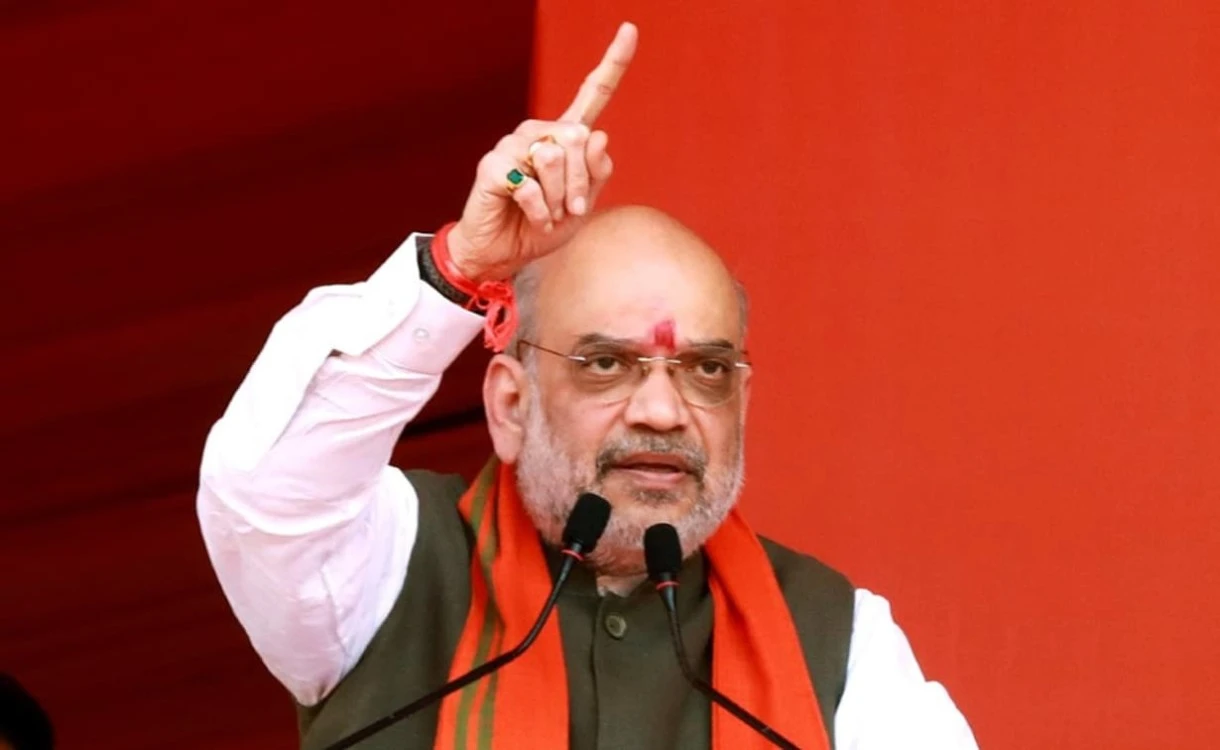
Amit Shah praises Dharmendra Pradhan’s resignation, says Nation above post

Amit Shah hailed Dharmendra Pradhan’s resignation as Union Education Minister, saying BJP places the nation and students above any position while highlighting the government’s commitment to examination reforms.

Published

on

Amit Shah

Union Home Minister Amit Shah on Saturday praised Dharmendra Pradhan’s decision to step down as Union Education Minister, saying the move reflected the Bharatiya Janata Party’s commitment to placing the nation and students above any political position.

In a post on X, Shah said that for BJP workers, the country, its youth and students are more important than any office. He described Pradhan’s resignation as an example of the party’s guiding principle of prioritising national interest over personal ambition.

Shah highlights government’s focus on exam reforms

Amit Shah said the Narendra Modi-led government respects the sentiments of students and remains committed to strengthening the examination system following concerns over alleged paper leaks.

He said the Centre has introduced strict measures to ensure severe punishment for those involved in examination paper leaks and expressed confidence that these steps would deliver justice to students who cleared the National Eligibility-cum-Entrance Test (NEET).

Praises Pradhan’s work as Education Minister

Recalling Dharmendra Pradhan’s tenure, Shah highlighted several initiatives undertaken during his time in the Education Ministry. He credited Pradhan with helping implement the National Education Policy (NEP), expanding PM SHRI schools, promoting digital education, strengthening skill development and improving coordination between industry and academic institutions.

Shah also said Pradhan worked towards making examinations more inclusive and student-centric, adding that his tenure reflected his commitment to the vision of a developed India.

Resignation follows NEET controversy

Dharmendra Pradhan’s resignation comes amid nationwide protests over alleged irregularities in the NEET examination and growing demands for accountability.

The resignation has triggered political reactions across party lines. While opposition parties have described the development as a result of sustained student protests, BJP leaders have projected it as an example of accountability and commitment to national interest.

Continue Reading

India News

Assam flood death toll rises to 66, over 6.5 lakh people still affected

Assam’s flood situation improved slightly on Saturday, but more than 6.54 lakh people remain affected in six districts. Four fresh deaths have pushed the state’s flood toll to 66.

Published

on

Assam floods

The flood situation in Assam showed marginal improvement on Saturday, though the disaster continued to impact more than 6.54 lakh people across six districts. Four more deaths were reported during the day, taking the total number of fatalities in this year’s floods to 66.

According to the Assam State Disaster Management Authority (ASDMA), three of the latest deaths were reported from Sivasagar district, while one person lost their life in Charaideo.

The number of affected people declined from over 7.05 lakh across nine districts on Friday to 6,54,800 across six districts on Saturday, indicating a gradual improvement in the overall situation.

Sivasagar remains the worst-hit district

Among the affected districts, Sivasagar continues to be the worst hit, with nearly 2.9 lakh people impacted by the floods. Charaideo follows with around 1.9 lakh affected residents, while more than 1.3 lakh people remain affected in Jorhat.

The other districts still facing flood-related challenges are Dibrugarh, Golaghat and Nagaon.

Relief operations continue across affected areas

The ASDMA said the state administration is operating 274 relief camps and aid distribution centres across the affected districts. Around 18,902 displaced people are currently taking shelter at these facilities.

The latest daily bulletin also stated that floodwaters have inundated 810 villages across the state, while 34,970.8 hectares of agricultural land have suffered damage.

Rivers flowing above danger level

The floods have also damaged embankments, roads, bridges and other public infrastructure in several areas.

Authorities said the Dikhou River in Sivasagar and the Dhansiri River at Numaligarh are flowing above the danger level, and officials continue to closely monitor the situation.

Continue Reading

India News

UP Government forms new SIT led by 3 IPS officers to probe Ayodhya Ram Temple donation theft

The Uttar Pradesh government has formed a new SIT led by three IPS officers to investigate the alleged Ram Temple donation theft case in Ayodhya following Supreme Court directions.

Published

on

Ram Mandir

The Uttar Pradesh government has reconstituted a Special Investigation Team (SIT) headed by IG Kiran S, with DIG Somen Verma and SSP Dr Gaurav Grover as members, to investigate the alleged theft of donations meant for the Ram Temple in Ayodhya. 

The move comes after directions from the Supreme Court, which sought a reconstituted investigation team to ensure an independent and comprehensive probe into the allegations.

The newly formed SIT is expected to continue the investigation and submit a status report before the Supreme Court on July 27.

Senior IPS officers to lead the probe

According to the state government, the investigation will now be supervised by senior IPS officers.  The revamped SIT has been tasked with examining all aspects of the alleged embezzlement of temple donations and carrying the investigation forward.

The Supreme Court had observed that criminal investigations and technical examination of theft-related cases are more effectively handled by experienced police officers, leading to the reconstitution of the SIT under senior IPS leadership.

Probe to continue under court supervision

The case relates to the alleged embezzlement of offerings (chadhava) donated by devotees at the Shri Ram Janmabhoomi Temple in Ayodhya.

The Supreme Court is monitoring the investigation and will review the SIT’s status report at the next hearing.

Authorities are expected to continue examining evidence collected during the earlier stages of the investigation as the newly constituted SIT proceeds with the case.

Continue Reading

Trending

© Copyright 2022 APNLIVE.com