English हिन्दी
Connect with us

India News

Israel, Hamas call for truce, celebration in Gaza after ceasefire

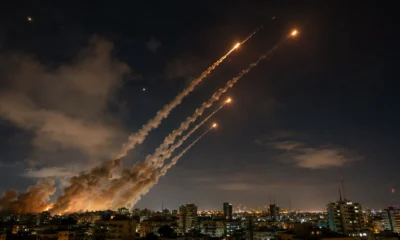
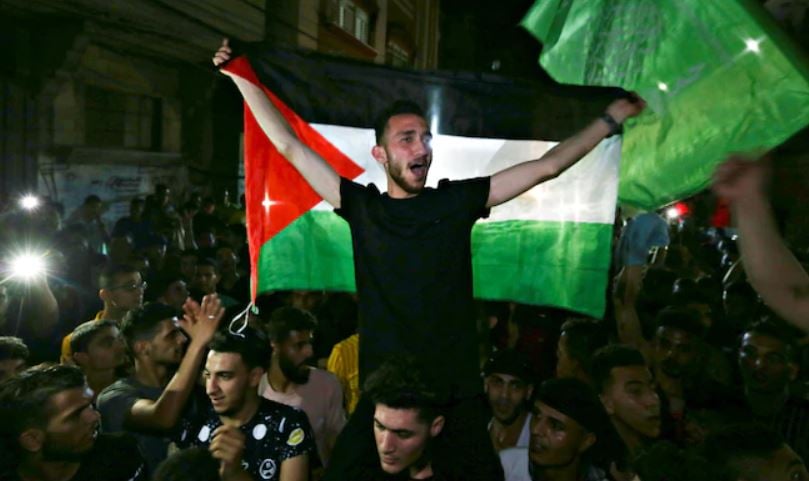
In a significant development, Israel and Hamas called a truce and announced a cease-fire on Thursday, halting a 11-days of hostilities that caused widespread destruction in the Gaza Strip and left more than 200 people dead.

Published

on

Gaza celebration

In a significant development, Israel and Hamas called a truce and announced a cease-fire on Thursday, halting a 11-days of hostilities that caused widespread destruction in the Gaza Strip and left more than 200 people dead. 
Just as an Egyptian mediated truce began on Friday at 2:00am, Palestinians, many of whom had spent 11 days huddled in fear of Israeli shelling, poured into Gaza’s streets. Celebrating truce, mosque loud-speakers feted, the victory of the resistance achieved over the Occupation (Israel).

The much-awaited development was welcomed by the United Nations and US President Joe Biden. Palestinians and Israelis equally deserve to live safely, security and to enjoy equal measures of freedom, prosperity, and democracy, Biden said after Israel and Hamas agreed to an unconditional ceasefire. 

While both sides have accepted the truce, they said they stood ready to retaliate for any violations by the other. While a Hamas official said Israel’s declaration of a cease-fire represented a victory to the Palestinian people and a defeat for Prime Minister Benjamin Netanyahu. He said Israel must end its violations in Jerusalem and address damages from bombardment of Gaza, warning they still had its hands on the trigger.

Israeli Prime Minister Benjamin Netanyahu’s office announced that the Israeli security cabinet approved a unilateral cease-fire mediated by Egypt on Thursday night. The decision came after a 2.5-hour discussion and was unanimously approved by the ministers, according to the office’s statement.

The violence erupted on May 10, which was triggered by Palestinians’ anger at what they saw Israeli restrictions on their rights in Jerusalem, including during police confrontations with protesters at Al-Aqsa mosque during the Ramadan fasting month.

Since then, Israel has been launching massive raids on the Palestinian enclave with airstrikes, artillery shellings and drone attacks in response to the rockets fired by Palestinian militants in Gaza in retaliation to violation at Al-Aqsa Mosque in Jerusalem.

The clash between Israel and Gaza militants has so far killed 232 Palestinians, including 65 children and 39 women, and 12 Israelis.

Read Also: Pinarayi Vijayan takes oath as Kerala CM for second term

Meanwhile, Egypt, who led the international mediation to end the Israeli-Palestinian bloodshed, will send two security delegations to Israel and Palestine to ensure the implementation of the truce, as per Egypt’s official MENA news agency.

India News

No state will lose a seat, Centre assures as delimitation debate takes centre stage in Parliament

Parliament’s special session begins with key focus on implementing women’s reservation and delimitation, setting the stage for major electoral changes.

Published

on

Parliament

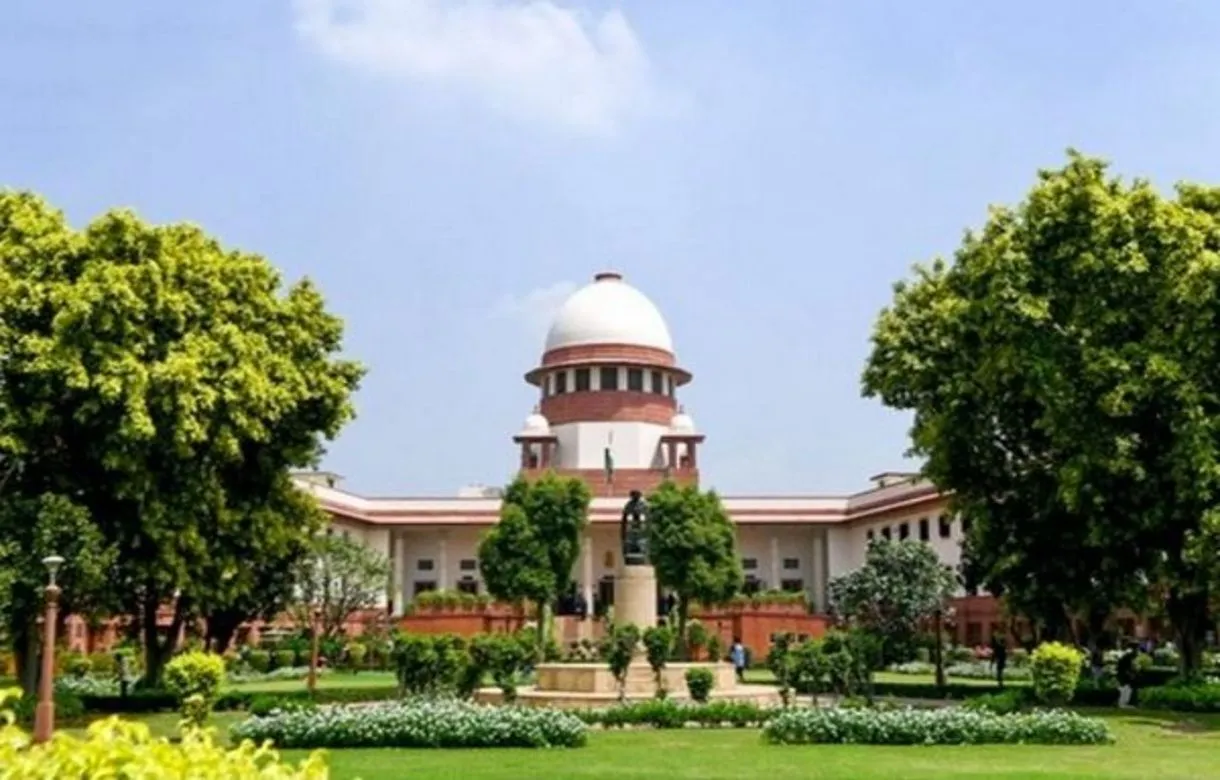
A special session of Parliament commenced on Thursday, with the Centre set to take up crucial legislation related to women’s reservation and delimitation of constituencies. The session, scheduled over three days, is expected to witness intense debate as the government pushes forward its legislative agenda.

At the centre of discussions is the proposal to operationalise the women’s reservation law, which seeks to allocate 33 percent of seats in the Lok Sabha and state assemblies to women. The law, passed earlier, requires enabling provisions before it can be implemented.

The rollout of the reservation is closely tied to the delimitation exercise — a process that redraws parliamentary constituencies based on updated population data. The implementation is expected only after the next census and delimitation process are completed.

The government is aiming to put in place the framework so that the reservation can be enforced in future elections, likely around 2029.

Delimitation and numbers at play

Delimitation is a key aspect of the proposed changes, as it will determine how seats are redistributed and which constituencies are reserved. The exercise is expected to reflect population shifts and may also involve an increase in the total number of Lok Sabha seats.

This linkage has made the issue politically sensitive, with several opposition parties backing women’s reservation in principle but raising concerns over how and when delimitation will be carried out.

Political reactions and expected debate

The session is likely to see sharp exchanges between the government and opposition. While there is broad agreement on increasing women’s representation, disagreements remain over the timing, process, and potential political implications of the delimitation exercise.

Some leaders have argued that delimitation could significantly alter the balance of representation among states, making it a contentious issue beyond the women’s quota itself.

The government, however, has framed the move as a step toward strengthening women’s participation in governance and ensuring more inclusive policymaking.

Continue Reading

India News

Delimitation and women’s quota bills set to be tabled in Parliament today, key numbers explained

The Centre will table key bills on women’s reservation and delimitation, proposing a major expansion of Lok Sabha and changes in seat allocation based on updated census data.

Published

on

Lok Sabha

The Centre is set to introduce a set of crucial bills in Parliament aimed at implementing women’s reservation and redrawing electoral constituencies, marking a major shift in India’s political framework.

According to details accessed from official drafts, three separate legislations are expected to be tabled during the ongoing session. These include a constitutional amendment to operationalise 33% reservation for women, a delimitation bill to redraw constituencies, and changes to laws governing Union Territories.

The move is seen as a coordinated effort to align women’s reservation with a fresh delimitation exercise based on updated population data.

How the numbers may change

One of the most significant proposals is the expansion of the Lok Sabha. The draft legislation suggests increasing the maximum strength of the House to around 815 members, with up to 35 seats allocated to Union Territories.

Currently, the Lok Sabha has 543 elected members. The increase is aimed at ensuring proportional representation after decades of population changes across states.

The proposed delimitation exercise would rely on the latest available census figures, likely the 2011 Census, replacing the long-standing reliance on 1971 data.

Women’s reservation linked to delimitation

The proposed framework makes it clear that the 33% reservation for women in Parliament and state assemblies will only be implemented after the delimitation process is completed.

The reservation is expected to apply across general, Scheduled Caste, and Scheduled Tribe seats, with constituencies being rotated periodically to ensure broader representation.

The reform is likely to come into effect ahead of the 2029 general elections, depending on the completion of the delimitation exercise.

Why delimitation is central to the plan

Delimitation has remained frozen for decades, leading to imbalances in representation due to population growth, migration, and urbanisation.

The new bill proposes setting up a Delimitation Commission, which would be tasked with redrawing constituency boundaries and reallocating seats based on updated population data.

This process is expected to significantly alter the political map of the country and could trigger debates over regional representation.

Continue Reading

India News

Yogi Adityanath warns of strict action over labour violations in Noida

Yogi Adityanath has said workers’ rights are non-negotiable and warned of strict action against labour law violations in Noida amid recent unrest.

Published

on

Yogi Adityanath

Uttar Pradesh Chief Minister Yogi Adityanath has asserted that there will be no compromise on the rights, dignity, and social security of workers, while warning of strict action against any violations in Noida.

The statement comes in the backdrop of recent unrest in the industrial region, where protests by factory workers over wages and working conditions escalated tensions. The chief minister emphasised that safeguarding labour rights remains a top priority for the state government.

He directed officials to ensure that industries strictly follow labour laws, including timely payment of wages, proper working conditions, and social security benefits for workers. Authorities have also been instructed to take firm action against any entity found violating these norms.

The government has reiterated that while workers’ rights will be protected, any attempts to disrupt industrial peace or create unrest will not be tolerated. Officials have been asked to maintain a balance between protecting labour welfare and ensuring smooth industrial operations.

The remarks follow a series of protests in Noida, where workers raised concerns over wages and employment conditions, with some demonstrations turning disruptive.

Amid the situation, the state government has been engaging with stakeholders, including workers and industry representatives, to address grievances and restore stability in the region.

Continue Reading

Trending

© Copyright 2022 APNLIVE.com