English हिन्दी
Connect with us

India News

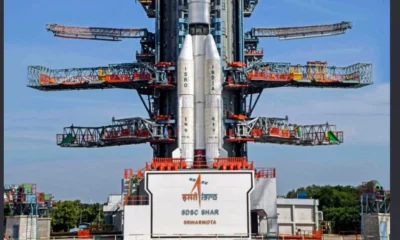
ISRO launches GSLV Mark III

Published

on

ISRO launches GSLV Mark III

[vc_row][vc_column][vc_column_text]GSLV-Mark III can be the first provider of internet services using a space-based platform

The Indian Space Research Organisation (ISRO) successfully launched the Mk III variant of its Geosynchronous Satellite Launch Vehicle (GSLV) from the Satish Dhawan Space Centre at Sriharikota on Monday.

“The GSLV Mark III would be carrying the GSAT-19 communications satellite that would help to improve VSAT (very small aperture terminal) and data connectivity and other applications across the country,” said A.S. Kiran Kumar, secretary, department of space and chairman of ISRO.

“The satellite will use multiple spot beams covering all of India and will increase Internet speed and connectivity,” he added.

Reports said the Mark III is ISRO’s heaviest vehicle to date as it is able to lift 4,000 kg of payload to the geostationary transfer orbit (GTO) and 10,000 kg to the low-Earth orbit.

On May 5, ISRO had launched the 2,230-kg South Asia GSAT-9 to boost connectivity among South Asian nations. The project involved eight nations including Bhutan, Nepal, Afghanistan, Maldives, Bangladesh and Sri Lanka,cost Rs 235 crore. Pakistan was not part of the project.

Experts said GSLV-Mark III can be the real game changer as it will be the first provider of internet services using a space-based platform.[/vc_column_text][/vc_column][/vc_row]

India News

Women’s cash schemes in Chhattisgarh ease inflation, not entrepreneurship

Published

on

By

By Neeraj Mishra

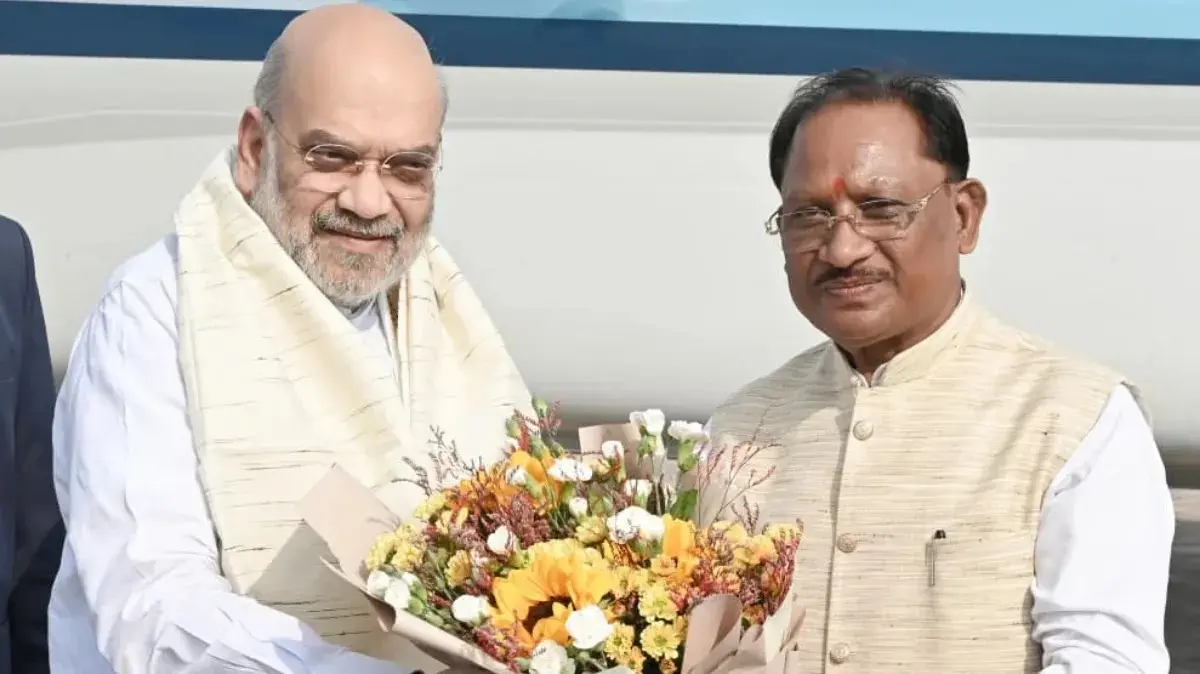
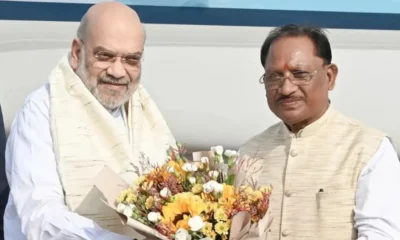
As Chhattisgarh celebrated its 26th Foundation Day with Home Minister Amit Shah as chief guest, there are worries about the cash programmes for women.

With the payment of the 33rd consecutive monthly installment of Mahtari Vandan Yojana to more than 67 lakh beneficiaries, Chhattisgarh has created a record of sorts. The 67 lakh women are supposed to have received a monthly cash dole of Rs 1000 per head in their accounts totaling to a mammoth Rs 21,350 crore. It translates into a very neat Rs 33000 per head for each married woman over the age of 21 so far.

And all these women are KYC- checked and receive the direct benefit transfer. If there are an average of  three married women in a joint family, then the amount totals to better than the average rise in paddy prices. That’s not all, there are six other women’s schemes which provide easy loans and rent free shops in good locations. These schemes pump in a further Rs 11,000 crore into each household every year. Further, the renamed MNREGA has another Rs 16,200 crore reserved for the state every year.

So far so good and it reads like a state government PR pamphlet. Now for the bad news. The cash dole has so far been absorbed by the family itself because of the inordinate rise in fuel prices. By all accounts only 23 per cent of the households who receive gas cylinders are able to continue buying it. Only 15 per cent of those who received loans for various trades including e-rickshaws have been able to sustain it. This is roughly about 41,000 women so far.

The state had also invested in physical infrastructure like sheds and shops for trades like mushroom farming, goat farming and small size hatcheries. Some shops were given rent free on prime locations in Raipur, Durg and Bilaspur etc. Most of these facilities have been abandoned as the self-help groups (SHGs) formed for the purpose haven’t been able to convert it into a profitable venture. In fact, each SHG, which usually has 11 women, is given a monthly encouragement amount of Rs 15,000 which is now being split amongst the group with nothing to show for it.  Most sheds have either broken down or have become illegally occupied. Better still, the shops have been handed over to businessmen to recover some of the cost.

“The main reason these schemes have not had the desired effect is lack of training and a general apathy on part of the entrepreneurs because of easy cash,” said an official. And that best sums it up.

Continue Reading

India News

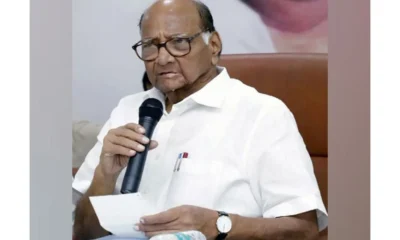
Sharad Pawar admitted to Mumbai hospital hours after Pune discharge

NCP (SP) chief Sharad Pawar was admitted to Mumbai’s Breach Candy Hospital hours after being discharged from Pune’s Ruby Hall Clinic, where he had been undergoing medical observation following complaints of cough and chest pain.

Published

on

Sharad Pawar

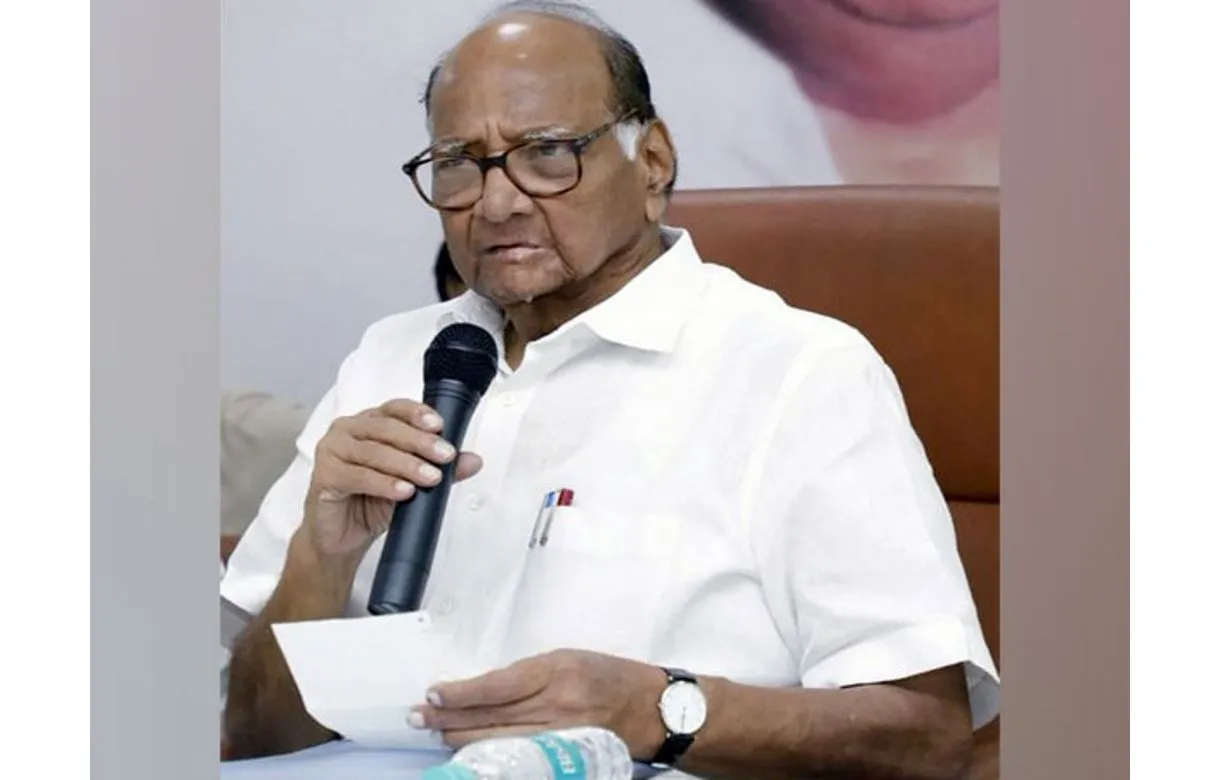
Nationalist Congress Party (Sharadchandra Pawar) chief Sharad Pawar was admitted to Mumbai’s Breach Candy Hospital on Wednesday, just hours after being discharged from Pune’s Ruby Hall Clinic. His daughter and Baramati MP Supriya Sule confirmed the development in a social media post, saying that the veteran politician was being admitted for further medical tests.

The 85-year-old leader had been discharged from Ruby Hall Clinic earlier on Wednesday after being admitted on November 2 following complaints of cough and pleuritic chest pain.

Confirming his admission to the Mumbai hospital, Supriya Sule said, “We are admitting Baba to Breach Candy Hospital for further tests. Thank you all for your concern and good wishes.”

Pawar’s latest hospitalisation came after he had undergone medical tests and observation during his stay at the Pune facility. Sule had earlier said that his health parameters were stable.

Why was Sharad Pawar admitted to hospital?

Sharad Pawar was initially admitted to Pune’s Ruby Hall Clinic on November 2 after experiencing complaints of cough and pleuritic pain, a form of chest pain that generally becomes worse while breathing, coughing or sneezing.

Dr Purvez K Grant, chief cardiologist, chairman and managing trustee of Ruby Hall Clinic, had said that Pawar was admitted for a general health check-up and medical observation following complaints of pleuritic pain.

During his hospital stay, Supriya Sule had informed that Pawar was undergoing medical tests and that his health parameters remained stable.

He was subsequently discharged from the Pune hospital on Wednesday. However, hours later, his family decided to admit him to Mumbai’s Breach Candy Hospital for further medical examinations.

PM Modi calls Sharad Pawar, advises complete rest

Prime Minister Narendra Modi also spoke to Sharad Pawar over the phone on Wednesday morning to enquire about his health.

According to Pawar’s aide Vitthal Maniyar, the Prime Minister spoke to the NCP (SP) chief and advised him to take complete rest.

Maniyar said Modi told Pawar that his daughter Supriya Sule and others were ready to take care of the country, and that the veteran politician should focus on his health.

Pawar thanked the Prime Minister for enquiring about his well-being, the aide said.

Maniyar also said that Pawar told Modi that he was resting and had no worries about the country, as others were there to take care of things.

The latest hospital admission was confirmed by Supriya Sule, who said her father was being taken to Breach Candy Hospital for further tests.

Continue Reading

Entertainment

Ramayana Day 1 Box Office: Ranbir Kapoor film eyes Rs. 100 crore-plus opening

Ramayana is expected to make a strong start at the Indian box office, with trade experts projecting a Day 1 opening of around Rs. 100 crore to Rs. 125 crore. The film’s China prospects remain uncertain.

Published

on

Ramayana Teaser

Nitesh Tiwari’s Ramayana is heading for a potentially massive opening at the Indian box office, with trade experts predicting that the film could collect more than Rs. 100 crore on its first day.

The film, starring Ranbir Kapoor, Yash and Sai Pallavi, is scheduled for theatrical release on November 5. Produced by Namit Malhotra, the mythological epic has generated significant expectations because of its cast, scale, music and visual effects.

Trade analyst Ramesh Bala has given the most optimistic domestic opening estimate, expecting around Rs. 125 crore gross in India on Day 1. He believes the Hindi version and the film’s premium-format availability could help drive its opening, particularly across the Hindi-speaking markets.

Exhibitor and trade analyst Akshaye Rathi has offered a slightly more conservative estimate, putting the film’s nationwide opening at around Rs. 100 crore or more across languages. He noted that the pre-Diwali release period could influence the opening numbers because audiences are occupied with Diwali preparations and shopping.

Veteran trade analyst Komal Nahta also expects the film to reach the Rs. 100-crore range across languages. His estimate is around Rs. 60 crore for the Hindi version, with the total across all languages potentially reaching Rs. 100 crore or more.

Ramayana vs Dhurandhar 2

One of the key box-office questions is whether Ramayana can surpass the opening-day performance of Dhurandhar 2.

Trade experts are cautious about making that comparison. Bala expects a strong opening but pointed out that Dhurandhar 2 benefited from being a sequel and having substantial pre-release hype.

Nahta believes Ramayana is unlikely to surpass Dhurandhar 2 on Day 1, partly because of the timing of its release. Rathi also expects a strong start but highlighted the pre-Diwali period as a factor that could affect the film’s initial numbers.

These are trade projections, rather than confirmed box-office figures. The actual Day 1 collection will depend on occupancy, spot bookings and audience response after the film’s release.

Why Ramayana has strong box-office potential

The film has several factors working in its favour. Its cast includes Ranbir Kapoor as Ram, Sai Pallavi as Sita and Yash as Ravana, while Nitesh Tiwari is directing the project.

The film also features music by AR Rahman and visual effects from DNEG, giving it a large-scale cinematic presentation. Trade experts believe the combination of mythology, star power and spectacle could attract audiences across different sections of the country.

The familiarity of the Ramayana story is another major factor. Experts believe its cultural and emotional connection with Indian audiences gives the film an advantage that many other releases do not have.

What could happen in China?

China is one of the biggest uncertainties surrounding Ramayana’s overseas prospects.

Nitesh Tiwari’s previous film Dangal had a major run in China, but trade experts have differing views on whether that success can be repeated with Ramayana.

Ramesh Bala has taken a cautious position. He pointed out that Dangal’s success was influenced by several factors and that Ramayana’s mythological subject may not have the same familiarity among Chinese audiences.

Akshaye Rathi, however, sees considerable international potential. He believes that audiences outside India could approach the Ramayana as a fresh story and that effective international marketing could help the film connect with viewers in markets such as China.

Komal Nahta is also optimistic about China and believes the emotional journey of Sita could appeal to Chinese audiences.

The film’s potential in China therefore remains an expectation rather than a confirmed outcome. Its eventual performance will depend on the scale of its release, marketing and audience reception.

Can Ramayana recover its reported budget?

The film has been widely associated with a reported budget of around Rs. 4,000 crore, although trade experts caution that this figure could relate to the two-part project rather than the first instalment alone.

Ramesh Bala suggested that the reported Rs. 4,000 crore figure could cover both parts and said the exact allocation for the first film remains unclear. Komal Nahta estimated the cost of the first part at around Rs. 1,200 crore.

The experts also pointed to non-theatrical revenue, including OTT and satellite rights, as important factors in determining whether the project can recover its investment.

Can Ramayana become India’s biggest film?

The possibility of Ramayana challenging major box-office records is also being discussed ahead of its release.

Bala said the film has the ingredients to compete at the highest level, while Rathi believes it has the potential to become the highest-grossing Indian film worldwide. Nahta, however, has avoided making a definitive prediction before audiences see the film.

The experts also differed on the film’s eventual worldwide theatrical earnings. Bala suggested that it could potentially reach Rs. 1,000-1,500 crore, while Nahta gave an even broader possible range. Rathi did not put a specific figure on it but said the film could potentially reach the top tier of Indian cinema’s global box-office performers.

Ticket prices could affect the opening

Another factor attracting attention is the premium pricing for formats such as IMAX.

Ramesh Bala expects the makers to benefit from higher ticket prices during the initial period but believes prices could come down after the opening week.

Komal Nahta defended the strategy, arguing that the pricing could help a film that has involved such a large reported investment. Audiences who do not want to pay premium prices could instead opt for regular screenings.

Ramayana’s box-office verdict will depend on audience response

While the pre-release projections point towards a major opening, the longer-term performance of Ramayana will ultimately depend on audience reception and word of mouth.

The trade experts broadly agree that the film has the scale, cast and story required for a major theatrical run. However, its actual performance in India, China and other international markets can only be established after its release.

For now, the projections indicate that Ramayana could cross the Rs. 100-crore mark in India on its opening day, while its potential to become one of the biggest Indian films globally remains dependent on how audiences respond to the film.

Continue Reading

Trending

© Copyright 2022 APNLIVE.com