English हिन्दी
Connect with us

India News

Judge Loya case: SC Bench headed by CJI starts hearing

Published

on

Judge Loya case: SC Bench headed by CJI starts hearing

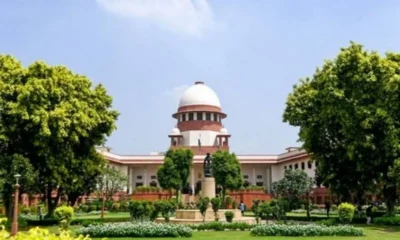
Above: Supreme Court; (inset) Judge Loya

Heated arguments between Chief Justice Dipak Misra and lawyers Dushyant Dave, Indira Jaising on Day 1 of hearing in the case

A three-judge Supreme Court Bench headed by Chief Justice Dipak Misra and comprising Justices AM Khanwilkar and DY Chandrachud, on Monday (January 22) began hearing a petition that seeks an investigation into the mysterious death of special CBI judge BH Loya.

The assigning of the petition by the Chief Justice to a Bench headed by Justice Arun Mishra had, earlier this month, forced Justices J Chelameswar, Ranjan Gogoi, Madan B Lokur and Kurian Joseph to publicly protests against the ‘master of the roster’. Amid reports last week of the Bench of Justice Arun Mishra having recused itself from hearing the contentious petition, the case had been transferred to Court Number 1 of the Chief Justice last Saturday.

Judge Loya had died under mysterious circumstances on December 1, 2014 in Nagpur. At the time of his death, he was the presiding judge in the controversial Sohrabuddin Sheikh ‘fake encounter’ case in which BJP president Amit Shah was then a key accused.

On Monday, as the Bench began its hearing in the case it restrained all subordinate courts – high courts as well as trial courts – from entertaining any new petition relating to the mysterious death of Judge Loya while it also ordered that petitions related to the case currently pending in the Bombay High Court be transferred before it in the Supreme Court.

The proceedings once again saw antagonistic scenes and heated arguments between lawyers appearing for various parties in the case (senior advocate Harish Salve for the Maharashtra government, Dushyant Dave appearing for the Bombay Lawyers Association, Mukul Rohatgi and Indira Jaising representing other parties) and also with the Chief Justice.

Salve, appearing for the Maharashtra government, informed the Supreme Court that a discreet inquiry was conducted by his client to probe the death of Judge Loya and four judicial officers had concluded that there was no foul play involved. Salve also asserted that the special CBI judge had died of a cardiac arrest, a submission that senior advocate Mukul Rohatgi also concurred with during his submissions before the Bench.

Salve also submitted before the Bench a report prepared by the Maharashtra government on the death of Judge Loya, adding that these documents had also been presented before the Chief Justice of the Bombay High Court on November 23, 2017. The senior advocate also sought ot demolish claims made by the Caravan magazine which had first published an article raising questions on the circumstances in which Judge Loya died and speculating that the death was possibly a murder.

In his arguments, Salve claimed that the report filed by the judicial officers of Maharashtra on the death establish that Judge Loya had died of a cardiac arrest. He said that some other judges and a deputy registrar had accompanied Judge Loya to the hospital on the fateful day after he complained of uneasiness and that contrary to the claims made in the media report in question, there was nothing suspicious about the death of the judge at the Nagpur hospital.

However, Dushyant Dave, appearing on behalf of the Bombay Lawyers Association, contested the claims made by Dave, stating: “there are so many things which showed that he (Judge Loya) never checked in (at the hospital mentioned by Salve)” and that the security granted to Judge Loya had been withdrawn before his death.

Dave asserted that the allegations being made in the case are of a serious nature and need to be probed as he submitted: “First judge (in the Sohrabuddin Sheikh fake encounter case) was transferred, second judge (Judge Loya) was murdered and the third judge discharged him (BJP president and accused in the case Amit Shah).”

Rohatgi objected to Dave making his submissions in the case on grounds that he “is not a party in this matter” (the court was hearing the petition filed by Tehseen Poonawalla, who Dave was earlier representing but then recused himself after differences with Poonawalla over getting the case transferred from the Court of Justice Arun Mishra).

While Salve insinuated that the case was being “used” by certain individuals for possible vested interests, Dave shot back saying: “He (Salve) has destroyed the institution enough.”

As Salve and Dave engaged in a war of words, Justice Chandrachud tried to pacify the two senior advocates, saying: “There must be a sense of seriousness… this is a serious issue. You all have to assist the court.”

While Salve defended the report of the Maharashtra government on the death of Judge Loya that he had submitted before the Supreme Court, Dave hit back saying he had documents – accessed under the Right to Information – which contradict all claims made in this report.

Justice Chandrachud then said that the court would like to scrutinize every document related to the case – whether it is the report of the Maharashtra government or those being referred to by Dave. Harish Salve then asked the Bench to have Dave file his documents before the court.

Justice Chandrachud said that the court cannot decide on the matter based on reports in the newspapers over the suspicious death of Judge Loya and that it has to “look at all the circumstances of the case.”

As the Bench passed an order directing that all documents related to the case be filed with the Supreme Court and be taken on record, Dave and senior advocate Indira Jaising requested to be included as interveners in the case.

The Bench also directed for necessary orders to be issued to the Bombay High Court for transferring the cases listed before it and its Nagpur Bench in regard to Judge Loya’s death to the Supreme Court and said that the lawyers representing various parties in these cases are free to make their submission before the apex court.

At this juncture, as Harish Salve requested the court to direct petitioners in the case against making the documents – including the Maharashtra government’s report – public, Dave registered a strong protest, stating that the “entire institution is trying to save one person… Amit Shah”.

Salve objected to the name of the BJP president being dragged into the case and the inference being attached to it while he submitted that “we don’t have any record which shows that he (Judge Loya) was murdered… taking the name (of Amit Shah) in the court is not right.”

As Salve and Dave continued their verbal duel, Justice Khanwilkar urged the lawyers to not cast aspersions on individuals or on Amit Shah as he is not a party in the case.

Senior lawyer Jaising perhaps interpreted the court’s remark as an order against dissemination of information contained in the documents submitted before the Bench and dubbed the remark as being akin to gagging the media.

Referring to the Supreme Court’s recent verdict of not staying the release or upholding the ban imposed on the screening of the Deepika Padukone-starrer Padmaavat, Jaising burst into an argument, stating: “this court passed the Padmavati order to uphold freedom of speech and expression for media and now the court is telling the press to not report on this case.”

Jaising’s outburst was met with an immediate reprimand from Chief Justice Dipak Misra who shouted at the senior advocate, telling her that the court was hearing a petition on the need for an investigation into the suspicious death of a judge and not to examine freedom of speech and expression of the press. Jaising later apologised for her conduct.

The Bench then adjourned the proceedings till February 2.

India News

Amit Shah counters delimitation concerns, says southern states to gain Lok Sabha seats

Amit Shah assures Parliament that southern states will gain Lok Sabha seats after delimitation, countering opposition criticism during the women’s reservation debate.

Published

on

Amit Shah

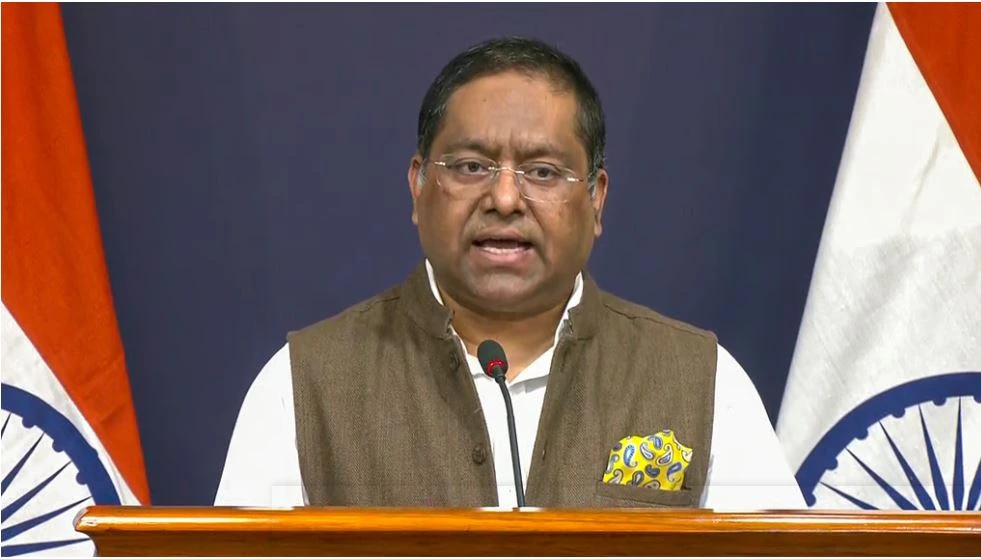
Union Home Minister Amit Shah on Thursday addressed concerns over the proposed delimitation exercise, asserting in the Lok Sabha that southern states will not lose representation but instead see an increase in their number of seats.

His remarks came during a heated debate linked to the implementation of women’s reservation, where opposition parties have raised fears that population-based delimitation could reduce the political weight of southern states.

Shah rejected these claims, calling them misleading, and said the proposed framework ensures fairness while expanding the overall strength of the Lok Sabha.

Seat count to rise with expansion of Lok Sabha

The government has indicated that the total number of Lok Sabha seats could increase significantly as part of the delimitation process. In this expanded House, the combined representation of southern states is expected to rise from 129 seats at present to around 195 seats.

Shah emphasised that no state will lose seats in absolute terms, and the exercise is designed to reflect population changes while maintaining balance across regions.

State-wise projections shared in Parliament

During his address, Shah also provided indicative figures for individual southern states, suggesting notable increases in representation. According to the projections:

  • Tamil Nadu could see its seats rise substantially
  • Kerala, Telangana, and Andhra Pradesh are also expected to gain additional seats
  • Karnataka’s representation may increase as well

These figures were presented to counter the argument that delimitation would disproportionately favour northern states.

Political debate intensifies over linkage with women’s quota

The delimitation exercise has been closely linked to the rollout of women’s reservation, which proposes one-third seats for women in Parliament and state assemblies.

Opposition leaders have questioned this linkage, arguing that tying reservation to delimitation could delay its implementation and raise federal concerns. Some leaders have also warned that the move could impact national unity if apprehensions among states are not addressed.

The government, however, maintains that the reforms are necessary to ensure equitable representation and to align the electoral system with demographic realities.

Centre dismisses ‘false narrative’ on southern states

Shah reiterated that concerns about southern states losing influence are unfounded. He said the delimitation process will increase representation across regions and described the criticism as a “false narrative” aimed at creating confusion.

The issue is expected to remain a key flashpoint as Parliament continues discussions on the women’s reservation framework and related legislative changes.

Continue Reading

India News

PM Modi assures no discrimination in women’s quota, delimitation debate intensifies in Parliament

PM Narendra Modi has assured that women’s reservation will be implemented without discrimination, amid a heated debate over delimitation in Parliament.

Published

on

PM modi

Prime Minister Narendra Modi has assured that there will be no discrimination in the implementation of women’s reservation, as Parliament witnessed a sharp debate over the proposed linkage between the quota and delimitation exercise.

During the ongoing special session, the government reiterated its commitment to ensuring fair representation while addressing concerns raised by opposition parties regarding the timing and structure of the legislation.

The proposed framework aims to reserve 33 percent of seats for women in the Lok Sabha and state assemblies. However, its implementation is tied to a fresh delimitation exercise, which is expected after the next census.

Opposition questions timing and intent

Opposition leaders have raised concerns that linking the women’s quota to delimitation could delay its implementation. They argue that the process of redrawing constituencies may push the actual rollout further into the future.

The issue has triggered a broader political confrontation, with multiple parties questioning whether the move could alter representation across states.

Some critics have also alleged that the delimitation exercise could disproportionately benefit certain regions based on population, a charge the government has rejected.

Government reiterates commitment to fair implementation

Responding to these concerns, the Centre has maintained that the reforms are necessary to ensure accurate and updated representation based on population data.

Leaders from the ruling side have repeatedly emphasized that the process will be carried out transparently and without bias. The assurance that there will be “no discrimination” is aimed at addressing fears among states and opposition parties.

The debate marks a key moment in Parliament, with both sides engaging in intense exchanges over one of the most significant electoral reforms in recent years.

Continue Reading

India News

Give all tickets to Muslim women, Amit Shah says, attacking Akhilesh Yadav on sub-quota demand

A sharp exchange between Amit Shah and Akhilesh Yadav in Parliament over sub-quota for Muslim women highlights key divisions on women’s reservation implementation.

Published

on

A heated exchange broke out in Parliament during discussions on the women’s reservation framework, with Union Home Minister Amit Shah and Samajwadi Party chief Akhilesh Yadav locking horns over the demand for a sub-quota for Muslim women.

The debate unfolded as the government pushed forward key legislative measures to implement 33% reservation for women in the Lok Sabha and state assemblies.

Akhilesh Yadav argued that the proposed reservation must ensure representation for women from marginalised communities, including Other Backward Classes (OBCs) and Muslim women. He said that without such provisions, large sections could remain excluded from political participation.

He also questioned the timing of the bill, alleging that the Centre was avoiding a caste census. According to him, a census would lead to renewed demands for caste-based reservations, which the government is reluctant to address.

Government rejects religion-based quota

Responding to the demand, Amit Shah made it clear that reservation based on religion is not permitted under the Constitution.

He stated that any proposal to provide quota to Muslims on religious grounds would be unconstitutional, firmly rejecting the idea of a separate sub-quota for Muslim women within the broader reservation framework.

The government has maintained that the existing framework already includes provisions for Scheduled Castes (SC) and Scheduled Tribes (ST) women within the overall reservation structure.

Wider political divide over implementation

The issue of sub-categorisation within the women’s quota has emerged as a major flashpoint, even as most opposition parties broadly support the idea of women’s reservation.

Samajwadi Party leaders reiterated that their support for the bill depends on inclusion of OBC and minority women, while the government continues to defend its constitutional position.

The debate is part of a broader discussion during the special Parliament session, where multiple bills linked to delimitation and implementation of the women’s quota are being taken up.

Continue Reading

Trending

© Copyright 2022 APNLIVE.com