English हिन्दी
Connect with us

India News

Near collapse of trial system will be one of Justice Chandrachud’s major challenges, says former CJI MN Venkatachaliah

Former Justice CJI MN Venkatachaliah also spoke about Justice Chandrachud being compared to his father, the late Justice YV Chandrachud.

Published

on

Former CJI MN Venkatachaliah

Supreme Court judge Justice Dhananjaya Yashwant Chandrachud was sworn in as the 50th Chief Justice of India on November 9, 2022, succeeding Justice UU Lalit. President Droupadi Murmu administered the oath of the Office of Chief Justice of India at a ceremony in Rashtrapati Bhavan.

Justice Chandrachud’s tenure will end on November 10, 2024.

Speaking to APN, former Justice CJI MN Venkatachaliah spoke about Justice Chandrachud’s major challenges as he has been appointed as the 50th Chief Justice of India.

Former Justice Venkatachaliah said one of the major challenges for Justice Chandrachud will be the near collapse of the trial system in the country. Another great challenge for the newly appointed CJI will be his response to the great changes happening in technology, he further said.

Law is a junior branch of economics and economics is the junior branch of technology and the impact of technology on judicial and social institutions can be a challenge, Justice Venkatachaliah concluded.

Speaking about Justice Chandrachud’s appointment as the new CJI, Justice Venkatachaliah said the new CJI is both a gentleman and someone who knows the law. Dr Chandrachud is a jurist, scholar, and judge with great experience, he said.

Former Justice CJI MN Venkatachaliah also spoke about Justice Chandrachud being compared to his father, the late Justice YV Chandrachud. He said both are similar in their brilliance of minds and judges.

Late Justice YV Chandrachud’s felicity of expression has been inherited by his son in a great measure and he is equally familiar with the fundamental principles of law and there are no contrasts, Justice Venkatachaliah said.

Justice Venkatachaliah also highlighted the factors the new CJI should keep in mind while dealing with the government and said justice Chandrachud should implement the constitutional philosophy without fear or favour.

Any judge should follow his conscience and the constitutional mandate to avoid conflict, Justice Venkatachaliah concluded.

Justice DY Chandrachud’s led bench has passed multiple orders for the people affected during the Covid-19 crisis. The most recent bench headed by him expanded the Medical Termination of Pregnancy (MTP) Act which will now include unmarried women.

India News

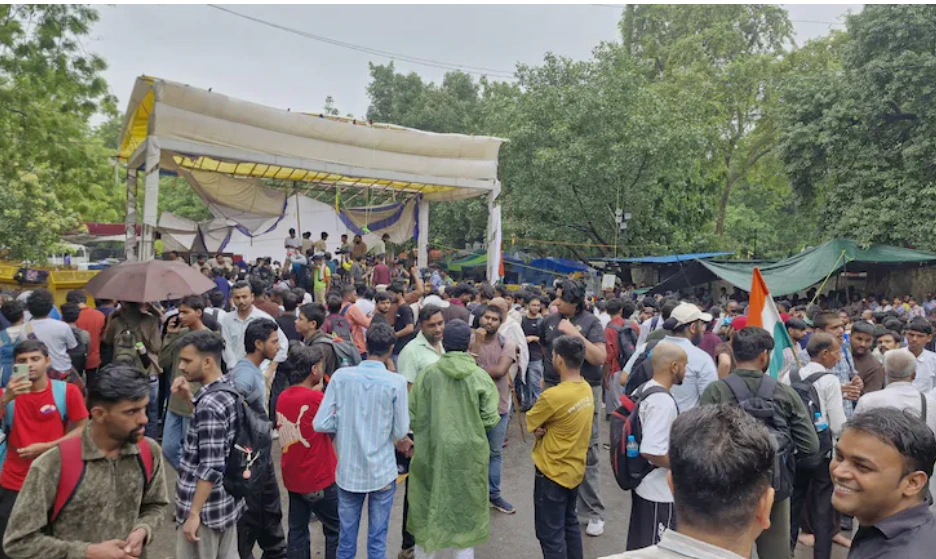
Supreme Court judge calls police assault on CJP protesters very distressing

Supreme Court judge Justice Ujjal Bhuyan criticised alleged police assaults on CJP protesters and raised concerns over excessive force.

Published

on

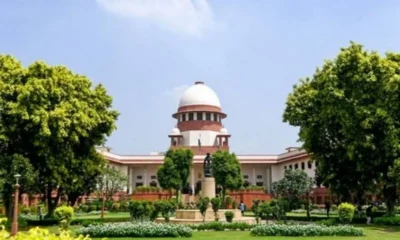
Supreme Court

Supreme Court judge Justice Ujjal Bhuyan has criticised the assault of protesters by police personnel during the recent CJP demonstrations in Delhi, describing the conduct as “very, very distressing” and a matter of serious concern.

Speaking at the launch of retired IPS officer Yashovardhan Azad’s book Policing the Republic, Justice Bhuyan said the detachment expected from police officers appeared to be diminishing.

He expressed concern over young Indian Police Service officers personally participating in the assault of protesters and demonstrators.

Justice Bhuyan stresses need for responsible policing

Justice Bhuyan said effective policing does not require excessive use of force or infringement of human rights. He emphasised that the police play an important role in maintaining public confidence because citizens generally approach the police when they feel they have been wronged.

He said maintaining the credibility of the police force was therefore of “utmost importance”.

The judge’s remarks come amid continuing scrutiny of the police and paramilitary response to the CJP protests in Delhi.

Supreme Court panel to examine police action

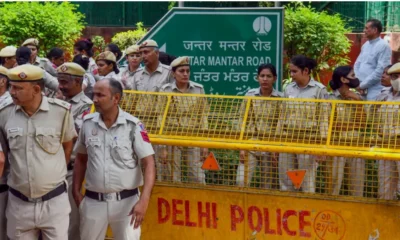
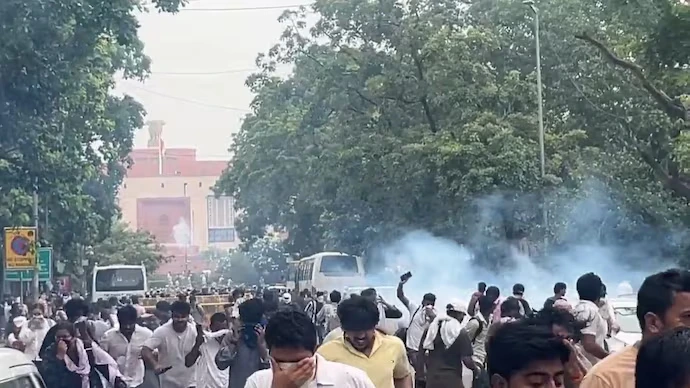
The Supreme Court has constituted a high-level panel to investigate allegations concerning the use of force by Delhi Police during the July 20 student protests at Jantar Mantar and the subsequent Parliament march.

The panel, headed by former Supreme Court judge Justice R Subhash Reddy, will examine complaints relating to lathi charges, tear gas, pellet guns and electronic batons. It will also look into allegations of targeted harassment or molestation of female protesters and review available CCTV and video footage.

The police response during the protests has faced criticism, while Delhi Police has maintained that its personnel were also attacked during the clashes.

Judge raises concern over custodial deaths and torture

Justice Bhuyan also spoke about custodial torture and deaths, describing custodial death as one of the gravest crimes in a society governed by the rule of law.

He stressed that torture and cruel, inhuman or degrading treatment cannot be accepted, regardless of whether such conduct takes place during investigation, interrogation or other circumstances.

The judge further warned that when government functionaries themselves become lawbreakers, it can undermine respect for the law and encourage lawlessness.

He questioned whether citizens lose their fundamental rights simply because they have been arrested by police.

‘Fake encounters’ cannot be part of policing

Justice Bhuyan also addressed allegations of extra-judicial killings, commonly referred to as “fake encounters”. Referring to a 2011 Supreme Court judgment, he said such encounters undermine the rule of law.

He stressed that an “encounter philosophy” cannot become part of legitimate policing and said proven fake encounters involving serving police officers must be treated with the utmost seriousness.

The Supreme Court’s panel will now examine the allegations surrounding the police action during the July 20 protests as scrutiny of the events continues.

Continue Reading

India News

8 Tamil Nadu engineering students killed in Kerala car-lorry crash

Eight engineering students from Tamil Nadu were killed after their car collided with a parked lorry on NH-66 in Kerala’s Thrissur district.

Published

on

Eight engineering students from Tamil Nadu were killed after the car they were travelling in crashed into a parked lorry on NH-66 in Kerala’s Thrissur district late Friday night, police said.

The accident took place at around 11.40 pm at Panambikkunnu in Kaipamangalam. The students were travelling from Guruvayur towards Kodungallur when their car collided with the rear of the lorry.

What happened in the Thrissur accident

According to the FIR, the lorry was parked illegally on the right side of the highway near a barricaded section where traffic had been diverted because of ongoing construction work.

Police said the car was travelling at high speed and its driver apparently failed to notice the diversion barricade before the vehicle crashed into the rear of the lorry.

The lorry was registered in Maharashtra.

Six students died at the accident spot, while two others were declared dead on arrival at a nearby hospital, police said.

Six victims identified

The victims were students of an engineering college in Dindigul and were travelling towards Kodungallur along NH-66.

Police have identified six of the eight victims. Four of them — Surya, Yuvasanjith, Vishva and Johua — were from Dindigul. The other two identified victims were Santhosh and Prasanna from Madurai.

The identities of the remaining two students are yet to be confirmed.

Residents, fire and rescue personnel and police took part in the rescue operation and pulled the students from the badly damaged car. The bodies were subsequently taken to the mortuary of Thrissur Medical College.

Case registered against lorry driver

Kaipamangalam police have registered a case against the lorry driver under Section 105 of the Bharatiya Nyaya Sanhita for culpable homicide.

Police said the driver went into hiding shortly after the accident.

The families of the victims were contacted using student identity cards recovered from the bodies. Police said some families were unaware that their children had travelled to Kerala.

Postmortem examinations will begin after the families reach Thrissur Medical College, police said.

Continue Reading

India News

Air India sacks Phuket-Delhi flight pilot after failing drug test

Air India has terminated the Phuket-Delhi flight pilot after a confirmatory test found a psychoactive substance following the August 4 incident.

Published

on

Air India has terminated the employment of the pilot-in-command of a Phuket-Delhi flight after he tested positive for a psychoactive substance.

The pilot was in command of flight AI2379, which was travelling from Phuket to Delhi on August 4 when the aircraft suddenly lost altitude over Odisha. The incident left 24 passengers injured.

Air India said the termination was in line with its zero-tolerance policy regarding safety violations and regulatory requirements.

Air India terminates pilot with immediate effect

In a statement, the Tata-owned airline said the pilot-in-command had tested positive for a psychoactive substance.

The airline said that, considering its zero-tolerance approach to violations related to safety, fitness and regulatory requirements, the pilot’s employment had been terminated with immediate effect.

Air India also said it continues to cooperate fully with the investigation into the incident and has provided access to relevant operational, maintenance and technical records.

What happened on the Phuket-Delhi flight?

According to the preliminary findings of the Aircraft Accident Investigation Bureau (AAIB), the Airbus A320 was carrying 145 people when it experienced the near-simultaneous loss of all three hydraulic systems while cruising at around 36,000 feet.

The technical failure resulted in the autopilot disconnecting and triggered a brief stall warning. The aircraft subsequently lost altitude, resulting in injuries to 24 passengers.

The preliminary report also noted that the pilot tested non-negative for a psychoactive substance in a confirmatory test.

However, the report did not establish that the pilot’s drug-test result caused or contributed to the hydraulic system failure or the subsequent loss of altitude.

AAIB recommends action over psychoactive substance finding

The AAIB described the confirmation of psychoactive substance use as a serious concern and recommended that the Directorate General of Civil Aviation (DGCA) take appropriate action against the pilot on priority.

The investigation into the technical and other aspects of the incident is still underway.

The preliminary report also noted that the co-pilot was flying the aircraft when the incident occurred and attempted to bring the situation under control.

Air India said safety remains its highest priority and that its pilots undergo training, proficiency checks, medical examinations and other regulatory assessments in accordance with applicable requirements.

Continue Reading

Trending

© Copyright 2022 APNLIVE.com