English हिन्दी
Connect with us

India News

Kerala lottery result: First prize winner for Sthree Sakthi SS-295 to get Rs 75 lakh, check full list of winning numbers here

The winner of Sthree Sakthi SS-295 will fetch Rs 75 lakh while the second and third prize winner will get Rs 10 lakh and Rs 5,000 respectively. Check the full winning list here.

Published

on

Kerala engineer swallows bribe money after being caught red-handed by vigilance department, admitted to hospital

Kerala State Lottery Department has announced the lucky draw winners of the Sthree Sakthi SS-295 lottery ticket today at 3 pm. The draw took place at Gorky Bhavan, near Bakery Junction, in the state capital Thiruvananthapuram. The winner of the first prize will fetch Rs 75 lakh while the second and third prize winner will get Rs 10 lakh and Rs 5,000 respectively.

The lottery holders can check the winning list on the official website of Kerala Lotteries.

The winner of the first prize (Rs 75 lakh) is SC 635104

The winner of the second prize (Rs 1 lakh) is SF 176397

The winners of the third prize (Rs 5,000) are 0231  0687  1807  2291  2681  5183  5487  7242  7400  7698  8155  8205  8343  8505  8948  9313  9563  9941

The winners of the consolation prize (Rs 8,000) SA 635104  SB 635104  SD 635104  SE 635104  SF 635104  SG 635104  SH 635104  SJ 635104  SK 635104  SL 635104  SM 635104

The winners of fourth prize (Rs 2,000) are 0017  0877  3225  3669  4455  5995  7445  8098  8474  9013

The winners of fifth prize (Rs 1,000) are 0026  0390  0982  1066  1810  1974  2392  2605  2929  3019  3746  5023  5225  5509  6108  6236  6863  6961  7765  8247

The winners of sixth prize (Rs 500) are 0068  0457  0506  0637  0882  0974  1552  1635  1718  2252  2354  2420  2506  2660  2777  2842  3293  3551  3647  4107  4177  4195  4287  4383  4514  4887  5196  5329  5352  5493  5599  5834  6359  6423  6540  6923  7069  7159  7353  7397  7480  7645  7664  7750  8010  8113  8839  8979  8994  9017  9221  9575

The winners of seventh prize (Rs 200) are 1495  1968  2306  2333  2595  2758  2851  3296  3301  3414  3482  3558  3754  3763  4907  4931  5070  5166  5535  5990  6070  6185  6495  6769  6877  6974  7026  7046  7405  7673  7775  7818  8201  8202  8539  9028  9055  9056  9183  9295  9301  9421  9531  9594  9596

The winners of eighth prize (Rs 100) are 0054  0185  0209  0219  0529  0568  0616  0719  0814  0858  0905  0961  0968  1059  1061  1067  1112  1160  1223  1265  1314  1379  1685  1932  1937  1954  1982  1995  2114  2167  2277  2312  2351  2397  2414  2479  2560  2657  2785  2791  2826  2896  3072  3089  3129  3137  3147  3252  3269  3855  3919  3938  3979  3983  3990  4040  4270  4318  4333  4503  4578  4585  4855  4928  4985  5030  5100  5112  5269  5326  5422  5440  5533  5586  5656  5671  5843  5851  5986  6043  6122  6135  6144  6212  6226  6248  6263  6276  6347  6430  6544  6796  6844  7004  7103  7113  7191  7211  7233  7443  7455  7498  7761  7839  7917  7929  8052  8057  8058  8097  8131  8282  8414  8619  8650  8768  8802  8866  8883  9174  9271  9388  9680  9845  9905  9945

The prize winners are advised to verify the winning numbers with the results published in the Kerala Government Gazette and surrender the winning tickets within 30 days.

Kerala Sthree Sakthi Lottery

Sthree Sakthi lottery ticket has 9 prizes including a consolation prize. The first prize winner receives Rs 75 lakh and the second and third prizes get Rs 10 lakh and Rs 5,000 respectively. A total of 2,79,733 prizes were given to the winners. The 10 percent of the first to third prizes will be deducted and the amount will be given to the agents (who sell the winning tickets) by the lottery agency. In the case of 3rd to 8th and the consolation prizes, 10 percent of the prize amount (agent’s commission) will be given from the fund allotted by the government.

Entertainment

Bharti Singh, Haarsh Limbachiyaa welcome second child after she’s rushed to hospital mid-shoot

Comedian Bharti Singh and her husband Haarsh Limbachiyaa welcomed their second child after she was rushed to hospital during a television shoot.

Published

on

Bharti

Popular comedian and television personality Bharti Singh and her husband, writer-host Haarsh Limbachiyaa, have welcomed their second child. The baby was born on Friday after Bharti was taken to the hospital following a sudden medical emergency earlier in the day, according to media reports.

Emergency during television shoot led to hospitalisation

As per available information, Bharti Singh was scheduled to shoot for the television show Laughter Chefs on Friday morning when her water broke unexpectedly. She was immediately rushed to a nearby hospital, where she later delivered her second child. No further details about the baby have been shared publicly so far.

The news of the delivery comes weeks after the couple announced Bharti’s second pregnancy on social media.

Pregnancy announcement and maternity shoot

Bharti Singh and Haarsh Limbachiyaa had revealed the pregnancy during a family vacation in Switzerland. A few weeks ago, Bharti also shared pictures from her maternity photoshoot, where she was seen wearing a blue silk gown with white floral patterns.

Sharing the photos online, Bharti wrote, “2nd Baby Limbachiya coming soon,” along with a baby emoji.

Family background

Bharti Singh and Haarsh Limbachiyaa became parents for the first time in 2022, when they welcomed their son, Lakshya.

The couple is among the most well-known faces on Indian television. Bharti is widely recognised for her comic timing and distinctive on-screen persona, while Haarsh has made his mark as a writer and host. Apart from their television work, the two also co-host a podcast together.

Continue Reading

India News

Renaming MGNREGA removes core spirit of rural employment law, says Shashi Tharoor

Published

on

Shashi Tharoor

Congress MP Shashi Tharoor has strongly criticised the renaming of the Mahatma Gandhi National Rural Employment Guarantee Act (MGNREGA), saying the move strips the rural employment programme of its core essence. His remarks came after Parliament cleared the Viksit Bharat Guarantee for Rozgar and Ajeevika Mission (Gramin) Bill, also referred to as the VB-G RAM G Bill.

Speaking to media, Tharoor said the decision to remove Mahatma Gandhi’s name from the scheme “takes out the heart” of the rural employment programme that has been in place for years. He noted that the identity and philosophy associated with Mahatma Gandhi were central to the original law.

Tharoor also objected to the way the new name was framed, arguing that it unnecessarily combined multiple languages. He pointed out that the Constitution envisages the use of one language in legislation, while the Bill’s title mixes English and Hindi terms such as “Guarantee”, “Rozgar” and “Ajeevika”, along with the conjunction “and”.

‘Disrespect to both names’

The Congress leader said that inserting the word “Ram” while dropping Mahatma Gandhi’s name amounted to disrespecting both. Referring to Mahatma Gandhi’s ideas, Tharoor said that for Gandhi, the concepts of Gram Swaraj and Ram Rajya were inseparable, and removing his name from a rural employment law went against that vision.

He added that the name of Lord Ram could be used in many contexts, but questioned the rationale behind excluding Mahatma Gandhi from a programme closely linked to his philosophy of village self-rule.

Protests over passage of the Bill

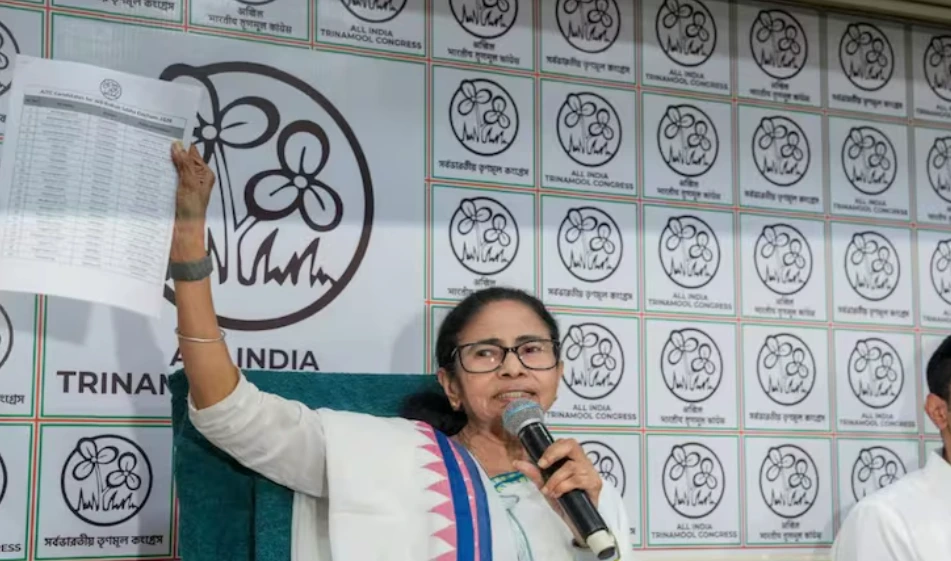
The VB-G RAM G Bill was passed by the Lok Sabha on December 18 and cleared by the Rajya Sabha in the early hours of December 19 amid protests from Opposition members. Several MPs opposed the manner in which the legislation was pushed through, with scenes of sloganeering and tearing of papers in the House.

Outside Parliament, members of the Trinamool Congress staged a sit-in protest near Samvidhan Sadan against the passage of the Bill. Congress also announced nationwide protests earlier this week, accusing the government of weakening rights-based welfare schemes.

Despite opposition criticism, the government has maintained that the new law will strengthen rural employment and livelihood security. The Bill raises the guaranteed employment from 100 days to 125 days per rural household and outlines a 60:40 cost-sharing formula between the Centre and states, with a higher central share for northeastern, Himalayan states and certain Union Territories.

Continue Reading

India News

Rahul Gandhi attacks G RAM G bill, says move against villages and states

Rahul Gandhi has criticised the G RAM G bill cleared by Parliament, alleging it dilutes the rights-based structure of MGNREGA and centralises control over rural employment.

Published

on

Rahul Gandhi

Leader of the Opposition Rahul Gandhi has launched a sharp attack on the Modi government after Parliament cleared the Viksit Bharat Guarantee for Employment and Livelihood Mission (Rural) Bill, commonly referred to as the ‘G RAM G’ bill. He described the proposed law as “anti-state” and “anti-village”, arguing that it weakens the core spirit of the Mahatma Gandhi National Rural Employment Guarantee Act (MGNREGA).

The new legislation, which is positioned as an updated version of MGNREGA, was passed amid protests by opposition parties and is expected to replace the existing scheme once it receives presidential assent.

‘Bulldozed without scrutiny’, says Rahul Gandhi

Rahul Gandhi criticised the manner in which the bill was cleared, saying it was pushed through Parliament without adequate debate or examination. He pointed out that the opposition’s demand to refer the bill to a standing committee was rejected.

According to him, any law that fundamentally alters the rural employment framework and affects crores of workers should undergo detailed scrutiny, expert consultation and public hearings before approval.

Claim of dilution of rights-based guarantee

Targeting the central government, the Congress leader said the proposed law dismantles the rights-based and demand-driven nature of MGNREGA and replaces it with a rationed system controlled from Delhi. He argued that this shift undermines the autonomy of states and villages.

Rahul Gandhi alleged that the intent behind the move is to centralise power and weaken labour, particularly impacting rural communities such as Dalits, OBCs and Adivasis.

Defence of MGNREGA’s impact

Highlighting the role of MGNREGA, Gandhi said the scheme provided rural workers with bargaining power, reduced distress migration and improved wages and working conditions, while also contributing to rural infrastructure development.

He also recalled the role of MGNREGA during the Covid period, stating that it prevented crores of people from slipping into hunger and debt. According to him, any rationing of a jobs programme first affects women, landless workers and the poorest communities.

Opposition to name change and provisions

The Congress has also objected to the renaming of the scheme, accusing the government of attempting to erase the legacy associated with Mahatma Gandhi. Opposition MPs staged a dharna within the Parliament complex, questioning provisions of the bill that they claim dilute the “soul and spirit” of the original law enacted in 2005.

Under MGNREGA, the government guaranteed 100 days of work in rural areas along with an unemployment allowance if work was not provided. The ‘G RAM G’ bill proposes to raise the guaranteed workdays to 125, while retaining other provisions. However, critics have flagged concerns over employment being linked to pre-approved plans.

The bill was cleared after a midnight voice vote in the Rajya Sabha, following its passage in the Lok Sabha amid protests and walkouts. It will become law once approved by the President.

Continue Reading

Trending

© Copyright 2022 APNLIVE.com