English हिन्दी
Connect with us

India News

Nirmal NR 267 Kerala lottery result for March 11 announced: First prize winner to get Rs 70 lakh | Check winning numbers here

Kerala State Lottery Department has announced the result of the Nirmal NR 267 lucky draw at Thiruvananthapuram’s Gorky Bhavan today at 3 pm.

Published

on

Kerala engineer swallows bribe money after being caught red-handed by vigilance department, admitted to hospital

Kerala State Lottery Department has announced the result of the Nirmal NR 267 lucky draw at Thiruvananthapuram’s Gorky Bhavan today at 3 pm. The winner of the first prize will get Rs 70 lakh. The second and third prize winner will get Rs 10 lakh and Rs 1 lakh respectively.
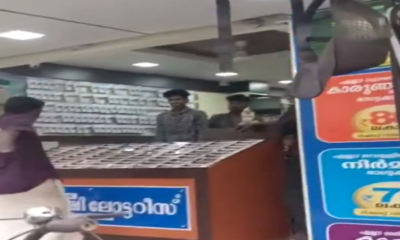
You can check the result by clicking on the official website of the Kerala State Lottery Department- www.keralalotteryresult.net Apart from these, the results are also published in the Kerala Government Gazette.

Check the Nirmal NR 267 lottery results

The winner of the first prize (Rs 70 lakh) is NV 441931

The winner of the second prize (Rs 10 lakh) is NX 246448

The winners of the third prize (Rs 1 lakh) are NN 633028 NO 803574 NP 269954 NR 918678 NS 239092 NT 409045 NU 115477 NV 424115 NW 715172 NX 182979 NY 336433 NZ 684481

The winners of the consolation prize (Rs 8,000) are NN 441931 NO 441931 NP 441931 NR 441931 NS 441931 NT 441931 NU 441931 NW 441931 NX 441931 NY 441931 NZ 441931

FOR THE TICKETS ENDING WITH THE FOLLOWING NUMBERS

The winners of the fourth prize (Rs 5,000) are 8843 4228 3418 1223 7220 9595 4739 0338 0383 9175 4607 2071 9494 1312 2038 0166 5827 4233

The winners of the fifth prize (Rs 1,000) are 9950 0226 4733 2093 3045 6572 1825 0919 9466 7778 0846 3929 4844 2567 6301 4507 8404 6499 6750 6955 0633 4202 8117 7139 1745 6040 2395 2477 3703 2816 8320 5494 6530 9636 9362 5253

The winners of the sixth prize (Rs 500) are 2252 3558 6953 6760 9325 5045 3903 7122 7523 6573 2636 7090 9863 8351 4250 4320 0262 6822 2374 8096 1131 2039 8458 2359 1546 7399 6077 9012 7343 0849 0183 5560 4168 8532 6100 1438 9246 2575 2357 3905 1022 0428 5587 9854 7571 0554 9620 0328 3268 1381 8206 0009 2371 6216 5983 0370 3970 2999 7263 0171 1310 5695 2271 9364 5154 3206 4430 1733 5277 6389 8626 3282 9129 2325 9965 6697 3940 3790 0049

The winners of the seventh prize (Rs 100) are 0017 0043 0129 0135 0236 0657 0799 0968 1003 1353 1499 1551 1792 2033 2115 2293 2417 2540 2603 2639 2644 2713 2883 3037 3067 3237 3241 3249 3267 3325 3539 3591 3774 3826 3871 3873 3882 3883 3987 4100 4121 4124 4164 4225 4242 4314 4319 4404 4425 4652 4795 4967 5132 5177 5231 5385 5402 5420 5460 5503 5513 5541 5555 5635 5807 5927 5944 6109 6229 6321 6500 6544 6590 6749 6807 6829 6926 7004 7037 7058 7156 7228 7308 7323 7382 7626 7632 7672 7694 7773 7829 8015 8088 8223 8256 8269 8278 8314 8317 8371 8515 8517 8522 8599 8668 8683 8727 8742 8928 8931 8999 9074 9137 9179 9634 9731 9803 9812 9815 9820 9849 9898

The prize winners are advised to verify the winning numbers with the results published in the Kerala Government Gazette and surrender the winning tickets within 30 days.

Next Nirmal Lottery

The next Nirmal Draw will be held on March 18 at Gorky Bhavan, Near Bakery Junction, Thiruvananthapuram.

Interested candidates can participate in the lottery by purchasing the tickets, which are priced at Rs 40 from any Taluk lottery office in the state. Notably, Kerala has three lottery offices in Punalur (Kollam district), Kattappana (Idukki district), and Thamarassery (Kozhikode district).

India News

PM Modi assures no discrimination in women’s quota, delimitation debate intensifies in Parliament

PM Narendra Modi has assured that women’s reservation will be implemented without discrimination, amid a heated debate over delimitation in Parliament.

Published

on

PM modi

Prime Minister Narendra Modi has assured that there will be no discrimination in the implementation of women’s reservation, as Parliament witnessed a sharp debate over the proposed linkage between the quota and delimitation exercise.

During the ongoing special session, the government reiterated its commitment to ensuring fair representation while addressing concerns raised by opposition parties regarding the timing and structure of the legislation.

The proposed framework aims to reserve 33 percent of seats for women in the Lok Sabha and state assemblies. However, its implementation is tied to a fresh delimitation exercise, which is expected after the next census.

Opposition questions timing and intent

Opposition leaders have raised concerns that linking the women’s quota to delimitation could delay its implementation. They argue that the process of redrawing constituencies may push the actual rollout further into the future.

The issue has triggered a broader political confrontation, with multiple parties questioning whether the move could alter representation across states.

Some critics have also alleged that the delimitation exercise could disproportionately benefit certain regions based on population, a charge the government has rejected.

Government reiterates commitment to fair implementation

Responding to these concerns, the Centre has maintained that the reforms are necessary to ensure accurate and updated representation based on population data.

Leaders from the ruling side have repeatedly emphasized that the process will be carried out transparently and without bias. The assurance that there will be “no discrimination” is aimed at addressing fears among states and opposition parties.

The debate marks a key moment in Parliament, with both sides engaging in intense exchanges over one of the most significant electoral reforms in recent years.

Continue Reading

India News

Give all tickets to Muslim women, Amit Shah says, attacking Akhilesh Yadav on sub-quota demand

A sharp exchange between Amit Shah and Akhilesh Yadav in Parliament over sub-quota for Muslim women highlights key divisions on women’s reservation implementation.

Published

on

A heated exchange broke out in Parliament during discussions on the women’s reservation framework, with Union Home Minister Amit Shah and Samajwadi Party chief Akhilesh Yadav locking horns over the demand for a sub-quota for Muslim women.

The debate unfolded as the government pushed forward key legislative measures to implement 33% reservation for women in the Lok Sabha and state assemblies.

Akhilesh Yadav argued that the proposed reservation must ensure representation for women from marginalised communities, including Other Backward Classes (OBCs) and Muslim women. He said that without such provisions, large sections could remain excluded from political participation.

He also questioned the timing of the bill, alleging that the Centre was avoiding a caste census. According to him, a census would lead to renewed demands for caste-based reservations, which the government is reluctant to address.

Government rejects religion-based quota

Responding to the demand, Amit Shah made it clear that reservation based on religion is not permitted under the Constitution.

He stated that any proposal to provide quota to Muslims on religious grounds would be unconstitutional, firmly rejecting the idea of a separate sub-quota for Muslim women within the broader reservation framework.

The government has maintained that the existing framework already includes provisions for Scheduled Castes (SC) and Scheduled Tribes (ST) women within the overall reservation structure.

Wider political divide over implementation

The issue of sub-categorisation within the women’s quota has emerged as a major flashpoint, even as most opposition parties broadly support the idea of women’s reservation.

Samajwadi Party leaders reiterated that their support for the bill depends on inclusion of OBC and minority women, while the government continues to defend its constitutional position.

The debate is part of a broader discussion during the special Parliament session, where multiple bills linked to delimitation and implementation of the women’s quota are being taken up.

Continue Reading

India News

No state will lose a seat, Centre assures as delimitation debate takes centre stage in Parliament

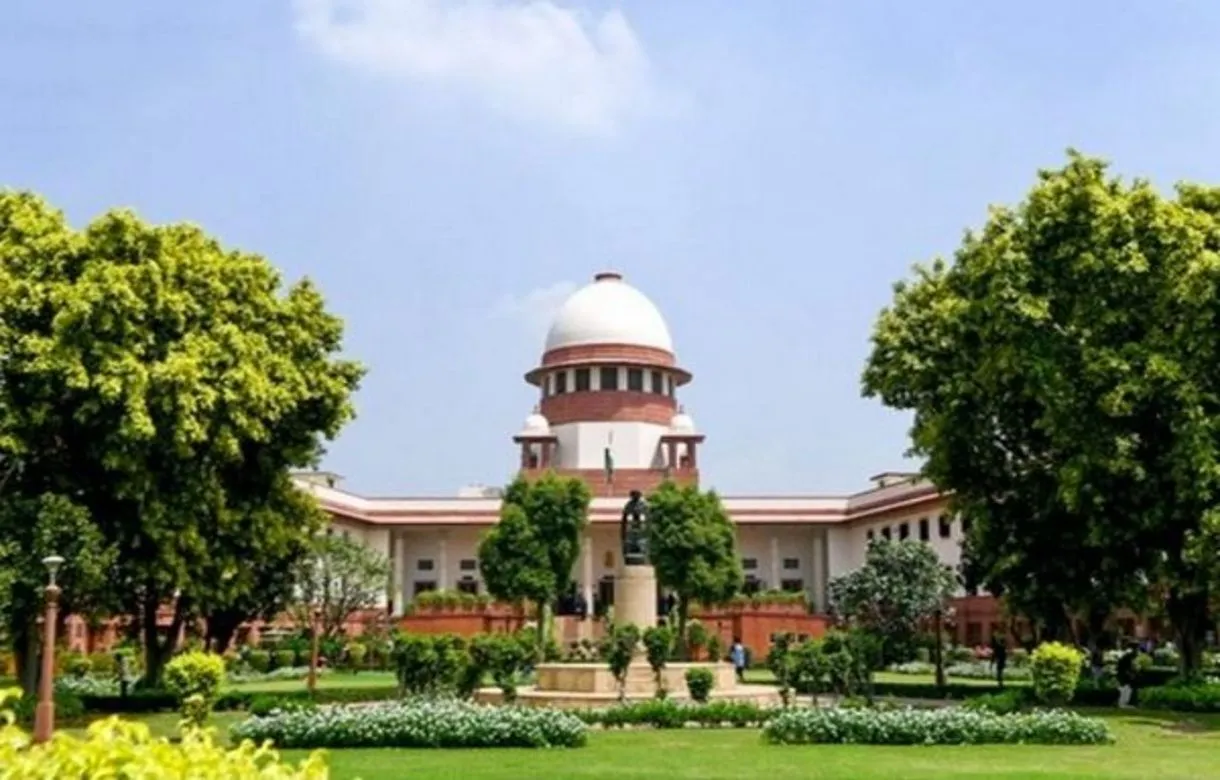
Parliament’s special session begins with key focus on implementing women’s reservation and delimitation, setting the stage for major electoral changes.

Published

on

Parliament

A special session of Parliament commenced on Thursday, with the Centre set to take up crucial legislation related to women’s reservation and delimitation of constituencies. The session, scheduled over three days, is expected to witness intense debate as the government pushes forward its legislative agenda.

At the centre of discussions is the proposal to operationalise the women’s reservation law, which seeks to allocate 33 percent of seats in the Lok Sabha and state assemblies to women. The law, passed earlier, requires enabling provisions before it can be implemented.

The rollout of the reservation is closely tied to the delimitation exercise — a process that redraws parliamentary constituencies based on updated population data. The implementation is expected only after the next census and delimitation process are completed.

The government is aiming to put in place the framework so that the reservation can be enforced in future elections, likely around 2029.

Delimitation and numbers at play

Delimitation is a key aspect of the proposed changes, as it will determine how seats are redistributed and which constituencies are reserved. The exercise is expected to reflect population shifts and may also involve an increase in the total number of Lok Sabha seats.

This linkage has made the issue politically sensitive, with several opposition parties backing women’s reservation in principle but raising concerns over how and when delimitation will be carried out.

Political reactions and expected debate

The session is likely to see sharp exchanges between the government and opposition. While there is broad agreement on increasing women’s representation, disagreements remain over the timing, process, and potential political implications of the delimitation exercise.

Some leaders have argued that delimitation could significantly alter the balance of representation among states, making it a contentious issue beyond the women’s quota itself.

The government, however, has framed the move as a step toward strengthening women’s participation in governance and ensuring more inclusive policymaking.

Continue Reading

Trending

© Copyright 2022 APNLIVE.com