English हिन्दी
Connect with us

India News

Late-March western disturbance brings 1,000-km rain band across India, Pakistan and Afghanistan

An unusual western disturbance has created a 1,000-km rain band, bringing widespread storms, rainfall and hail across parts of India and neighbouring countries.

Published

on

Weather

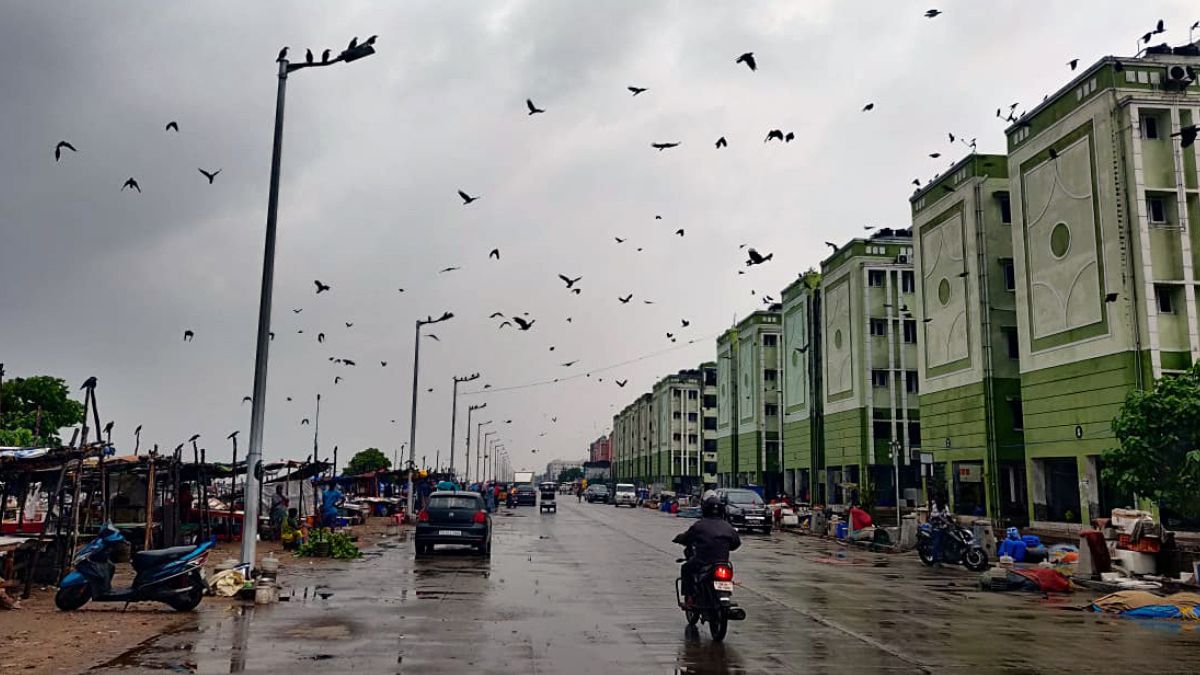
An unusual weather system is currently impacting large parts of India, Pakistan and Afghanistan, bringing widespread thunderstorms, gusty winds, rainfall and even hailstorms at a time when summer conditions typically begin to set in.

The ongoing event is being driven by an active western disturbance that has formed a nearly straight, linear low-pressure trough stretching about 1,000 kilometres—from Afghanistan, across Pakistan, and into India. This formation is considered atypical, as most western disturbances usually follow a curved path.

Western disturbances are generally extratropical systems originating near the Mediterranean region and are more common during winter months, when they bring snowfall and cold weather to northern India. However, this system stands out both for its timing in late March and its distinct structure.

Widespread weather activity across regions

The system is associated with an upper-air cyclonic circulation over northern Pakistan, which is leading to widespread thunderstorms and winds ranging between 40 and 80 kmph across northwest India. Isolated hailstorms and light-to-moderate rainfall or snowfall have also been reported.

Heavy to very heavy rainfall has already occurred in sub-Himalayan West Bengal and Sikkim, while southern states including Karnataka, Andhra Pradesh, Kerala and Tamil Nadu have received significant showers. Hailstorm activity has also been observed in multiple regions.

Meteorological conditions indicate that the western disturbance includes a trough in the middle and upper atmospheric levels. This is interacting with several low-level cyclonic circulations over regions such as north Madhya Pradesh, east Uttar Pradesh, west Rajasthan, Haryana, northeast Assam, coastal Andhra Pradesh, and parts of Tamil Nadu and Kerala, intensifying weather activity.

System likely to weaken, another disturbance ahead

The current disturbance is expected to remain active over the Western Himalayas and adjoining plains through Friday, after which its intensity is likely to decrease.

However, forecasts suggest that another weaker western disturbance may approach the region around March 22, potentially bringing further weather changes.

Moisture sources behind the system

The primary moisture feeding this system originates from evaporation over multiple water bodies, including the Mediterranean Sea, Caspian Sea, Black Sea, and the Persian Gulf.

As the system moves eastward, it gathers additional moisture from the Arabian Sea. This moisture is further enhanced due to orographic lifting along the Himalayas. Simultaneously, existing troughs and cyclonic features over regions such as Gujarat and the Mannar area are contributing to increased low-level convergence, leading to intensified rainfall and storm activity.

Delhi-NCR sees cooler conditions and rainfall

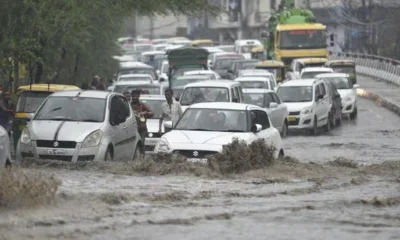
In Delhi-NCR, light-to-moderate rainfall accompanied by thunderstorms and winds of 30–50 kmph is expected to continue until Friday. Daytime temperatures are likely to remain between 25 and 28 degrees Celsius, which is below the seasonal average.

Why late-March disturbances are uncommon

Climatologically, western disturbances are most frequent between December and February, with India typically experiencing four to six such systems per month during winter.

By late March, their frequency usually declines sharply as the jet stream weakens and shifts northward. Historically, only one or two such systems occur during this period each year.

However, recent trends suggest a gradual extension of the western disturbance season into April. Experts attribute this to changes in atmospheric patterns, including stronger subtropical jet streams and broader climate variability.

Continue Reading
Click to comment

Leave a Reply

Your email address will not be published. Required fields are marked *

India News

PM Modi assures no discrimination in women’s quota, delimitation debate intensifies in Parliament

PM Narendra Modi has assured that women’s reservation will be implemented without discrimination, amid a heated debate over delimitation in Parliament.

Published

on

PM modi

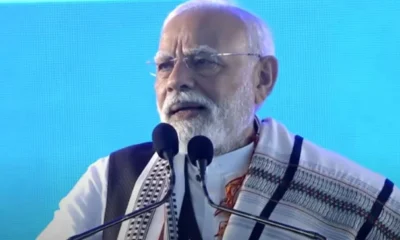
Prime Minister Narendra Modi has assured that there will be no discrimination in the implementation of women’s reservation, as Parliament witnessed a sharp debate over the proposed linkage between the quota and delimitation exercise.

During the ongoing special session, the government reiterated its commitment to ensuring fair representation while addressing concerns raised by opposition parties regarding the timing and structure of the legislation.

The proposed framework aims to reserve 33 percent of seats for women in the Lok Sabha and state assemblies. However, its implementation is tied to a fresh delimitation exercise, which is expected after the next census.

Opposition questions timing and intent

Opposition leaders have raised concerns that linking the women’s quota to delimitation could delay its implementation. They argue that the process of redrawing constituencies may push the actual rollout further into the future.

The issue has triggered a broader political confrontation, with multiple parties questioning whether the move could alter representation across states.

Some critics have also alleged that the delimitation exercise could disproportionately benefit certain regions based on population, a charge the government has rejected.

Government reiterates commitment to fair implementation

Responding to these concerns, the Centre has maintained that the reforms are necessary to ensure accurate and updated representation based on population data.

Leaders from the ruling side have repeatedly emphasized that the process will be carried out transparently and without bias. The assurance that there will be “no discrimination” is aimed at addressing fears among states and opposition parties.

The debate marks a key moment in Parliament, with both sides engaging in intense exchanges over one of the most significant electoral reforms in recent years.

Continue Reading

India News

Give all tickets to Muslim women, Amit Shah says, attacking Akhilesh Yadav on sub-quota demand

A sharp exchange between Amit Shah and Akhilesh Yadav in Parliament over sub-quota for Muslim women highlights key divisions on women’s reservation implementation.

Published

on

A heated exchange broke out in Parliament during discussions on the women’s reservation framework, with Union Home Minister Amit Shah and Samajwadi Party chief Akhilesh Yadav locking horns over the demand for a sub-quota for Muslim women.

The debate unfolded as the government pushed forward key legislative measures to implement 33% reservation for women in the Lok Sabha and state assemblies.

Akhilesh Yadav argued that the proposed reservation must ensure representation for women from marginalised communities, including Other Backward Classes (OBCs) and Muslim women. He said that without such provisions, large sections could remain excluded from political participation.

He also questioned the timing of the bill, alleging that the Centre was avoiding a caste census. According to him, a census would lead to renewed demands for caste-based reservations, which the government is reluctant to address.

Government rejects religion-based quota

Responding to the demand, Amit Shah made it clear that reservation based on religion is not permitted under the Constitution.

He stated that any proposal to provide quota to Muslims on religious grounds would be unconstitutional, firmly rejecting the idea of a separate sub-quota for Muslim women within the broader reservation framework.

The government has maintained that the existing framework already includes provisions for Scheduled Castes (SC) and Scheduled Tribes (ST) women within the overall reservation structure.

Wider political divide over implementation

The issue of sub-categorisation within the women’s quota has emerged as a major flashpoint, even as most opposition parties broadly support the idea of women’s reservation.

Samajwadi Party leaders reiterated that their support for the bill depends on inclusion of OBC and minority women, while the government continues to defend its constitutional position.

The debate is part of a broader discussion during the special Parliament session, where multiple bills linked to delimitation and implementation of the women’s quota are being taken up.

Continue Reading

India News

No state will lose a seat, Centre assures as delimitation debate takes centre stage in Parliament

Parliament’s special session begins with key focus on implementing women’s reservation and delimitation, setting the stage for major electoral changes.

Published

on

Parliament

A special session of Parliament commenced on Thursday, with the Centre set to take up crucial legislation related to women’s reservation and delimitation of constituencies. The session, scheduled over three days, is expected to witness intense debate as the government pushes forward its legislative agenda.

At the centre of discussions is the proposal to operationalise the women’s reservation law, which seeks to allocate 33 percent of seats in the Lok Sabha and state assemblies to women. The law, passed earlier, requires enabling provisions before it can be implemented.

The rollout of the reservation is closely tied to the delimitation exercise — a process that redraws parliamentary constituencies based on updated population data. The implementation is expected only after the next census and delimitation process are completed.

The government is aiming to put in place the framework so that the reservation can be enforced in future elections, likely around 2029.

Delimitation and numbers at play

Delimitation is a key aspect of the proposed changes, as it will determine how seats are redistributed and which constituencies are reserved. The exercise is expected to reflect population shifts and may also involve an increase in the total number of Lok Sabha seats.

This linkage has made the issue politically sensitive, with several opposition parties backing women’s reservation in principle but raising concerns over how and when delimitation will be carried out.

Political reactions and expected debate

The session is likely to see sharp exchanges between the government and opposition. While there is broad agreement on increasing women’s representation, disagreements remain over the timing, process, and potential political implications of the delimitation exercise.

Some leaders have argued that delimitation could significantly alter the balance of representation among states, making it a contentious issue beyond the women’s quota itself.

The government, however, has framed the move as a step toward strengthening women’s participation in governance and ensuring more inclusive policymaking.

Continue Reading

Trending

© Copyright 2022 APNLIVE.com