Big Stories Today: Former Maharashtra CM Fadnavis alleges land deals between Nawab Malik and 1993 Mumbai blast convicts, China opts out of Delhi Regional Security Dialogue, 112 terrorists killed so far in 2021, says CRPF
NCB Zonal Director Sameer Wankhede’s father, wife and sister met Governor Bhagat Singh Koshyari on Tuesday in Mumbai.
After the meeting Wankhede’s father said: “My daughter-in-law, daughter and I met the Governor today. We gave him a memorandum. The Governor assured us that everything will be fine.”
CRPF sends five additional companies to Jammu and Kashmir in wake of recent civilian killings
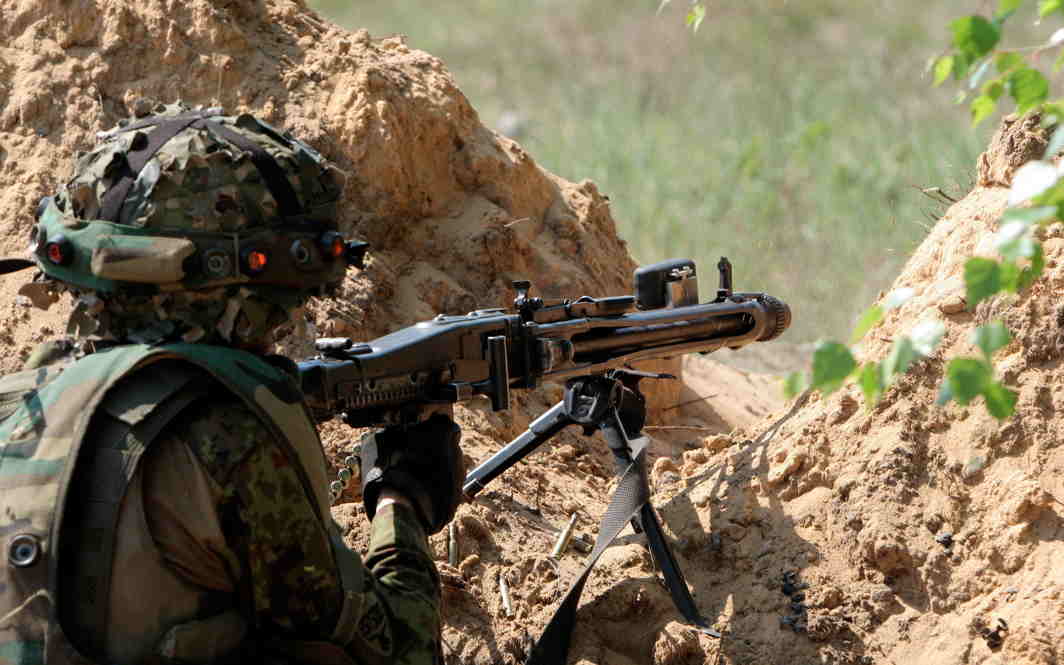
The Central Reserve Police Force (CRPF) on Tuesday said that it will send five additional companies to Jammu and Kashmir in wake of the recent civilian killings. These companies will be deployed there within a week. The force earlier sent 25 companies in J&K.
112 terrorists killed, 135 apprehended and two surrendered in Jammu and Kashmir so far this year, informs CRPF
The Central Reserve Police Force (CRPF) on Tuesday said that a total of 112 terrorists killed, 135 apprehended and two surrendered in Jammu and Kashmir so far this year.
Punjab CM Channi accepts Advocate General APS Deol’s resignation
Punjab Congress chief Navjot Sidhu’s wish prevailed as Punjab Chief Minister Charanjit Singh Channi accepts Advocate General APS Deol’s resignation.
Navjot Sidhu has been questioning Deol’s appointment ever since he was given the charge of Punjab Advocate General. Deol was a counsel for former director general of police Sumedh Singh Saini in the 2015 post sacrilege police firing incidents.
Delhi HC seeks Delhi government’s reply over spike in dengue cases
The Delhi High Court today sought response of the Delhi government and North Delhi Municipal Corporation on a plea for taking steps to control the outbreak of dengue like regular fogging, forming inspection teams to check any growth of mosquito larvae on the premises and imposing penalties for violations.
China opts out of Delhi Regional Security Dialogue on Afghanistan citing scheduling reasons
China on Tuesday opted out of Delhi Regional Security Dialogue on Afghanistan saying that it is not attending the security dialogue on Afghanistan convened by India due to scheduling reasons.
Delhi security dialogue on Afghanistan is discuss common approach to deal with Afghanistan crisis. The security officials from Russia, Iran and five Central Asian countries for a security dialogue on Afghanistan on Wednesday will explore firming up a common approach for practical cooperation in confronting increasing threats of terrorism, radicalisation and drug trafficking following the Taliban’s takeover of Kabul in August.
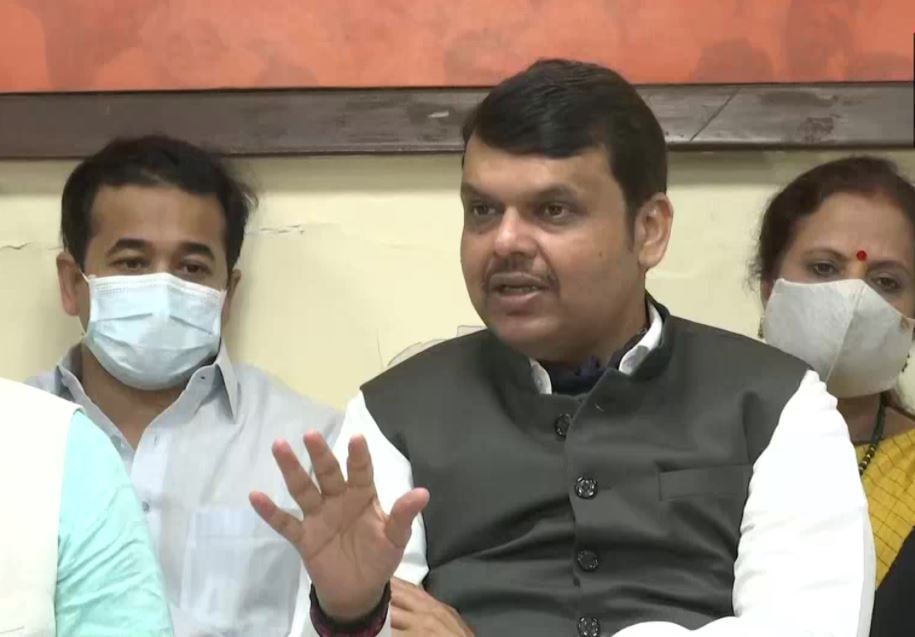
Former Maharashtra CM Fadnavis alleges land deals between Nawab Malik and 1993 Mumbai blast convicts
Former Maharashtra Chief Minister and BJP leader Devendra Fadnavis on Tuesday accused NCP minister Nawab Malik of engaging in dubious property deals with two Bombay blast convicts.
Fadnavis said that Nawab Malik brought property from an underworld person who was convicted in the 1993 Mumbai blasts.
Delhi government to launch campaign against open burning of garbage from November 11 to December 11, says Environment Minister Gopal Rai
Delhi Environment Minister Gopal Rai said on Tuesday that the Delhi government will launch a campaign against open burning of garbage from November 11 to December 11.
As the Delhi air quality is continues to remain in very poor state, the Delhi government today called an emergency meeting to discuss ways to improve air quality.
Kisan Mahapanchayat in Lucknow on November 22 will prove to be last nail in coffin for Centre, says BKU spokesperson Rakesh Tikait
Bharatiya Kisan Union (BKU) spokesperson Rakesh Tikait said on Tuesday that the Kisan Mahapanchayat in Lucknow on November 22 will prove to be the last nail in the coffin for the Centre and the ongoing farmers’ protests against the three new farm laws will intensify in Purvanchal.
The mahapanchayat in Lucknow is being organised by the Samyukt Kisan Morcha (SKM), an umbrella body of around 40 farmer unions.
New Delta variant of Covid-19 in China spreads over 40 cities, Heihe city announces reward for tracing source of outbreak
The latest Covid-19 outbreak triggered by the Delta variant has spread to over 40 cities and across 20 provinces and regions in China with rise in cases in the double-digits since the past three weeks.
The authorities in China are continuing to strictly follow a zero-Covid strategy with strict border closures, targeted lockdowns and long quarantines.
India one of the greatest teams, says Ravi Shastri before signing off as India’s head coach
Ravi Shastri delivered a moving speech in the dressing room as his tenure as the Indian head coach came to an end following India’s match against Namibia in T20 World Cup 2021. He said: “The current team will go down as one of the greatest teams to have played the game.”
Must Watch: A stirring speech to sign off as the #TeamIndia Head Coach 👏 👏
Here's a snippet from @RaviShastriOfc's team address in the dressing room, reflecting on the team's journey in the last few years. 👍 👍 #T20WorldCup#INDvNAM
West Bengal Cabinet is likely to expand on Tuesday. According to reports, after the proposed West Bengal Cabinet expansion, West Bengal Chief Minister Mamata Banerjee may keep the finance portfolio with herself, while making Chandrima Bhattacharya the Minister of State (MoS) for finance.
PM Modi assures no discrimination in women’s quota, delimitation debate intensifies in Parliament
PM Narendra Modi has assured that women’s reservation will be implemented without discrimination, amid a heated debate over delimitation in Parliament.
Prime Minister Narendra Modi has assured that there will be no discrimination in the implementation of women’s reservation, as Parliament witnessed a sharp debate over the proposed linkage between the quota and delimitation exercise.
During the ongoing special session, the government reiterated its commitment to ensuring fair representation while addressing concerns raised by opposition parties regarding the timing and structure of the legislation.
The proposed framework aims to reserve 33 percent of seats for women in the Lok Sabha and state assemblies. However, its implementation is tied to a fresh delimitation exercise, which is expected after the next census.
Opposition questions timing and intent
Opposition leaders have raised concerns that linking the women’s quota to delimitation could delay its implementation. They argue that the process of redrawing constituencies may push the actual rollout further into the future.
The issue has triggered a broader political confrontation, with multiple parties questioning whether the move could alter representation across states.
Some critics have also alleged that the delimitation exercise could disproportionately benefit certain regions based on population, a charge the government has rejected.
Government reiterates commitment to fair implementation
Responding to these concerns, the Centre has maintained that the reforms are necessary to ensure accurate and updated representation based on population data.
Leaders from the ruling side have repeatedly emphasized that the process will be carried out transparently and without bias. The assurance that there will be “no discrimination” is aimed at addressing fears among states and opposition parties.
The debate marks a key moment in Parliament, with both sides engaging in intense exchanges over one of the most significant electoral reforms in recent years.
Give all tickets to Muslim women, Amit Shah says, attacking Akhilesh Yadav on sub-quota demand
A sharp exchange between Amit Shah and Akhilesh Yadav in Parliament over sub-quota for Muslim women highlights key divisions on women’s reservation implementation.
A heated exchange broke out in Parliament during discussions on the women’s reservation framework, with Union Home Minister Amit Shah and Samajwadi Party chief Akhilesh Yadav locking horns over the demand for a sub-quota for Muslim women.
The debate unfolded as the government pushed forward key legislative measures to implement 33% reservation for women in the Lok Sabha and state assemblies.
Akhilesh Yadav argued that the proposed reservation must ensure representation for women from marginalised communities, including Other Backward Classes (OBCs) and Muslim women. He said that without such provisions, large sections could remain excluded from political participation.
He also questioned the timing of the bill, alleging that the Centre was avoiding a caste census. According to him, a census would lead to renewed demands for caste-based reservations, which the government is reluctant to address.
Government rejects religion-based quota
Responding to the demand, Amit Shah made it clear that reservation based on religion is not permitted under the Constitution.
He stated that any proposal to provide quota to Muslims on religious grounds would be unconstitutional, firmly rejecting the idea of a separate sub-quota for Muslim women within the broader reservation framework.
The government has maintained that the existing framework already includes provisions for Scheduled Castes (SC) and Scheduled Tribes (ST) women within the overall reservation structure.
Wider political divide over implementation
The issue of sub-categorisation within the women’s quota has emerged as a major flashpoint, even as most opposition parties broadly support the idea of women’s reservation.
Samajwadi Party leaders reiterated that their support for the bill depends on inclusion of OBC and minority women, while the government continues to defend its constitutional position.
The debate is part of a broader discussion during the special Parliament session, where multiple bills linked to delimitation and implementation of the women’s quota are being taken up.
No state will lose a seat, Centre assures as delimitation debate takes centre stage in Parliament
Parliament’s special session begins with key focus on implementing women’s reservation and delimitation, setting the stage for major electoral changes.
A special session of Parliament commenced on Thursday, with the Centre set to take up crucial legislation related to women’s reservation and delimitation of constituencies. The session, scheduled over three days, is expected to witness intense debate as the government pushes forward its legislative agenda.
At the centre of discussions is the proposal to operationalise the women’s reservation law, which seeks to allocate 33 percent of seats in the Lok Sabha and state assemblies to women. The law, passed earlier, requires enabling provisions before it can be implemented.
The rollout of the reservation is closely tied to the delimitation exercise — a process that redraws parliamentary constituencies based on updated population data. The implementation is expected only after the next census and delimitation process are completed.
The government is aiming to put in place the framework so that the reservation can be enforced in future elections, likely around 2029.
Delimitation and numbers at play
Delimitation is a key aspect of the proposed changes, as it will determine how seats are redistributed and which constituencies are reserved. The exercise is expected to reflect population shifts and may also involve an increase in the total number of Lok Sabha seats.
This linkage has made the issue politically sensitive, with several opposition parties backing women’s reservation in principle but raising concerns over how and when delimitation will be carried out.
Political reactions and expected debate
The session is likely to see sharp exchanges between the government and opposition. While there is broad agreement on increasing women’s representation, disagreements remain over the timing, process, and potential political implications of the delimitation exercise.
Some leaders have argued that delimitation could significantly alter the balance of representation among states, making it a contentious issue beyond the women’s quota itself.
The government, however, has framed the move as a step toward strengthening women’s participation in governance and ensuring more inclusive policymaking.
APN News is today the most watched and the most credible and respected news channel in India. APN has been at the forefront of every single news revolution. The channel is being recognized for its in-depth, analytical reportage and hard hitting discussions on burning issues; without any bias or vested interests.