
India News
Mandal-era again: Modi govt appoints commission to identify OBC sub-categories

[vc_row][vc_column][vc_column_text]- By Abhishek Kumar
Panel headed by retired Delhi HC chief justice G Rohini tasked with identifying OBC sub-categories on a scientific basis, to submit findings within 12 weeks
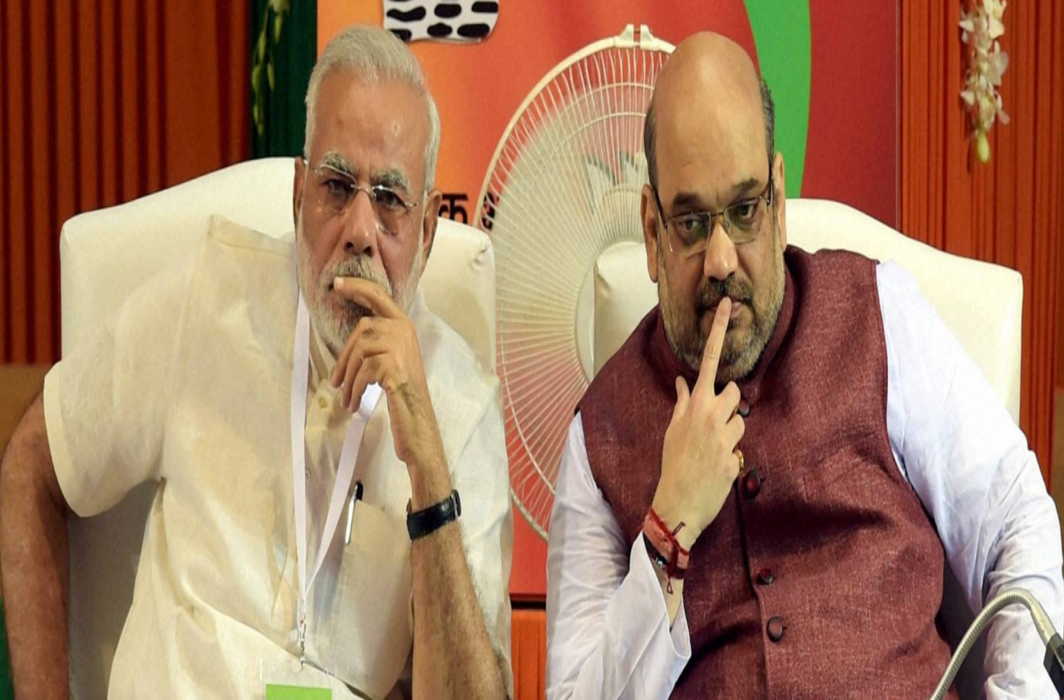
In a move that could revive the political churning last witnessed in India during the Mandal Commission days of the late 1980s, the Narendra Modi government has set up a commission to divide the Other Backward Classes (OBCs) into sub-groups to ensure a more equitable sharing of benefits between various classes covered in the overarching category.
The commission, set up on orders of President Ram Nath Kovind on Monday, will be chaired by retired Delhi high court chief justice G Rohini and has been tasked to identify the sub-categories on a scientific basis. The panel has to submit its findings to the government within 12 weeks.
There are three clear terms of reference for the commission:[/vc_column_text][/vc_column][/vc_row][vc_row css=”.vc_custom_1507027821301{margin-bottom: 20px !important;border-bottom-width: 20px !important;padding-top: 20px !important;background-color: #b2b1bf !important;}”][vc_column][vc_column_text]
- To examine the extent of inequitable distribution of benefits of reservation among the castes or communities included in the broad category of Other Backward Classes with reference to such classes included in the Central List
- To work out the mechanism, criteria, norms and parameters in a scientific approach for sub-categorisation within such Other Backward Classes
- To take up the exercise of identifying respective castes or communities or sub-castes or synonyms in the Central List of Other Backward Classes and classifying them into their respective sub-categories.
[/vc_column_text][/vc_column][/vc_row][vc_row][vc_column][vc_column_text]While the state objectives of the commission seem well-intentioned and address a demand that had been long-pending from those members of the OBC community who find themselves robbed of the quota-benefits by dominant classes like the Yadavs, the political motivations of Prime Minister Narendra Modi’s government and his BJP cannot be discounted.Narendra Modi’s government and his BJP cannot be discounted.
Under the current reservation system, OBCs who qualify for quota benefits are entitled to a chunk of 27 per cent of the Centre government’s jobs and educational opportunities – a recommendation that was made under the Mandal Commission report and implemented by the then Prime Minister VP Singh’s government in 1990 amid massive nationwide protests. The panel is likely to recommend that the most backward classes (MBCs) – the kurmis, mallahs, musahars, kumhars, barhais, kirar, gujars, and other politically significant communities – get a sub-quota within the 27 per cent block reserved for OBCs.
Politically, if the BJP is able to get the commission’s findings and recommendations implemented as law, the move could help the saffron party wean off a huge chunk of OBC votes from Opposition parties that mushroomed in the Mandal-era – like the Samajwadi Party, Bahujan Samaj Party, Rashtriya Janata Party and even its own ally – Bihar chief minister Nitish Kumar’s Janata Dal (United). The parties have for long been cashing in electoral dividends on account of their claims of representing the political, social and economic interests of the OBCs.
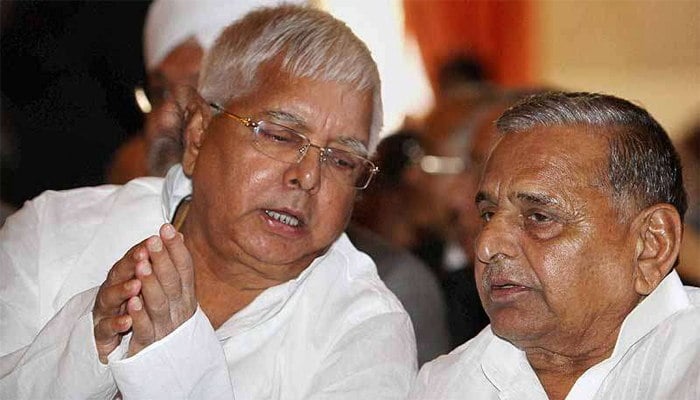
While Lalu Prasad Yadav’s RJD and Mulayam Singh’s SP have greatly benefitted from their Muslim-Yadav support base, Nitish has positioned himself as a Kurmi leader. Mayawati and her BSP owe their political relevance to the perception that they represent the most backward castes among the OBCs. The OBC-MBC divide, the anger among the MBCs against the dominant Yadav OBC political leadership has played a defining role in the politics of Uttar Pradesh and Bihar – the two Indian states where politics is still seen from the prism of castes and which account for a total of 120 of Lok Sabha’s 543 seats.
In recent years, the BJP has made a concerted effort to reach out to MBCs and those OBC sub-groups that fail to find a political voice in the Mandal-era political parties and it has reaped huge benefits from this effort, both during the Lok Sabha elections in 2014 and the UP assembly elections earlier this year.
In Modi’s home state of Gujarat, the BJP has been facing a major challenge from its erstwhile loyal vote bank of the Patel-Patidar community which has been demanding inclusion in the OBC list despite the fact that the community is largely seen as being economically strong and self-sufficient.
Once the commission submits its report, there is a possibility that the BJP might try to alter the current system of caste-based reservations but through a well-disguised logic. The sub-categorisation will help determine the economic status of different OBC communities and then propose a sub-quota for them – in effect it would meet the BJP’s long-pending poll promise of replacing purely caste-based reservation with reservation based on economic conditions.
Currently nine Indian states – Andhra Pradesh, Telangana, Puducherry, Karnataka, Haryana, Jharkhand, West Bengal, Bihar, Maharashtra and Tamil Nadu – have sub-categories for state quotas among the backward classes.
Once the commission submits its report, the Centre will try to push for a pan-India sub-categorisation and corresponding distribution of quota benefits. It remains to be seen how Mandal-era political veterans like Lalu, Mulayam, Mayawati and Nitish react to the final submission of the panel. But what is certain is that the move is set to trigger a massive political churning in India’s caste-based electoral politics.[/vc_column_text][/vc_column][/vc_row]







India News
Supreme Court questions EC over missing records in Sringeri election dispute
The Supreme Court questioned the Election Commission over missing video footage of the 2023 counting in Karnataka’s Sringeri constituency. The case involves a revised result following a recount of postal ballots.

India News
Rahul Gandhi joins India Gate protest by Ankita Bhandari’s parents
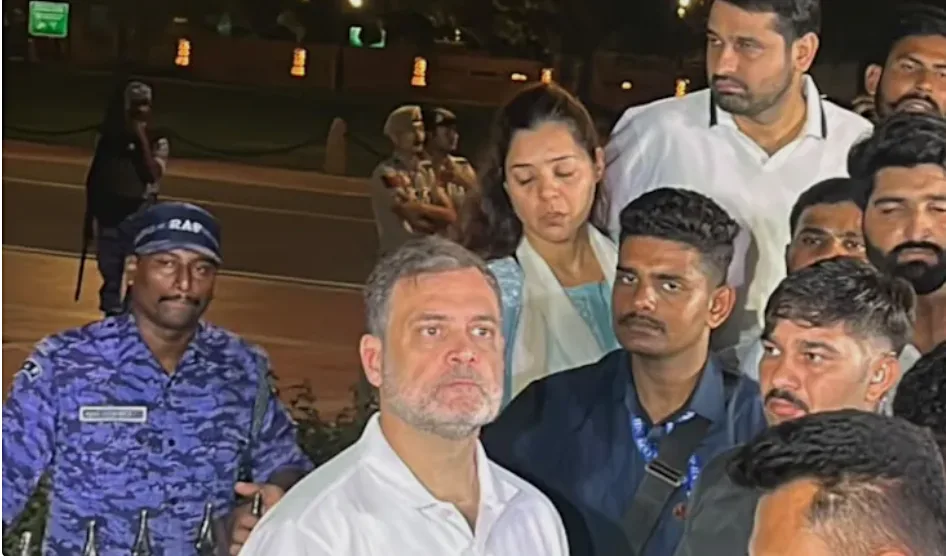
Rahul Gandhi joined the protest by Ankita Bhandari’s parents at India Gate in New Delhi on October 14. The demonstration has brought renewed attention to the 2022 murder case and the family’s concerns following Dushyant Gautam’s appointment as Sikkim Governor.
India News
Meerut murder: Muskaan Rastogi and Sahil Shukla get death sentence
A Meerut court has sentenced Muskaan Rastogi and Sahil Shukla to death in the blue drum murder case involving the killing of merchant navy officer Saurabh Rajput in March 2025.

CJP leaders Saurav Das, Ashutosh Ranka, Ajinkya Shinde sent to 5-day judicial custody

PM Modi speaks to Mark Carney as India and Canada push to strengthen ties

S Jaishankar says India is a natural option for Russia amid Europe tensions

Meerut murder: Muskaan Rastogi and Sahil Shukla get death sentence

Rahul Gandhi joins India Gate protest by Ankita Bhandari’s parents

Supreme Court questions EC over missing records in Sringeri election dispute
Rahul Gandhi joins India Gate protest by Ankita Bhandari’s parents
Meerut murder: Muskaan Rastogi and Sahil Shukla get death sentence
PM Modi speaks to Mark Carney as India and Canada push to strengthen ties
S Jaishankar says India is a natural option for Russia amid Europe tensions

Afghan Men Try To Hang With The Jet Engine Of The Aircraft in Kabul- Afghanistan News – Kabul News
Trending Top 10 News: 10000 Crore Fine on Flipkart, Apple to Launch Unique Feature, Hdfc Bank Job Ad

Trending Top 10 News: Nokia 6310, Apple sales, Bachpan ka Pyar Video Kid, Dainik Bhaskar IT Raid

Trending Top 10 News: Canada bans Indian flights, Rain in Delhi NCR, AIMIM Twitter hacked, Raj Kundra case

Trending Top 10 News: Shein India, Apple New Service, Pocket Oxygen, Oppo Launched New Phone
-
 India News20 hours ago
CJP leaders Saurav Das, Ashutosh Ranka, Ajinkya Shinde sent to 5-day judicial custody
-
 India News20 hours ago
PM Modi speaks to Mark Carney as India and Canada push to strengthen ties
-
 Latest world news20 hours ago
S Jaishankar says India is a natural option for Russia amid Europe tensions
-
 India News9 hours ago
Meerut murder: Muskaan Rastogi and Sahil Shukla get death sentence
-
 India News9 hours ago
Rahul Gandhi joins India Gate protest by Ankita Bhandari’s parents
-
 India News8 hours ago
Supreme Court questions EC over missing records in Sringeri election dispute
