English हिन्दी
Connect with us

India News

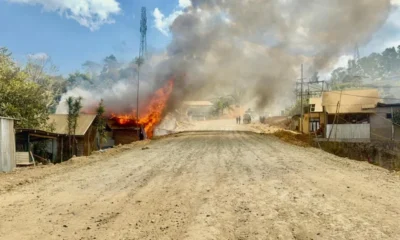
Manipur violence: Tribal Leaders Forum rejects dialogue with CM Biren Singh

ITLF’s spokesperson Ginza Vualzong remarked that there is no point in talking about peace without a political solution. 

Published

on

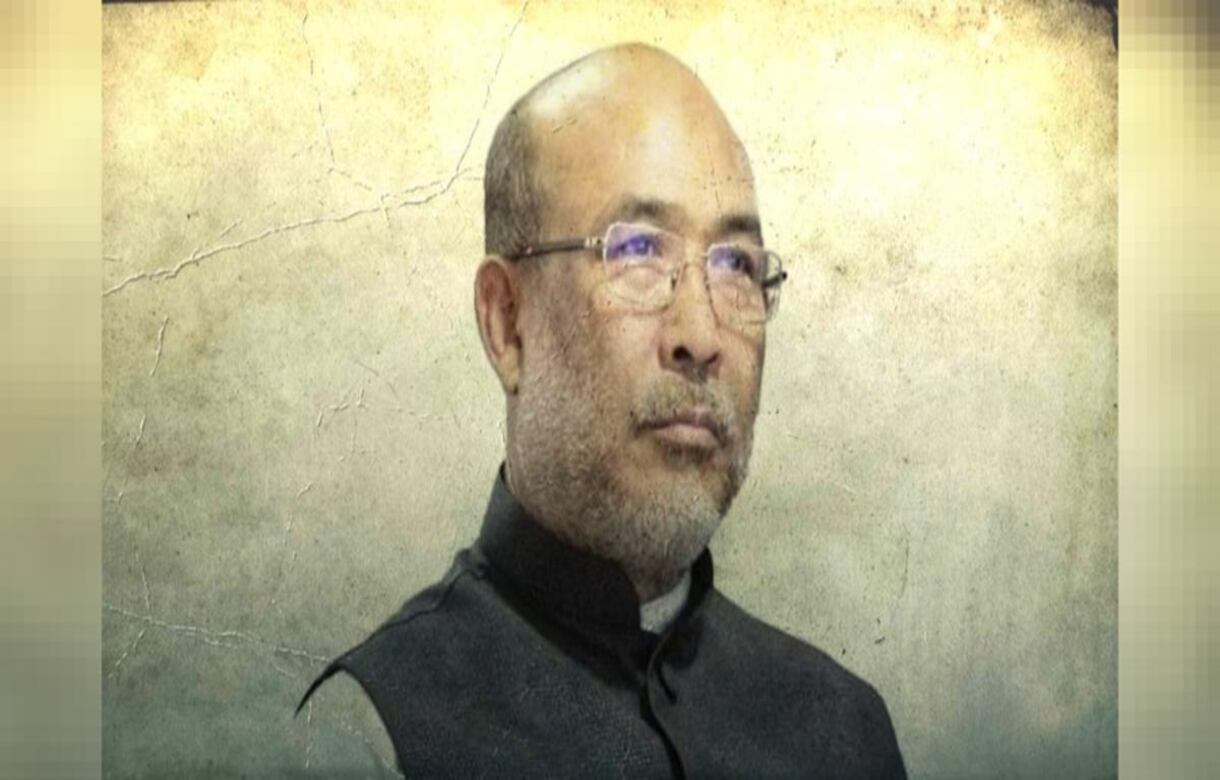
CM Biren Singh

The Indigenous Tribal Leaders Forum (ITLF), a major tribal body in Manipur, declined any dialogue with Chief Minister N Biren Singh or his government on Monday. The tribal body has been demanding imposition of President’s rule in Manipur. 

The Indigenous Tribal Leaders Forum’s spokesperson Ginza Vualzong stated that the Chief Minister’s intention of reaching out to the stakeholders after a meeting with Home Minister Amit Shah comes too late after the loss of so many innocent lives and properties and several other untold hardships faced by the Kuki-Zo tribals. Ginza Vualzong remarked that there is no point in talking about peace without a political solution. 
The spokesperson further added that they have reached a point where the Kuki-Zo community can no longer live together with the Meiteis. He claimed that the Chief Minister is the perpetrator of the current ethnic violence whose hatred for the Kuki-Zo community resulted in the genocide of the Kuki-Zo community and that cannot be the harbinger of peace. 

The tribal body along with 10 tribal MLA, has been urging for a separate administration for the tribals. A statement issued by the body read that all the tribals and a large section of the Meitei community have lost faith in his leadership and his government. Earlier, the ITLF has chaired talks with various other dignitaries including Union Home Minister Amit Shah, where the Kuki-Zo tribals have voiced their demands including their political aspiration of total separation from the northeastern state. 

The statement added that the tribal body’s political demand is in sync with the demand of the other 10 MLAs and other CSO groups. It noted that the ITLF has exhausted their avenues for dialogue and it is crucial for the Government of India to focus on finding a solution to their political demand as soon as possible in an effort to bring lasting peace in the state. 

The ITLF has also urged all CSOs and tribe leaders from the Kuki-Zo community to maintain unity and not to participate in any form of dialogue with the Chief Minister and his administration. The body further warned that if anyone is known to be in contact with the state government, stringent measures would be taken as necessary. 

India News

Maharashtra passes freedom of religion bill with jail term up to 10 years

Maharashtra passes anti-conversion bill with strict jail terms and fines, aiming to curb unlawful religious conversions.

Published

on

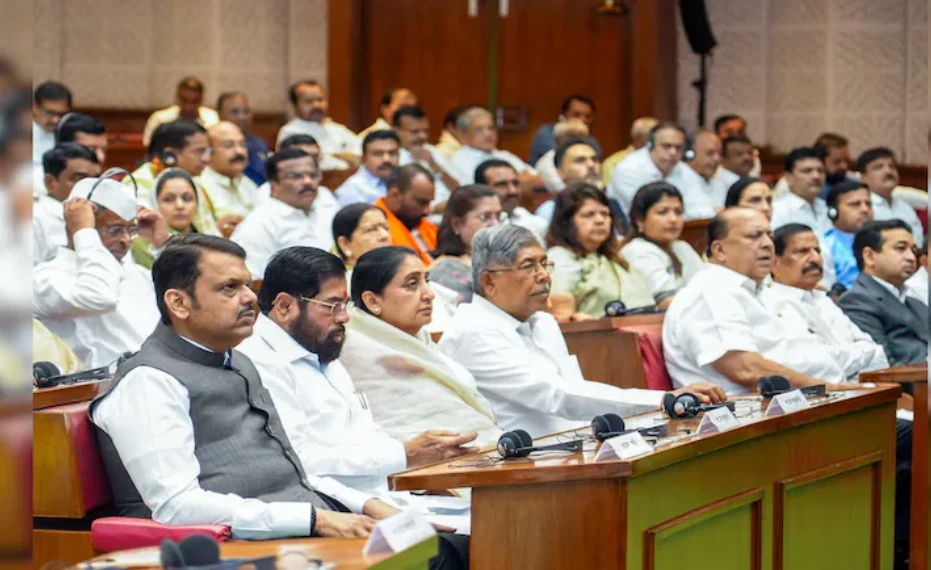
Maharashtra faces freedom of bill

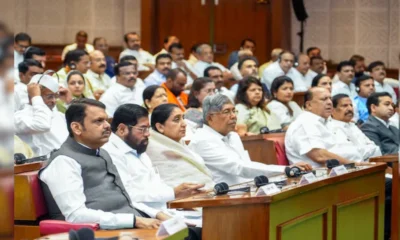
The Maharashtra Assembly has passed the Freedom of Religion Bill 2026, introducing stringent penalties to curb religious conversions carried out through coercion, fraud, inducement or marriage.

The bill was cleared by voice vote late Monday, with the government asserting that it aims to protect individuals from unlawful conversions while safeguarding constitutional rights.

Under the provisions, individuals found guilty of conversion through marriage or deceit can face up to seven years in prison along with a fine of Rs 1 lakh. In cases involving minors, women, persons of unsound mind, or those belonging to Scheduled Castes and Scheduled Tribes, the punishment increases to seven years’ imprisonment and a fine of Rs 5 lakh.

Mass conversions will also attract a jail term of up to seven years and a fine of Rs 5 lakh. Repeat offenders could face imprisonment of up to 10 years.

Chief Minister Devendra Fadnavis said the law is not aimed at any particular religion but seeks to prevent conversions through illegal means. He emphasised that the right to freedom of religion under Article 25 of the Constitution does not include conversion through coercion or fraud.

He also noted that several states, including Odisha, Gujarat, Uttar Pradesh, Madhya Pradesh, Haryana, Karnataka and Jharkhand, have enacted similar laws.

The bill allows complaints to be filed by the affected individual or close relatives, while police can also initiate action in certain situations. The government said this provision is necessary as victims may not always be in a position to approach authorities.

Minister of State for Home Pankaj Bhoyar said the legislation ensures that conversions take place voluntarily and transparently. He addressed concerns over the requirement of giving a 60-day prior notice to the district magistrate, stating that the provision is meant to verify free consent.

The law also mandates informing authorities within 21 days after conversion, failing which it may be treated as invalid. The government described this as a measure for administrative record-keeping and to avoid disputes.

During the debate, members from the opposition raised concerns over possible misuse and vigilantism. Congress MLA Aslam Shaikh argued that the bill could affect constitutional rights, including privacy and equality. Some legislators also demanded that the bill be sent to a joint select committee for further scrutiny.

However, the opposition Shiv Sena (UBT) extended support. MLA Bhaskar Jadhav said the bill does not target any religion and is aimed at preventing unethical practices.

The government maintained that the law does not restrict an individual’s right to change religion voluntarily but is intended to curb unlawful practices and maintain law and order.

Continue Reading

India News

Mamata Banerjee writes to poll chief over officers’ reshuffle, calls move arbitrary

Mamata Banerjee has written to the Chief Election Commissioner, calling the reshuffle of senior Bengal officials arbitrary and raising concerns over constitutional norms.
Published

on

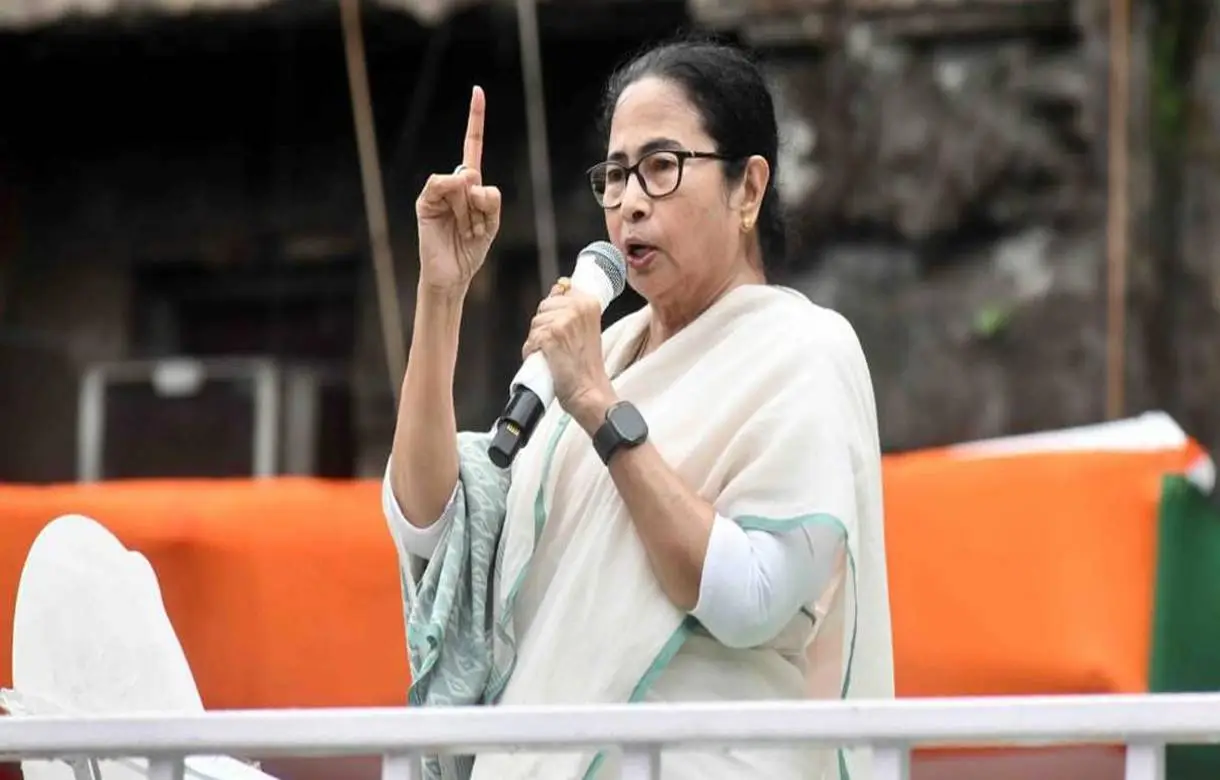
mamta banerjee

West Bengal Chief Minister Mamata Banerjee has written to Chief Election Commissioner Gyanesh Kumar, raising strong objections to the recent reshuffle of senior bureaucrats in the state ahead of the assembly elections.

In her letter, Banerjee described the move by the Election Commission of India as “arbitrary” and expressed “deep concern” over what she termed a unilateral decision. She urged the Commission to refrain from adopting such measures in the future.

The Chief Minister pointed out that while the Election Commission does have the authority to make administrative changes during elections, past practice has involved consultation with the state government. According to her, the Commission would typically seek a panel of officers from the state and make its selections from that list, maintaining what she called constitutional propriety and administrative convention.

Banerjee warned that bypassing this process could undermine the institutional credibility and long-standing legacy of the poll body, and may also affect the foundational principles of the constitutional framework.

The controversy stems from the Commission’s decision, taken soon after announcing election dates, to remove several top officials from election-related duties. These include the state’s Chief Secretary, Director General of Police, Kolkata Police Commissioner, and Home Secretary.

The Commission has maintained that the reshuffle was aimed at ensuring a peaceful and violence-free electoral process.

Reacting sharply, Banerjee alleged bias in the decision-making, claiming that the removal of the Chief Secretary indicated an anti-women stance. She also accused the Commission of selectively targeting officers, suggesting that the move favoured individuals aligned with the Bharatiya Janata Party.

Meanwhile, the Trinamool Congress escalated its protest, staging a day-long walkout from the Rajya Sabha earlier in the day.

Responding to the criticism, Parliamentary Affairs Minister Kiren Rijiju said the Election Commission is a constitutional authority, adding that questioning its decisions in Parliament is inappropriate and unproductive.

The Commission has appointed a new Chief Secretary in place of the outgoing official as part of the reshuffle.

Continue Reading

India News

Pakistan airstrike allegations on Kabul hospital leave hundreds dead, claims Taliban

Taliban alleges 400 deaths after a Pakistani airstrike hit a Kabul hospital, but Islamabad denies targeting civilian infrastructure.
Published

on

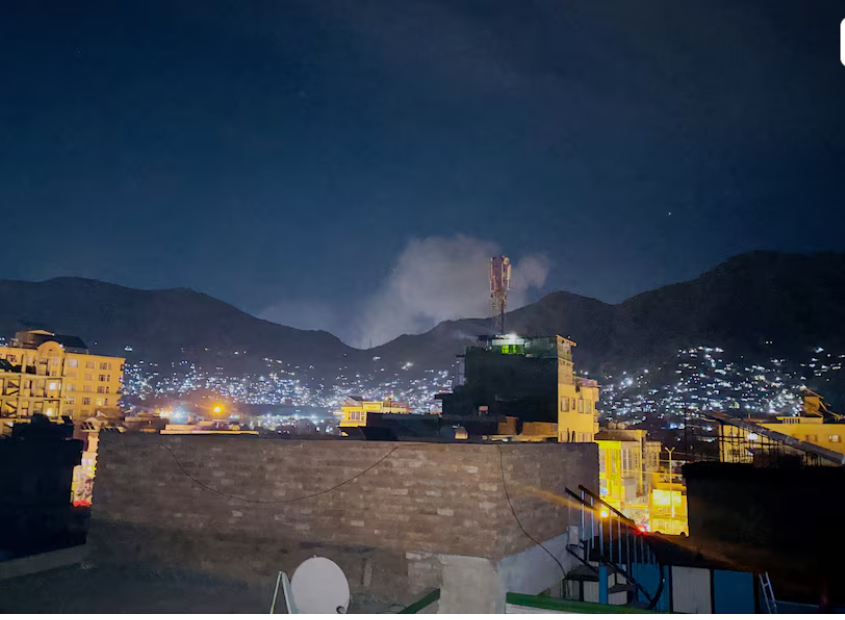
pakistan fire

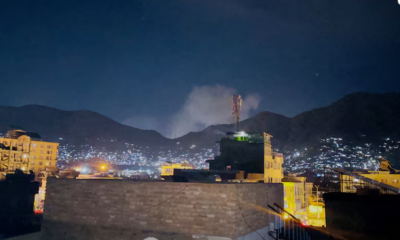
At least 400 people have been killed and around 250 others injured following an alleged Pakistani airstrike on a hospital in Afghanistan’s capital, Kabul, according to Taliban officials.

Afghanistan’s deputy government spokesperson Hamdullah Fitrat said the strike occurred around 9 pm local time and hit a major drug rehabilitation hospital in Kabul. The facility, which reportedly has a capacity of 2,000 beds, suffered extensive damage, with large sections destroyed in the attack.

Taliban spokesperson Zabihullah Mujahid strongly condemned the incident, accusing Pakistan of deliberately targeting civilian infrastructure. In a statement posted on X, he alleged that the strike hit a medical facility where patients were undergoing treatment, calling the act a violation of international norms and “a crime against humanity.”

Pakistan, however, rejected the accusations. The country’s officials termed the claims “baseless” and denied targeting any hospital in Kabul.

Pakistan’s Information Minister Attaullah Tarar stated that the military had carried out “precision airstrikes” but insisted the targets were military installations. According to him, the operations focused on “technical support infrastructure and ammunition storage facilities” at two locations in Kabul and in the eastern province of Nangarhar.

He further claimed that the strikes were aimed at infrastructure allegedly used to support militant groups, stressing that only specific targets were engaged.

The reported airstrike comes amid rising tensions between the two neighbouring countries. Afghan authorities said clashes along the border in recent days have resulted in casualties, with at least four people killed in Afghanistan.

The ongoing hostilities reportedly began in late February after Afghanistan launched cross-border actions in response to earlier Pakistani strikes, which Kabul claimed had caused civilian deaths.

The situation has further strained relations despite a ceasefire brokered last October. The truce had followed earlier violence that left dozens of civilians, soldiers, and suspected militants dead.

Pakistan’s Defence Minister Khawaja Asif has described the situation as an “open war,” signalling a sharp escalation in the conflict between the two nations.

Continue Reading

Trending

© Copyright 2022 APNLIVE.com