English हिन्दी
Connect with us

India News

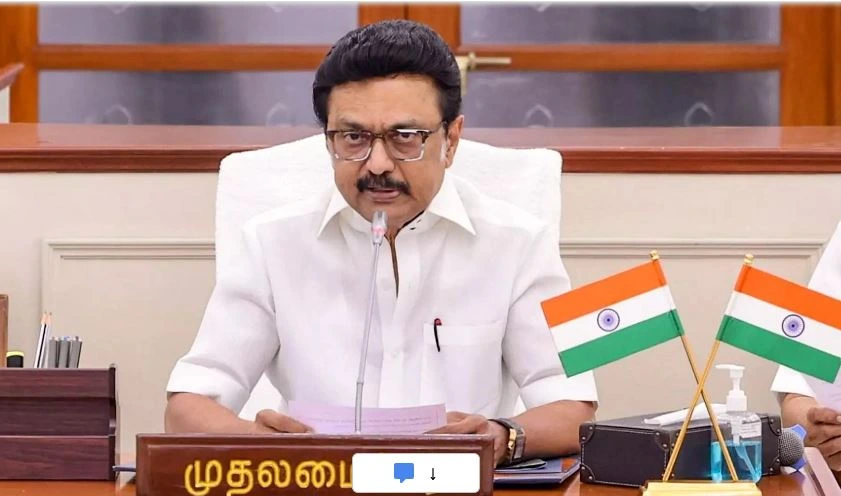
MK Stalin rebuts PM Modi’s women safety remark, calls Tamil Nadu safest state

MK Stalin strongly countered Prime Minister Narendra Modi’s remark on women’s safety, calling Tamil Nadu the safest state and questioning the Centre’s handling of Manipur violence.

Published

on

MK Stalin

Ahead of the Tamil Nadu Assembly elections, Chief Minister and DMK president MK Stalin launched a strong political attack on Prime Minister Narendra Modi, firmly rejecting the claim that Tamil Nadu is unsafe for women and questioning the Centre’s handling of law and order issues across the country.

Addressing a massive DMK women’s conference in Thanjavur district, Stalin said the Prime Minister’s remarks on women’s safety in Tamil Nadu were misleading and politically motivated. Asserting that the state remains one of the safest places for women, he highlighted the high participation of women in education, employment and public life.

“Mr Prime Minister, I say this with my head held high — Tamil Nadu is the safest place for women,” Stalin said, accusing the Prime Minister of spreading false narratives.

Manipur violence and Centre under fire

Turning his focus to the prolonged violence in Manipur, Stalin questioned the BJP-led government’s failure to restore normalcy in the northeastern state. Referring to official figures, he said hundreds had lost their lives, thousands were injured and more than a lakh people had been displaced.

He asked why the so-called “double-engine government” had been unable to control the situation despite being in power both at the Centre and in the state.

Drug abuse claims rejected

Responding to allegations of rising drug abuse in Tamil Nadu, the Chief Minister said narcotics were entering India through BJP-ruled states, blaming the Centre for weak border security and enforcement failures.

Attack on AIADMK-BJP alliance

Stalin also criticised the renewed alliance between the AIADMK and BJP, describing it as a “repackaged failed alliance.” He pointed out that the partnership had been defeated in previous elections and claimed that even when the two parties contested separately, voters rejected them.

Alleging misuse of central agencies, Stalin said NDA allies in Tamil Nadu were functioning under pressure, with investigative agencies being used as tools of intimidation.

Dravidian model and women-centric schemes

Highlighting the achievements of his government, Stalin said the Dravidian model of governance places women’s empowerment and social justice at its core. He recalled initiatives introduced during the tenure of former chief minister M Karunanidhi, including women’s entry into the police force and the expansion of self-help groups.

Stalin said his first decision as Chief Minister was to introduce free bus travel for women, a scheme that has since become widely popular. He also cited women-led self-help groups providing doorstep healthcare services, the breakfast scheme for schoolchildren and the 50 per cent reservation for women in local bodies.

Calling women the “powerhouse” of society, Stalin urged them to actively campaign for the DMK, counter misinformation and mobilise voters. He announced that the party would organise five mega conferences across Tamil Nadu in February as part of its election outreach.

Kanimozhi targets PM Modi

Earlier at the event, DMK MP Kanimozhi launched a sharp attack on the Prime Minister, accusing him of visiting Tamil Nadu only during election periods. She questioned the Centre over pending funds for schoolchildren, the Hosur airport project, flood relief assistance, delimitation concerns and insufficient funding for Tamil language initiatives.

BJP response

The BJP dismissed the DMK’s criticism, arguing that while the BJP and AIADMK had lost elections when contesting separately, their combined vote share indicated that the NDA could still remain a strong contender in Tamil Nadu.

India News

Voting underway in West Bengal phase 1 and Tamil Nadu as turnout crosses 50% by afternoon

Voter turnout crosses 50% in West Bengal phase 1 and Tamil Nadu as polling continues across key constituencies.

Published

on

voting percentage Bengal and Tamilnadu

Voting is underway in West Bengal and Tamil Nadu as the 2026 assembly elections see active participation from voters across both states. In West Bengal, the first phase of polling is being held across 152 constituencies in 16 districts, marking the beginning of a multi-phase election process.

Tamil Nadu, on the other hand, is witnessing single-phase polling across all 234 assembly seats, making it a crucial electoral day for the state.

Polling began in the morning with voters arriving at booths early, and arrangements were in place to ensure smooth voting.

Turnout figures show steady participation

As voting progressed, turnout figures indicated moderate to strong participation in both states.

  • West Bengal recorded around 62.2% voter turnout by 1 pm
  • Tamil Nadu saw approximately 56.8% turnout by the same time

Earlier in the day, initial turnout trends showed gradual momentum as queues built up at polling stations.

High-stakes contest in both states

The elections are significant for major political parties in both regions.

In West Bengal, the contest remains largely between the ruling Trinamool Congress and the Bharatiya Janata Party, with several key constituencies drawing attention. Around 3.6 crore voters are eligible to vote in this phase, highlighting the scale of the exercise.

Tamil Nadu’s election features a traditional contest between the DMK and AIADMK alliances, with the outcome expected to shape the state’s political direction.

Security and arrangements in place

Authorities have deployed security personnel and made logistical arrangements to ensure peaceful polling. Reports indicate that voting is largely proceeding smoothly, with monitoring systems in place across sensitive areas.

The election process in West Bengal will continue with the second phase scheduled for April 29, while Tamil Nadu will conclude voting in a single day.

Continue Reading

India News

Early voter turnout steady in Tamil Nadu and Bengal as polling gains pace

Tamil Nadu and West Bengal recorded steady voter turnout till 9 am as polling began across constituencies, with numbers expected to rise through the day.

Published

on

Elections

Morning polling sees moderate participation as voters head to booths across key states

Polling in the ongoing Assembly elections showed steady participation in the early hours on Thursday, with both Tamil Nadu and West Bengal recording moderate voter turnout by 9 am.

According to initial data released by election authorities, Tamil Nadu registered a turnout of around 17.7%, while West Bengal slightly edged ahead with approximately 18.8% in the same period.

Voting began at 7 am across polling stations, and officials expect the turnout to rise significantly as the day progresses, a pattern typically seen in Indian elections.

Tamil Nadu votes in single phase

Tamil Nadu is conducting polling across all 234 Assembly constituencies in a single phase. Early trends indicate a gradual but steady flow of voters, with participation likely to increase during the later hours of the day.

Several prominent personalities were among early voters, encouraging public participation and highlighting the importance of the democratic process.

Bengal phase 1 polling underway

West Bengal is witnessing polling across multiple constituencies in the first phase of its Assembly elections. The early turnout suggests an active start, with voters turning up in noticeable numbers despite the morning hours.

Turnout expected to rise through the day

Election officials have indicated that turnout figures in the morning are usually conservative, with a sharper increase expected in the afternoon and evening. Weather conditions, local factors, and voter mobilisation efforts often influence the final turnout percentage.

The elections are being closely watched due to the high political stakes in both states, with major parties competing intensely for control.

Continue Reading

India News

West Bengal election battle begins as phase 1 voting covers 152 seats

Phase 1 of the Bengal assembly elections begins with voting across 152 constituencies, setting the stage for a high-stakes TMC vs BJP contest.

Published

on

West bengal elections

Voting for the first phase of the West Bengal assembly elections 2026 began on April 23, marking the start of a crucial political contest in the state.

In this phase, polling is being held across 152 constituencies, making it one of the most significant stages of the election process. The voting spans multiple districts across both North and South Bengal, setting the tone for the rest of the electoral battle.

The election is largely being seen as a direct contest between the ruling Trinamool Congress (TMC) and the Bharatiya Janata Party (BJP). While the TMC is seeking to retain power after over a decade in office, the BJP is aiming to expand its presence and challenge the incumbent government.

A large number of candidates are in the fray for this phase, reflecting the scale and intensity of the contest. Several prominent leaders are contesting from key constituencies, adding to the political significance of the opening phase.

The elections are being conducted in two phases, with the second round of polling scheduled for April 29. The counting of votes is expected in early May, after which the composition of the 294-member assembly will be decided.

Key issues shaping voter sentiment include employment concerns, welfare schemes, governance, and identity politics. The outcome of this phase is expected to provide early indications of the broader electoral trend in the state.

With high voter turnout expected and tight security arrangements in place, the first phase is being closely watched as it could influence momentum for the remaining constituencies.

Continue Reading

Trending

© Copyright 2022 APNLIVE.com