English हिन्दी
Connect with us

India News

India liberalises mapping, geospatial data, PM Modi says massive step in vision for Atmanirbhar Bharat

The Centre on Monday liberalised the process of map making and generation of geospatial data, enabling Indian private firms to work without prior approvals.

Published

on

mapping

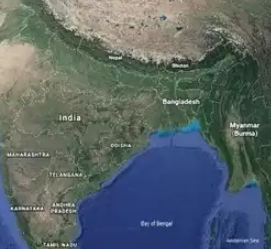
The Centre on Monday liberalised the process of map making and generation of geospatial data, enabling Indian private firms to work without prior approvals. The changes in the mapping policy have been made keeping in mind the government’s vision for Atmanirbhar Bharat.

The Ministry of Science and Technology said that what is readily available globally does not need to be restricted in India and therefore geospatial data that used to be restricted will now be freely available in India.

With the sweeping changes in the policy, the corporations and innovators are no longer subject to restrictions before they store, collect, generate, prepare, disseminate, publish, update digital Geospatial Data and Maps within the territory of India, the Ministry said in a statement.

The Ministry said the liberalisation of the Mapping industry and democratisation of the existing datasets will likely spur domestic innovation and enable Indian companies to compete in the global mapping ecosystem by leveraging modern geospatial technologies.

The policy will help startups and local companies to build next generation geospatial maps and harness them for building new business across infrastructure, urban transport and rural commerce.

On the new development, Prime Minister Narendra Modi tweeted that the government has taken a decision that will provide a huge impetus to Digital India. Liberalising policies governing the acquisition and production of geospatial data is a massive step in our vision for an Atmanirbhar Bharat. 

Also Read: Tripura CM Biplab Deb claims Amit Shah has plans to form government in Nepal and Sri Lanka

In another tweet, he said the reforms will unlock tremendous opportunities for our country’s start-ups, private sector, public sector and research institutions to drive innovations and build scalable solutions. This will also generate employment and accelerate economic growth.

He said the step will also benefit India’s farmers by leveraging the potential of geospatial and remote sensing data. The agriculture and allied sectors will become efficient with the rise of new technology enabled by the democratisation of data. These reforms demonstrate our commitment to improving ease of doing business in India by deregulation, added PM Modi.

Also Read: Govt data shows most Covid-19 vaccine beneficiaries skipped second dose

Earlier, mapping remained a government reserve and was handled by the Centre’s Survey of India. The individuals and companies needed to seek approval for use of mapping data under the Geospatial Information Regulation Act ,2016. So far, the country has been reliant on foreign resources for mapping technologies and services. 

India News

India hits back at Shehbaz Sharif at UN, says terror will have consequences

India hit back at Pakistan Prime Minister Shehbaz Sharif’s UN speech, with New Delhi warning that terrorism will have consequences.

Published

on

India has responded to Pakistan Prime Minister Shehbaz Sharif’s remarks at the United Nations, delivering a strong message on terrorism and warning that such actions will have consequences.

The response came after Mr Sharif addressed the UN and raised issues concerning India and Pakistan. New Delhi rejected the narrative presented by the Pakistani prime minister and highlighted the issue of terrorism.

India’s message was delivered by Petal Gehlot, who represented New Delhi in the response to Pakistan.

India warns Pakistan over terrorism

India’s response focused on Pakistan’s record and its approach towards terrorism. New Delhi made clear that terrorism cannot be separated from its consequences and that those responsible cannot expect such actions to go unanswered.

The Indian side also pushed back against the claims and allegations made by Mr Sharif during his UN speech.

The exchange comes amid continuing tensions between India and Pakistan, with terrorism remaining a major point of disagreement between the two countries.

Shehbaz Sharif’s UN remarks

In his address, Pakistan Prime Minister Shehbaz Sharif spoke about India-Pakistan relations and raised several issues concerning New Delhi.

India subsequently exercised its right of reply to respond to Pakistan’s statements at the United Nations.

New Delhi’s response underlined its position that terrorism remains a serious issue in the relationship and that there would be consequences for terrorist actions.

The latest exchange at the UN adds to the continuing diplomatic confrontation between the two neighbouring countries.

Continue Reading

India News

Veeramani POCSO case: Vijay questions Stalin over earlier probe

Tamil Nadu Chief Minister Vijay has questioned MK Stalin over the handling of the Veeramani POCSO case, while Stalin has rejected allegations that the previous DMK government protected anyone.

Published

on

Actor Vijay

Tamil Nadu Chief Minister and Tamilaga Vettri Kazhagam (TVK) president C Joseph Vijay has questioned DMK president MK Stalin over the handling of the POCSO case involving Gem Granites founder R Veeramani. The political exchange follows renewed investigation into allegations involving minor girls.

Vijay’s remarks came as the ruling TVK stepped up its questions about how the case was handled during the previous DMK government. The party’s IT wing has alleged that the earlier investigation was weakened and questioned why a final report was filed.

The allegations have been rejected by the DMK. Stalin has said that no order was issued by the DMK government to protect anyone in the case and has called the allegations false and defamatory.

What did Vijay say about the Veeramani case?

Vijay questioned Stalin over the handling of the case and demanded an explanation from the former chief minister.

The TVK has specifically questioned why action was not taken against Veeramani during the previous administration and why the earlier investigation resulted in a closure report.

The party has also raised questions about the role of officials involved in the earlier investigation. These are political allegations made by the TVK and have not been established as facts.

What is the Veeramani POCSO case?

The case concerns allegations of sexual abuse of minors involving R Veeramani, the founder of Gem Granites.

The case came under renewed scrutiny after a special POCSO court rejected an earlier closure report and ordered further investigation. The expanded probe has subsequently identified additional alleged survivors who were minors at the time of the alleged offences, according to current reporting.

The investigation is also examining the circumstances surrounding the earlier probe and whether there were any lapses in how the case was handled.

What has MK Stalin said?

Stalin has rejected allegations that the previous DMK government protected Veeramani.

He has said that no order was issued by the DMK government to shield anyone in the case. Stalin has also said that everyone responsible for the alleged offences, including anyone who aided or attempted to protect the accused, should face the law.

The DMK president has further said that the focus should remain on securing justice for the affected girls rather than making political allegations.

Why has the case become a political issue?

The Veeramani case has become the subject of a political dispute between the ruling TVK and the DMK over the handling of the earlier investigation.

The TVK is questioning the previous government’s handling of the case, while the DMK has denied that it intervened to protect the accused.

At this stage, claims about political interference or deliberate weakening of the earlier investigation should be treated as allegations unless established by the ongoing investigation or judicial proceedings.

Continue Reading

India News

Women wrestlers challenge Brij Bhushan’s acquittal in sexual harassment case

Four women wrestlers have challenged the acquittal of former WFI chief Brij Bhushan Sharan Singh and co-accused Vinod Tomar in a sexual harassment case.

Published

on

Brij Bhushan Sharan Singh

Four women wrestlers have approached a Delhi court challenging the acquittal of former Wrestling Federation of India (WFI) chief and BJP leader Brij Bhushan Sharan Singh in a sexual harassment case.

The wrestlers have also challenged the acquittal of co-accused Vinod Tomar. The matter is scheduled to be heard by a Special Judge at the Rouse Avenue Courts.

The appeal challenges the order passed by an Additional Chief Judicial Magistrate on August 3, 2026, when Brij Bhushan and Tomar were acquitted in the case.

Wrestlers challenge court’s reasoning

In their appeal, the wrestlers have argued that the acquittal order is legally unsustainable and that the evidence was not assessed appropriately.

They have also alleged that the order relied on assumptions about how victims of sexual assault and harassment were expected to behave instead of assessing the evidence and circumstances of the complainants.

The challenge seeks judicial scrutiny of the findings that resulted in the acquittal of Brij Bhushan and Tomar.

Brij Bhushan was acquitted in August

The Rouse Avenue court acquitted Brij Bhushan Sharan Singh on August 3 in the sexual harassment case involving women wrestlers. The court’s decision followed consideration of the evidence and statements presented during the proceedings.

The case had emerged after several women wrestlers accused the former WFI chief of sexual harassment. The allegations had led to a major protest by wrestlers in 2023.

The latest appeal means the acquittal is now being challenged before a higher court.

Continue Reading

Trending

© Copyright 2022 APNLIVE.com