
India News
Massive storm hits north India, kills at least 75 in Uttar Pradesh, Rajasthan


At least 75 persons were killed and over 150 injured in Uttar Pradesh and Rajasthan in a powerful storm that raged across north India on Tuesday, May 2 night.
The storm also left at least 156 animals dead in UP and uprooted trees and disrupted power supply in Punjab and Haryana as well.
Rains and hailstorm during the storm also brought down temperatures in the region. The official weather department, Indian Meteorological Department (IMD) forecast thunderstorm and squall for the next 48 hours (May 3-4).

While it had been windy with occasional thunder, the weather suddenly turned violent at 2.30 am on Thursday when people were fast asleep. While the storm lasted only for 15 minutes, it took an immense toll in the devastation it caused in terms of loss of human life, damage to crop and livestock.
“We have sought a detailed report from the affected districts,” said media reports quoting Relief Commissioner Sanjay Kumar. He said that 156 cattleheads also perished in the calamity.
At least 45 people were killed with 36 casualties in Agra Zone alone. Officials said that the death toll may cross 50 as many of the injured are still critical. In many areas, the power supply is yet to be restored.
According to the meteorological department of the Indian Air Force’s Kheria base, on Wednesday night, as much as 48.2 mm rainfall was reported in Agra district between 8:45 pm to 11:30 pm. That was accompanied by 126 km/hr storm winds.
“As per figures received till noon, 45 people were killed and 38 injured in the dust storm in different parts of the state,” Relief Commissioner Sanjay Kumar told PTI.
18 people were killed in Khairabad, 9 in Fatehabad, 4 in Bah, 2 each in Etmadpur and Kirwali area in Agra as winds at the speed of 132 km/hour, with a massive thunder and hailstorm, lashed the entire region.
Three persons died in Bijnor, two in Saharanpur and one each in Bareilly, Chitrakoot, Raebareli and Unnao districts, Kumar said. Other districts affected were Saharanpur, Pilibhit, Firozabad, Chitrakoot and Muzaffarnagar where people died after houses and trees collapsed.
In Rajasthan, at least 34 people were killed and nearly 100 injured as a high-intensity squall followed by thundershowers hit parts of the state during the night. Most deaths were reported from Bharatpur district where at least 16 people lost their lives. Nine people died in neighbouring Dholpur in the high-speed dust storm that started around 7pm and wreaked havoc for two hours. Four deaths were reported from Alwar and one each from Jhunjhunu and Bikaner.
Most deaths occurred in house collapse due to the storm, said media reports quoting officials in Rajasthan.
Hemant Kumar Gera, Secretary, Disaster Management and Relief, said nearly 100 were injured in the disaster, according to media reports.
20 were injured in Alwar, 32 in Bharatpur and 50 in Dholpur respectively. “A few are undergoing primary treatment while others were discharged. One critical patient from Dholpur was referred to Jaipur,” he said.
In Uttarakhand, the sudden rains also halted the ongoing Char Dham pilgrimage. Officials, however, said debris from the roads were cleared particularly in Chamoli and Uttarkashi districts.
Uttarakhand Disaster Mitigation & Management Centre (DMMC) said at least two people were killed in Kumaon and few more injured in other parts after rains and thunderstorm lashed the hill state on Wednesday night.
The storm uprooted many trees and snapped electricity supply in state capital Dehradun. Villages in the Jaunpur area near Mussoorie were also reeling in the dark. Reports suggest electricity and water supply has also been affected in Nainital, Haldwani and several other remote locations.
In Delhi, the storm caused traffic snarls in various places when a squall with a wind speed of 59 km per hour hit the city in the evening, the met department said. The Safdarjung observatory, whose recording is considered the official figure for Delhi, recorded 13.4mm rainfall.
Apart from traffic snarls, 15 flights, including two international, were diverted due to the bad weather, airport officials in Delhi said.
The weather office has forecast overcast skies along with the possibility of a drizzle on Thursday. “The maximum and minimum temperatures are expected to hover at 36 and 26 degrees Celsius respectively,” the weatherman said.
Prime Minister Narendra Modi, who is in Karnataka today, also expressed his condolences over the loss of lives. ‘Saddened by the loss of lives due to dust storms in various parts of India. Condolences to the bereaved families. May the injured recover soon. Have asked officials to coordinate with the respective state governments and work towards assisting those who have been affected,’ he tweeted.








India News
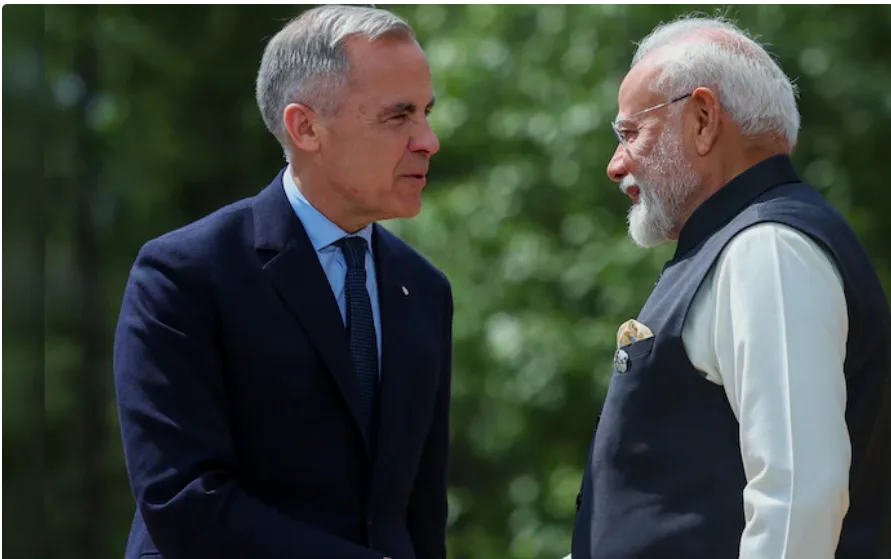
PM Modi speaks to Mark Carney as India and Canada push to strengthen ties
Prime Minister Narendra Modi held a telephone conversation with Canadian Prime Minister Mark Carney on October 13, with both leaders agreeing to strengthen India-Canada ties and pursue concrete outcomes across key areas of their strategic partnership.

India News
CJP leaders Saurav Das, Ashutosh Ranka, Ajinkya Shinde sent to 5-day judicial custody
Three CJP leaders, Saurav Das, Ashutosh Ranka and Ajinkya Shinde, were placed under preventive arrest following a protest at Delhi’s Jantar Mantar over Chief Election Commissioner Gyanesh Kumar.

India News
BJP focuses on religion as opposition pushes BDM strategy in UP
The BJP is emphasising religious issues ahead of the Uttar Pradesh Assembly elections, while opposition parties are seeking to consolidate Backward, Dalit and Minority voters. Recent exchanges involving Yogi Adityanath, Akhilesh Yadav and Asaduddin Owaisi have added to the political contest over the state’s electoral narrative.


CJP claims Saurav Das, Ashutosh Ranka detained at Jantar Mantar

Supreme Court stays defamation case against Rahul Gandhi over PM Modi remarks

Rahul Gandhi hosts high tea for INDIA bloc after Gyanesh Kumar protests

L Murugan quits Union ministry to strengthen BJP in Tamil Nadu

Amit Shah attacks Rahul Gandhi over Congress poll losses, questions SIR row

PM Modi speaks to Mark Carney as India and Canada push to strengthen ties

S Jaishankar says India is a natural option for Russia amid Europe tensions

CJP leaders Saurav Das, Ashutosh Ranka, Ajinkya Shinde sent to 5-day judicial custody

BJP focuses on religion as opposition pushes BDM strategy in UP
L Murugan quits Union ministry to strengthen BJP in Tamil Nadu

Afghan Men Try To Hang With The Jet Engine Of The Aircraft in Kabul- Afghanistan News – Kabul News
Trending Top 10 News: 10000 Crore Fine on Flipkart, Apple to Launch Unique Feature, Hdfc Bank Job Ad

Trending Top 10 News: Nokia 6310, Apple sales, Bachpan ka Pyar Video Kid, Dainik Bhaskar IT Raid

Trending Top 10 News: Canada bans Indian flights, Rain in Delhi NCR, AIMIM Twitter hacked, Raj Kundra case

Trending Top 10 News: Shein India, Apple New Service, Pocket Oxygen, Oppo Launched New Phone
-
 India News24 hours ago
CJP claims Saurav Das, Ashutosh Ranka detained at Jantar Mantar
-
 India News22 hours ago
Supreme Court stays defamation case against Rahul Gandhi over PM Modi remarks
-
 India News14 hours ago
Rahul Gandhi hosts high tea for INDIA bloc after Gyanesh Kumar protests
-
 India News13 hours ago
L Murugan quits Union ministry to strengthen BJP in Tamil Nadu
-
 India News14 hours ago
Amit Shah attacks Rahul Gandhi over Congress poll losses, questions SIR row
-
 India News12 hours ago
BJP focuses on religion as opposition pushes BDM strategy in UP
-
 India News1 hour ago
CJP leaders Saurav Das, Ashutosh Ranka, Ajinkya Shinde sent to 5-day judicial custody
-
 Latest world news1 hour ago
S Jaishankar says India is a natural option for Russia amid Europe tensions
