English हिन्दी
Connect with us

India News

Meghalaya news: CM failed commitment, tourism reopen; vaccinate upto 75 %, congress reorganise to comeback.

Sangma failed to give any commitment on suspension demand, tourism resume with vaccine doses, the state targeted to vaccinate upto 75 per cent by end of September, congress to reorganise for comeback in Assembly election in 2023

Published

on

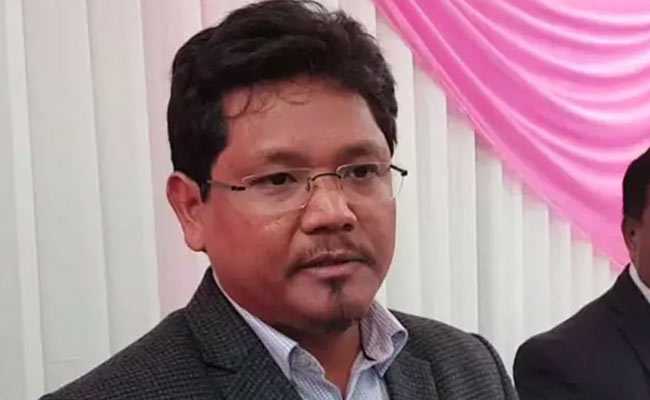
Conrad Sangma

Following the burning of effigies and massive protest in Mawlai area against the encounter of former HNLC leader Cheristerfield Thangkiew the protesters took to streets chanting slogans seeking justice for the leader. Chief Minister Conrad Sangma on Thursday failed to give any commitment on the growing demand for suspension of the two police officials involved in the encounter of the leader.  Acting on the query CM told that the purpose of setting up judicial inquiry was to find out the facts pertaining to the case and as the majority of the people have welcomed the government to move to institute a judicial inquiry over the incident it would be unfair for the inquiry commission for not giving fair chance. Sangma asserted that the action will be taken up only after the reports and proper investigation has been done on the entire case. Meanwhile, the protesters under the banner Ka Sur ki Nong Mawlai has decided to intensify its agitation to mount pressure on the state government to accept the demand.

MEGHALAYA TO REOPEN FOR TOURISTS WITH BOTH VACCINE DOSES

The Chief Minister of Meghalaya Conrad Sangma after the cabinet meeting announced that the state will resume its tourism from 1 September with certain norms as decided by the government of the state. Sangma said that those with both vaccine doses can enter the state however the tourists with only one dose and not vaccinated can also visit by producing a negative report of RTPCR test within 72 hours prior to arrival at the entry point. Moreover, locals with fully or partially vaccinated can also visit the sites and those unvaccinated locals have to provide negative report before visiting the place. He further added that reopening varies from place to place depending on the local authorities own set of protocols.

MEGHALAYA TO VACCINATE MINIMUM 75% BY SEPTEMBER

The Health Department despite of the challenges and hesitancy of vaccine in the state has targeted to vaccinate at least 75 per cent of population by end of September. The Principle Secretary of Health Department Sampath Kumar while speaking to the media told that  50-60 percent should be achieve this month and 75 percent is expected to complete by the end of September. Kumar also mention that several awareness campaign are been done along with traditional institutions and managed to mobilise various groups and the efforts made by the state government regarding the vaccine hesitancy has brought a positive result and this was the reason they have cross 50 percent.

Read Also: In Kalari frenzy, Anand Mahindra fails to distinguish between girl and boy, long-haired boy corrects tycoon

CONGRESS HAS TO REORGANISE ITSELF TO RETURN IN 2023

The newly-appointed Meghalaya Pradesh Congress Committee Chief Vincent H. Pala on Thursday admitted that the state congress has to reorganise, discipline and strengthen itself and work together to stand any chance of making a comeback in the Assembly election in 2023. Pala told that the comeback is not sure but to work together and the present government may be weak but congress may be weaker until reorganise is done. The public knows the weakness of the present government and hence the congress has to give hope and inspire the youths he added.

India News

PM Modi assures no discrimination in women’s quota, delimitation debate intensifies in Parliament

PM Narendra Modi has assured that women’s reservation will be implemented without discrimination, amid a heated debate over delimitation in Parliament.

Published

on

PM modi

Prime Minister Narendra Modi has assured that there will be no discrimination in the implementation of women’s reservation, as Parliament witnessed a sharp debate over the proposed linkage between the quota and delimitation exercise.

During the ongoing special session, the government reiterated its commitment to ensuring fair representation while addressing concerns raised by opposition parties regarding the timing and structure of the legislation.

The proposed framework aims to reserve 33 percent of seats for women in the Lok Sabha and state assemblies. However, its implementation is tied to a fresh delimitation exercise, which is expected after the next census.

Opposition questions timing and intent

Opposition leaders have raised concerns that linking the women’s quota to delimitation could delay its implementation. They argue that the process of redrawing constituencies may push the actual rollout further into the future.

The issue has triggered a broader political confrontation, with multiple parties questioning whether the move could alter representation across states.

Some critics have also alleged that the delimitation exercise could disproportionately benefit certain regions based on population, a charge the government has rejected.

Government reiterates commitment to fair implementation

Responding to these concerns, the Centre has maintained that the reforms are necessary to ensure accurate and updated representation based on population data.

Leaders from the ruling side have repeatedly emphasized that the process will be carried out transparently and without bias. The assurance that there will be “no discrimination” is aimed at addressing fears among states and opposition parties.

The debate marks a key moment in Parliament, with both sides engaging in intense exchanges over one of the most significant electoral reforms in recent years.

Continue Reading

India News

Give all tickets to Muslim women, Amit Shah says, attacking Akhilesh Yadav on sub-quota demand

A sharp exchange between Amit Shah and Akhilesh Yadav in Parliament over sub-quota for Muslim women highlights key divisions on women’s reservation implementation.

Published

on

A heated exchange broke out in Parliament during discussions on the women’s reservation framework, with Union Home Minister Amit Shah and Samajwadi Party chief Akhilesh Yadav locking horns over the demand for a sub-quota for Muslim women.

The debate unfolded as the government pushed forward key legislative measures to implement 33% reservation for women in the Lok Sabha and state assemblies.

Akhilesh Yadav argued that the proposed reservation must ensure representation for women from marginalised communities, including Other Backward Classes (OBCs) and Muslim women. He said that without such provisions, large sections could remain excluded from political participation.

He also questioned the timing of the bill, alleging that the Centre was avoiding a caste census. According to him, a census would lead to renewed demands for caste-based reservations, which the government is reluctant to address.

Government rejects religion-based quota

Responding to the demand, Amit Shah made it clear that reservation based on religion is not permitted under the Constitution.

He stated that any proposal to provide quota to Muslims on religious grounds would be unconstitutional, firmly rejecting the idea of a separate sub-quota for Muslim women within the broader reservation framework.

The government has maintained that the existing framework already includes provisions for Scheduled Castes (SC) and Scheduled Tribes (ST) women within the overall reservation structure.

Wider political divide over implementation

The issue of sub-categorisation within the women’s quota has emerged as a major flashpoint, even as most opposition parties broadly support the idea of women’s reservation.

Samajwadi Party leaders reiterated that their support for the bill depends on inclusion of OBC and minority women, while the government continues to defend its constitutional position.

The debate is part of a broader discussion during the special Parliament session, where multiple bills linked to delimitation and implementation of the women’s quota are being taken up.

Continue Reading

India News

No state will lose a seat, Centre assures as delimitation debate takes centre stage in Parliament

Parliament’s special session begins with key focus on implementing women’s reservation and delimitation, setting the stage for major electoral changes.

Published

on

Parliament

A special session of Parliament commenced on Thursday, with the Centre set to take up crucial legislation related to women’s reservation and delimitation of constituencies. The session, scheduled over three days, is expected to witness intense debate as the government pushes forward its legislative agenda.

At the centre of discussions is the proposal to operationalise the women’s reservation law, which seeks to allocate 33 percent of seats in the Lok Sabha and state assemblies to women. The law, passed earlier, requires enabling provisions before it can be implemented.

The rollout of the reservation is closely tied to the delimitation exercise — a process that redraws parliamentary constituencies based on updated population data. The implementation is expected only after the next census and delimitation process are completed.

The government is aiming to put in place the framework so that the reservation can be enforced in future elections, likely around 2029.

Delimitation and numbers at play

Delimitation is a key aspect of the proposed changes, as it will determine how seats are redistributed and which constituencies are reserved. The exercise is expected to reflect population shifts and may also involve an increase in the total number of Lok Sabha seats.

This linkage has made the issue politically sensitive, with several opposition parties backing women’s reservation in principle but raising concerns over how and when delimitation will be carried out.

Political reactions and expected debate

The session is likely to see sharp exchanges between the government and opposition. While there is broad agreement on increasing women’s representation, disagreements remain over the timing, process, and potential political implications of the delimitation exercise.

Some leaders have argued that delimitation could significantly alter the balance of representation among states, making it a contentious issue beyond the women’s quota itself.

The government, however, has framed the move as a step toward strengthening women’s participation in governance and ensuring more inclusive policymaking.

Continue Reading

Trending

© Copyright 2022 APNLIVE.com