English हिन्दी
Connect with us

India News

Mumbai mayor race still open, claims Uddhav camp despite Mahayuti majority

Despite the Mahayuti alliance crossing the majority mark in the BMC, the Uddhav Thackeray camp says the Mumbai mayor’s race is still wide open.

Published

on

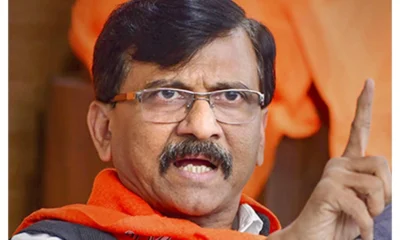
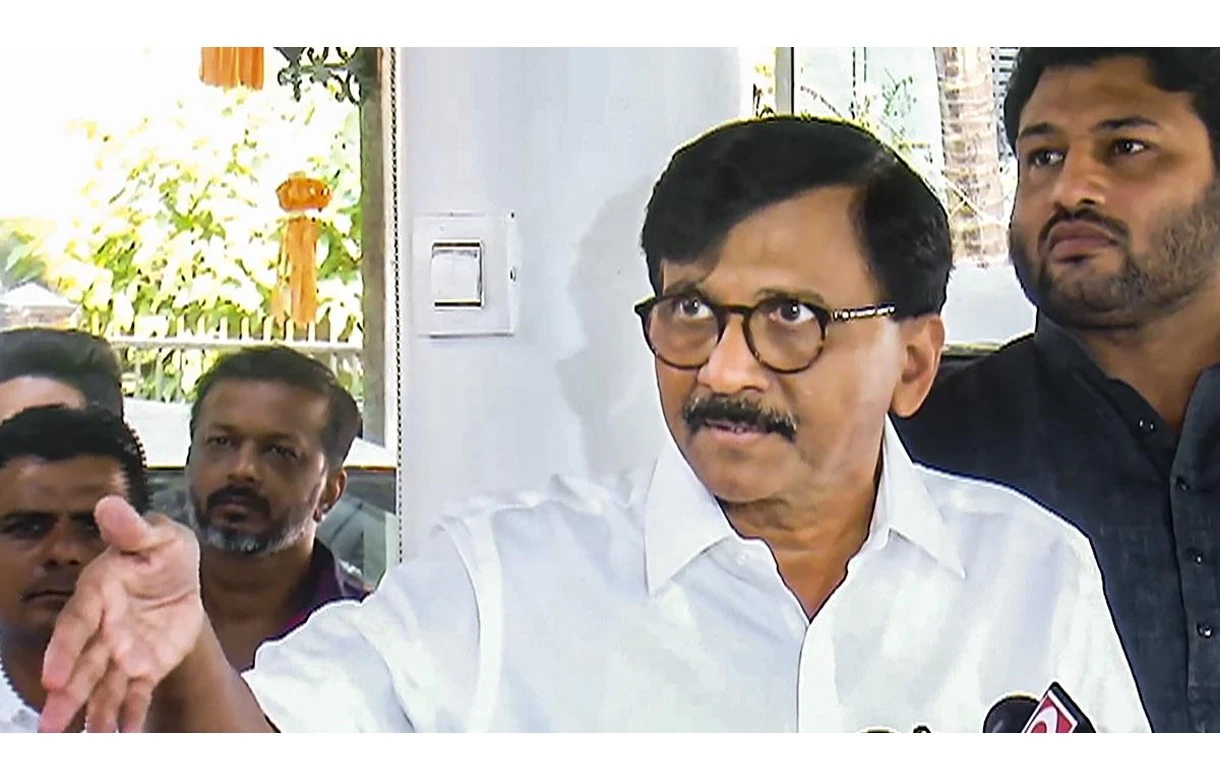
Shiv Sena (UBT) MP Sanjay Raut

The contest for the Mumbai mayor’s post remains far from settled, according to leaders of the Uddhav Thackeray-led Shiv Sena (UBT), even as the ruling Mahayuti alliance has crossed the majority mark in the Brihanmumbai Municipal Corporation (BMC).

The BJP emerged as the single largest party in the BMC elections, winning 89 of the 227 wards. Its ally, the Eknath Shinde-led Shiv Sena, secured 29 seats. Together, the Mahayuti alliance has 118 corporators, comfortably above the majority requirement of 114 in India’s richest civic body, which has an annual budget of over Rs 74,000 crore.

However, senior Shiv Sena (UBT) leader Sanjay Raut maintained that the numbers tell only part of the story.

Uddhav Thackeray’s faction finished second with 65 wards. Raut said that when allied parties are taken into account, the UBT-led grouping stands at 108 seats, just six short of the majority.

“We are currently at 108 with the UBT, MNS, Congress and our allies. The target is 114. We are marginally short by just six seats. Just wait and watch, anything can happen in Mumbai politics,” Raut said.

Allies and numbers

Raj Thackeray’s Maharashtra Navnirman Sena (MNS), which aligned with the Uddhav faction shortly before the polls, won six seats. The Congress, which contested in alliance with the Vanchit Bahujan Aghadi, secured 24 seats.

Other parties in the civic house include the All India Majlis-e-Ittehadul Muslimeen with eight seats, the Samajwadi Party with two, the Ajit Pawar-led Nationalist Congress Party with three, and one seat won by the Sharad Pawar faction. The Ajit Pawar-led party is part of the ruling alliance at the state level but fought the civic elections independently.

War of words over corporators

Raut also took a sharp dig at Deputy Chief Minister Eknath Shinde, alleging that corporators from the Shinde-led Sena had been moved to luxury hotels to prevent defections.

“Our corporators are at home, living a normal life,” Raut said, adding that rival leaders were acting out of fear. He claimed that some elected representatives did not want to see a BJP mayor in Mumbai and could switch sides.

Responding to the allegations, the Shinde camp dismissed claims of poaching fears, stating that its 29 corporators-elect were attending a training workshop at a five-star hotel. Party sources said the arrangement was meant to familiarise newly elected members with organisational expectations, not to keep them confined.

With both sides trading claims and counterclaims, the battle for the Mumbai mayor’s chair appears set for intense political manoeuvring in the days ahead.

India News

Early voter turnout steady in Tamil Nadu and Bengal as polling gains pace

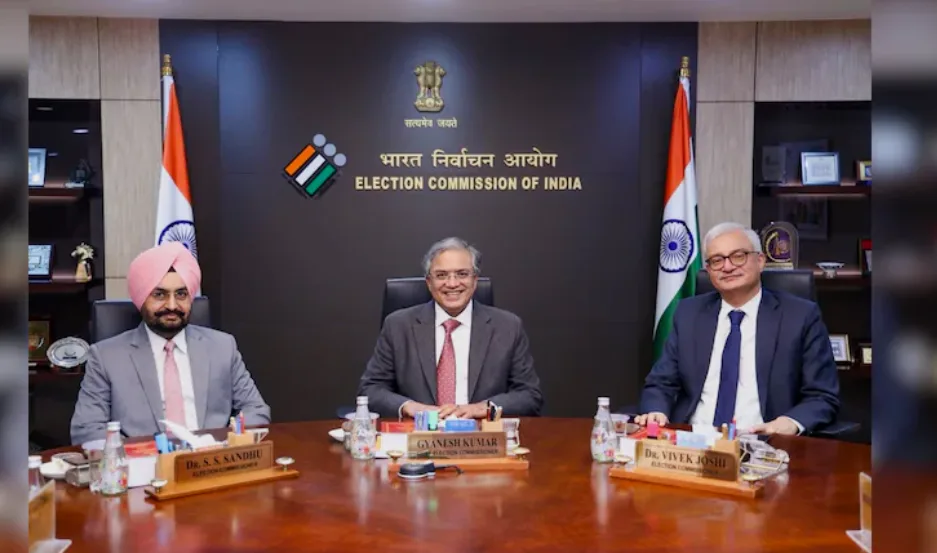
Tamil Nadu and West Bengal recorded steady voter turnout till 9 am as polling began across constituencies, with numbers expected to rise through the day.

Published

on

Elections

Morning polling sees moderate participation as voters head to booths across key states

Polling in the ongoing Assembly elections showed steady participation in the early hours on Thursday, with both Tamil Nadu and West Bengal recording moderate voter turnout by 9 am.

According to initial data released by election authorities, Tamil Nadu registered a turnout of around 17.7%, while West Bengal slightly edged ahead with approximately 18.8% in the same period.

Voting began at 7 am across polling stations, and officials expect the turnout to rise significantly as the day progresses, a pattern typically seen in Indian elections.

Tamil Nadu votes in single phase

Tamil Nadu is conducting polling across all 234 Assembly constituencies in a single phase. Early trends indicate a gradual but steady flow of voters, with participation likely to increase during the later hours of the day.

Several prominent personalities were among early voters, encouraging public participation and highlighting the importance of the democratic process.

Bengal phase 1 polling underway

West Bengal is witnessing polling across multiple constituencies in the first phase of its Assembly elections. The early turnout suggests an active start, with voters turning up in noticeable numbers despite the morning hours.

Turnout expected to rise through the day

Election officials have indicated that turnout figures in the morning are usually conservative, with a sharper increase expected in the afternoon and evening. Weather conditions, local factors, and voter mobilisation efforts often influence the final turnout percentage.

The elections are being closely watched due to the high political stakes in both states, with major parties competing intensely for control.

Continue Reading

India News

West Bengal election battle begins as phase 1 voting covers 152 seats

Phase 1 of the Bengal assembly elections begins with voting across 152 constituencies, setting the stage for a high-stakes TMC vs BJP contest.

Published

on

West bengal elections

Voting for the first phase of the West Bengal assembly elections 2026 began on April 23, marking the start of a crucial political contest in the state.

In this phase, polling is being held across 152 constituencies, making it one of the most significant stages of the election process. The voting spans multiple districts across both North and South Bengal, setting the tone for the rest of the electoral battle.

The election is largely being seen as a direct contest between the ruling Trinamool Congress (TMC) and the Bharatiya Janata Party (BJP). While the TMC is seeking to retain power after over a decade in office, the BJP is aiming to expand its presence and challenge the incumbent government.

A large number of candidates are in the fray for this phase, reflecting the scale and intensity of the contest. Several prominent leaders are contesting from key constituencies, adding to the political significance of the opening phase.

The elections are being conducted in two phases, with the second round of polling scheduled for April 29. The counting of votes is expected in early May, after which the composition of the 294-member assembly will be decided.

Key issues shaping voter sentiment include employment concerns, welfare schemes, governance, and identity politics. The outcome of this phase is expected to provide early indications of the broader electoral trend in the state.

With high voter turnout expected and tight security arrangements in place, the first phase is being closely watched as it could influence momentum for the remaining constituencies.

Continue Reading

India News

EC issues notice to Mallikarjun Kharge over terrorist remark against PM Modi

The Election Commission has issued a notice to Mallikarjun Kharge over his remark on PM Modi, asking for a response within 24 hours amid a growing political controversy.

Published

on

mallikarjun-kharge

The Election Commission has issued a notice to Congress president Mallikarjun Kharge over his controversial remark referring to Prime Minister Narendra Modi as a “terrorist” during an election campaign.

Taking serious note of the statement, the poll body has asked Kharge to submit his response within 24 hours, highlighting concerns over the language used in public campaigning.

BJP complaint triggered action

The development comes after the Bharatiya Janata Party approached the Election Commission, alleging that the remark violated the Model Code of Conduct. The party described the comment as derogatory and sought strict action against the Congress leader.

A delegation of BJP leaders also met the poll panel, stressing that such statements undermine the standards of political discourse during elections.

Kharge’s clarification

Following the controversy, Kharge clarified that his remarks were being misinterpreted. He said he did not intend to call the Prime Minister a terrorist but was referring to what he described as “terrorising” political opponents through the use of central agencies.

Rising political tensions

The episode has further escalated tensions between the ruling party and the opposition amid an ongoing election season. Leaders across the political spectrum have reacted strongly, with criticism and counter-criticism intensifying the debate around campaign rhetoric.

The Election Commission’s intervention underscores its attempt to maintain decorum and enforce campaign norms as political activity intensifies across states.

Continue Reading

Trending

© Copyright 2022 APNLIVE.com