English हिन्दी
Connect with us

India News

PM Modi unveils Kashmir’s grand rail revival weeks after Pahalgam attack

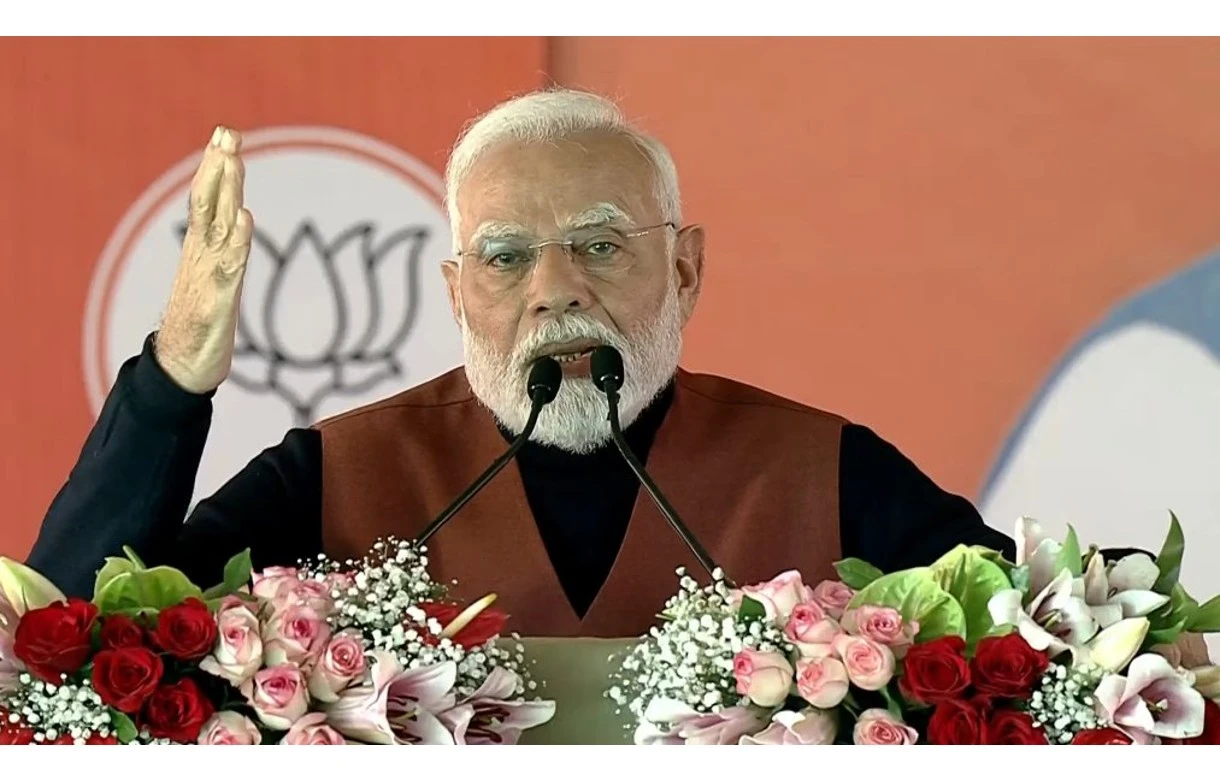
PM Narendra Modi flagged off the USBRL project and Vande Bharat trains during a high-profile visit to Jammu & Kashmir, marking a strong infrastructural and political statement after the recent Pahalgam terror attack.

Published

on

Modi govt

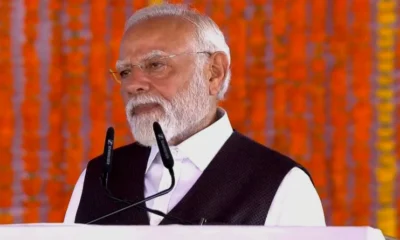
Prime Minister Narendra Modi, in a significant post-terror attack outreach to Jammu and Kashmir, inaugurated several key infrastructure projects today aimed at revolutionising the region’s connectivity and economy. Marking his first visit to the Union Territory since the tragic April 22 terror attack in Pahalgam that killed 26 people, the Prime Minister flagged off the long-awaited Udhampur-Srinagar-Baramulla Railway Link (USBRL), a milestone project decades in the making.

Engineering marvels take centre stage

Two prominent features of the USBRL that drew national attention were inaugurated during the visit — the Chenab Rail Bridge and the Anji Khad Bridge. The Chenab bridge, now officially the world’s highest railway arch, towers 359 metres above the Chenab River, eclipsing even the Eiffel Tower by 35 metres. The bridge is built to withstand wind speeds of up to 260 km/h and has an estimated life span of 120 years, with construction costs pegged at ₹1,486 crore.

Meanwhile, the Anji Khad structure stands out as India’s first cable-stayed railway bridge, overcoming formidable terrain challenges to connect remote areas in the Reasi district.

Launch of Vande Bharat trains

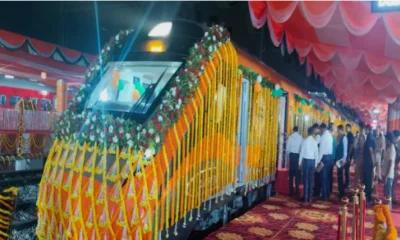
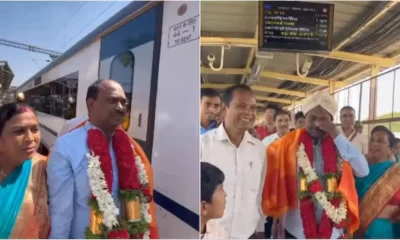
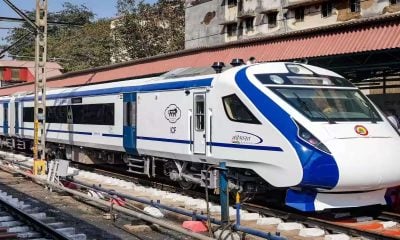
Adding to the day’s events, PM Modi flagged off two Vande Bharat Express trains between Baramulla and Katra, with operations beginning June 7. The service, expected to run six days a week, will significantly reduce travel time and provide high-speed rail access to pilgrimage and tourism hubs, including the Vaishno Devi shrine.

Decades-long project nears completion

The USBRL was initially sanctioned in 1994, but construction only gained momentum in 2002. Of its 272 km length, 209 km had been previously commissioned in phases. The final and most difficult stretch — from Sangaldan to Reasi — was completed in December 2024. This phase involved deep tunnelling and complex bridge-building in the Himalayan terrain, particularly in the Pir Panjal range.

The Katra-Banihal segment alone comprises over 97 km of tunnels and 49 bridges, including major ones such as Bridge 220 and 224. Tunnel T-50, stretching 12.77 km, is now the country’s longest railway tunnel.

Strategic timing amid counter-terror push

The timing of PM Modi’s visit is seen as a bold political and strategic message. It follows the launch of Operation Sindoor, a counter-terror offensive targeting militant infrastructure across the Line of Control. Addressing the nation recently, the Prime Minister reaffirmed India’s resolve against terrorism, stating that those responsible for attacks would face “the severest punishment”.

Economic and tourism implications

The government envisions a significant economic transformation in Kashmir through these infrastructure developments. According to the Union Railway Minister, five railway terminals are being developed between Baramulla and Jammu, aimed at facilitating the movement of fruits, handicrafts, and other regional goods.

In addition, the success of recent freight runs transporting cherries from Kashmir has sparked interest in replicating the model for other produce. Rail connectivity is also expected to reduce dependence on the often-closed Jammu-Srinagar highway, bringing down flight costs to the Valley during peak closures due to snowfall or landslides.

India News

Karnataka to convene joint legislature session over MGNREGA repeal

The Karnataka government will convene a joint session of the legislature from January 22 to discuss the Centre’s repeal of MGNREGA, triggering sharp criticism from the opposition.

Published

on

karnataka assembly

The Karnataka cabinet on Wednesday decided to convene a joint session of the state legislature from January 22 to January 31, with the Centre’s decision to repeal the Mahatma Gandhi National Rural Employment Guarantee Act (MGNREGA) set to be the key focus.

The Congress-led government had earlier planned a two-day special session to discuss the repeal of MGNREGA, which has been replaced by the Viksit Bharat Guarantee for Rozgar and Ajeevika Mission (Gramin) (VB-G RAM G). However, State Law and Parliamentary Affairs Minister H K Patil said the plan was altered due to constitutional provisions.

Briefing reporters, Patil said the government was compelled to convene a joint session instead of a special session because of a technical requirement. Citing Article 176 of the Constitution, he explained that the Governor must address the first session of the state legislature every year.

“As a result of this technical reason, we are advancing the session. Instead of a special session, it will be a joint session,” Patil said, adding that holidays during the session would be announced by the Speaker.

He stressed that the state government would not remain silent if people’s rights were “snatched away” and said the objective of the session was to create public awareness and exert pressure on the Centre to restore MGNREGA.

Opposition questions intent of the session

Leader of Opposition in the Karnataka Assembly R Ashoka strongly criticised the decision, alleging that the joint session was convened with a “malafide intention” and amounted to a “sheer waste of money”.

Addressing a press conference, Ashoka said legislative sessions were meant for law-making and discussions on governance issues, questioning the purpose of holding a session on a matter decided by the Centre.

“What is this session convened for? Is it to utter gibberish in the House? There is no use of this session,” he said, adding that any resolution passed by the Assembly would have no practical value and would be ignored.

Continue Reading

India News

Centre urges Indians to leave Iran amid worsening security situation

India has advised its citizens to leave Iran and avoid travelling to the country as nationwide protests intensify and the security situation continues to deteriorate.

Published

on

unrest in iran

India on Wednesday asked all its nationals currently in Iran to leave the country using available commercial means, citing a sharp deterioration in the security situation amid widespread anti-government protests and a heavy crackdown by authorities.

The government has also issued a strong advisory urging Indians to avoid travelling to Iran until further notice.

Advisory issued for Indian nationals in Iran

In a fresh advisory, the Indian Embassy in Iran said Indian citizens, including students, pilgrims, businesspersons and tourists, should leave Iran by available modes of transport, including commercial flights.

The embassy further advised Indian nationals and persons of Indian origin to exercise extreme caution, avoid areas witnessing protests or demonstrations, stay in regular contact with the embassy, and closely monitor local developments through official channels and local media.

Separately, the Ministry of External Affairs reiterated its warning, strongly advising Indians against travelling to Iran in view of the evolving situation. Earlier this month, the ministry had already asked citizens to avoid non-essential travel and urged those residing in Iran to remain cautious.

Protests spread nationwide

The unrest in Iran began late last month in Tehran after the Iranian currency, the rial, fell to record lows. What started as protests over economic hardship has since expanded into a broader movement demanding political change.

The demonstrations have now spread across all 31 provinces of the country, with the overall situation deteriorating significantly in recent days.

According to reports cited by media, the death toll from the nationwide protests has crossed 2,500, reflecting the scale and intensity of the ongoing crackdown.

Rising regional tensions

The developments in Iran have also contributed to heightened tensions in West Asia. The situation escalated further after the US president warned Tehran against the use of force on demonstrators and hinted at possible military action.

In a message addressed to protesters, the US president said that “help is on the way,” adding to the growing international pressure surrounding the crisis.

Continue Reading

India News

Abhishek Banerjee presents alleged dead voters at poll rally, attacks EC over SIR

Abhishek Banerjee displayed 10 people allegedly marked as dead in Bengal’s draft electoral rolls, accusing the Election Commission and BJP of undermining voting rights through the SIR exercise.

Published

on

Abhishek Banerjee

Trinamool Congress MP Abhishek Banerjee on Tuesday intensified his attack on the Election Commission and the BJP-led Centre, presenting 10 people at a public rally who were allegedly marked as dead in the draft electoral rolls during the ongoing Special Intensive Revision (SIR) exercise in West Bengal.

Addressing the gathering in Cooch Behar, the Trinamool national general secretary called the individuals on stage and claimed they had been wrongly declared deceased despite being residents of the district since birth. He alleged that their names were struck off the electoral rolls during the SIR process.

Banerjee accused the Election Commission of acting under political influence and said the ongoing exercise was effectively depriving citizens of their fundamental right to vote.

Allegations over voter list revision

The Diamond Harbour MP claimed that around 3.5 lakh residents of Cooch Behar district alone have received notices citing logical discrepancies during the SIR process. He urged Trinamool workers to ensure that all affected individuals are re-included in the voter list.

Banerjee also alleged that the EC was focusing on removing names from electoral rolls instead of safeguarding democratic participation. He claimed that anxiety related to the SIR exercise had led to the deaths of around 78 people in the state.

Earlier this month, Banerjee had presented three individuals at another rally in South 24 Parganas district, alleging that they too had been marked as dead voters in the draft rolls.

Attack on BJP over unfulfilled promises

Targeting the BJP-led Centre, Banerjee accused the ruling party of failing to fulfil electoral promises made to the people of Cooch Behar since 2014. He cited commitments related to the formation of the Narayani battalion, a training centre named after warrior Chilarai, international status for the Madan Mohan temple, and the upgradation of Cooch Behar airport.

He also claimed that the 9-seater aircraft service between Cooch Behar and Kolkata, introduced in February 2023, is likely to be discontinued by the end of the month, alleging neglect by the Centre.

Assembly polls and political messaging

Calling on voters to back Trinamool candidates in all nine assembly seats in Cooch Behar district, Banerjee said the upcoming assembly elections would be a contest between the people of Bengal and the BJP. In the 2021 assembly elections, the BJP had won six seats in the district, while Trinamool secured three.

He thanked voters for defeating former Union minister Nisith Pramanik in the 2024 Lok Sabha elections and asserted that the Trinamool Congress would return to power in West Bengal for a fourth consecutive term under Chief Minister Mamata Banerjee.

Banerjee also criticised recent central agency actions in the state and accused the BJP leadership of insulting Bengal’s cultural and political legacy. He further alleged excesses by border forces against farmers working near the India-Bangladesh border and objected to NRC notices allegedly being sent to some residents of Cooch Behar.

Continue Reading

Trending

© Copyright 2022 APNLIVE.com