India News
Pollution emergency steps in Delhi-NCR from today, violators to face criminal cases


[vc_row][vc_column][vc_column_text]As patients pour into hospitals with respiratory and allergic complaints and players participating matches fall sick, emergency measures to check pollution kicked in today (Thursday, November 1) in Delhi-NCR amid fears of air quality deteriorating further.
State pollution control bodies have been directed to initiate criminal prosecution against violators. A move to restrict or stop use of private vehicles was also contemplated.[/vc_column_text][/vc_column][/vc_row][vc_row][vc_column][vc_column_text css=”.vc_custom_1541071507856{border-top-width: 10px !important;border-right-width: 10px !important;border-bottom-width: 10px !important;border-left-width: 10px !important;padding-top: 10px !important;padding-right: 10px !important;padding-bottom: 10px !important;padding-left: 10px !important;background-color: #f4f4f4 !important;border-radius: 10px !important;}”]From vox.com:
A whopping nine in 10 people on Earth breathe highly polluted air, and more than 80 percent of urban dwellers have to endure outdoor pollution that exceeds health standards, according to the WHO’s World Global Ambient Air Quality Database.
But even among countries gasping for breath, India stands out for air that is consistently, epically terrible. Eleven out of the 12 most polluted cities on a World Health Organization list were in India.
Cities with the highest small particulate measurements in the world
| Country | City | PM2.5 (µg/m³) |
| India | Kanpur | 173 |
| India | Faridabad | 172 |
| India | Varanasi | 151 |
| India | Gaya | 149 |
| India | Patna | 144 |
| India | Delhi | 143 |
| India | Lucknow | 138 |
| Cameroon | Bamenda | 132 |
| India | Agra | 131 |
| India | Muzaffarpur | 120 |
| India | Srinagar | 113 |
| India | Gurgaon | 113 |
World Health Organization

A map of particulate air pollution in India on October 31, 2018. Berkeley Earth[/vc_column_text][/vc_column][/vc_row][vc_row][vc_column][vc_column_text]Measures for air pollution control to be in force from November 1 to November 10 include shut down of Mundka industrial area, ban on construction and excavation (digging) activities, shutting down of industries that run on coal and biomass, ban on stone crushers, brick kilns and hot mix plants. Diesel generators have already been banned and Badarpur power plant has been shut down since October 15, when the Graded Response Action Plan (Grap) came into force.
The Supreme Court-appointed body Environment Pollution (Prevention and Control) Authority (EPCA) has also warned that it could even ban private vehicles or introduce odd and even road rationing measures in the coming days after consulting the Central Pollution Control Board (CPCB) task force.
“These measures are pre-emptive and go beyond what is stipulated in the Grap. These measures are being introduced keeping in mind the forecast and the need for emergency actions to combat pollution,” said Bhure Lal, chairman of EPCA.
The EPCA urged Delhiites on Wednesday to use public transport for the next 10 days when the air quality is likely to deteriorate further. Noting that private vehicles contribute to 40 per cent pollution in Delhi-NCR, the EPCA urged people to reduce use of private vehicles and completely stop plying diesel vehicles during this period. There are a total of 35 lakh private vehicles in the Delhi NCR region.
An EPCA member had on Tuesday said in case of further deterioration of air quality, they are even contemplating regulating the use of private vehicles from November 1. On its part, the Delhi government on Wednesday said it is “fully prepared” to implement the emergency plan.
“The Delhi government is fully prepared to take measures as per Graded Response Action Plan (GRAP), including the odd-even scheme are concerned. We will take them when needed,” Delhi Transport Minister Kailash Gahlot said.
In 2016, the odd-even scheme was enforced twice — January 1-15 and April 15-30 in the city when vehicles having odd and even numbers were allowed to ply on alternate days. The GRAP is an emergency plan implemented in phases to combat pollution depending upon the air quality of the city. It came into effect from October 15.
Delhi Metro announced that it has introduced 21 additional trains on its network with effect from Wednesday which will provide 812 additional number of trips to passengers using public transport. This includes 14 trains with 730 trips of Trilokpuri-Sanjay Lake to Shiv Vihar section of Line-7 also which has been thrown open to public from Wednesday.
The EPCA’s call to public comes as the city’s air quality deteriorated in the last two weeks with the pollution reaching severe levels on Tuesday, prompting authorities to issue a slew of directions including ban construction activities along with halting operations of industries using coal and biomass as fuel between November 1 and 10.
From Thursday, there will be a halt of all construction activities involving excavation. Civil construction will remain closed in Delhi and other NCR districts, besides closure of all stone crushers, hot mix plants generating dust pollution in Delhi and NCR districts, according to a Delhi Pollution Control Committee (DPCC) order.
The DPCC has also directed the transport department and traffic police to intensify checking of polluting vehicles and control travel congestion in Delhi and other NCR districts during November 1-10.
“Ensure that we do not burn garbage and we report all instances of garbage burning and other pollution carefully and responsibly on the CPCB Facebook/Twitter accounts,” the EPCA said Wednesday.
The Central Pollution Control Board (CPCB) has directed the state pollution control bodies of Punjab, Haryana and Delhi to start criminal prosecution against agencies or individuals who do not comply with directives to check air pollution.
The overall air quality index of Delhi on Wednesday was recorded at 366 by the CPCB. An official with the Centre-run System of Air Quality Forecasting And Research (SAFAR) said the improvement in air quality can be attributed to increased speed of early morning winds.
“Early morning winds picked up, which came as respite and dispersed particles rapidly and pulled back air quality towards very poor range,” the official said. SAFAR further said the AQI for next two days would remain in “very poor” range but with increasing trend.
“Air quality is likely to deteriorate on November 3 as a result of post westerly disturbances which are likely to hit over Western Himalayas today,” SAFAR said.
Gurgaon recorded ‘severe’ air quality at 416, while it was ‘very poor’ in Ghaziabad, Faridabad, Noida and Greater Noida. Ten areas in Delhi recorded ‘severe’ air quality while 23 areas recorded ‘very poor’ air quality, according to the CPCB data.
CPCB Chairperson SP Singh Parihar has also issued directions to construction agencies, municipal corporations and land owning industries to comply with the directions of the NGT and the CPCB and ensure corrective actions within 48 hours in cases of air polluting activities as reported by the CPCB inspection teams.
“Failure to which will make the defaulting agencies and individuals liable to criminal prosecution which may be initiated by the CPCB under appropriate provision of the law,” Parihar said in the letter.
Complying with the Supreme Court directions, the CPCB has also put up guidelines for public to file complaints on air pollution in Delhi NCR on its social media accounts, CPCB website and also through an app developed by it called Sameer app.[/vc_column_text][/vc_column][/vc_row]






India News
Mumbai Police book 3 unidentified shooters in Tiger Shroff firing case
Mumbai Police have registered a case against three unidentified individuals in connection with the firing at Tiger Shroff’s car in Mumbai’s Juhu area. The actor escaped without gunshot injuries, while two other people were injured.

India News
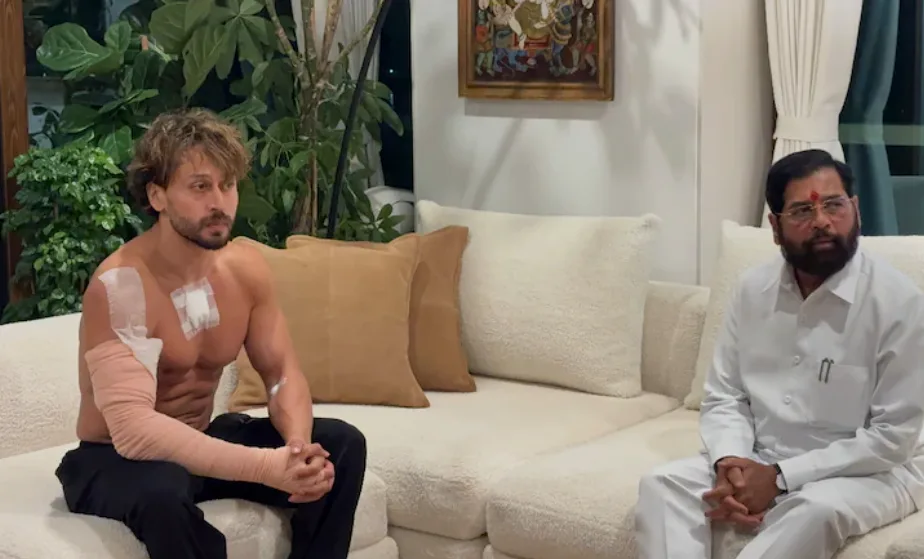
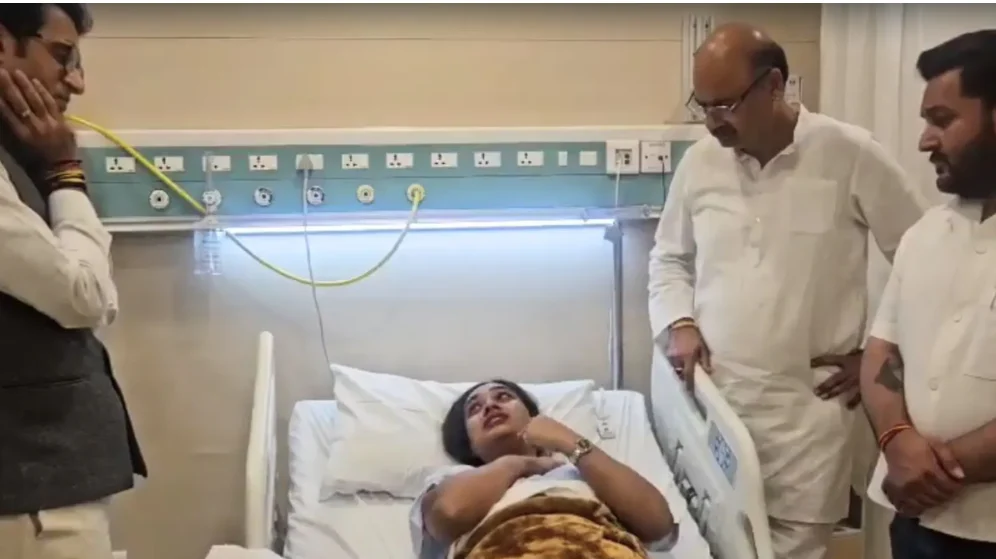
Devendra Fadnavis says no one will be spared after firing at Tiger Shroff
Maharashtra Chief Minister Devendra Fadnavis has assured strict action after gunmen opened fire at actor Tiger Shroff’s car in Mumbai’s Juhu area. Shroff suffered minor injuries, while two other people were injured.

India News
Journalist files police complaint against Rahul Gandhi over push allegation
Journalist Richa Parashar has filed a criminal complaint against Rahul Gandhi and others, alleging that she was pushed while covering the Opposition’s march to the Supreme Court. The Congress has denied the allegation.

Devendra Fadnavis says no one will be spared after firing at Tiger Shroff

Mumbai Police book 3 unidentified shooters in Tiger Shroff firing case
Mumbai Police book 3 unidentified shooters in Tiger Shroff firing case
Devendra Fadnavis says no one will be spared after firing at Tiger Shroff

Journalist files police complaint against Rahul Gandhi over push allegation

Delhi court orders release of CJP founder Abhijeet Dipke

Anirudh Ravichander to marry Kavya Maran in November, reception on November 21

Afghan Men Try To Hang With The Jet Engine Of The Aircraft in Kabul- Afghanistan News – Kabul News
Trending Top 10 News: 10000 Crore Fine on Flipkart, Apple to Launch Unique Feature, Hdfc Bank Job Ad

Trending Top 10 News: Nokia 6310, Apple sales, Bachpan ka Pyar Video Kid, Dainik Bhaskar IT Raid

Trending Top 10 News: Canada bans Indian flights, Rain in Delhi NCR, AIMIM Twitter hacked, Raj Kundra case