
India News
PTI to Face Journalists’ Ire on Large-Scale Retrenchment


DUJ Condemn the Move, Extends Solidarity with Retrenched Journalists
The Delhi Union of Journalists (DUJ) has condemned the sudden retrenchment of 297 employees by country’s premier news agency Press Trust of India (PTI) and urged Ministry of Information Broadcasting and Ministry of Labour to step in to stop the anti-labour and anti-media moves.
In a press release issued on Sunday, the national capital’s journalists’ body said “DUJ takes strong objection to the arbitrary retrenchment of 297 permanent employees by the management of the Press Trust of India. The management has chosen to suddenly throw out staffers who have spent long years building up the country’s premier news agency and taking it to new heights.”
The press release further said that the employees “have been summarily thrown out by putting up a list of names at the PTI office. Letters have, reportedly, been sent to homes and, according to the management’s claims, dues have been directly transferred to individual bank accounts.”
“We condemn this move by the PTI management and demand that it be revoked at the earliest. The Union Ministry of Labour and the Ministry of Information and Broadcasting must step in at this juncture to stop these anti-labour and anti-media moves,” the journalists’ body said.
Moreover, the DUJ has called upon “all PTI employees to unite in solidarity and resist the retrenchment.” They have also called upon the wider journalist community to show solidarity with their victimized colleagues..
On Saturday, PTI sacked 297 employees across the country triggering a controversy. The retrenchment order, dated 29 September, is signed by M. R. Mishra, the Chief Administrative Officer of the agency.

The copies of retrenchment letters along with the names of the employees who lost their jobs were uploaded on organization’s website. They were also placed on the desk and those “individuals whose names appeared in the displayed list was required to collect the same under receipt”.
Reacting to the move, federation of PTI employees’ unions has claimed the retrenchment was “illegal”. In a letter written to Venkey Venkatesh, the Chief Executive Officer of the agency, federation’s general Secretary Balram Singh Dahiya said, “We strongly protest the PTI Management’s unilateral and unprovoked decision to illegally retrench 297 PTI employees all over India today. We demand that this illegal retrenchment be withdrawn with immediate effect.”

Moreover, Dahiya said, “Please note that we will be holding day long gate meetings and dharnas at all PTI centers starting Monday, 1st Oct. 2018 till the illegal retrenchment orders are rescinded.”
PTI is the largest news agency in the country, with its headquarters in New Delhi and is a non-profit cooperative among more than 500 newspapers. As of January 2016, the agency had more than 1000 full-time employees. This is the only news agency in South Asia which operates its own communication satellite, an INSAT, to broadcast news ang information.









India News
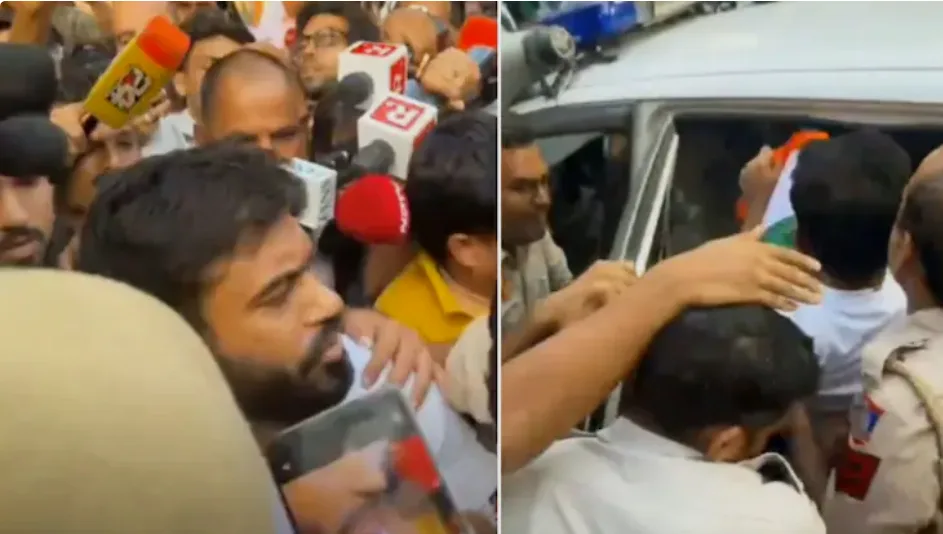
Abhijeet Dipke detained ahead of CJP’s national flag march in Delhi
Cockroach Janta Party founder Abhijeet Dipke was detained by Delhi Police on October 16, 2026, shortly before a planned national flag march. The proposed rally followed the judicial custody of two CJP members who had waved the Tricolour at Jantar Mantar.

India News
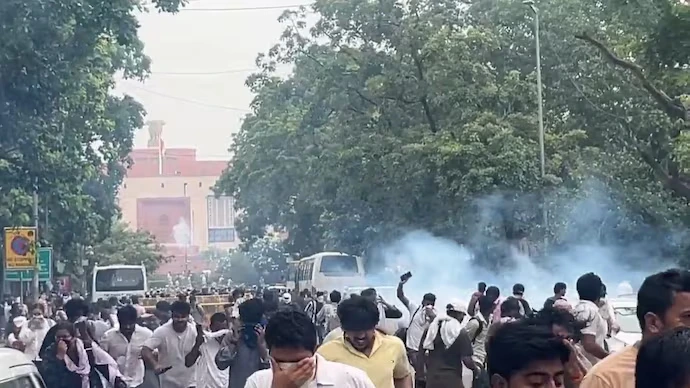
Delhi deploys 25,000 personnel, installs CCTV cameras ahead of CJP march
More than 25,000 police and paramilitary personnel have been deployed in Delhi ahead of the CJP’s planned protest march at Connaught Place. Authorities have also imposed restrictions and stepped up CCTV surveillance.
India News
Mallikarjun Kharge’s ‘Your Friends’ jab at Rahul Gandhi over congress exits
Congress president Mallikarjun Kharge took a dig at Rahul Gandhi after the Leader of the Opposition reportedly described former party leaders Jyotiraditya Scindia and Ghulam Nabi Azad as among those who had left the Congress.


Election Commission orders voter roll revision in 17 states, UTs

Delhi Police offers 11-person limit for CJP’s Connaught Place protest

Actor Imran Khan asked to leave India after CJP protest

Magnitude 7 earthquake strikes Russia’s Kamchatka Peninsula

Mallikarjun Kharge’s ‘Your Friends’ jab at Rahul Gandhi over congress exits

Abhijeet Dipke detained ahead of CJP’s national flag march in Delhi
Magnitude 7 earthquake strikes Russia’s Kamchatka Peninsula

Delhi deploys 25,000 personnel, installs CCTV cameras ahead of CJP march
Mallikarjun Kharge’s ‘Your Friends’ jab at Rahul Gandhi over congress exits
Delhi Police offers 11-person limit for CJP’s Connaught Place protest

Afghan Men Try To Hang With The Jet Engine Of The Aircraft in Kabul- Afghanistan News – Kabul News
Trending Top 10 News: 10000 Crore Fine on Flipkart, Apple to Launch Unique Feature, Hdfc Bank Job Ad

Trending Top 10 News: Nokia 6310, Apple sales, Bachpan ka Pyar Video Kid, Dainik Bhaskar IT Raid

Trending Top 10 News: Canada bans Indian flights, Rain in Delhi NCR, AIMIM Twitter hacked, Raj Kundra case

Trending Top 10 News: Shein India, Apple New Service, Pocket Oxygen, Oppo Launched New Phone
-
 India News23 hours ago
Election Commission orders voter roll revision in 17 states, UTs
-
 India News21 hours ago
Delhi Police offers 11-person limit for CJP’s Connaught Place protest
-
 India News22 hours ago
Actor Imran Khan asked to leave India after CJP protest
-
 Latest world news9 hours ago
Magnitude 7 earthquake strikes Russia’s Kamchatka Peninsula
-
 India News9 hours ago
Mallikarjun Kharge’s ‘Your Friends’ jab at Rahul Gandhi over congress exits
-
 India News9 hours ago
Delhi deploys 25,000 personnel, installs CCTV cameras ahead of CJP march
-
 India News8 mins ago
Abhijeet Dipke detained ahead of CJP’s national flag march in Delhi
