
India News
Rafale deal: CAG report along expected lines on price, but raises other questions


[vc_row][vc_column][vc_column_text]The report of the Comptroller and Auditor General (CAG) on Rafale deal tabled on the last day of the Budget Session in the Parliament today (Wednesday Feb 13), while contradicting Modi government’s claim of the reworked contract price being 9% lower than the previous deal negotiated by the UPA government, said it was 2.8% cheaper.
The audit does not go into the unanswered question of what was the need for cancelling the old deal envisaging transfer of technology and working out a new deal. If the UPA government had been slow in finalising the deal, as Modi government alleges, it could have speeded up the negotiations and sealed it in a matter of months instead of taking another over year-and-a-half after Prime Minister Narendra Modi’s surprise announcement in Paris.
There is also a question about the claim of faster delivery of the fighter aircraft in the renegotiated deal. A report in The Times of India (TOI) said the CAG report says that in the 2007 offer, 18 aircraft were to be delivered by 50th month of signing the contract. The next 18 were to be licensed produced in HAL and to be delivered from 49 to 72 months of the contract signing.
However, in the 2016 contract, the first 18 aircraft would be delivered between 36 to 53 months after signing of IGA and the remaining 18 to be delivered by 67 months, the CAG says, according to the TOI report.
The first Rafale jet is reportedly expected to arrive only later this year – by September 2019 and the rest of the first batch by 2022. If the negotiation of the previous deal, that was nearly complete, had been expedited and completed in 2015 – when the fresh process was started – the first batch of 18 Rafale aircraft would have arrived by next year.
Even without these, the report, “Capital Acquisition in Indian Air Force”, tabled in the Rajya Sabha by Union Minister of State for finance, Pon Radhakrishnan, is a mixed bag from which both the Modi government as well as the Opposition, particularly the Congress party, can choose points to suit their respective narratives on the Rafale deal.
The CAG report, while predictably redacting the controversial details of the final purchase price for the 36 Rafale fighter jets that the Modi government negotiated with the French government and Dassault Aviation in 2016, says that the government did save on the renegotiated deal: it was 2.8% cheaper than the 2007 deal.
It is pertinent to note here that the 2007 negotiations were being carried out for purchase of 126 Rafale jets, also involving transfer of technology to India’s Hindustan Aeronautics Limited (HAL). The deal negotiated by the Modi government in 2016 was for only 36 jets with no transfer of technology involved.
The CAG report also says that officials of the Indian Air Force had, indeed, objected to certain proposed enhancements to the jet, that were sought by the Indian government 2016 from Dassault Aviation, as unnecessary. This was from those who have to fly the fighter and go to battle.
The report states that at least four “unnecessary India specific enhancements” were made to the Rafale jet as part of the deal though senior officials from the Indian Air Force had categorically informed the Ministry of Defence (MoD) that these were not needed. The MoD ministry, the report states, overruled the view of experts from the Indian Air Force.
Aspects of the deal that are more expensive include engineering support package and performance-based logistics.
The Modi government can take heart from the report also saying that India managed to save 17.08 percent money for the India Specific Enhancements in the 36 Rafale aircraft contract as compared to the 126 aircraft deal proposed by the UPA regime. The cost of the basic aircraft is the same in both cases.
The contract for Rafale consisted of six different packages with a total of 14 items. The contracted price of seven items was higher than the aligned price, the price at which the contract should have been signed.
Three items, including basic aircraft, were procured at the same price. Four items were purchased at lower than the aligned price.
The auditor also endorses claims made in a recent report published by The Hindu newspaper earlier this week which the Opposition has since used to slam the Modi government for a “sell out” to Dassault Aviation. The report in The Hindu had said that the deal renegotiated by the Modi regime had excluded sovereign guarantee clauses for Dassault Aviation, thereby ensuring that the French defence giant gets undue benefits in exchange.
CAG said in the previous offer of 2007, Dassault Aviation had provided performance and financial guarantees which was about 25 per cent of the total value of the contract. The vendor had embedded the cost in its bid price. But in the 2016 contract there are no such guarantees or warranty. This led to saving for Dassault Aviation which was not passed on to India.
The CAG, however, does not factor this aspect in its estimate that says the NDA-II’s deal was 2.86% cheaper. If these costs were considered – 25 per cent of the total value of the contract – the Modi government’s deal would be more expensive than the UPA’s.

Further, the auditor suggests that a Defence Ministry team in March 2015 had recommended scrapping of the 126 jet deal saying that Dassault Aviation was not the lowest bidder and EADS (European Aeronautic Defence & Space Company) was not fully compliant with the tender requirements. This has been among the major claims of the Opposition while attacking the Modi government on the Rafale deal.
The report has examined 11 defence deals (five from the UPA era and six from the NDA era) which were signed between 2012 and 2017. Prices have been redacted only for the part of the report that deals with the Rafale purchase agreements.
The Congress and other opposition parties have dismissed the report as biased because auditor Rajiv Mehrishi was Finance Secretary when the deal for 36 Rafale fighter jets was inked in 2016. The Congress alleges that Mehrishi was “complicit in the irregularities” in the Rafale deal and alleged that “the bungling was happening at the highest level with his direct or indirect complicity and consent”.
Union minister Arun Jaitley lashed out at the Opposition: “The lies of the Mahajhootbandhan stand exposed by the CAG report. It cannot be that the Supreme Court is wrong, the CAG is wrong and only the dynast is right,” he said, taking a swipe at Congress president Rahul Gandhi.
The CAG report came even as a report in The Hindu newspaper on Wednesday said at least three senior Defence Ministry officials among the seven-member Indian Negotiating Team were of the view that the final price offered by the French Government cannot be considered as ‘better terms’ compared to the deal under the UPA.[/vc_column_text][/vc_column][/vc_row]




India News
Centre sends 3 letters to Punjab government after anti-drug activist’s killing
The Centre has sought reports from the Punjab government on three incidents linked to allegations surrounding drug-related activities, including the killing of anti-drug activist Parvinder Singh Jhota.

India News
Mallikarjun Kharge seeks all-party meeting with PM Modi on delimitation
Congress president Mallikarjun Kharge has written to Prime Minister Narendra Modi for the fourth time, seeking an all-party meeting on delimitation. He also flagged the 64-day delay in proroguing Parliament’s Monsoon Session.
India News
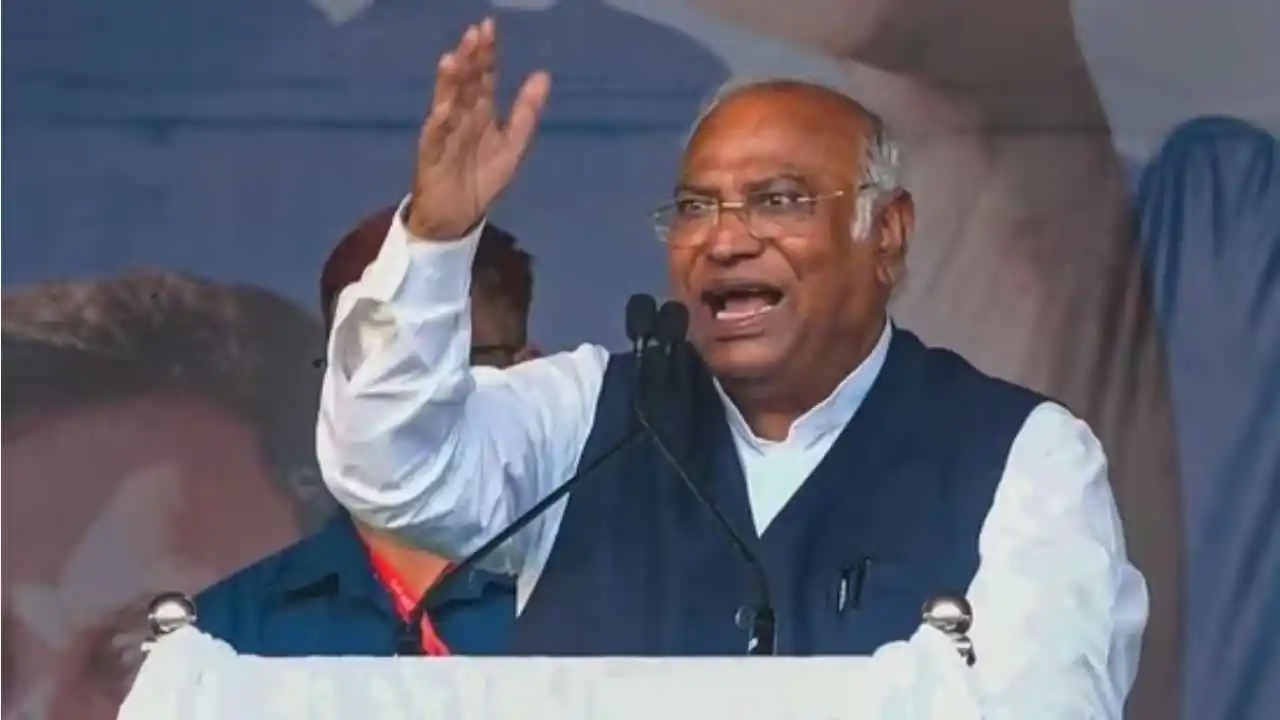
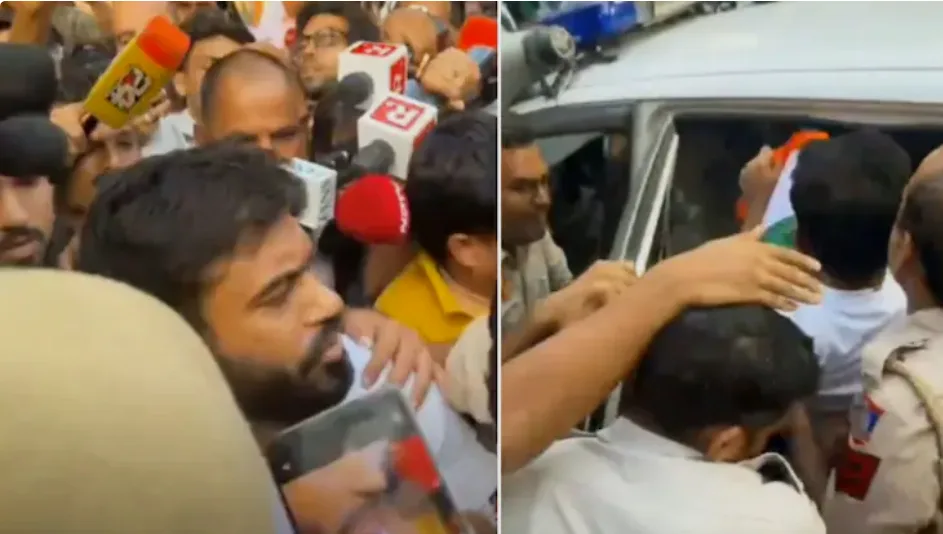
Abhijeet Dipke detained ahead of CJP’s national flag march in Delhi
Cockroach Janta Party founder Abhijeet Dipke was detained by Delhi Police on October 16, 2026, shortly before a planned national flag march. The proposed rally followed the judicial custody of two CJP members who had waved the Tricolour at Jantar Mantar.

Mallikarjun Kharge’s ‘Your Friends’ jab at Rahul Gandhi over congress exits

Magnitude 7 earthquake strikes Russia’s Kamchatka Peninsula

Delhi deploys 25,000 personnel, installs CCTV cameras ahead of CJP march

Abhijeet Dipke detained ahead of CJP’s national flag march in Delhi

Mallikarjun Kharge seeks all-party meeting with PM Modi on delimitation

Centre sends 3 letters to Punjab government after anti-drug activist’s killing
Mallikarjun Kharge seeks all-party meeting with PM Modi on delimitation
Abhijeet Dipke detained ahead of CJP’s national flag march in Delhi
Magnitude 7 earthquake strikes Russia’s Kamchatka Peninsula
Delhi deploys 25,000 personnel, installs CCTV cameras ahead of CJP march

Afghan Men Try To Hang With The Jet Engine Of The Aircraft in Kabul- Afghanistan News – Kabul News
Trending Top 10 News: 10000 Crore Fine on Flipkart, Apple to Launch Unique Feature, Hdfc Bank Job Ad

Trending Top 10 News: Nokia 6310, Apple sales, Bachpan ka Pyar Video Kid, Dainik Bhaskar IT Raid

Trending Top 10 News: Canada bans Indian flights, Rain in Delhi NCR, AIMIM Twitter hacked, Raj Kundra case

Trending Top 10 News: Shein India, Apple New Service, Pocket Oxygen, Oppo Launched New Phone
-
 India News13 hours ago
Mallikarjun Kharge’s ‘Your Friends’ jab at Rahul Gandhi over congress exits
-
 Latest world news12 hours ago
Magnitude 7 earthquake strikes Russia’s Kamchatka Peninsula
-
 India News12 hours ago
Delhi deploys 25,000 personnel, installs CCTV cameras ahead of CJP march
-
 India News3 hours ago
Abhijeet Dipke detained ahead of CJP’s national flag march in Delhi
-
 India News2 hours ago
Mallikarjun Kharge seeks all-party meeting with PM Modi on delimitation
-
 India News1 hour ago
Centre sends 3 letters to Punjab government after anti-drug activist’s killing
