English हिन्दी
Connect with us

India News

Rajasthan BJP MLA Ghanshyam Tiwari quits, says will fight corruption, undeclared Emergency

Published

on

Senior BJP MLA Ghanshyam Tiwari quits, says will fight corruption, undeclared Emergency

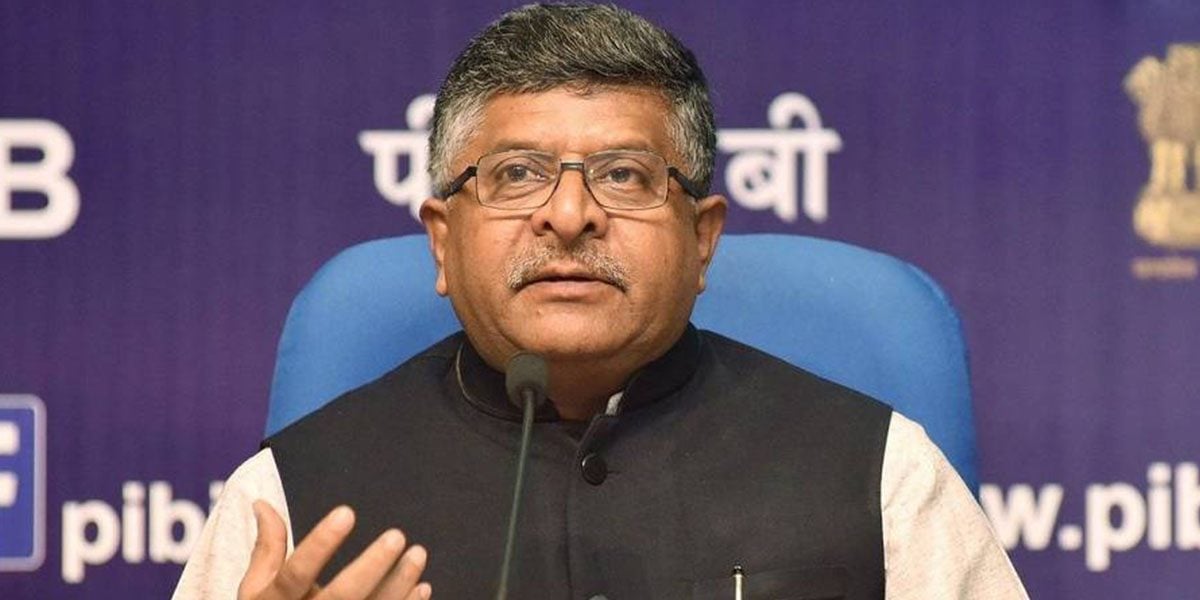
Six-term MLA Ghanshyam Tiwari of Rajasthan BJP has quit the party alleging rampant corruption under chief minister Vasundhara Raje and an undeclared Emergency in the country and in Rajasthan.

The allegations for the move hurt BJP where it hurts most, coming at a time when the BJP top brass chose to pull out the issue of Emergency without any apparent reason or occasion – this is the 43rd year, not 10, 25, or even 40 years – to observe it as a ‘Black Day’ and attack the Congress.

A former minister, Tiwari said that he has submitted his resignation to party chief Amit Shah and accused him of not reining in corruption by CM Raje.

Tiwari’s move was anticipated. A rebel MLA sidelined for four years, he had announced two days earlier that he will field candidates on all 200 Assembly seats of the state under the banner of Bharat Vahini Party, whose founder president is his son Akhilesh Tiwari, said media reports. BVP was registered by the Election Commission of India on June 13.

Addressing a press conference later on Monday, Tiwari said the country was going through a phase of “undeclared emergency” for the last four years and he was ready to fight against it. “Undeclared emergency is more dangerous than actual emergency,” he told reporters, according to PTI. “I have witnessed both the phases and I am tendering my resignation from the party [BJP] to fight against it.”

Tiwari talked about Emergency days, recalling that he “went to jail, was beaten up, and operated while underground.” But, he said “the undeclared Emergency at present in the nation and state is more dangerous than declared Emergency.” He said he was immensely hurt at having to leave the party after being associated with the Sangh for decades.  Tiwari has been with the party since its Jansangh days.

In his four-page resignation letter, he alleged that both the state and central leadership have kneeled down before Chief Minister Vasundhara Raje.

“I fought in 1975 against the declared emergency. Now, I will fight against undeclared emergency. There is an undeclared emergency in the country and the state. I am ready to fight for the protection of public and safeguarding their independence,” wrote Tiwari in his resignation letter.

While addressing Shah, the senior leader pointed out that his repeated complaints over the last four years on corruption and misrule in Rajasthan did not find an audience.

“I even attempted to tell that an individual has taken control of BJP in the state. But you did nothing. Instead, you tried to harass and defame the loyal workers of the party. It is now clear that first you agreed to side with corruption in Rajasthan and now, you have kneeled before it,” Tiwari wrote to Shah.

In his letter to BJP President Amit Shah, Tiwari wrote, “The present state government, in connivance with some leaders in Centre, has been looting the state. Under the leadership of the chief of the state government, a coterie of some ministers and officers has only one aim: to pick the pockets of the citizens and rob the state’s resources.”

Without naming Raje, he wrote, “New methods of corruption are being invented on a daily basis under the chief of BJP government. Be it appointing her confederates on creamy postings, or extortion through political appointments.or possession of Rs 2,000 crore government residence in Civil Lines – for life – through a Bill.”

Further, he wrote, “…the power and dignity of all the major constitutional offices – Vidhan Sabha, Vidhan Sabha committees, Raj Bhawan, Rajasthan Public Services Commission, council of ministers etc. – have been put at stake for fulfilling personal aspirations. False cases are filed on dissenters and their families harassed. Situation is such that newspapers are openly suppressed economically and politically.”

Tiwari is the MLA from Jaipur’s Sanganer Assembly seat — his sixth term in the State Assembly. In 2013 Assembly elections, he had won with the highest margin in the state, defeating Congress rival by over 65,000 votes.

Tiwari is a known adversary of Rajasthan Chief Minister Vasundhara Raje in the state’s political circles. He had been at loggerheads with her on several occasions during her current stint as the state Chief Minister and in 2017, the BJP’s national disciplinary committee issued show-cause notices to Tiwari after he alleged that the state party unit had become a place for mafias and sycophants, PTI reported.

Tiwari said he will contest from the same constituency – Sanganer – in the upcoming Assembly elections in Rajasthan from his son’s newly-floated party Bharat Vahini Party. The polls are scheduled for later this year.

While Tiwari’s party is unlikely to win on his own but he can harm the BJPs prospects in the assembly election. He could influence some Brahmin votes, a caste that constitutes 12.5 per cent of the population.

The Vasundhara Raje government is already facing anti-incumbency and the BJP has faced series of defeats in recent bypolls. In the bypolls to five assembly and two Lok Sabha seats so far, the BJP lost three and two respectively to the Congress.

In bypolls for two Lok Sabha seats held earlier this year, the BJP lost in all the 17 assembly constituencies.

The party’s state unit is plagued with infighting and dissensions and the central leadership has failed to appoint a state president, a post which has been lying vacant for a considerable period of time.

Officially, the BJP put up a brave face. Party’s Rajasthan in-charge, Avinash Rai Khanna, was quoted by media reports as saying that “no person has been able to establish himself politically after parting ways with the BJP. His case was pending before the disciplinary committee and he took this step on his own.”

India News

PM Modi assures no discrimination in women’s quota, delimitation debate intensifies in Parliament

PM Narendra Modi has assured that women’s reservation will be implemented without discrimination, amid a heated debate over delimitation in Parliament.

Published

on

PM modi

Prime Minister Narendra Modi has assured that there will be no discrimination in the implementation of women’s reservation, as Parliament witnessed a sharp debate over the proposed linkage between the quota and delimitation exercise.

During the ongoing special session, the government reiterated its commitment to ensuring fair representation while addressing concerns raised by opposition parties regarding the timing and structure of the legislation.

The proposed framework aims to reserve 33 percent of seats for women in the Lok Sabha and state assemblies. However, its implementation is tied to a fresh delimitation exercise, which is expected after the next census.

Opposition questions timing and intent

Opposition leaders have raised concerns that linking the women’s quota to delimitation could delay its implementation. They argue that the process of redrawing constituencies may push the actual rollout further into the future.

The issue has triggered a broader political confrontation, with multiple parties questioning whether the move could alter representation across states.

Some critics have also alleged that the delimitation exercise could disproportionately benefit certain regions based on population, a charge the government has rejected.

Government reiterates commitment to fair implementation

Responding to these concerns, the Centre has maintained that the reforms are necessary to ensure accurate and updated representation based on population data.

Leaders from the ruling side have repeatedly emphasized that the process will be carried out transparently and without bias. The assurance that there will be “no discrimination” is aimed at addressing fears among states and opposition parties.

The debate marks a key moment in Parliament, with both sides engaging in intense exchanges over one of the most significant electoral reforms in recent years.

Continue Reading

India News

Give all tickets to Muslim women, Amit Shah says, attacking Akhilesh Yadav on sub-quota demand

A sharp exchange between Amit Shah and Akhilesh Yadav in Parliament over sub-quota for Muslim women highlights key divisions on women’s reservation implementation.

Published

on

A heated exchange broke out in Parliament during discussions on the women’s reservation framework, with Union Home Minister Amit Shah and Samajwadi Party chief Akhilesh Yadav locking horns over the demand for a sub-quota for Muslim women.

The debate unfolded as the government pushed forward key legislative measures to implement 33% reservation for women in the Lok Sabha and state assemblies.

Akhilesh Yadav argued that the proposed reservation must ensure representation for women from marginalised communities, including Other Backward Classes (OBCs) and Muslim women. He said that without such provisions, large sections could remain excluded from political participation.

He also questioned the timing of the bill, alleging that the Centre was avoiding a caste census. According to him, a census would lead to renewed demands for caste-based reservations, which the government is reluctant to address.

Government rejects religion-based quota

Responding to the demand, Amit Shah made it clear that reservation based on religion is not permitted under the Constitution.

He stated that any proposal to provide quota to Muslims on religious grounds would be unconstitutional, firmly rejecting the idea of a separate sub-quota for Muslim women within the broader reservation framework.

The government has maintained that the existing framework already includes provisions for Scheduled Castes (SC) and Scheduled Tribes (ST) women within the overall reservation structure.

Wider political divide over implementation

The issue of sub-categorisation within the women’s quota has emerged as a major flashpoint, even as most opposition parties broadly support the idea of women’s reservation.

Samajwadi Party leaders reiterated that their support for the bill depends on inclusion of OBC and minority women, while the government continues to defend its constitutional position.

The debate is part of a broader discussion during the special Parliament session, where multiple bills linked to delimitation and implementation of the women’s quota are being taken up.

Continue Reading

India News

No state will lose a seat, Centre assures as delimitation debate takes centre stage in Parliament

Parliament’s special session begins with key focus on implementing women’s reservation and delimitation, setting the stage for major electoral changes.

Published

on

Parliament

A special session of Parliament commenced on Thursday, with the Centre set to take up crucial legislation related to women’s reservation and delimitation of constituencies. The session, scheduled over three days, is expected to witness intense debate as the government pushes forward its legislative agenda.

At the centre of discussions is the proposal to operationalise the women’s reservation law, which seeks to allocate 33 percent of seats in the Lok Sabha and state assemblies to women. The law, passed earlier, requires enabling provisions before it can be implemented.

The rollout of the reservation is closely tied to the delimitation exercise — a process that redraws parliamentary constituencies based on updated population data. The implementation is expected only after the next census and delimitation process are completed.

The government is aiming to put in place the framework so that the reservation can be enforced in future elections, likely around 2029.

Delimitation and numbers at play

Delimitation is a key aspect of the proposed changes, as it will determine how seats are redistributed and which constituencies are reserved. The exercise is expected to reflect population shifts and may also involve an increase in the total number of Lok Sabha seats.

This linkage has made the issue politically sensitive, with several opposition parties backing women’s reservation in principle but raising concerns over how and when delimitation will be carried out.

Political reactions and expected debate

The session is likely to see sharp exchanges between the government and opposition. While there is broad agreement on increasing women’s representation, disagreements remain over the timing, process, and potential political implications of the delimitation exercise.

Some leaders have argued that delimitation could significantly alter the balance of representation among states, making it a contentious issue beyond the women’s quota itself.

The government, however, has framed the move as a step toward strengthening women’s participation in governance and ensuring more inclusive policymaking.

Continue Reading

Trending

© Copyright 2022 APNLIVE.com