English हिन्दी
Connect with us

India News

Rajnath Singh says India has no permanent friends or enemies only permanent interests amid tariff tensions

Published

on

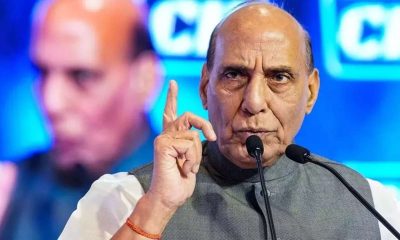
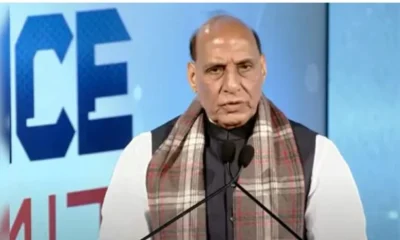
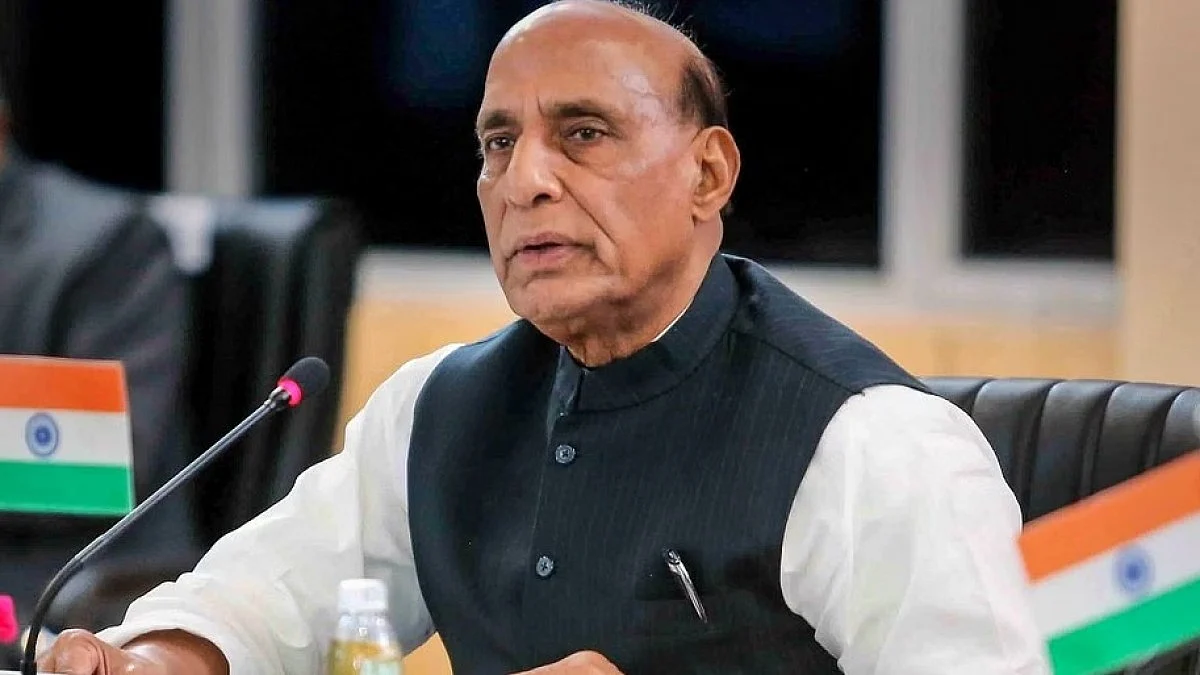
Defence Minister Rajnath Singh on Saturday highlighted India’s growing emphasis on self-reliance in defence, stating that the country has no permanent friends or enemies, only permanent interests. His comments were made during the NDTV Defence Summit 2025, set against the backdrop of escalating trade disputes with the United States and the recent improvement in India’s ties with China.

Singh underlined that India is steadily moving towards complete indigenisation in defence manufacturing, citing the commissioning of two Nilgiri-class stealth frigates, INS Himgiri and INS Udaygiri as milestones in this journey. He reiterated that all future warships will be built domestically, with the Indian Navy committed to manufacturing rather than importing such platforms.

The minister also announced that the indigenously developed Sudarshan Chakra defence system will soon be operational, further strengthening India’s strategic capabilities. He described self-reliance, or aatmanirbharta, as not merely an advantage but an urgent necessity in the face of shifting global geopolitics.

He emphasised that external dependency in defence is no longer an option, pointing out that the volatile international environment required both economic and security resilience. He further noted that while India does not view any country as an enemy, it would continue to safeguard its national interests without compromise.

Singh acknowledged the rise of protectionist policies among developed countries and highlighted the challenges created by US President Donald Trump’s decision to impose a 50% tariff on Indian imports. He observed that the global trade environment resembled a war-like situation and emphasised that India would pursue its course based on long-term national interests.

The defence minister also highlighted Operation Sindoor, which showcased India’s indigenous strength after the Pahalgam terror attack, proving the effectiveness of locally developed precision systems.

Another key achievement he cited was the surge in India’s defence exports, which have risen from under ₹700 crore in 2014 to nearly ₹24,000 crore today. Singh said, reflects India’s transition from a defence importer to a country steadily emerging as an exporter of strategic systems.

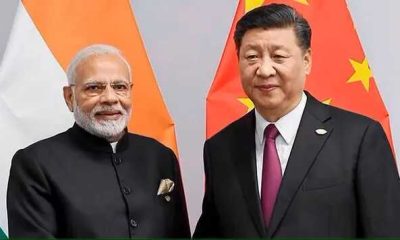
Singh’s strong emphasis on self-reliance comes as Prime Minister Narendra Modi departed for China to attend the Shanghai Cooperation Organisation (SCO) summit, following a two-day visit to Japan.

With the unveiling of projects like the Sudarshan Chakra and the Navy’s pledge for full indigenisation, Singh’s message underscores India’s determination to secure its defence and trade interests in a turbulent global order.

India News

Congress, BJP attack Bhagwant Mann over remarks on Punjab blasts

Congress and BJP have jointly criticised Punjab CM Bhagwant Mann after he linked recent blasts near defence sites to political motives, triggering a controversy.

Published

on

Bhagwant Mann

A political row has erupted in Punjab after Chief Minister Bhagwant Mann linked recent blast incidents to political motives, drawing sharp criticism from both the Congress and the Bharatiya Janata Party (BJP).

The controversy follows two low-intensity explosions reported within a short span of time — one near the Border Security Force (BSF) headquarters in Jalandhar and another close to an army cantonment area in Amritsar. The incidents raised concerns over security, particularly given the sensitive nature of the locations.

In response, Mann suggested that the blasts could be part of a larger political strategy. His remarks triggered a strong backlash, with opposition parties accusing him of politicising a serious security issue.

Leaders from the Congress criticised the Chief Minister’s statement, calling it inappropriate and alleging that such comments undermine the gravity of the situation. They stressed that matters related to national security should be handled with caution and responsibility.

The BJP also joined the criticism, questioning the basis of Mann’s claims and urging the state government to focus on investigation and law enforcement instead of making political allegations.

The developments have led to an unusual moment where both Congress and BJP appear aligned in their criticism of the Aam Aadmi Party-led government in the state.

Meanwhile, the blasts themselves have intensified concerns over safety in border regions, with authorities continuing their investigation into the incidents. No casualties were reported, but the proximity to defence establishments has made the issue particularly sensitive.

The episode has further escalated political tensions in the state, with security and accountability emerging as key points of debate.

Continue Reading

India News

Himanta Biswa Sarma resigns as Assam chief minister, oath ceremony likely after May 11

Himanta Biswa Sarma resigns as Assam Chief Minister after BJP-led NDA’s victory. He will continue as caretaker CM until the new government is sworn in after May 11.

Published

on

Himanta sharma

Assam Chief Minister Himanta Biswa Sarma resigned from his post on Wednesday, paving the way for the formation of a new government after the BJP-led NDA secured a decisive victory in the 2026 Assembly elections.

Sarma submitted his resignation to Governor Lakshman Prasad Acharya at Lok Bhawan in Guwahati. The Governor accepted the resignation and asked him to continue as the caretaker Chief Minister until the new government takes charge.

The resignation comes after the NDA’s strong electoral performance, where the alliance won a clear majority in the 126-member Assembly, ensuring its return to power for another term.

Oath ceremony expected after May 11

Speaking to reporters after submitting his resignation, Sarma said the swearing-in ceremony for the new government is likely to be held after May 11.

He indicated that Prime Minister Narendra Modi has been invited to attend the ceremony but is unavailable until May 11, which has influenced the tentative schedule.

Decision on next chief minister soon

Sources suggest that central observers, including senior BJP leaders, are expected to arrive shortly to oversee the selection of the legislature party leader. The newly elected MLAs will then decide on the next Chief Minister.

Despite the formal resignation, party sources indicate that Sarma is likely to continue in the role for another term, given the BJP’s strong mandate in the state.

The move marks the beginning of the government formation process in Assam following the election results declared earlier this week.

Continue Reading

India News

Rahul Gandhi and Vijay alliance took shape through backchannel talks, early signals from Congress leaders

Congress outreach and political calculations led to Rahul Gandhi and Vijay coming together after the Tamil Nadu 2026 election results.

Published

on

The coming together of Rahul Gandhi and actor-politician Vijay in Tamil Nadu after the 2026 Assembly elections was not sudden, but the result of behind-the-scenes political manoeuvring and early signals within the Congress.

According to media reports, some leaders in the Tamil Nadu Congress had already sensed the scale of Vijay’s surge during the campaign, anticipating what was later described as a “wave” in favour of his party.

After the results, where Vijay’s Tamilaga Vettri Kazhagam (TVK) emerged as the single largest party but fell short of a majority, communication channels between the Congress leadership and Vijay quickly became active.

A key moment in this evolving political equation was a phone call from Rahul Gandhi to Vijay, congratulating him on the party’s strong performance. The conversation was seen as more than a courtesy, signalling the possibility of cooperation at a time when government formation required additional support.

Reports indicate that discussions within Congress weighed the political benefits of supporting Vijay, especially given the shifting dynamics in the state where traditional dominance by major Dravidian parties has been challenged.

With TVK needing allies to cross the majority mark, Congress emerged as a potential partner, leading to a broader political realignment in the state. This development also triggered tensions within opposition alliances, highlighting the strategic importance of the decision.

The evolving partnership reflects a mix of electoral pragmatism and changing voter sentiment, particularly the growing influence of younger voters, which leaders acknowledged as a key factor in the election outcome.

Continue Reading

Trending

© Copyright 2022 APNLIVE.com