English हिन्दी
Connect with us

India News

India clears Rs. 1.1 lakh crore defence procurement plan for radars, mine layers

India has cleared defence procurement proposals worth around Rs. 1.10 lakh crore for the Army, Navy and Air Force, including radars, mine layers, helicopters and electronic warfare systems.

Published

on

Rajnath Singh

The Defence Ministry has cleared military procurement proposals estimated at around Rs. 1.10 lakh crore for the Indian Army, Navy and Air Force, in a major push to strengthen operational capabilities and promote indigenous defence manufacturing.

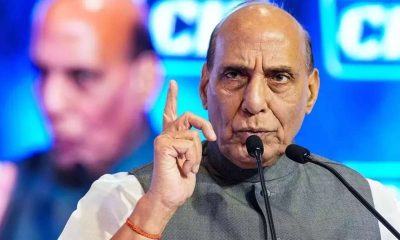
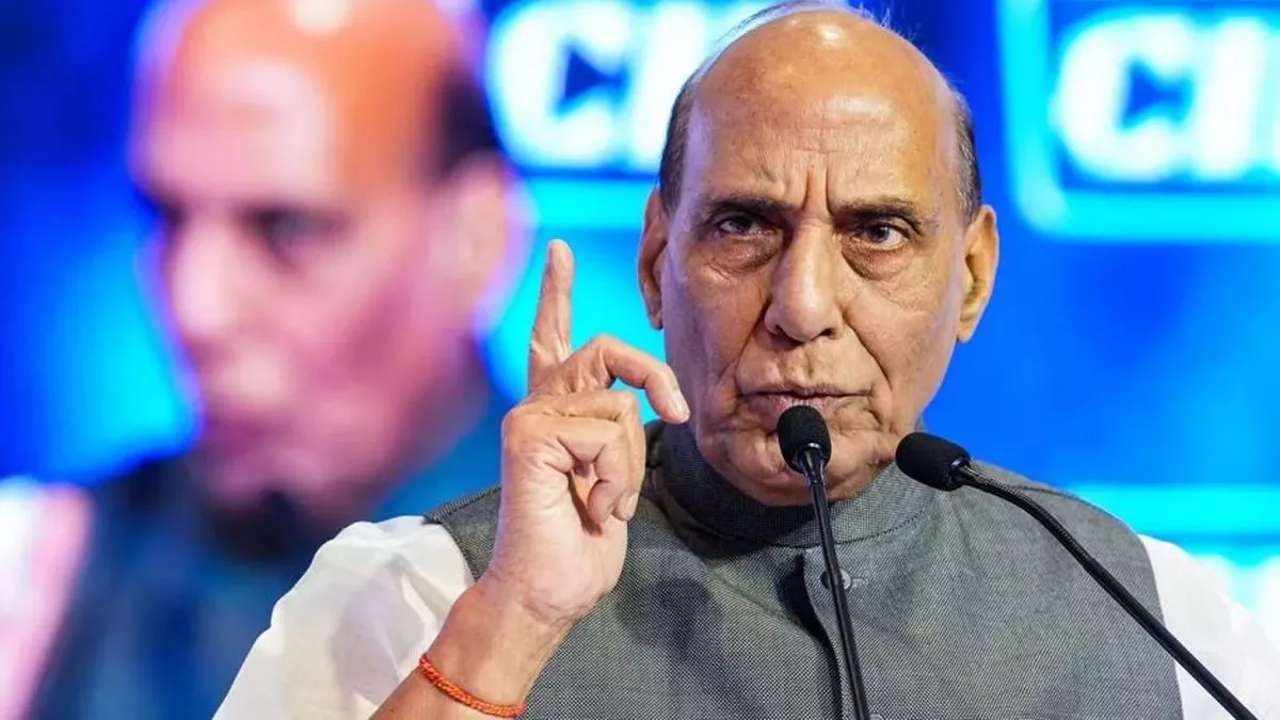
The proposals were approved by the Defence Acquisition Council (DAC), headed by Defence Minister Rajnath Singh. The ministry said the DAC accorded Acceptance of Necessity (AoN) for a range of acquisitions. AoN is the first stage of the defence procurement process.

Nearly 98 per cent of the approved procurements are expected to be sourced from Indian industry, according to the Defence Ministry.

What the Army will get

The Army-related approvals include Chemical, Biological, Radiological and Nuclear (CBRN) reconnaissance vehicles, high-mobility vehicles, self-propelled mechanical mine layers, Advanced Light Helicopters (ALHs), trawl tanks and the Sarvatra bridge system.

CBRN reconnaissance vehicles will be used to detect and monitor areas contaminated by chemical, biological, radiological or nuclear agents.

The high-mobility vehicles are intended to support troop movement and logistics in difficult terrain. The trawl tanks and Sarvatra bridge system will help combat formations with mobility and crossings during military operations.

Advanced Light Helicopters will be used by both the Army and the Air Force for operations across different terrains and mission requirements.

Navy to receive Arudhra radars

For the Indian Navy, the DAC approved the procurement of Arudhra radars, along with the design, development and subsequent procurement of Marine Gas Turbines (MGTs).

The Marine Gas Turbine programme is aimed at developing a key propulsion system for warships while reducing dependence on foreign suppliers.

The Arudhra radars will replace existing air-route surveillance radars at naval air stations and are expected to strengthen the Navy’s surveillance capabilities.

Air Force gets electronic warfare systems

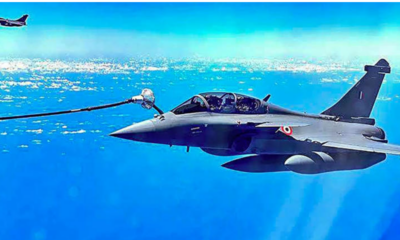
The Indian Air Force also received approval for projects aimed at strengthening the capabilities of its fighter aircraft, transport fleets and helicopters.

Among the approved systems is the Ground-Based Multi-Purpose Jammer (GBMPJ). The ministry said the jammer will provide electronic warfare capability against adversary radar networks.

Approval was also given for the installation of the Defence Forces Secure Access Card system.

Push for domestic defence manufacturing

The latest approvals are part of the government’s broader effort to strengthen the operational capabilities of the armed forces while promoting self-reliance in defence manufacturing.

The Defence Ministry said nearly 98 per cent of the approved procurements will be sourced from Indian industry, potentially giving further impetus to domestic defence production.

The Rs. 1.10 lakh crore figure represents the estimated value of the procurement proposals that received the DAC’s Acceptance of Necessity at this stage. It does not by itself mean that all the equipment has already been contracted or delivered.

India News

Pralhad Joshi accuses Rahul Gandhi of sharing cropped Amit Shah SIR clip

Pralhad Joshi accused Rahul Gandhi of sharing a cropped Amit Shah video over SIR and challenged the Congress leader to debate the issue in Parliament.

Published

on

Pralhad Joshi

Union Minister Pralhad Joshi has accused Congress leader Rahul Gandhi of sharing a cropped and out-of-context video of Home Minister Amit Shah over the Special Intensive Revision (SIR) of electoral rolls.

The latest exchange comes amid a growing political dispute between the BJP and the Opposition over SIR and allegations concerning the electoral roll revision process.

Joshi questioned Gandhi’s understanding of the issue and challenged him to take up the matter in Parliament rather than relying on selectively edited video clips.

The remarks came after Amit Shah challenged Gandhi to discuss SIR in Parliament. Shah said the government was prepared to hold a special session if the Congress leader wanted a debate on the issue.

Rahul Gandhi shares Amit Shah video

The controversy intensified after Rahul Gandhi shared a video featuring two statements by Amit Shah concerning whether SIR could be discussed in Parliament.

Gandhi used the video to question Shah’s position and urged him to persuade Prime Minister Narendra Modi to agree to an open debate on the issue.

The video highlighted what Gandhi described as differing positions on the discussion of SIR in Parliament. The Congress leader has continued to press for a debate on the electoral roll revision exercise.

Joshi challenges Gandhi over SIR

Responding to Gandhi’s position, Joshi accused him of circulating a cropped video that did not present Shah’s remarks in their complete context.

Joshi also questioned the Congress leader’s criticism of the electoral process, arguing that the party had faced defeats in Lok Sabha elections before the current SIR exercise.

The BJP has maintained that its concerns about the electoral rolls should be addressed through a discussion in Parliament. Amit Shah has separately pointed to the 2014, 2019 and 2024 Lok Sabha elections while arguing that there was no SIR during those elections and Congress still lost.

BJP-Congress clash over SIR

The dispute over SIR has become a major political flashpoint, with the Opposition raising concerns about electoral rolls and the BJP defending the revision process.

The latest confrontation follows protests by the INDIA bloc against alleged irregularities in electoral rolls and demands concerning the Election Commission. The BJP, meanwhile, has challenged the Opposition to take its arguments to Parliament.

The disagreement over the Amit Shah video is therefore part of the wider political battle between the BJP and Congress over SIR, electoral rolls and the conduct of elections.

Continue Reading

India News

SIR 2026: EC gives voters in 7 states another chance to join final rolls

The Election Commission has opened another opportunity for voters left out of the draft SIR rolls in Delhi, Maharashtra, Haryana, Andhra Pradesh, Jharkhand, Telangana and Nagaland.
Published

on

Election Commission of India

The Election Commission has given another opportunity to certain voters whose names were not included in the draft electoral rolls during the ongoing Special Intensive Revision (SIR) exercise.

The decision applies to Delhi, Maharashtra, Haryana, Andhra Pradesh, Jharkhand, Telangana and Nagaland. It covers electors who were issued Enumeration Forms but whose names were left out of the draft rolls after being marked under the ASDD categories — Absent, Shifted, Dead or Duplicate.

The move is aimed at ensuring that eligible voters get an opportunity to have their cases considered before the final electoral rolls are published. The EC has also directed officials to prevent duplicate enrolments while ensuring that eligible electors are not left out.

Lists of excluded voters to be displayed again

The Election Commission has directed officials to display booth-wise lists of voters falling under the specified categories again at the concerned polling stations.

The lists will also be made available at panchayat bhawans and urban local body offices and uploaded on the websites of the respective Chief Electoral Officers. They will mention the probable reasons why the voters’ names were not included in the draft rolls.

Fresh enumeration forms for affected voters

District election officials and Electoral Registration Officers have been asked to generate partially filled Enumeration Forms afresh through the ECINET system.

Booth Level Officers will be tasked with contacting the affected voters and helping ensure that the forms reach them. This can include physical delivery as well as communication through WhatsApp, email or SMS where contact details are available.

Voters can also download and fill their forms through the Election Commission’s website or ECINET using the same EPIC number that existed before their names were deleted from the draft roll.

What voters who have shifted need to do

The EC has made separate provisions for voters who have shifted their residence within the same state.

Such electors will not need to submit Form 8 for this process. They can submit the Enumeration Form along with a statement giving their new address and Assembly constituency, along with proof of address.

For homeless voters who do not have address documents, the Election Commission has provided for a field verification report by the Booth Level Officer to establish residence.

Forms will be verified before inclusion

The fresh submissions will not automatically result in inclusion in the electoral roll. The applications will be examined by the concerned Electoral Registration Officers under Rule 21(1) of the Registration of Electors Rules, 1960.

Forms accepted after verification will be kept separately for inclusion in the final electoral rolls under the SIR exercise.

The Election Commission has also directed state and Delhi election officials to establish monitoring mechanisms to oversee the implementation of the process and ensure that eligible electors get the opportunity to seek inclusion while duplicate entries are prevented.

Continue Reading

India News

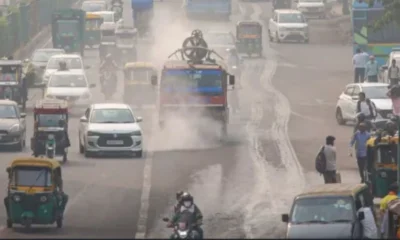
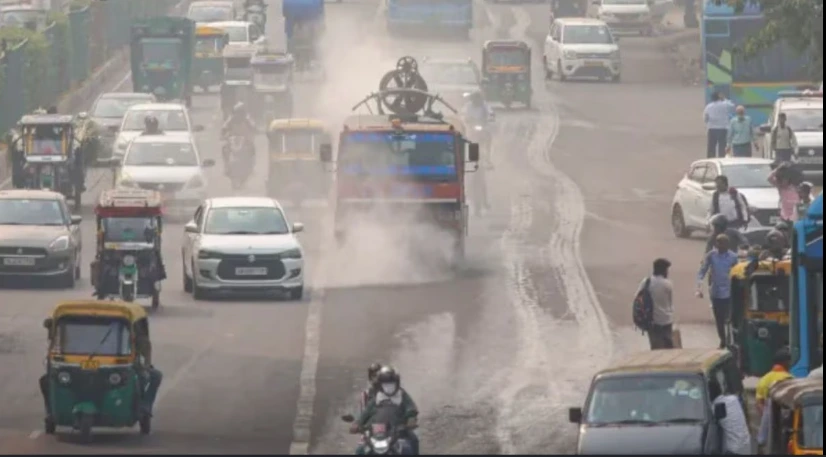
Delhi-NCR GRAP 3 imposed as pollution worsens ahead of Diwali

GRAP Stage III has been imposed across Delhi-NCR with immediate effect as Delhi’s average AQI reached 382, putting the air quality in the “Very Poor” category ahead of Diwali.

Published

on

The Commission for Air Quality Management (CAQM) has imposed Stage III of the Graded Response Action Plan (GRAP) across Delhi-NCR with immediate effect as air quality deteriorated ahead of Diwali.

The decision was taken as a precautionary measure after Delhi’s average Air Quality Index (AQI) reached 382 on Friday, placing the national capital in the “Very Poor” category. 

GRAP 3 comes into effect across NCR

The CAQM’s Sub-Committee on GRAP decided to invoke Stage III across the entire National Capital Region.

GRAP is an emergency response framework under which pollution-control measures become progressively stricter as air quality deteriorates. The four stages correspond to different levels of air pollution, with “Poor” covering AQI levels of 201-300, “Very Poor” 301-400, “Severe” 401-450 and “Severe Plus” above 450.

The Stage III decision comes less than two days before Diwali, when authorities are particularly concerned about a further deterioration in air quality.

Pollution levels remain a concern

Delhi’s average AQI of 382 indicates that pollution levels have remained high across the capital. The move to GRAP Stage III is intended to prevent further deterioration in air quality across Delhi-NCR.

The latest decision follows earlier pollution-control measures implemented under the revised GRAP framework as air quality worsened in the region. 

What GRAP means for Delhi-NCR

The GRAP framework provides for increasingly stringent measures as pollution levels rise. Stage III brings stricter restrictions than the earlier stages, particularly in areas linked to dust and emissions.

The latest CAQM decision applies across Delhi-NCR with immediate effect. Details of the measures to be enforced under the newly invoked Stage III should be followed through official directions issued by the authorities.

The development comes amid heightened concern over air pollution in the national capital region ahead of Diwali.

Continue Reading

Trending

© Copyright 2022 APNLIVE.com