
India News
Rohingya issue: Suu Kyi-India intransigence carries few explanations

[vc_row][vc_column][vc_column_text]~By Lilly Paul
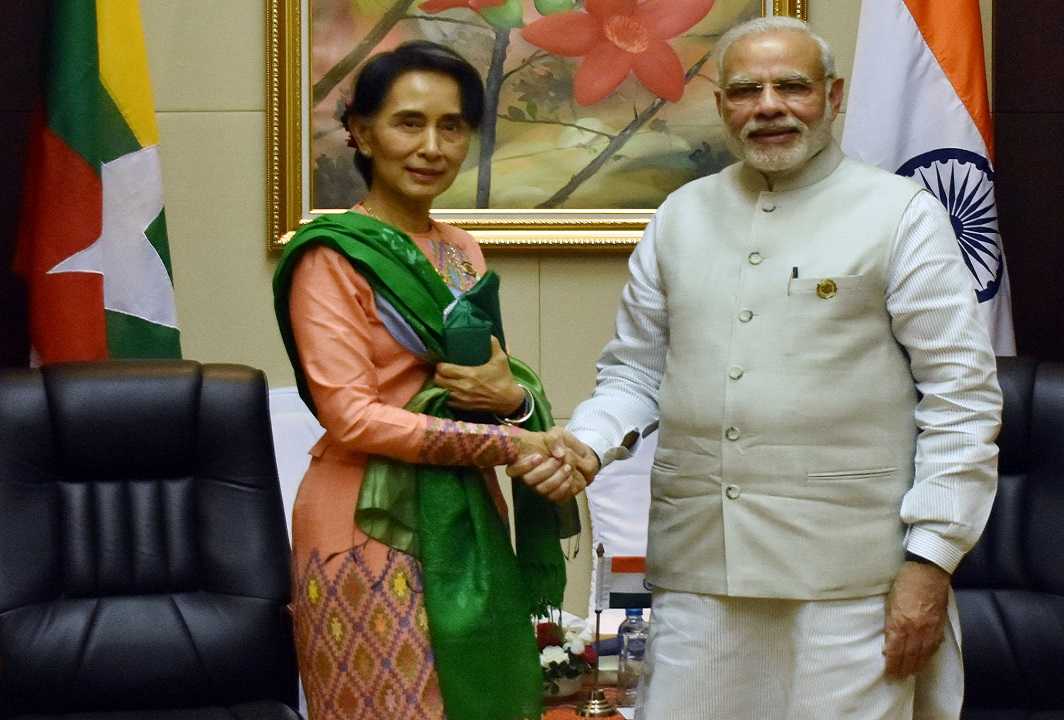
Rohingya immigrants in India were given Long Term Visas in 2012 (valid till 2015), but this has been discontinued
As the problem of the forced Rohingya exodus increases, so does the criticism of Myanmar’s de facto leader Aung San Suu Kyi. She has not only been unable to stop the fleeing of these persecuted people but has been rather timid in her comments, having said that the situation is being twisted by a “huge iceberg of misinformation”.
“We make sure that all the people in our country are entitled to protection of their rights as well as, the right to, not just political but social and humanitarian defence”, she reportedly told Turkish President Recep Tayyip Erdogan during a phone call on September 5.
There has been a move to ask the Nobel Committee to take back her Nobel Peace Prize. And, amid this hue and cry, Suu Kyi has decided not to attend the United Nations General Assembly this year. The Assembly is expected to discuss the Rohingya crisis in its session from September 19 to 25. Instead, Suu Kyi is expected to speak over a televised address on September 19.
The UN Security Council, after its meeting on September 13, issued its first statement on Myanmar in nine years. It has publicly condemned the violence and called on Myanmar to end its campaign against Rohingyas. The 15-member Council held its meeting behind closed doors at the request of Sweden and Britain.
The United Nations Human Rights Commissioner chief Zeid Ra’ad Al Hussein called the Myanmar situation a textbook example of ethnic cleansing and also criticised India for its plan to deport Rohingyas at a time of violence in their country.
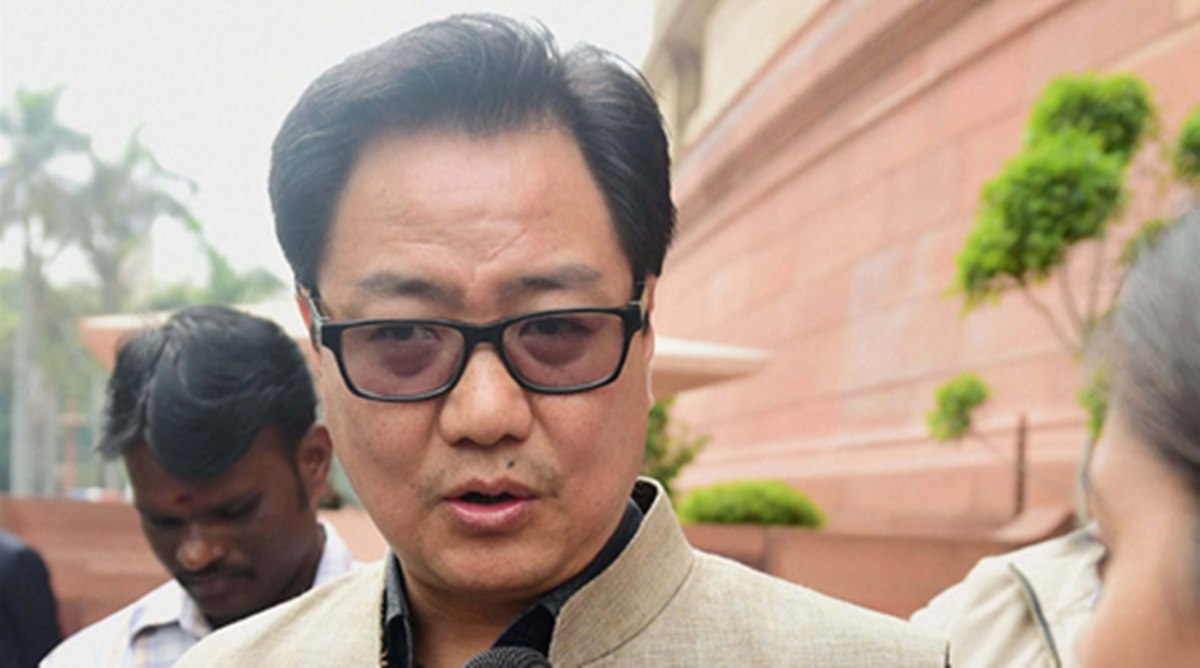
However, the Indian government is rather stiff towards UNHCR and its refugee undertakings in the country. Union Minister of State for Home Affairs Kiren Rijiju had earlier clarified that all illegal immigrants would be deported including the ones who have been issued ID cards by the UNHCR. There are 16,500 UN identified Rohingya refugees in India.
UNHCR told India Legal: “UNHCR is aware of the media articles reporting on the government’s plan to deport Rohingya. UNHCR has not received any official communication from the government in this regard and there are no reported instances of deportations of UNHCR registered Rohingya from India.”
Apart from being criticised by the UNHCR, India is also upsetting its immediate neighbours with its pro-Myanmar stand. According to reports, it was Bangladesh which was the reason behind India’s changed stance on the Rohingya refugee crisis. After Bangladesh High Commissioner Syed Muazzem Ali met India’s Foreign Secretary S Jaishankar, the Ministry of External Affairs released a statement declaring its concern over the situation in Rakhine and over the outflow of refugees from that region.
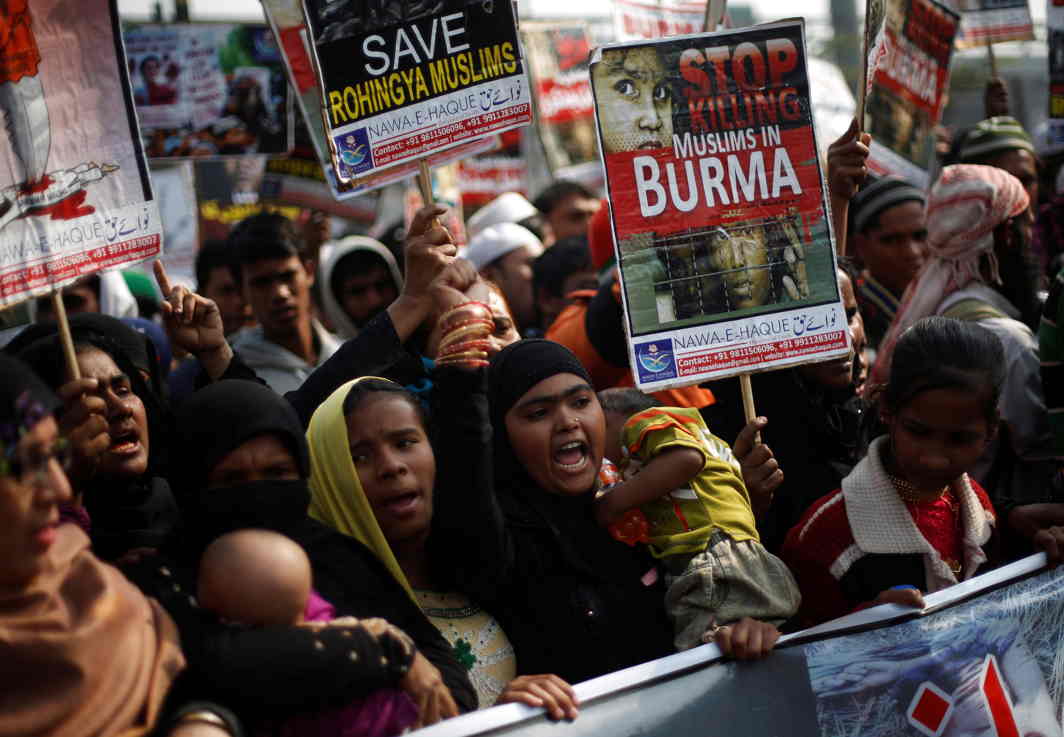
On the other hand, the protests inside the country against and in support of the Rohingyas have intensified further. On September 13, hundreds protested outside the Myanmar embassy in Chanakyapuri, Delhi against the government’s decision. The civil society along with human rights activists joined the Rohingyas in this protest. RJD spokesperson Manoj Jha and AISA student activist Shehla Rashid also joined the protest. Before this, the Rohingyas along with other Indians had protested at Jantar Mantar, New Delhi on September 5. Similar protests have been held in other cities as well such as Kolkata and Jaipur.
The anti-Rohingya sentiments are also on rise. Two PILs have been filed in the Supreme Court asking it to intervene in an ongoing hearing against Rohingya deportation. RSS ideologue Govindacharya and a Chennai-based group Indic Collective have sought to intervene in the matter asking to deport Rohingyas as they could probably be a threat to the country.
Amidst all this, one item of news from Hyderabad said a 20-year-old Rohingya man was arrested on the charge of cheating and forgery as he had obtained Indian identity card to get a passport and travel to Dubai. Mohammad Ismail was arrested along with an Aadhaar card, a Voter ID card and also a PAN card.
This brings us to another matter— what is the legal recognition provided to the Rohingya refugees in India, if at all.
In May, 2012, after a month long protest by the Rohingyas backed by the United Nations High Commission for Refugees (UNHCR), India had granted them long-term visas (LTV). Although they protested to get official refugee status from the government, the Indian government did not give them any such recognition.
This was because India which is home to refugees from several countries has no refugee law of its own. India does not even differentiate between immigrants and refugees. As per UNHCR refugees are “persons fleeing armed conflict or persecution” whereas migrants are people who choose to move so as to improve their lives by finding work, or in some cases education, family reunion, or other reasons. However, India makes no such distinction. An illegal migrant as defined in Section 2 (1) (b) of the Citizenship Act, 1955 is a foreigner who entered India without a valid passport or travel documents or is staying in India after the expiry of the passport and other travel documents. There is no mention of refugees and granting them asylum.
However, India granted Rohingyas LTVs in 2012 which was to be valid until 2015. India continued with the granting of LTVs to Rohingyas.
Sabbir, Founder of Rohingya Human Rights Initiative, who runs a mobile repair shop along with an Indian partner, told India Legal: “In Delhi there are around 1,200 Rohingyas among which 800 to 850 people have already got long term visas from the Foreigner Regional Registration Office.”
However, the Indian government has now stopped giving Rohingyas LTVs and the FRRO website states that visas will only be granted to Pakistani and Bangladeshi nationals. It is unclear as to why did the Indian government stop granting them LTVs because as per a press release issued by Press Information Bureau titled “Law for refugees in India”, the government talks about circulating a standard operating procedure while dealing with foreign nationals “who claim to be refugees”.
The release dated August 6, 2014 mentions that long term visas will be permitted on grounds of persecution due to race, religion, sex, nationality, ethnic identity, membership of a particular social group or political opinion. In the case of Rohingyas, it is clear that they are being persecuted on the grounds of ethnicity and therefore they are eligible of getting long-term visas. Therefore there’s no point why the government decided to stop the LTVs.
UNHCR told India Legal: “The Government also issue Long Term Visas to refugees which eases their access to public services, bank accounts and employment in the private sector. Because of some recent changes to documentation processes, some refugees have reportedly been facing challenges in accessing public services and opening bank accounts with their existing documentation”.
The government is clearly discriminating between Rohingyas and migrants from other countries. Not only has it denied Long Term Visa to the Rohingyas despite accepting a standard operating procedure as per which they qualify to get LTVs, the government is granting special facilities to other religious communities. This Ministry of Home Affairs put out a statement in August, 2016 wherein it gave various facilities to persons belonging to ‘minority community’ in Afghanistan, Bangladesh and Pakistan, namely, Hindus, Sikhs, Buddhists, Jains, Parsis and Christians, who are staying in India on LTV.
The government here, decided to issue PAN card and Aadhaar card to such people. Further, all benefits extended to such people will be linked to Aadhaar numbers. It is unclear as to how did the Rohingyas get Aadhaar card and other Indian ID cards. There is definitely a flaw in the Indian security system. It will now be even more difficult for the government to identify Rohingyas as many of the ones living here from long already have obtained ID cards and the other who have recently arrived are now desperate to get those cards or to leave the country and travel to safer places like Ismail tried to do.[/vc_column_text][/vc_column][/vc_row]









India News
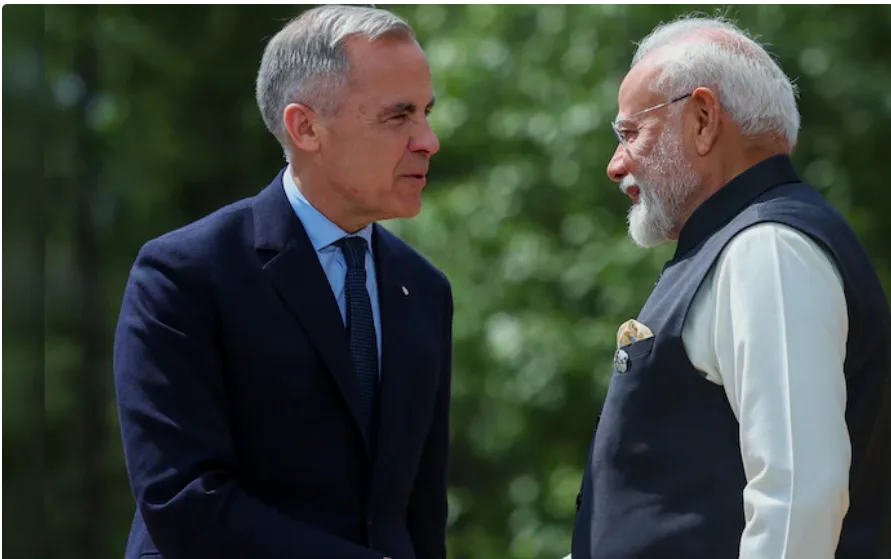
PM Modi speaks to Mark Carney as India and Canada push to strengthen ties
Prime Minister Narendra Modi held a telephone conversation with Canadian Prime Minister Mark Carney on October 13, with both leaders agreeing to strengthen India-Canada ties and pursue concrete outcomes across key areas of their strategic partnership.

India News
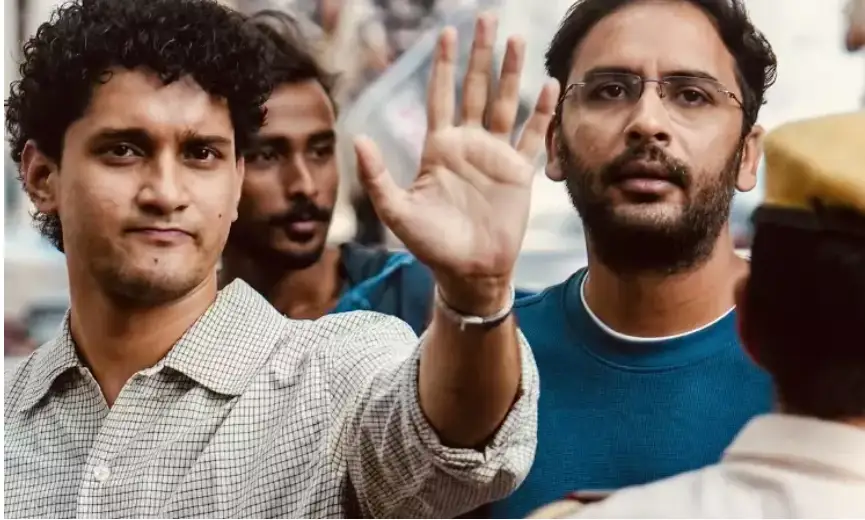
CJP leaders Saurav Das, Ashutosh Ranka, Ajinkya Shinde sent to 5-day judicial custody
Three CJP leaders, Saurav Das, Ashutosh Ranka and Ajinkya Shinde, were placed under preventive arrest following a protest at Delhi’s Jantar Mantar over Chief Election Commissioner Gyanesh Kumar.
India News
BJP focuses on religion as opposition pushes BDM strategy in UP
The BJP is emphasising religious issues ahead of the Uttar Pradesh Assembly elections, while opposition parties are seeking to consolidate Backward, Dalit and Minority voters. Recent exchanges involving Yogi Adityanath, Akhilesh Yadav and Asaduddin Owaisi have added to the political contest over the state’s electoral narrative.


Rahul Gandhi hosts high tea for INDIA bloc after Gyanesh Kumar protests

L Murugan quits Union ministry to strengthen BJP in Tamil Nadu

Amit Shah attacks Rahul Gandhi over Congress poll losses, questions SIR row

BJP focuses on religion as opposition pushes BDM strategy in UP

CJP leaders Saurav Das, Ashutosh Ranka, Ajinkya Shinde sent to 5-day judicial custody

PM Modi speaks to Mark Carney as India and Canada push to strengthen ties

S Jaishankar says India is a natural option for Russia amid Europe tensions
CJP leaders Saurav Das, Ashutosh Ranka, Ajinkya Shinde sent to 5-day judicial custody
BJP focuses on religion as opposition pushes BDM strategy in UP
L Murugan quits Union ministry to strengthen BJP in Tamil Nadu

Afghan Men Try To Hang With The Jet Engine Of The Aircraft in Kabul- Afghanistan News – Kabul News
Trending Top 10 News: 10000 Crore Fine on Flipkart, Apple to Launch Unique Feature, Hdfc Bank Job Ad

Trending Top 10 News: Nokia 6310, Apple sales, Bachpan ka Pyar Video Kid, Dainik Bhaskar IT Raid

Trending Top 10 News: Canada bans Indian flights, Rain in Delhi NCR, AIMIM Twitter hacked, Raj Kundra case

Trending Top 10 News: Shein India, Apple New Service, Pocket Oxygen, Oppo Launched New Phone
-
 India News16 hours ago
Rahul Gandhi hosts high tea for INDIA bloc after Gyanesh Kumar protests
-
 India News15 hours ago
L Murugan quits Union ministry to strengthen BJP in Tamil Nadu
-
 India News16 hours ago
Amit Shah attacks Rahul Gandhi over Congress poll losses, questions SIR row
-
 India News14 hours ago
BJP focuses on religion as opposition pushes BDM strategy in UP
-
 India News4 hours ago
CJP leaders Saurav Das, Ashutosh Ranka, Ajinkya Shinde sent to 5-day judicial custody
-
 Latest world news3 hours ago
S Jaishankar says India is a natural option for Russia amid Europe tensions
-
 India News3 hours ago
PM Modi speaks to Mark Carney as India and Canada push to strengthen ties
