English हिन्दी
Connect with us

India News

1984 riots case: Former Congress MP gets life sentence

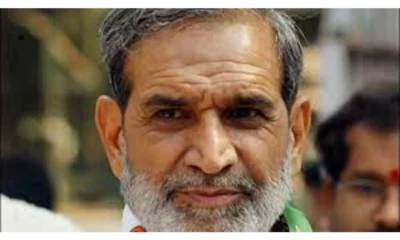
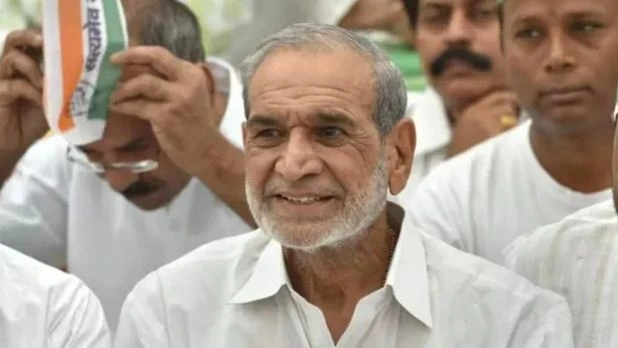
A Delhi court has sentenced former Congress MP Sajjan Kumar to life imprisonment in the 1984 anti-Sikh riots case. The court rejected the prosecution’s plea for the death penalty.

Published

on

Sajjan Kumar sentenced to life imprisonment in 1984 riots case

In a landmark decision, a Delhi court sentenced former Congress MP Sajjan Kumar to life imprisonment for his involvement in a murder case linked to the 1984 anti-Sikh riots. The court rejected the prosecution’s plea for the death penalty.
Verdict in 1984 anti-Sikh riots case

Special judge Kaveri Baweja announced the ruling, convicting Kumar for the murder of Jaswant Singh and his son Tarundeep Singh, who were allegedly killed by a violent mob on November 1, 1984. The prosecution, along with Jaswant’s wife—the complainant in the case—had sought the death sentence for Kumar.

However, while the court acknowledged the gravity of the crime, it decided on life imprisonment, adhering to the Supreme Court’s guidance on evaluating psychiatric and psychological reports before awarding capital punishment. Earlier this month, on February 12, Kumar was convicted of the charges, and a psychiatric evaluation report from Tihar Central Jail was sought.

Legal proceedings and case details

The case was initially registered at the Punjabi Bagh Police Station, but a special investigation team (SIT) later took over the probe. According to the prosecution, a large mob armed with deadly weapons carried out widespread looting, arson, and destruction of Sikh-owned properties in the aftermath of the assassination of then-Prime Minister Indira Gandhi. The rioters stormed Jaswant Singh’s house, killed him and his son, looted valuables, and set their residence on fire.

Sajjan Kumar remains in Tihar Jail

Currently incarcerated at Tihar Jail, Kumar has been serving a sentence in another case related to the 1984 riots. This latest conviction adds to the legal challenges the former Congress leader faces, as courts continue to deliver verdicts on riot-related cases decades after the violence shook the nation.

India News

As stealth reshapes air combat, India weighs induction of Sukhoi Su-57 jets

India is assessing the possible induction of up to 40 Sukhoi Su-57 fifth-generation fighter jets as stealth becomes central to future air combat strategy.

Published

on

Sukhoi Su-57 jets

Aerial warfare is increasingly being defined by the ability to remain undetected rather than by traditional dogfighting skills, and India is now assessing options to strengthen its capabilities in this new paradigm. Defence circles are abuzz with indications that the Indian Air Force may consider procuring up to 40 Russian fifth-generation Su-57 fighter jets, according to sources.

The possible move comes less than a year after Operation Sindoor, which was launched in May last year following the Pahalgam terror attack. The air engagements with the Pakistan Air Force during the operation are understood to have provided fresh operational insights, prompting discussions on future preparedness.

Why stealth is central to fifth-generation fighters

Fifth-generation fighter aircraft are designed with a strong emphasis on low observability. Platforms such as the Su-57 incorporate airframes shaped to reduce radar signatures and use radar-absorbent materials to make detection more difficult across radar, infrared and visible spectrums.

These aircraft typically integrate advanced avionics, sensor fusion and supercruise capabilities. They are also configured to carry specialised weapons internally, enhancing stealth during combat missions.

According to information available on Sukhoi’s official platform, the Su-57 is equipped with a deeply integrated avionics suite that offers a high level of automation and intelligent crew support. Its onboard systems enable it to operate autonomously and exchange data in real time with ground control systems or as part of a coordinated task force.

The aircraft can deploy a broad range of air-to-air and air-to-surface munitions, allowing it to undertake both fighter and strike roles. Sukhoi states that the jet is capable of conducting covert missions owing to reduced visibility across multiple wavelength ranges.

The Su-57 is also fitted with an auxiliary power unit designed to improve deployment autonomy and lower fuel consumption during ground operations. An onboard oxygen extraction unit enhances operational endurance. Additionally, the aircraft features an explosion-proof fuel tank system described as a generator-type neutral gas system, aimed at improving combat survivability.

Regional security context

The reported deliberations come amid evolving regional dynamics. China, regarded as Pakistan’s close strategic partner, has developed the J-20 fifth-generation stealth fighter, and there are indications that such capabilities could eventually be shared with Pakistan.

India is also pursuing its own fifth-generation programme, the Advanced Medium Combat Aircraft (AMCA). The first flight of the AMCA is expected around 2028 or 2029, with induction into the Air Force projected around 2035.

In this backdrop, any decision on the Su-57 would form part of a broader effort to ensure that the Indian Air Force remains prepared for future aerial warfare scenarios where stealth and advanced sensing capabilities play a decisive role.

Continue Reading

India News

RSS chief backs nationwide rollout of Uniform Civil Code, cites Uttarakhand model

RSS chief Mohan Bhagwat has supported nationwide implementation of the Uniform Civil Code, urging adoption of the Uttarakhand model.

Published

on

Mohan Bhagwat

Rashtriya Swayamsevak Sangh chief Mohan Bhagwat has expressed support for implementing the Uniform Civil Code (UCC) across the country, stating that it would be a “very good thing” if adopted nationwide. He suggested that the framework introduced in Uttarakhand could serve as a model for other states.

Speaking at a former servicemen’s dialogue seminar organised to mark the RSS’s 100th anniversary, Bhagwat said the UCC should be implemented in a manner similar to the approach followed by Uttarakhand. The hill state became the first in the country to enforce the Uniform Civil Code on January 27 last year.

Highlighting the process adopted in Uttarakhand, Bhagwat noted that after a draft proposal was prepared, it was opened for public discussion. According to him, suggestions from nearly three lakh people were received, and these inputs were examined and incorporated.

Describing the UCC as essential for societal unity, the RSS chief said such a legal framework would strengthen social cohesion.

When asked about the ongoing issue concerning the University Grants Commission, Bhagwat declined to comment, stating that the matter is currently under consideration by the Supreme Court of India.

Addressing retired personnel from the armed forces and paramilitary services at the event, Bhagwat underlined the continuing importance of defence forces, even in an independent nation, to safeguard sovereignty.

He also reflected on the journey of the RSS, saying the organisation was established without external resources and continued to grow despite facing severe sanctions on two occasions. He attributed its progress to the confidence and support of society.

Encouraging participation, Bhagwat invited former servicemen to attend Sangh camps and programmes to observe the work of volunteers and contribute to service activities based on their interests and abilities.

Continue Reading

India News

DMK leader’s son arrested after car rams family in Krishnagiri, one dead

A 20-year-old son of a DMK leader has been arrested for allegedly driving a car into four members of a family in Krishnagiri, killing assistant labour inspector Sivamoorthy.

Published

on

DMK leader

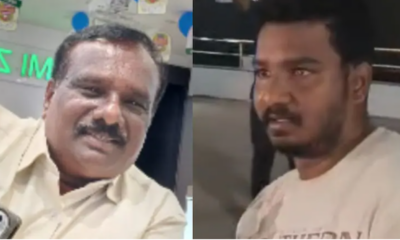
A 20-year-old son of a leader from the Dravida Munnetra Kazhagam (DMK) has been arrested for allegedly mowing down four members of a family following a heated argument in Tamil Nadu’s Krishnagiri district. One person died in the incident, police said.

The deceased has been identified as Sivamoorthy, an assistant labour inspector and a resident of Krishnagiri. According to the police, the incident occurred outside his residence after the accused, identified as Adithya, objected to a two-wheeler parked on the road.

Police said Adithya was driving the car and began honking as the two-wheeler was blocking the road. Sivamoorthy and his family members reportedly stepped out to move the vehicle. During the exchange that followed, an altercation broke out.

Investigators allege that Adithya then rammed his car into Sivamoorthy, his son Kirubakaran, daughter-in-law Amsavalli and granddaughter Nilani. Sivamoorthy sustained severe injuries and later succumbed. The others were injured in the incident.

Besides Adithya, two of his friends — Rithik Kumar and Harish — who were present in the car at the time, have also been arrested. A case of murder has been registered against the trio and further investigation is underway.

Kirubakaran, recounting the incident, said the family had attempted to move the parked two-wheeler when the accused damaged it. He alleged that the men appeared intoxicated and tried to assault them with a stick before the vehicle was driven into the family.

Amsavalli said they had tried to defuse the situation peacefully but the confrontation turned violent, resulting in her father-in-law’s death and injuries to her child.

A police officer stated that Adithya’s father is a local functionary of the DMK in Krishnagiri district. The victim’s family has demanded strict action in the case.

Reacting to the incident, state BJP chief Nainar Nagendran criticised the ruling Dravida Munnetra Kazhagam, questioning the state government over the episode and alleging that party functionaries were misusing their influence.

Police said the probe is ongoing.

Continue Reading

Trending

© Copyright 2022 APNLIVE.com