
India News
Saving Kulbhushan Jadhav

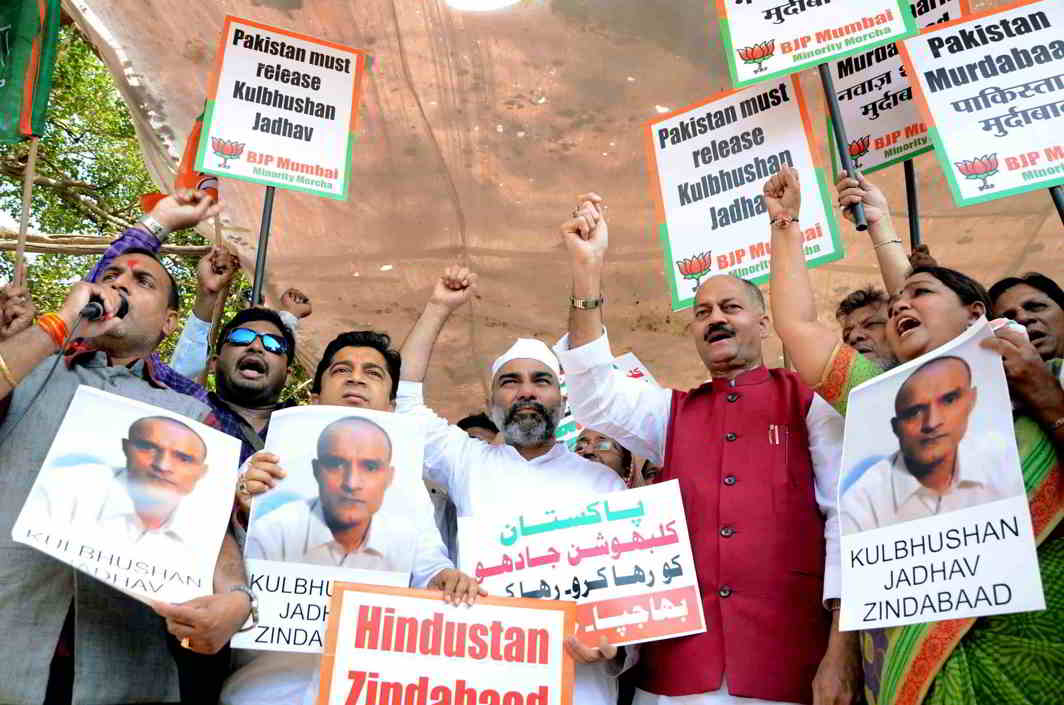
[vc_row][vc_column][vc_column_text]What can India do to bring the former Indian Navy officer home?
By Sujit Bhar
The capture of a “spy” on foreign land is not steeped in historic uniqueness. It is not the same as the live capture of a terrorist who had killed and maimed hundreds and destroyed humongous property as Ajmal Kasab, member of the Lashkar-e-Taiba Islamist group, did in the Mumbai terrorist attacks in 2008.
There are two things to be considered in the capture of Kulbhushan Jadhav, allegedly in the Balochistan area of Pakistan. First, he is not a terrorist and deserves more than a half-baked military court (which the entire Pakistani defence establishment is) to pronounce judgement on a crime that he has not committed. And secondly, diplomacy is not yet dead between the two countries. There can always be a diplomatic solution to tricky situations. It serves both ways.
Lets us put it on the table. If Pakistan has consistently denied that Kasab was a Pakistani citizen (which he certainly was), then Jadhav cannot be a tit-for-tat for that hanging. Secondly, the Pakistani Supreme Court’s decision that a Pakistani army Field General Court Marshal is valid even if it gives a death sentence to a civilian, smacks of a dictatorial approach. In such a case normal processes – India has attempted 14 failed consular interventions – would not work.
If Prime Minister Narendra Modi’s relations with his Pakistani counterpart Nawaz Sharif is as good as Modi wants the country to believe, why is he not opening lines of communication with him? Or is it that these lines of communication are as useless as Modi’s lines of “communication” with Chinese President Xi Jinping? Xi had come to India, sat on the jhula with Modi and shared a Gujarati meal. And then, quietly but sternly, Xi had thrown India’s claim to the Security Council seat out of the window. China has snubbed India on several occasions since.
India’s kindergarten learning curve continues.
So what options lie in India’s path in the Jadhav case?
Let us consider some earlier instances of spy captures.
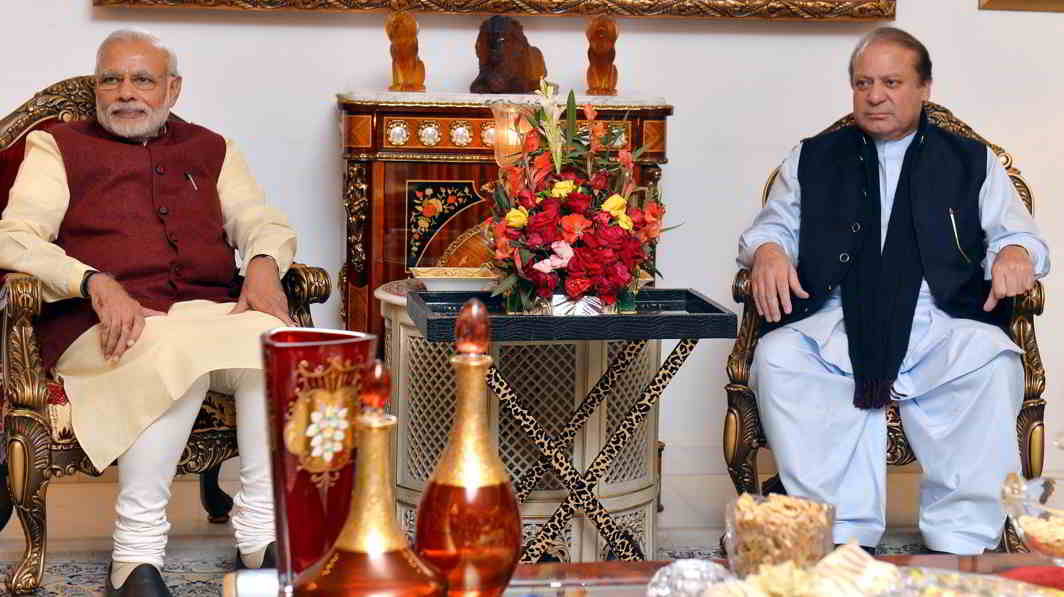
FAILED OVERTURE: A photo of the Indian PM’s much-talked-about birthday greeting meet with his Pakistani counterpart
The spy-exchange mission
In 1962, a US spy Francis Gary Powers was released by the then Soviet Union after having held him for two years when his plane crashed during a spying mission across the USSR. He was convicted of espionage, “a grave crime covered by Article 2 of the Soviet Union’s law ‘On Criminality Responsibility for State Crimes’, as the Soviets put it.
Diplomacy won, finally, with Powers being exchanged for Soviet KGB Colonel Vilyam Fisher, known as “Rudolf Abel” in early 1962.
CIA got agents return after 19 years
A documentary released by the CIA in 2011, showed how two of their agents were captured – their plane was shot down in an ambush – by the Chinese in 1952 and released only in 1971 when relations between the two countries “warmed”. The Chinese held them hostage for so long to hold a political advantage. The problem with Pakistan is that its diplomacy is ruled by the military, and when no administration is sure of its next month under the army’s thumb, it cannot even think of long term diplomatic solutions.
The failed mission
Robert Levinson, a former FBI official and an off-the-hook CIA agent was picked up by Iranian security from a resort island of that country in 2008 and has not even been heard of since 2010. The CIA claimed in 2013 that they had not even heard of the existence of Levinson till eight months after his disappearance. That was almost as far-fetched an explanation as Pakistan’s denial to acknowledge Kasab. In the end, diplomacy failed and Levinson is presumed dead.
His family members are said to have secretly paid $ 2.5 million to secure his release, all in vain.
Sarabjit’s death
Sarabjit Singh, an Indian farmer, who had allegedly strayed into Pakistan territory in 1990, was caught by Pakistani Rangers and charged and convicted with terrorism and spying by a Pakistani court.
The Pakistani Supreme Court, which is no more than a spineless adjunct of the Pakistani army, held a “trial” and implicated him in the series of bomb attacks in Lahore and Faisalabad (14 bystanders died) in 1990, saying Sarabjit was an undercover agent of India’s Research and Analysis Wing.
He was sentenced to death in 1991, but while waiting for his execution (it was postponed several times by the government) at Kot Lakhpat jail, Lahore, he was brutally assaulted by fellow inmates and died in a hospital in 2013.
No bargaining chip
It would have been to Pakistan’s advantage had they declared the capture and held the bargaining chips. Diplomacy in Pakistan is not even in its nascent stage, all of it under army control. Relations are not at a comfortable stage between the two countries, but we are not at war. So negotiations can still happen. Balochistan is a thorn in Pakistan’s flesh as Kashmir is of India’s. But that means little to the small minds that rule that country.
Only posturing
On India’s part, Modi’s posturing has done little to sensitise Pakistan. His strange jump-down from a foreign trip to wish Pakistani Prime Minister Nawaz Sharif on his birthday now seems an obtuse act. India has not been able to stop the brutal beheadings of Indian jawans by Pakistani soldiers. India has not opened channels of conversation with the people who matter in Pakistan, its army generals. How long does it take to realise that the Pakistani politicians are no more than puppets in the hands of the armed forces? What was the point of chasing good relations with such spineless politicians?
[Here is a bit of information, provided without comment: Sharif is also a steel tycoon. For all practical purposes he is a billionaire, and has huge business interests in India.]
It has become an international norm – institutionalised by the US – to not go into dealings with non-combatant individuals caught in the line of action, in the face of quid-pro-quo demands. Will India, too, consider this as another collateral damage, like our beheaded soldiers? It is clear that Pakistani generals are corrupt and work only for money. They can be bought. They have been bought in the past by foreign forces. This is an open secret. Does not India, the great nation, have any underground channel open to address this monetary situation? It could save a citizen’s life.
What responsibility does this government have towards its citizens, one wonders? What responsibility does it have towards its jawans and towards its covert operatives in the field of action?
If India keeps treating a failed state like Pakistan like a superpower, that failed state will see no wrong in behaving like one.
One guesses, protecting cows and strange international business interests have become more important in this dispensation than protecting the country’s soldiers, operatives and people on the border.[/vc_column_text][/vc_column][/vc_row]







India News
Delhi Police offers 11-person limit for CJP’s Connaught Place protest
Delhi Police has offered to facilitate a group of 11 people at Central Park in Connaught Place for the Cockroach Janata Party’s October 16 protest, while warning that violations of prohibitory orders could invite legal action.


India News
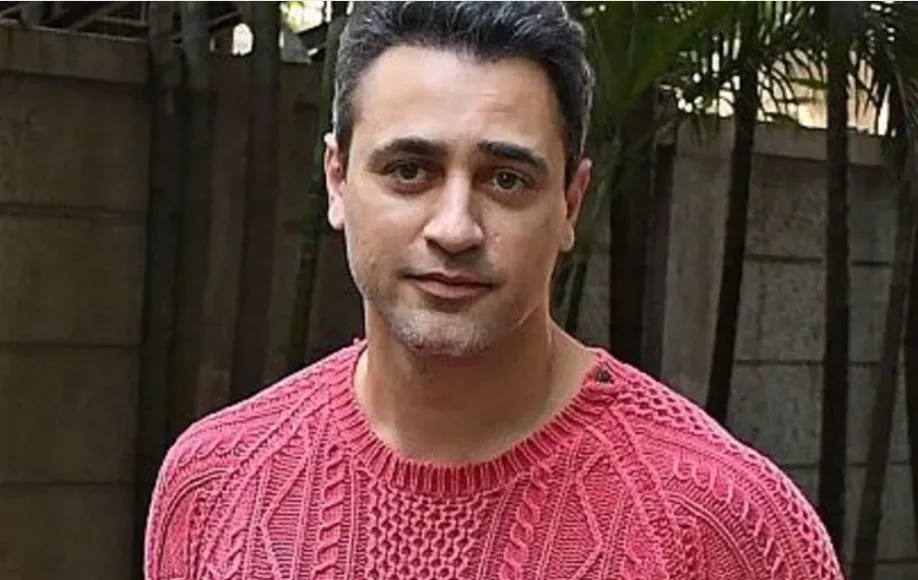
Actor Imran Khan asked to leave India after CJP protest
Actor Imran Khan has been asked to leave India by October 28, days after participating in a protest called by the Cockroach Janta Party (CJP) in Mumbai.
India News
Election Commission orders voter roll revision in 17 states, UTs
The Election Commission has ordered a Special Summary Revision of electoral rolls in 17 states and Union Territories. Draft rolls are scheduled for November 12, with final rolls due on January 4, 2027.

Dhruv Rathee gets fresh summons in 2018 BJP IT cell video case

Nobody can browbeat judiciary, Chief Justice warns over Rahul Gandhi’s march

India-US trade deal first phase finalised, drafting underway

Election Commission orders voter roll revision in 17 states, UTs

Actor Imran Khan asked to leave India after CJP protest

Delhi Police offers 11-person limit for CJP’s Connaught Place protest
Actor Imran Khan asked to leave India after CJP protest
Election Commission orders voter roll revision in 17 states, UTs
India-US trade deal first phase finalised, drafting underway
Nobody can browbeat judiciary, Chief Justice warns over Rahul Gandhi’s march

Afghan Men Try To Hang With The Jet Engine Of The Aircraft in Kabul- Afghanistan News – Kabul News
Trending Top 10 News: 10000 Crore Fine on Flipkart, Apple to Launch Unique Feature, Hdfc Bank Job Ad

Trending Top 10 News: Nokia 6310, Apple sales, Bachpan ka Pyar Video Kid, Dainik Bhaskar IT Raid

Trending Top 10 News: Canada bans Indian flights, Rain in Delhi NCR, AIMIM Twitter hacked, Raj Kundra case

Trending Top 10 News: Shein India, Apple New Service, Pocket Oxygen, Oppo Launched New Phone
-
 India News15 hours ago
Dhruv Rathee gets fresh summons in 2018 BJP IT cell video case
-
 India News12 hours ago
Nobody can browbeat judiciary, Chief Justice warns over Rahul Gandhi’s march
-
 India News7 hours ago
India-US trade deal first phase finalised, drafting underway
-
 India News5 hours ago
Election Commission orders voter roll revision in 17 states, UTs
-
 India News5 hours ago
Actor Imran Khan asked to leave India after CJP protest
-
 India News3 hours ago
Delhi Police offers 11-person limit for CJP’s Connaught Place protest
