English हिन्दी
Connect with us

India News

SC asks woman claiming to be Jayalalithaa’s daughter to move Karnataka HC

Published

on

[vc_row][vc_column][vc_column_text]Amrutha Sarathy, brought up as the daughter of the late AIADMK chief’s estranged sister, claims a DNA test will prove Jayalalithaa was her real mother

The continuing war within the AIADMK and among close aides of J Jayalalithaa to claim the deceased leader’s legacy got a fresh twist on Monday as a woman – 37-year-old Amrutha Sarathy – moved the Supreme Court seeking a DNA test which she claimed would prove that she is the biological daughter of the former Tamil Nadu chief minister.

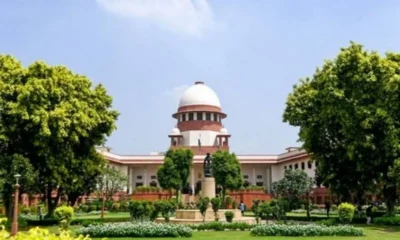
While the Supreme Court Bench of Justices Madan B Lokur and Deepak Gupta dismissed the writ petition moved by Amrutha through her counsel, senior advocate Indira Jaisingh, on the grounds that it was not maintainable under Article 32 of the Constitution, the new twist in the ever-evolving AIADMK political potboiler is clearly one that will be keenly monitored.

The disappointment in the Supreme Court is not likely to dissuade Amrutha, who was brought up as the daughter of Jayalalithaa’s estranged younger sister Shylaja, from pressing for a DNA test to establish that the deceased Tamil icon was her real mother.

Amrutha has been told by the apex court that she can approach the Karnataka High Court with her demand.

Since Jayalalithaa’s ‘mysterious’ death at Chennai’s Apollo Hospital last year, there has been a constant war between political leaders and her close-confidante, the jailed VK Sasikala, for claiming the former chief minister’s legacy.

While it seemed the patch-up between Jayalalithaa’s political aides – Tamil Nadu chief minister Edappadi Palaniswamy and his deputy O Panneerselvam – and their recent victory against VK Sasikala in the quest to get rights to the AIADMK’s ‘two-leaves’ election symbol, was the beginning of an end to the legacy-war, Amrutha’s claim now adds a new twist to the saga.

Interestingly, Amrutha’s aunts – LS Lalitha and Ranjani Ravindranath – both cousins of Jayalalithaa, are co-petitioners in the case that the 37-year-old had filed. Lalithaa and Ranjani had sought the apex court’s intervention to help Amrutha prove her relationship with Jayalalithaa, which they claim was thwarted by AIADMK leader Sasikala.

Amrutha’s story is fascinating, one that could easily pass off as a spicy movie script in Bollywood, or even the Tamil film industry of which Jayalalithaa was a reigning queen before her plunge into politics.

Amrutha has claimed that she was born on August 14, 1980, at Jayalalithaa’s residence in the Mylapore neighbourhood of Chennai but the birth was kept a secret to avoid social stigma and “uphold the dignity of the family as they belonged to a very religious, orthodox and cultured Brahmin family”.

Jayalalithaa, at least as per known official records, had never married and Amrutha’s petition didn’t expressly mention who she believes her biological father was. However, in her petition before the SC, Amrutha claimed that she was adopted by Jayalalithaa’s elder sister, Shylaja, at birth. Shylaja died in 2015 while her husband, Sarathy, died in March this year. Amrutha’s petition claims that on his deathbed, Sarathy confessed that he was in a relationship with Jayalalithaa.

“It was upon the death of Late Ms. J. Jayalalitha that Amrutha came to know through close family relatives – LS Lalitha and Ranjani Ravindranath – that she is in fact the biological daughter of Late Ms. J. Jayalalitha and thus, to ascertain the same, the Petitioners herein are seeking remedy under Article 32 of the Constitution of India for a declaration of the same through an identifiable method to know the maternity i.e., through deoxyribonucleic acid test (hereinafter referred to as DNA Test) which is to be undertaken by any institute of national repute to ascertain and establish the maternity of the Petitioner No.1 (Amrutha),” states the petition.

As per official records, Jayalalithaa is known to have only one sibling, a brother – the late Jayakumar. Curiously, Jayakumar’s daughter Deepa Jayakumar, has refuted the claims being made by Amrutha while other close aides of Jayalalithaa have on earlier occasions asserted that she had no other sibling.

Detailing the circumstances of her birth in her petition, Amrutha says: “It was decided amongst the family members that the birth and adoption of the Petitioner No.1 will be kept as a secret and therefore all of them, viz., Late Mrs. Jayalakshmi, Late Ms. J. Jayalalitha, Late Mrs. Shylaja and her husband Late Mr. Sararthy took a promise in front of God and amongst themselves that they will not disclose the true facts and circumstances of birth of the Petitioner No. 1.”

However, Amrutha goes on to say in her petition that that she had visited Jayalalithaa on several occasions during her lifetime and that the AIADMK chief would always treat her with “motherly affection” and had even had her enrolled as a member of the AIADMK.

Things, according to Amrutha, seem to have taken a sudden turn for the worse when Jayalalithaa was hospitalized last year at Apollo Hospital. During the over 70-day hospitalized, which eventually ended with Jayalalithaa’s demise, Amrutha claims she often tried to meet her ‘mother’ but that she was chased away by the security on Sasikala’s instructions. She also alleges that she was obstructed from paying her last respects to Jayalalithaa at the Rajaji Hall.

The mystery around Amrutha’s ‘foster’ mother Shylaja:

In an interview to Junior Vikatan in 2014, Shylaja claimed that she is the third sibling born to Sandhya and Jayaram, with Jayalalithaa being the eldest and Jayakumar the middle child. “I was a three-month-old foetus when my father died. My mother entered films and gave me to art director Damodar Pillai’s son, who raised me,” Shylaja told JV.

According to Shylaja, she lived in Ramanathapuram till the age of five. In the interview to Junior Vikatan, Shylaja had also claimed that Jayalalithaa’s mother, Sandhya, used to meet her twice or thrice a week. “She used to take me out to buy chocolate. She used to make me wear gold and feel happy. She once took me to JC road Shivaji theatre to watch my akka’s (elder sister Jayalalithaa) film.”

However, when quizzed on whether she had any document to prove her story, Shylaja had replied in the negative. She said she had a photograph with her mother Sandhya but it was “somehow lost”. Like Amrutha is doing now, Shylaja had then claimed: “If you take my DNA test you will know (that I am Jayalalithaa’s sister)… When I was 16 years old, my adopted father took me to the Kannada superstar Rajkumar uncle. As soon as he saw me, Rajkumar asked Damodaran, ‘Is this Sandhya’s daughter?’ To that, my father said yes.”[/vc_column_text][/vc_column][/vc_row]

India News

PM Modi assures no discrimination in women’s quota, delimitation debate intensifies in Parliament

PM Narendra Modi has assured that women’s reservation will be implemented without discrimination, amid a heated debate over delimitation in Parliament.

Published

on

PM modi

Prime Minister Narendra Modi has assured that there will be no discrimination in the implementation of women’s reservation, as Parliament witnessed a sharp debate over the proposed linkage between the quota and delimitation exercise.

During the ongoing special session, the government reiterated its commitment to ensuring fair representation while addressing concerns raised by opposition parties regarding the timing and structure of the legislation.

The proposed framework aims to reserve 33 percent of seats for women in the Lok Sabha and state assemblies. However, its implementation is tied to a fresh delimitation exercise, which is expected after the next census.

Opposition questions timing and intent

Opposition leaders have raised concerns that linking the women’s quota to delimitation could delay its implementation. They argue that the process of redrawing constituencies may push the actual rollout further into the future.

The issue has triggered a broader political confrontation, with multiple parties questioning whether the move could alter representation across states.

Some critics have also alleged that the delimitation exercise could disproportionately benefit certain regions based on population, a charge the government has rejected.

Government reiterates commitment to fair implementation

Responding to these concerns, the Centre has maintained that the reforms are necessary to ensure accurate and updated representation based on population data.

Leaders from the ruling side have repeatedly emphasized that the process will be carried out transparently and without bias. The assurance that there will be “no discrimination” is aimed at addressing fears among states and opposition parties.

The debate marks a key moment in Parliament, with both sides engaging in intense exchanges over one of the most significant electoral reforms in recent years.

Continue Reading

India News

Give all tickets to Muslim women, Amit Shah says, attacking Akhilesh Yadav on sub-quota demand

A sharp exchange between Amit Shah and Akhilesh Yadav in Parliament over sub-quota for Muslim women highlights key divisions on women’s reservation implementation.

Published

on

A heated exchange broke out in Parliament during discussions on the women’s reservation framework, with Union Home Minister Amit Shah and Samajwadi Party chief Akhilesh Yadav locking horns over the demand for a sub-quota for Muslim women.

The debate unfolded as the government pushed forward key legislative measures to implement 33% reservation for women in the Lok Sabha and state assemblies.

Akhilesh Yadav argued that the proposed reservation must ensure representation for women from marginalised communities, including Other Backward Classes (OBCs) and Muslim women. He said that without such provisions, large sections could remain excluded from political participation.

He also questioned the timing of the bill, alleging that the Centre was avoiding a caste census. According to him, a census would lead to renewed demands for caste-based reservations, which the government is reluctant to address.

Government rejects religion-based quota

Responding to the demand, Amit Shah made it clear that reservation based on religion is not permitted under the Constitution.

He stated that any proposal to provide quota to Muslims on religious grounds would be unconstitutional, firmly rejecting the idea of a separate sub-quota for Muslim women within the broader reservation framework.

The government has maintained that the existing framework already includes provisions for Scheduled Castes (SC) and Scheduled Tribes (ST) women within the overall reservation structure.

Wider political divide over implementation

The issue of sub-categorisation within the women’s quota has emerged as a major flashpoint, even as most opposition parties broadly support the idea of women’s reservation.

Samajwadi Party leaders reiterated that their support for the bill depends on inclusion of OBC and minority women, while the government continues to defend its constitutional position.

The debate is part of a broader discussion during the special Parliament session, where multiple bills linked to delimitation and implementation of the women’s quota are being taken up.

Continue Reading

India News

No state will lose a seat, Centre assures as delimitation debate takes centre stage in Parliament

Parliament’s special session begins with key focus on implementing women’s reservation and delimitation, setting the stage for major electoral changes.

Published

on

Parliament

A special session of Parliament commenced on Thursday, with the Centre set to take up crucial legislation related to women’s reservation and delimitation of constituencies. The session, scheduled over three days, is expected to witness intense debate as the government pushes forward its legislative agenda.

At the centre of discussions is the proposal to operationalise the women’s reservation law, which seeks to allocate 33 percent of seats in the Lok Sabha and state assemblies to women. The law, passed earlier, requires enabling provisions before it can be implemented.

The rollout of the reservation is closely tied to the delimitation exercise — a process that redraws parliamentary constituencies based on updated population data. The implementation is expected only after the next census and delimitation process are completed.

The government is aiming to put in place the framework so that the reservation can be enforced in future elections, likely around 2029.

Delimitation and numbers at play

Delimitation is a key aspect of the proposed changes, as it will determine how seats are redistributed and which constituencies are reserved. The exercise is expected to reflect population shifts and may also involve an increase in the total number of Lok Sabha seats.

This linkage has made the issue politically sensitive, with several opposition parties backing women’s reservation in principle but raising concerns over how and when delimitation will be carried out.

Political reactions and expected debate

The session is likely to see sharp exchanges between the government and opposition. While there is broad agreement on increasing women’s representation, disagreements remain over the timing, process, and potential political implications of the delimitation exercise.

Some leaders have argued that delimitation could significantly alter the balance of representation among states, making it a contentious issue beyond the women’s quota itself.

The government, however, has framed the move as a step toward strengthening women’s participation in governance and ensuring more inclusive policymaking.

Continue Reading

Trending

© Copyright 2022 APNLIVE.com