
India News
SC modifies judgement on firecracker ban, lays down 16 guidelines

[vc_row][vc_column][vc_column_text]Delhi Police told to reduce grant of temporary licences by about 50 percent against those given out in 2016, number of temporary licences to be capped at 500
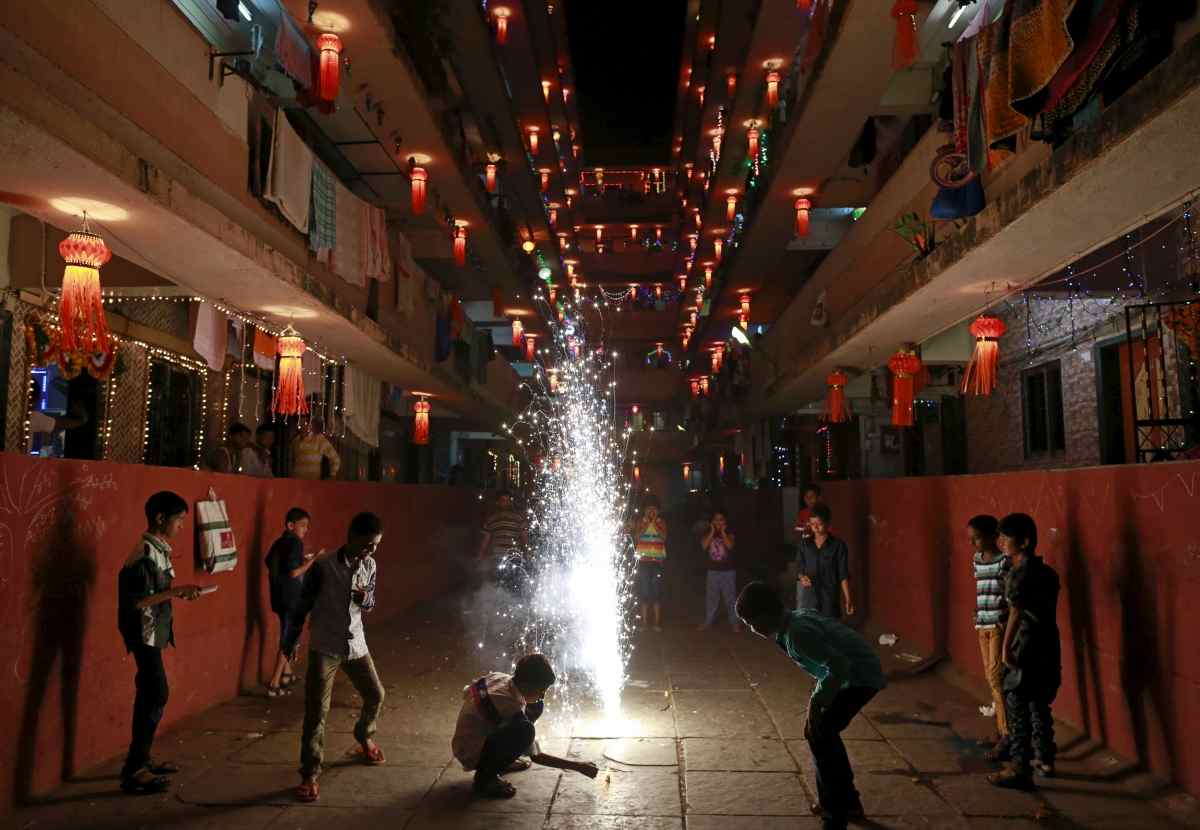
The Supreme Court bench of Justices Madan B Lokur and Deepak Gupta, on Tuesday (September 12), clarified that there is no blanket ban on firecrackers in Delhi and the National Capital Region (NCR). The court laid down 16 directions on the use of firecrackers.
Reacting to a PIL the top court had banned firecrackers due to heavy pollution caused by the fireworks in the Delhi NCR region. The court had, earlier, directed the Central Government to suspend all such licenses that permit sale of fireworks, both wholesale and retail, within NCR. It had said that the suspension “shall remain in force till further orders of this Court.”
The apex court had also directed the Central Pollution Control Board (CPCB) to study and prepare a report on the harmful effects of the materials which are currently being used in the manufacture of fireworks.
However, the court has now released the following set of guidelines that are to be followed by the Centre and State as far as sale and use of firecrackers within the NCR is concerned:
(1) The directions issued by this Court in Sadar Bazar Fire Works (Pucca Shop) Association shall stand partially modified to the extent that they are not in conformity with the Explosives Rules which shall be implemented in full by the concerned authorities. Safety from fire hazards is one of our concerns in this regard.
(2) Specifically, Rule 15 relating to marking on explosives and packages and Rule 84 relating to temporary shops for possession and sale of fireworks during festivals of the Explosives Rules shall be strictly enforced. This should not be construed to mean that the other Rules need not be enforced – all Rules should be enforced. But if the fireworks do not conform to the requirements of Rules 15 and 84, they cannot be sold in the NCR, including Delhi and this prohibition is absolute.
(3) The directions issued and restrictions imposed in the order passed by this Court on 18th July, 2005 in Noise Pollution (V) shall continue to be in force.
(4) The concerned police authorities and the District Magistrates will ensure that fireworks are not burst in silence zones that is, an area at least 100 m from hospitals, nursing homes, primary and district health-care centres, educational institutions, courts, religious places or any other area that may be declared as a silence zone by the concerned authorities.
(5) The Delhi Police is directed to reduce the grant of temporary licences by about 50 percent of the number of licences granted in 2016. The number of temporary licences should be capped at 500. Similarly, the states in the NCR are restrained from granting more than 50 percent of the number of temporary licences granted in 2016. The area of distribution of the temporary licences is entirely for the authorities to decide.
(6) The Union of India will ensure strict compliance with the Notification GSR No. 64(E) dated 27th January, 1992 regarding the ban on import of fireworks. The Union of India is at liberty to update and revise this notification in view of the passage of time and further knowledge gained over the last 25 years if necessary.
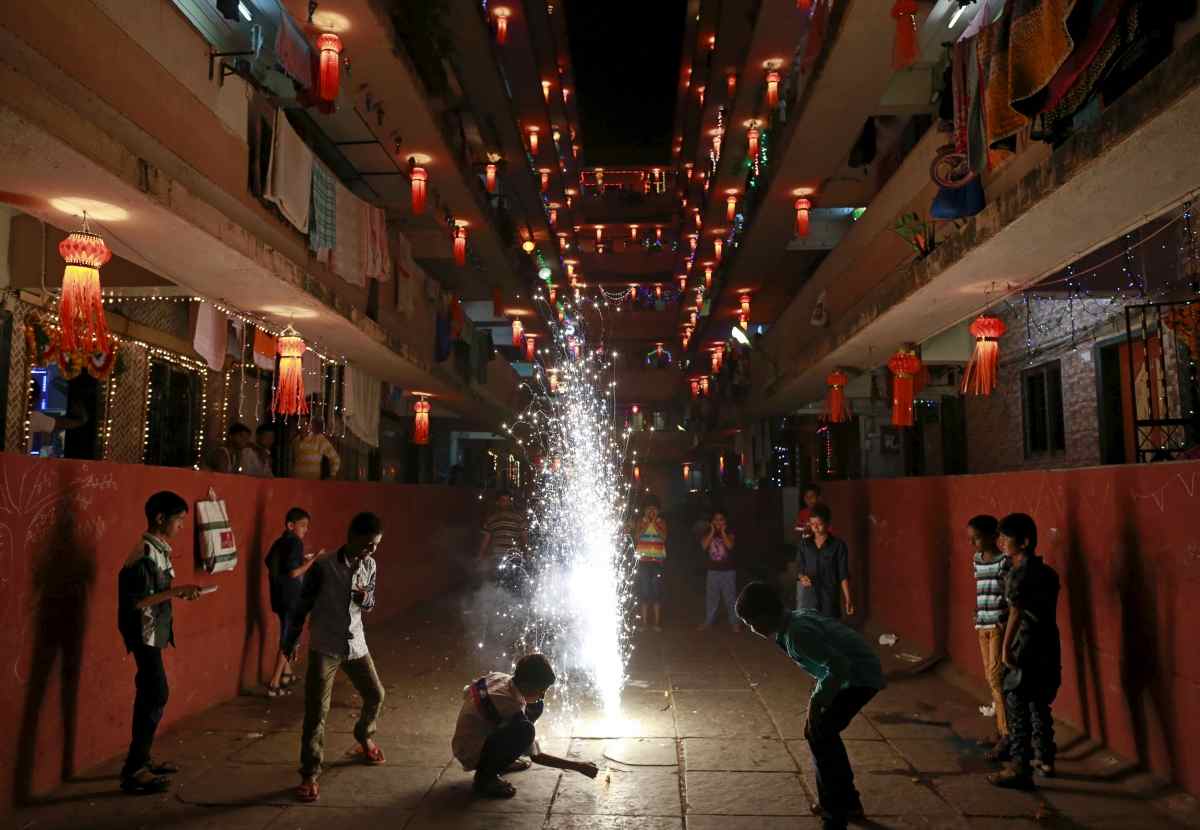
(7) (Through) Fresh notification, Department of Education of the Government of NCT of Delhi and the corresponding Department in other states in the NCR shall immediately formulate a plan of action, in not more than 15 days, to reach out to children in all the schools through the school staff, volunteers and NGOs to sensitize and educate school children on the health hazards and ill effects of breathing polluted air, including air that is polluted due to fireworks. School children should be encouraged to reduce, if not eliminate, the bursting of fireworks as a part of any festivities.
(8) The Government of NCT of Delhi and other states in the NCR may consider interacting with established medical institutions for issuing advisories cautioning people about the health hazards of bursting fireworks.
(9) The interim direction issued by this court on July 31, prohibiting the use of arsenic, antimony, lithium, mercury and lead in the manufacture of fireworks is made absolute. In addition, the use of the chromate of strontium is prohibited in the manufacture of fireworks.
(10) Fireworks containing aluminium, sulphur, potassium and barium may be sold in Delhi and in the NCR, provided the composition approved by PESO is maintained. It is the responsibility already of PESO to ensure compliance of the standards it has formulated.
(11) Since there are enough fireworks available for sale in Delhi and the NCR, the transport of fireworks into Delhi and the NCR from outside the region is prohibited and the concerned law enforcement authorities will ensure that there is no further entry of fireworks into Delhi and the NCR till further orders. In our opinion, even 50,00,000 kg of fireworks is far more than enough for Dussehra and Diwali in 2017. The permanent licensees are at liberty to exhaust their existing stock of fireworks in Delhi and the NCR and, if that is not possible, take measures to transport the stocks outside Delhi and the NCR.
(12) The suspension of permanent licences as directed by the order of November, 2016 is lifted for the requirement a review after Diwali… This might be ambient air quality post Diwali. However, it is made explicit that the sale of fireworks by the permanent licensees must conform to the directions given above and must be fully in compliance with the Explosives Rules. We were informed that the permanent licences were issued by PESO and therefore the responsibility is on PESO to ensure compliance.
(13) While lifting the suspension on the permanent licence granted, we put these licensees on notice for Dussehra…
(14) Since there is a lack of clarity on the safety limits of various metals and constituents used in fireworks, a research study must be jointly carried out by the CPCB and the FDRC standards for ambient air quality, laying down appropriate (standards).
(15) In any event, a research study also needs to be conducted on the impact of bursting fireworks during Dussehra and Diwali on the health of the people. We, therefore, appoint a Committee to be chaired by the Chairperson of the CPCB and consisting of officers at the appropriate level from the National Physical Laboratory, Delhi, the Defence Institute of Physiology and Allied Sciences, Timarpur, Delhi, the Indian Institute of Technology-Kanpur, scientists from the State Pollution Control Boards, the Fire Development and Research Centre, Sivakasi and Nagpur and the National Environment Engineering Research Institute (NEERI) nominated by the Chairperson of the CPCB to submit a report in this regard preferably on or before 31st December, 2017.
(16) Keeping in mind the adverse effects of air pollution, the human right to breathe clean air and the human right to health, the Central Government and other authorities should consider encouraging display fireworks through community participation rather than individual bursting of fireworks.”[/vc_column_text][/vc_column][/vc_row]









India News
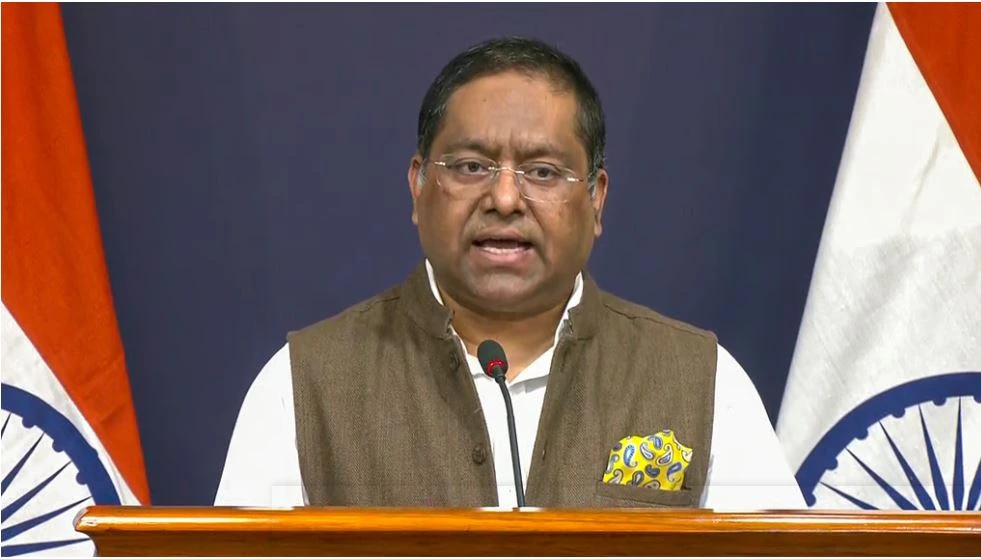
MEA responds after ITBP chief flags ongoing face-offs with China in Arunachal
India said deviations by Chinese forces from established patrolling patterns periodically disturb the situation along the Line of Actual Control, as the government addressed remarks by the ITBP chief about ongoing face-offs in Arunachal Pradesh.

India News
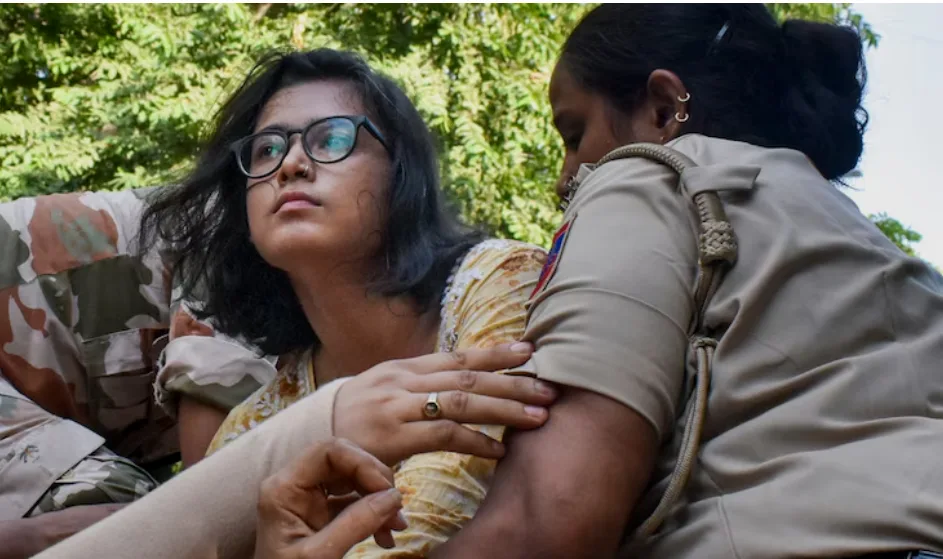
Delhi High Court rejects Neha Bora’s plea against peace bond notice
The Delhi High Court has rejected AISA president Neha Bora’s petition challenging a police notice requiring her to execute a peace bond following her participation in recent protests in the national capital.
India News
PM Modi to inaugurate Rs 169-crore RBI data centre in Odisha on October 25
Prime Minister Narendra Modi is scheduled to visit Odisha on October 25 to inaugurate the Reserve Bank of India’s Rs. 169-crore data centre in Jatni, near Bhubaneswar.


Punjab strike hits public services as 3 lakh employees and roadways workers protest

Two election commissioners complained against senior poll officer, RTI reveals

Om Prakash Mathur sworn in as Keralam Governor

PM Modi to inaugurate Rs 169-crore RBI data centre in Odisha on October 25

Delhi High Court rejects Neha Bora’s plea against peace bond notice

MEA responds after ITBP chief flags ongoing face-offs with China in Arunachal
Delhi High Court rejects Neha Bora’s plea against peace bond notice
PM Modi to inaugurate Rs 169-crore RBI data centre in Odisha on October 25
Om Prakash Mathur sworn in as Keralam Governor
Two election commissioners complained against senior poll officer, RTI reveals

Afghan Men Try To Hang With The Jet Engine Of The Aircraft in Kabul- Afghanistan News – Kabul News
Trending Top 10 News: 10000 Crore Fine on Flipkart, Apple to Launch Unique Feature, Hdfc Bank Job Ad

Trending Top 10 News: Nokia 6310, Apple sales, Bachpan ka Pyar Video Kid, Dainik Bhaskar IT Raid

Trending Top 10 News: Canada bans Indian flights, Rain in Delhi NCR, AIMIM Twitter hacked, Raj Kundra case

Trending Top 10 News: Shein India, Apple New Service, Pocket Oxygen, Oppo Launched New Phone
-
 India News24 hours ago
Punjab strike hits public services as 3 lakh employees and roadways workers protest
-
 India News23 hours ago
Two election commissioners complained against senior poll officer, RTI reveals
-
 India News12 hours ago
Om Prakash Mathur sworn in as Keralam Governor
-
 India News12 hours ago
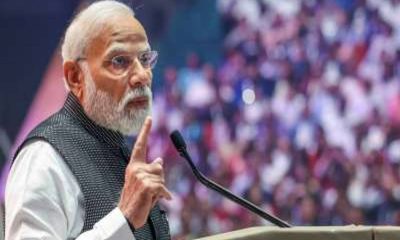
PM Modi to inaugurate Rs 169-crore RBI data centre in Odisha on October 25
-
 India News11 hours ago
Delhi High Court rejects Neha Bora’s plea against peace bond notice
-
 India News10 hours ago
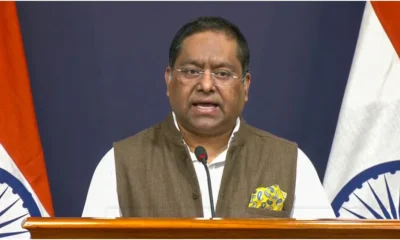
MEA responds after ITBP chief flags ongoing face-offs with China in Arunachal
