English हिन्दी
Connect with us

India News

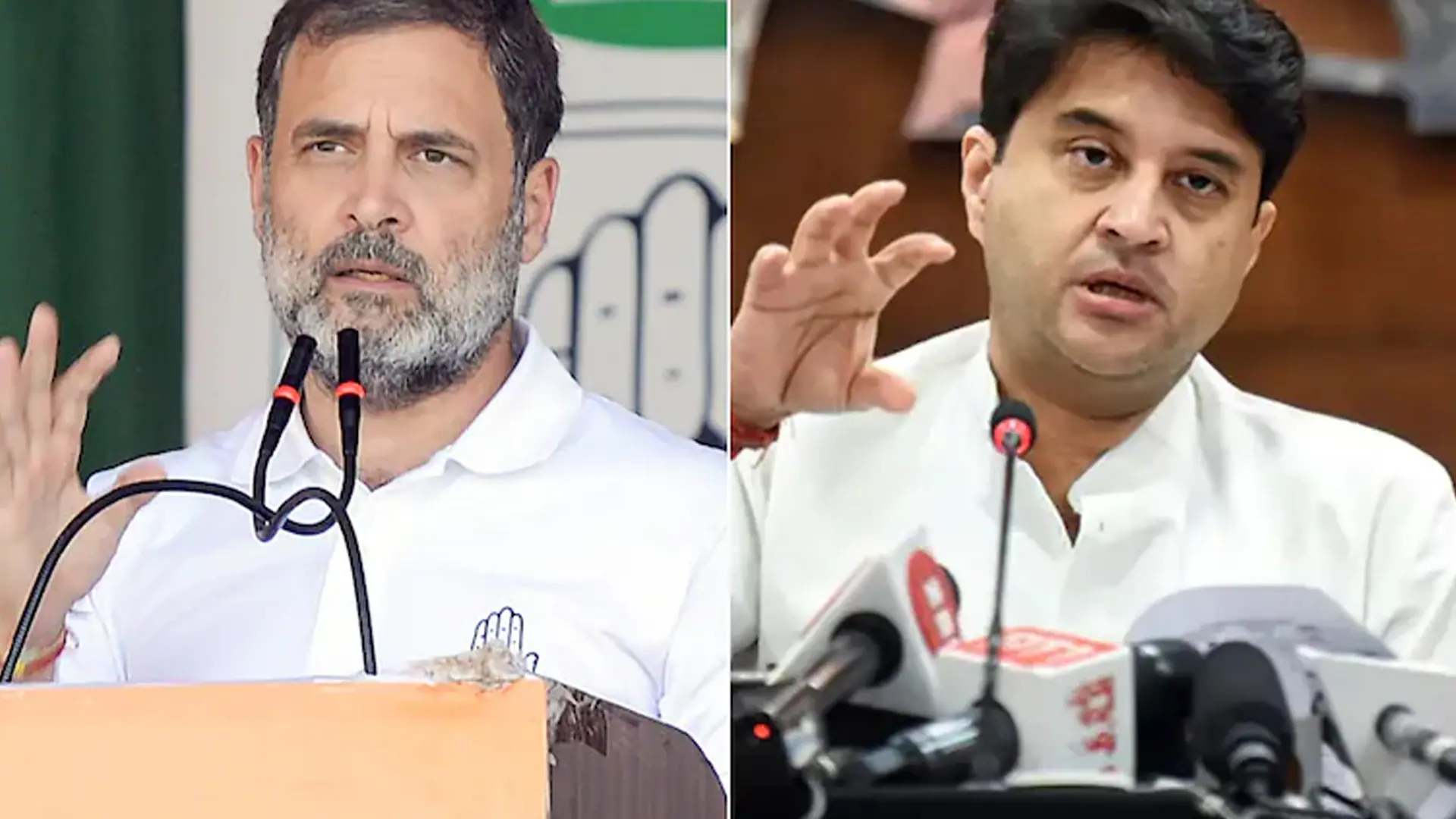
Union Minister Scindia slams Rahul Gandhi for Maharajas remark, Congress hits back

He argued that Gandhi’s remarks demonstrated a limited understanding of India’s past, accusing him of overlooking the positive contributions of several royal families to social reform and development.

Published

on

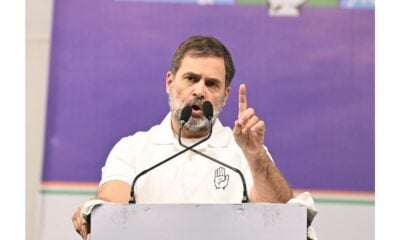
A sharp political clash erupted following Rahul Gandhi’s assertion that only Maharajas enjoyed rights in pre-independence India. Addressing a rally in Mhow, Gandhi claimed that Dalits, Adivasis (tribal people), and other backward castes lacked rights before independence, a stark contrast to the privileged position of royal families. He framed the BJP-RSS’s vision as a return to this pre-independence era, where, he alleged, only the ultra-wealthy like Adani and Ambani would hold sway, leaving the poor to suffer in silence. Gandhi’s speech was a powerful indictment of what he perceived as a regressive political agenda.

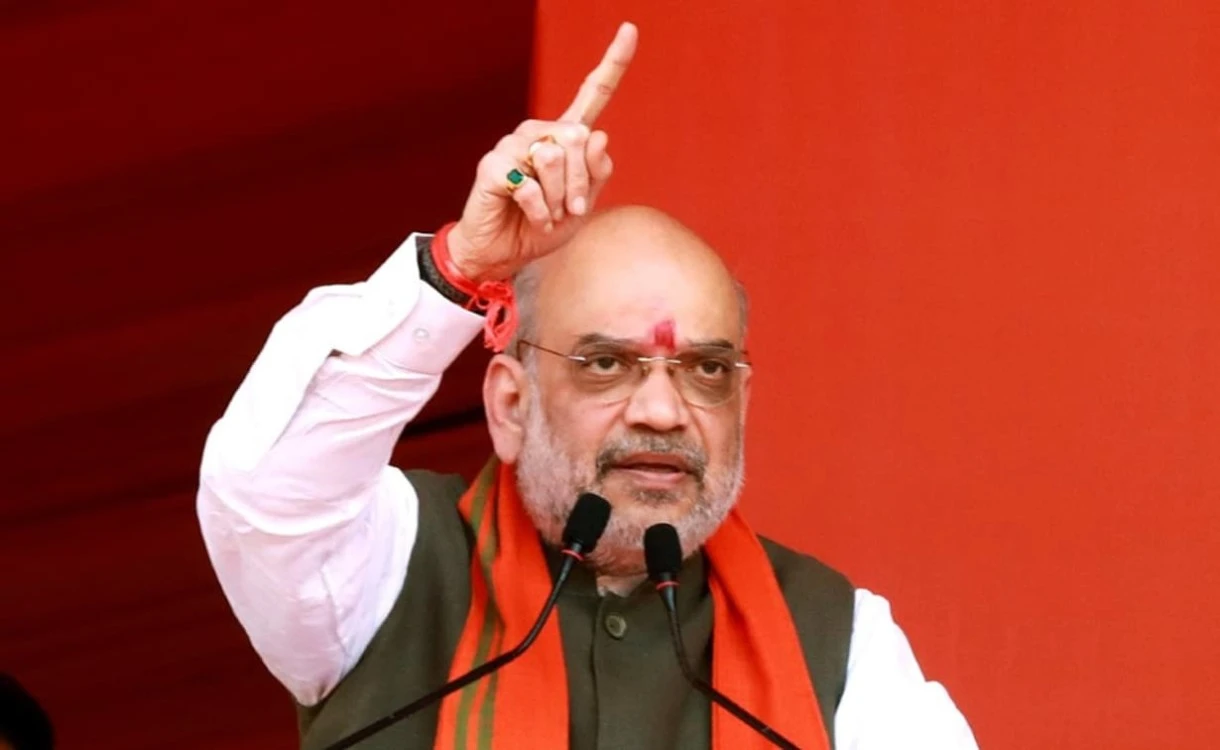
This statement immediately drew fire from Jyotiraditya Scindia, a BJP leader and former Congress member. Scindia, in a series of posts on X (formerly Twitter), directly challenged Gandhi’s historical narrative. He argued that Gandhi’s remarks demonstrated a limited understanding of India’s past, accusing him of overlooking the positive contributions of several royal families to social reform and development.

Scindia highlighted specific examples: the financial assistance provided by Maharaja Sayajirao Gaekwad of Baroda to B.R. Ambedkar for his education, Chhatrapati Shahuji Maharaj’s pioneering 50% reservation for backward castes in his governance as early as 1902, and Madhavrao I of Gwalior’s establishment of educational and employment centres across the Gwalior-Chambal region.

Scindia’s carefully chosen examples aimed to paint a picture of royal patronage of social justice, directly contradicting Gandhi’s narrative. His pointed criticism also served as a personal attack, emphasizing the perceived hypocrisy of a leader from a prominent royal family criticizing the historical role of other such families.

The Congress responded swiftly and forcefully to Scindia’s critique. Pawan Khera, the party’s media and publicity head, launched a counter-offensive, accusing Scindia of conveniently overlooking the darker aspects of the royal families’ history. Khera’s response emphasized the often-overlooked collaboration between many royal families and the British Raj, highlighting their loyalty to colonial rule and the economic privileges they enjoyed even after India’s independence.

He pointed to the substantial tax-free allowances granted to the Gwalior royal family (₹2.5 million in 1950), continuing until 1971, as a direct consequence of their privileged status within the pre-independent and early independent Indian states. Khera’s argument challenged the selective portrayal of royal benevolence, underscoring the enduring economic and political power imbalances that persisted well into the post-independence era.

Furthermore, Khera brought up the contentious issue of a royal family’s alleged involvement in Mahatma Gandhi’s assassination, reminding the public of the complex and often morally ambiguous legacy of many royal houses. He also quoted Jawaharlal Nehru’s rejection of the “divine right of kings” in a Constituent Assembly speech, showcasing the Congress’s historical commitment to dismantling the hierarchical power structures of the past.

Khera’s counter-narrative skillfully framed the debate as a struggle between a vision of inclusive democracy and the remnants of feudal privilege. He cleverly deployed Subhadra Kumari Chauhan’s poem on the Rani of Jhansi, subtly referencing the Scindias’ alleged alliance with the British, to add a layer of pointed historical critique to his response.

The exchange between Scindia and Khera transcended a simple disagreement over historical interpretation. It revealed deep-seated political fault lines and competing narratives about India’s past and the nature of its present-day political landscape. It also highlighted the ongoing debate about the legacy of princely states in independent India and the delicate balance between recognizing past contributions and acknowledging historical injustices. The intense rhetoric used by both sides underscored the high stakes involved in shaping public perception of India’s history and its implications for contemporary politics.

India News

Nitish Kumar’s son Nishant among 32 inducted in Bihar cabinet expansion

Nishant Kumar entered the Bihar cabinet for the first time as 32 ministers from NDA allies took oath in a major expansion of the state government.

Published

on

Bihar government cabinet

A major cabinet expansion took place in Bihar on Thursday, with 32 leaders from the ruling NDA alliance inducted into the state government. Among the prominent names was Nishant Kumar, son of former Bihar chief minister Nitish Kumar, who entered the cabinet for the first time.

The expansion included representatives from all major NDA allies in the state. According to reports, the BJP secured 15 ministerial berths, while JD(U) got 13 positions. Two ministers were inducted from Lok Janshakti Party (Ram Vilas), while Hindustani Awam Morcha and Rashtriya Lok Morcha received one berth each.

The oath-taking ceremony was held in Patna in the presence of senior NDA leaders, including Prime Minister Narendra Modi, Union Home Minister Amit Shah and Defence Minister Rajnath Singh.

Nishant Kumar’s induction comes weeks after he formally entered active politics. His entry into the Bihar cabinet is being viewed as a significant development for JD(U), which had long projected an anti-dynasty image under Nitish Kumar’s leadership.

The cabinet reshuffle follows Nitish Kumar’s move to the Rajya Sabha earlier this year and the formation of the government led by Chief Minister Samrat Choudhary.

Continue Reading

India News

PM Modi marks Operation Sindoor anniversary, calls it India’s firm stand against terrorism

PM Modi said Operation Sindoor showcased India’s firm response against terrorism while paying tribute to the armed forces on the operation’s first anniversary.

Published

on

PM Modi

Prime Minister Narendra Modi on Thursday said Operation Sindoor demonstrated India’s firm response against terrorism and highlighted the country’s commitment to national security.

Marking one year of the operation, the Prime Minister praised the courage, precision and professionalism of the Indian armed forces. He said the military action was carried out in response to the Pahalgam terror attack that had claimed the lives of 26 civilians in 2025.

Operation Sindoor was launched on May 7, 2025, as a calibrated tri-services operation targeting terror infrastructure linked to cross-border terrorism. Reports said the operation showcased coordinated action by the armed forces and was seen as a major counter-terror response by India.

On the anniversary of the operation, PM Modi also changed the display pictures across his social media platforms, including X, Facebook, Instagram and WhatsApp. The image carried the text “Operation Sindoor” along with the Indian tricolour design.

The Indian Air Force also shared visuals and messages recalling the operation and highlighting India’s military response. A video released by the force described the operation as a strong message against terrorism and referred to the precision strikes carried out during the mission.

Operation Sindoor was launched following the Pahalgam terror attack, after which India carried out strikes on terror camps in Pakistan and Pakistan-occupied Kashmir, according to official statements and reports published at the time.

Continue Reading

India News

Vijay meets Tamil Nadu Governor again as TVK pushes to prove majority

TVK chief Vijay held another meeting with Tamil Nadu Governor Rajendra Vishwanath Arlekar as the party intensified efforts to secure majority support after emerging as the single-largest party in the Assembly elections.

Published

on

Actor vijay

Actor-turned-politician Vijay met Tamil Nadu Governor Rajendra Vishwanath Arlekar again on Thursday as his party, Tamilaga Vettri Kazhagam (TVK), continued efforts to prove it has enough support to form the next government in the state.

TVK emerged as the single-largest party in the 234-member Tamil Nadu Assembly after winning 108 seats, but it remains short of the majority mark of 118.

The Congress has extended support to TVK, adding five MLAs to Vijay’s side. However, the alliance still needs additional backing from other parties or independents to comfortably cross the halfway mark.

According to reports, the Governor has not yet been fully convinced that TVK currently has the required numbers to form a stable government. This has delayed clarity over the swearing-in ceremony and the formal invitation to form the government.

Political activity intensified after reports emerged that some AIADMK legislators were moved to a resort in Puducherry amid speculation over possible support to TVK. AIADMK leaders, however, publicly denied any internal crisis.

TVK sources have expressed confidence that the party will be able to demonstrate majority support during discussions with the Governor.

The Tamil Nadu election results marked a major political shift in the state, with TVK breaking the long-standing dominance of the DMK and AIADMK in its first Assembly election contest.

Continue Reading

Trending

© Copyright 2022 APNLIVE.com