English हिन्दी
Connect with us

India News

India extends former Bangladesh PM Sheikh Hasina’s visa amid extradition demand

Bangladesh’s immigration department on Tuesday announced the cancellation of 97 passports, including that of former PM Hasina’s

Published

on

India extends former Bangladesh PM Sheikh Hasina’s visa amid extradition demand

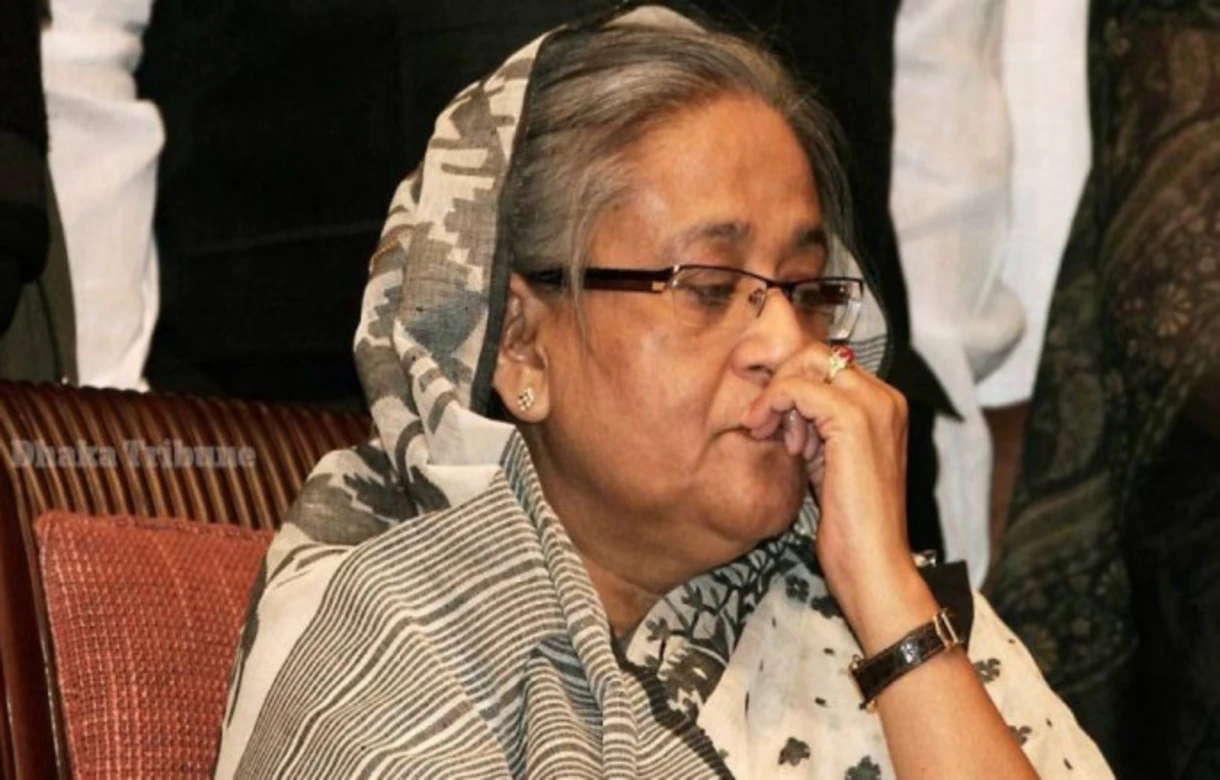
India has reportedly extended the visa of Bangladesh’s deposed Prime Minister Sheikh Hasina, who has been residing in the country since August last year. This decision comes against the backdrop of mounting demands from the interim government in Bangladesh for her extradition.

However, reports quoted sources who refuted claims of Sheikh Hasina being granted asylum. The former Prime Minister fled Dhaka on August 5 amid violent protests by students. The sources clarified that India lacks specific legislation for granting asylum and emphasized that her visa extension should not be interpreted as a move towards offering refuge.

They added that this visa extension is purely a technical extension to facilitate her stay, confirming that Hasina has been living under tight security in a safehouse in Delhi.

Meanwhile, the interim government in Bangladesh, led by Nobel laureate Muhammad Yunus, formally sought Hasina’s extradition on December 23. Dhaka officials further claimed that Hasina must face charges related to her alleged involvement in incidents of violence and disappearances during the 2024 protests, which left more than 500 people dead.

Furthermore, Bangladesh’s immigration department on Tuesday announced the cancellation of 97 passports, including that of former PM Hasina’s. Abul Kalam Azad Majumder, a spokesperson for Yunus, stated that it was linked to allegations of enforced disappearances and killings during the 2024 protests.

Addressing a press briefing, he said that passports of 22 individuals were revoked for their involvement in enforced disappearances, while 75 others, including Sheikh Hasina, were implicated in the July killings.

While Bangladesh former PM Sheikh Hasina’s prolonged stay poses no immediate threat to bilateral relations between both countries, Dhaka’s extradition demand has complicated the situation.

The extradition follows at a time when Bangladesh’s interim government is under fire for its handling of opposition leaders. Many critics have argued that the cancellation of Hasina’s passport and the charges levelled against her were politically motivated attempts to consolidate power ahead of the next general elections.

India News

Raksha Bandhan rush chokes Delhi-Meerut Expressway, traffic crawls for hours

Heavy Raksha Bandhan traffic caused kilometre-long queues on the Delhi-Meerut Expressway and severe congestion across Ghaziabad.

Published

on

The Delhi-Meerut Expressway witnessed severe traffic congestion on Thursday evening, August 27, a day before Raksha Bandhan, as a large number of people travelled to their hometowns and relatives’ homes.

Traffic moved slowly for several kilometres, with some commuters reportedly stuck for nearly five to six hours. The congestion affected stretches of the expressway and other major roads in Ghaziabad.

The traffic was particularly heavy around Lal Kuan and towards Dasna. People travelling from Delhi and Noida added to the pressure on roads as they headed out ahead of the festival.

Commuters face long delays

The festive rush also affected people travelling within the city. Commuters returning from offices reported journeys taking two to three times longer than usual.

One commuter cited in the report said it took around 35-40 minutes to cover four kilometres on the Delhi-Meerut Expressway, compared with the usual 10-15 minutes.

Near Chhijarsi, passengers were also reportedly waiting for buses and other vehicles, with the traffic congestion making it difficult for vehicles to reach them.

Ghaziabad Police issues traffic helpline

Amid the congestion, Ghaziabad Police said traffic personnel were deployed at Lal Kuan to manage the situation. A traffic helpline number, 9643322904, was also issued for commuters.

Authorities had already put traffic measures in place ahead of Raksha Bandhan as increased movement was expected during the festival.

Alternative routes for commuters

For people travelling between Ghaziabad and Meerut, connectors before Dasna can be used to access the Eastern Peripheral Expressway and avoid the main congested stretch.

Commuters travelling from Delhi or Ghaziabad can also consider the old National Highway route through Muradnagar and Modinagar.

For those heading towards Meerut, the Namo Bharat train is another option. The NCRTC was operating additional services on August 27 and 28, with trains available at shorter intervals during the festive period.

Continue Reading

India News

Nepal flash floods kill 359, over 1,300 still missing, search continues for survivors

Nepal flash floods have killed at least 359 people and left more than 1,300 missing, with rescue and relief operations continuing across affected areas.

Published

on

The death toll from the deadly flash floods in Nepal has risen to at least 359, while more than 1,300 people remain missing, Nepali police said on Thursday as rescue teams continued searching for survivors.

The flash flood struck the Bhotekoshi River at around 9 am on Wednesday, causing widespread destruction across three districts. The disaster resulted in significant loss of life and left several people missing, including foreign tourists.

According to Nepalese officials, the flood rushed downstream after hitting the main market area, sweeping away people, animals, buildings and public infrastructure.

The powerful flow also damaged roads and bridges, disrupting key routes and complicating rescue and relief efforts.

288 Indians still missing

India’s Ministry of Foreign Affairs said 288 Indians remain missing following the disaster. Around 200 people undertaking the Mansarovar Yatra have also sought evacuation.

India has sent two military aircraft carrying 48 tonnes of relief supplies to flood-hit Nepal. The supplies include solar lamps, hygiene kits, more than eight tonnes of medicines and food.

Rescue and relief operations intensified

Nepal’s security forces have stepped up rescue and relief operations, deploying helicopters and ground teams to affected areas.

Authorities are providing medical assistance, temporary shelters, food, water and medicines to people affected by the floods.

The disaster has also highlighted the growing risks facing communities and infrastructure in the Himalayan region, where unstable ice systems can threaten settlements, infrastructure and water supplies.

A similar flash-flood disaster occurred in the region in August 2025 after a glacial lake in Tibet overflowed amid high temperatures. Nine people were killed in that incident, while critical infrastructure, including a bridge connecting Nepal and China, was damaged.

Continue Reading

India News

Nepal flash floods: Glacial collapse, not earthquake, triggered disaster clarifies USGS

The USGS clarified that seismic activity initially reported as an earthquake was caused by a glacial collapse and debris flow that triggered deadly flash floods in Nepal.

Published

on

The tremors associated with the deadly flash floods in Nepal on Wednesday morning were caused by a powerful landslide involving ice and rock, rather than an earthquake, the United States Geological Survey (USGS) clarified.

The agency said the seismic activity initially reported as an earthquake “was instead a glacial collapse and debris flow” that caused catastrophic impacts downstream.

The USGS had initially reported seismic activity along the Nepal-China border, north of Kathmandu. It later clarified that the event was not an earthquake.

“No earthquake had occurred,” the agency said.

Landslide triggered debris-laden flood

An initial study of satellite imagery from Planet Labs indicated that a landslide involving ice and rock triggered a debris-laden flood in the Lhende River.

The landslide occurred about 20 km northeast of the Nepal-China Rasuwagadhi border crossing.

The Lhende Khola River is a tributary of the Bhote Koshi River, which flows from China into Nepal. The powerful landslide sent debris and water downstream, triggering the flash floods.

The event was later registered as seismic activity equivalent to an earthquake measuring 5.2 in magnitude.

157 bodies recovered in Nepal

Relief and rescue operations are underway in Rasuwa and other affected areas following the floods.

Nepal Police have recovered 157 bodies, while authorities are working to move families living in flood-risk areas to safer locations.

At least 403 tourists, including 341 foreigners, were reported unaccounted for several hours after the disaster, according to the tourism ministry.

The missing foreigners included 142 Indians, along with nationals from Australia, Britain, Malaysia, the Netherlands, Portugal, South Africa, South Korea and the United States, according to the tourism board.

Rescue teams are searching for survivors and bodies buried under mud and debris. Prime Minister Balendra Shah has pledged government resources for relief and rescue operations.

Floods hit several districts

The flood surged through the Bhote Koshi River at around 9 am local time after crossing over from the Tibet side.

Rasuwa and Dhading, which border Tibet, along with Nuwakot, were among the affected districts.

In Tibet, China’s state broadcaster reported that three people were killed and 265 were missing in Gyirong. It said the deaths were still being verified and rescue operations were continuing.

Security footage from the Nepal-Tibet border showed people fleeing moments before a torrent of rock, mud and water swept through the area, destroying buildings and vehicles.

Families search for missing relatives

Residents from affected areas of Nuwakot and Dhading gathered outside a Nepali Army training centre that was being used as a base for helicopter rescue operations.

People sought information about relatives who remained missing after the floods. Police were recording the names of missing people outside the barracks as the area remained without electricity because of damage to hydropower infrastructure.

Across the affected areas, houses, trees and vehicles were submerged or buried beneath mud and debris.

Helicopters continued rescue operations, bringing survivors out of the flood-hit areas.

Continue Reading

Trending

© Copyright 2022 APNLIVE.com