English हिन्दी
Connect with us

India News

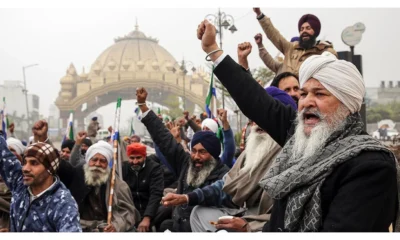
Sikh priest shoots himself at Singhu border, leaves note supporting farmers’ protest

The deceased hailed from Singhara village in Nissing area of Karnal district, had joined the farmers’ protest at the Delhi-Sonipat border. He shot himself with a licensed gun inside the car gun in Kundali, from where he was immediately taken to the Park hospital in Panipat.

Published

on

Sant baba ram singh

The Sikh preacher from Haryana, Baba Ram Singh, reportedly shot himself at Singhu border in Delhi on Wednesday. According to his suicide note, the 65-year-old sacrificed his life in solidarity with the farmers protesting against three new farm laws.

The deceased hailed from Singhara village in Nissing area of Karnal district, had joined the farmers’ protest at the Delhi-Sonipat border. He shot himself with a licensed gun inside the car gun in Kundali, from where he was immediately taken to the Park hospital in Panipat. He was declared dead on arrival, said Shyam Lal Poonia, Deputy Police Commissioner of Sonipat.
Sant Baba Ram Singh was a priest of a Gurdwara with followers in Haryana and Punjab. He had been a former office bearer for many Sikh organisations, including Haryana SGPC.

In the handwritten suicide note found near his body, the deceased said that he was hurt to see the plight of the farmers, who are on the streets, struggling for their rights. Also it hurts to see the government not giving justice, it is a crime.It is a sin to suffer and oppress, the note read.

Further it said, nobody did anything against the oppression and for the rights of the farmers. Even many returned their awards to express their protest. This servants commits self-immolation for farmers, in order to voice up against the government’s oppression, the suicide note in Punjabi said.

Reacting to the sad incident, many Opposition leaders including Haryana Chief Minister Manohar Lal Khattar, Delhi Chief Minister Arvind Kejriwal, Congress leader Rahul Gandhi among others expressed their condolences on Twitter. 

Gandhi tweeted that over the farmers’ condition, Sant Baba Ram Singh committed suicide at Kundli border. Expressing grief, he targeted the Modi government, saying that it has crossed all the limits of cruelty, and asked them to stop being adamant and take back the contentious farm laws.

Saddened by the news, Kejriwal in his tweet, said the government should listen to the demand pof farmers and withdraw the three laws. While anguished by the Sant Baba Ram Singh’s suicide, Senior Akali Dal leader Sukhbir Bada; tweeted that Sant ji’s sacrifice won’t go in vain. He urged the government to let the situation become normal and repeal the three agricultural laws.

Also Read: Farmers harden stance on farm laws, say will make government scrap laws

Meanwhile, thousands of farmers from Punjab, Haryana and other states have been staging protests for the past three weeks against three controversial farm laws passed by the government in September.

India News

Two election commissioners complained against senior poll officer, RTI reveals

An RTI response has shed light on complaints by two Election Commissioners against a senior poll panel officer and the Cabinet Secretariat’s decision not to intervene directly.

Published

on

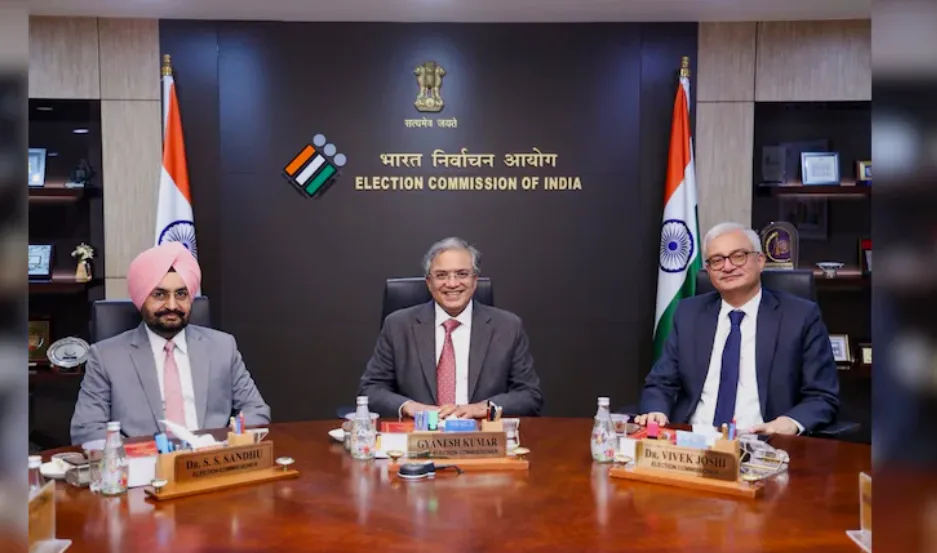
An RTI response has brought fresh details to light about complaints submitted by two Election Commissioners against a senior official of the Election Commission of India (ECI), including the Cabinet Secretariat’s decision not to intervene directly in the matter.

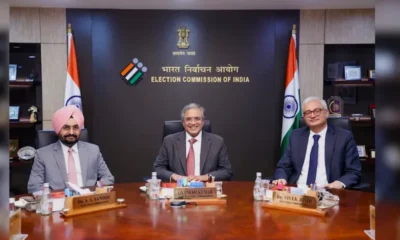
Election Commissioners Sukhbir Singh Sandhu and Vivek Joshi wrote separate letters to Cabinet Secretary T V Somanathan on July 29, 2026, raising concerns about the working of Senior Deputy Election Commissioner Maneesh Garg.

The complaints followed an order concerning the allocation of responsibilities among senior officers in the poll panel. The Cabinet Secretariat subsequently acknowledged the communications and shared them with relevant offices, while noting that direct action could be inappropriate without an official communication from the Commission as a whole.

Why the two Election Commissioners raised concerns

The dispute centred on a work-allocation order issued on July 28, when Garg took temporary charge as the link officer for the Deputy Election Commissioner handling administration, who was on leave.

According to the complaints, Garg issued an order reallocating responsibilities among senior and equivalent-ranking officers without discussing the changes with the Commission or the officers concerned.

Sandhu reportedly objected that the revised allocation had been made without consultation, while Joshi stated that a file he requested from the Administration Division was not provided to him.

The two Commissioners also referred to previous instructions against making such changes without prior discussion or approval from the Commission.

Why the Cabinet Secretariat did not intervene

Records disclosed through the RTI process indicate that the Cabinet Secretariat considered the complaints but concluded that direct intervention could be inappropriate.

In its internal deliberations, the Secretariat noted that the Election Commission is a constitutional body designed to function independently of executive interference. It also observed that the letters had been sent by the two Commissioners in their individual capacities rather than as an official communication from the Commission collectively.

The Secretariat therefore considered it appropriate to acknowledge the letters and inform the Chief Election Commissioner’s office, rather than take direct action against the official.

The Department of Personnel and Training was also informed so that the matter could be placed on record for future consideration concerning the officer.

What happened after the complaints

The Cabinet Secretariat’s records show that internal discussions took place on August 3 and August 4. The Cabinet Secretary acknowledged the two letters on August 5 and forwarded the matter to the relevant offices.

The Election Commission had also issued a clarification on September 26, stating that the dispute did not concern a policy matter or the Commission’s IT division, but the functioning of an officer posted to the poll panel.

The Commission said the work-reallocation orders were not implemented following directions from the two Commissioners and that oversight of the IT division had not actually been withdrawn.

The RTI disclosures provide an official record of how the complaints were handled by the Cabinet Secretariat, while also highlighting the institutional considerations involved in deciding whether the executive should intervene in the functioning of a constitutional body.

Continue Reading

India News

Punjab strike hits public services as 3 lakh employees and roadways workers protest

Punjab is facing disruption to government work and public transport as over three lakh government employees participate in a mass leave protest and roadways workers continue their strike over pending demands.
Published

on

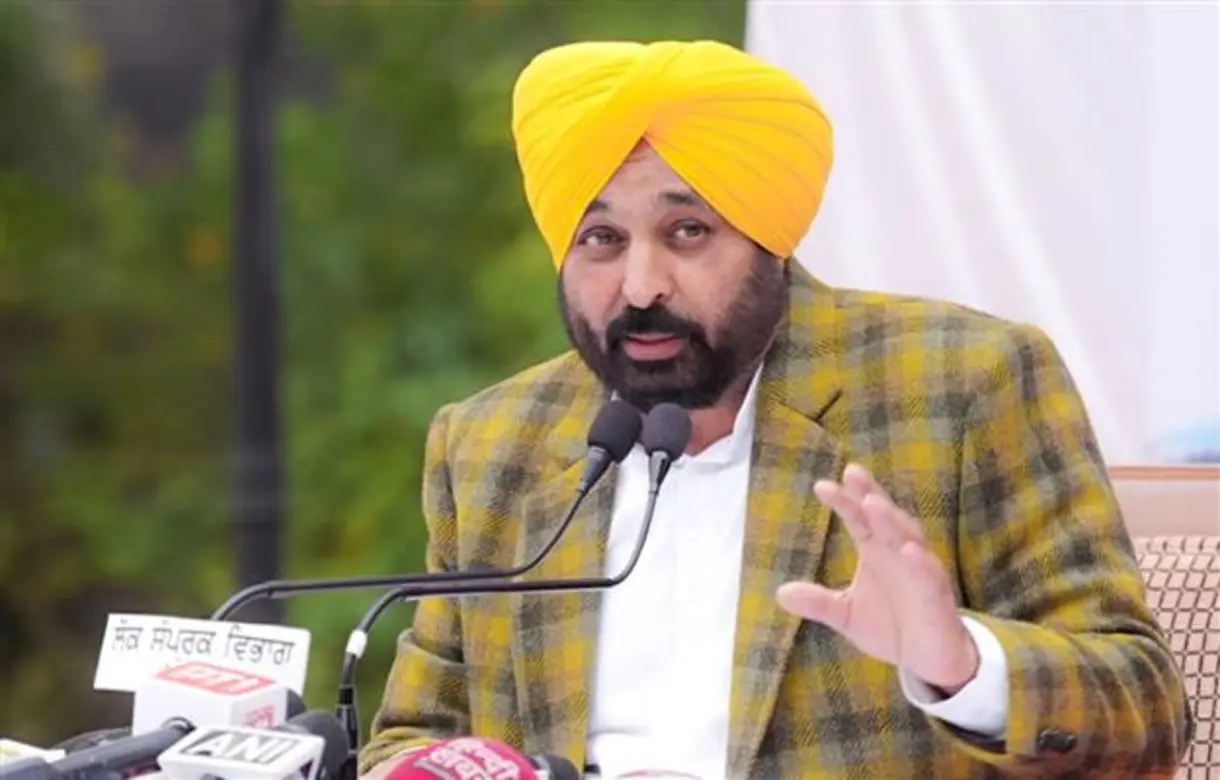
Public services in Punjab have been affected as government employees and transport workers continue their agitation over long-pending demands. The protests involve a mass casual leave programme by more than three lakh government employees and a separate strike by workers associated with state-run transport services.

The agitation has disrupted government office operations and public bus services, adding to the pressure on the Punjab government to address employees’ grievances.

Why Punjab government employees are protesting

Government employees have been pressing for the release of pending dearness allowance (DA) instalments and arrears, restoration of the Old Pension Scheme (OPS), regularisation of contractual workers and resolution of pay-related issues.

The demands also cover service conditions and benefits for workers employed across different government departments. Employee organisations have called for concrete decisions on these matters, arguing that several issues remain unresolved despite discussions with the state government.

The mass casual leave programme has affected the functioning of government offices and administrative establishments across the state.

Roadways workers’ strike affects bus services

Separately, workers associated with Punjab Roadways, PUNBUS and the Punjab Road Transport Corporation (PRTC) have continued their agitation over employment-related demands.

The transport workers’ protest has affected the availability of public buses, creating difficulties for commuters who depend on state-run services for their daily travel.

The transport workers’ demands include regularisation under applicable service rules, changes to employment arrangements for outsourced workers and action on cases linked to previous protests.

The government employees’ agitation and the transport workers’ strike are separate actions, although both concern outstanding demands and the state government’s response to employee organisations.

Talks fail to resolve the deadlock

Discussions between employee representatives and the state government have so far failed to produce a comprehensive resolution to the dispute.

Employee organisations have continued to seek assurances and concrete action on their demands. The continuation of the agitation reflects the lack of an agreement that would persuade the protesting groups to withdraw their actions.

The dispute has also placed the state government under pressure to restore normal public services while addressing the concerns raised by government staff and transport workers.

Continue Reading

India News

Amit Shah says congress won’t return to power for 30 years

Union Home Minister Amit Shah took a swipe at Rahul Gandhi over the Opposition’s vote theft allegations, asserting that the Congress would not return to power for the next 30 years.

Published

on

Union Home Minister Amit Shah on Thursday launched a fresh attack on Congress leader Rahul Gandhi, questioning the Opposition’s allegations of vote theft and asserting that the Congress would not return to power for the next 30 years.

Addressing an event in New Delhi, Shah criticised Gandhi over his absence from the country and challenged the Congress’s objections to the Election Commission of India (ECI), arguing that the party accepted the electoral process when it won elections but questioned it after defeats.

The remarks came during an event related to projects for the rejuvenation of the Yamuna, where Shah also targeted the Congress and the Aam Aadmi Party (AAP) over their political record in Delhi.

Amit Shah’s warning to Rahul Gandhi

Taking a dig at Gandhi over his reported foreign visit, Shah said the Congress leader would have to remember his words when he returned to Delhi.

The Home Minister argued that the Congress’s political setbacks had begun long before Narendra Modi became Prime Minister and said the party could not attribute its electoral losses solely to allegations of irregularities in elections.

Shah also defended his confidence in the BJP’s electoral prospects, contrasting his prediction of the party remaining in power with the Congress’s prospects under its current political approach.

He asserted that the Congress would not get another opportunity to form a government for the next 30 years. The statement was a political prediction made by Shah, rather than an established electoral outcome.

Shah questions Congress over vote theft allegations

Shah accused the Congress and other Opposition parties of adopting inconsistent positions on the Election Commission, depending on whether election results favoured them.

Citing electoral victories in states including Kerala, Telangana and Himachal Pradesh, he argued that the Congress and its allies had accepted the electoral process when they won.

He questioned why the same institutions and electoral arrangements became subjects of criticism when the Opposition lost elections.

Shah also targeted the Opposition’s protests against alleged electoral irregularities and the Special Intensive Revision (SIR) of electoral rolls. He alleged that the Congress was using vote theft claims to protect the votes of infiltrators.

These were allegations made by the Home Minister and should be understood as his political assertions, not as independently established findings.

Amit Shah targets Opposition’s protest strategy

The Home Minister also criticised the Opposition’s demonstrations in Delhi, arguing that protests could not overturn the public mandate.

He said political parties seeking electoral victories should engage with people and address their concerns rather than rely on demonstrations and allegations against constitutional institutions.

Shah further accused the Opposition of applying different standards to court decisions, suggesting that it welcomed judgments in its favour while questioning those that went against it.

His remarks came amid continuing political disagreements over the electoral process and the Opposition’s criticism of the Election Commission.

Yamuna projects and attack on AAP

During the same event, Shah inaugurated and laid the foundation stones for 43 Delhi Jal Board projects worth Rs. 8,941 crore, aimed at improving wastewater treatment, drinking water infrastructure and the rejuvenation of the Yamuna.

He criticised previous governments in Delhi over the river’s pollution and accused the Congress and AAP of failing to address the problem adequately.

Shah also targeted AAP national convenor Arvind Kejriwal, arguing that political parties should be judged by their performance rather than their explanations for failing to deliver results.

He said the BJP would work towards cleaning the Yamuna and improving water and sewerage infrastructure in the national capital.

Continue Reading

Trending

© Copyright 2022 APNLIVE.com