English हिन्दी
Connect with us

India News

Supreme Court allows sub-classification of Scheduled Castes, Scheduled Tribes for reservation, overrules 2005 judgment

SC overruled its 2005 judgment of EV Chinnaiah Vs State of Andhra Pradesh.

Published

on

The Supreme Court on Thursday allowed the sub-classification of Scheduled Castes and Scheduled Tribes into different groups based on their inter se backwardness for reservation benefits, overruling its 2005 judgment of EV Chinnaiah Vs State of Andhra Pradesh.
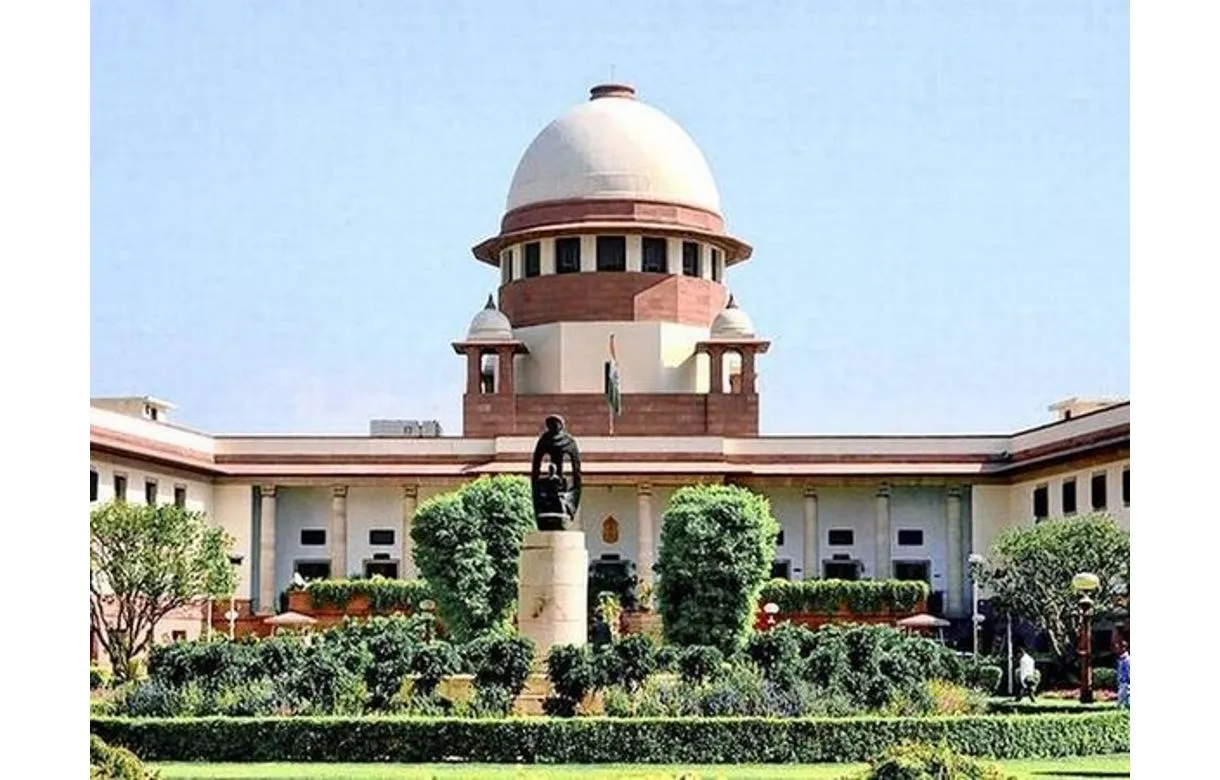
A Constitutional bench of seven judges headed by Chief Justice of India DY Chandrachud with a 6:1 majority overruled the 2005 judgment, which states that only the President has the power to notify the inclusion or exclusion of a caste as a Scheduled Castes, and the State cannot tinker with the list under Article 341 of the Constitution.

The Chinnaiah verdict had also held that any sub-classification of the Scheduled Castes would violate Article 14 of the Constitution.

Chief Justice Chandrachud noted that Scheduled Castes are not an integrated or homogenous group.

The other judges are B R Gavai, Vikram Nath, Bela M Trivedi, Pankaj Mithal, Manoj Misra, and Satish Chandra Sharma. Justice Bela Trivedi dissented from the majority and ruled that such sub-classification is not permissible.

Pronouncing its majority judgment, the bench said that the members of SCs and STs are not able to climb up the ladder due to the systemic discrimination faced by them. The Apex Court said that under Article 14, sub-classification of caste is permitted.

The Court noted that out of 25 castes, only 9 are Scheduled Castes in Madhya Pradesh. Asserting that the Court noted that sub-classification of SCs and STs by states will not violate Article 341.

The Top Court also said that it has not found anything in Articles 15, 16, and 341 that prevents sub-classification for SCs, adding that the Court said states can sub-classify for the inadequate representation of some classes.

The Court asserted that when a state sub-classifies, it should be backed up by empirical information and should not be based on whims, and to meet political ends.

One of the seven judges, Justice Gavai said that the state must frame a policy to identify the creamy layer among the SCs and STs category and take them out of the fold of affirmative action and the Court noted that this is the only way to gain true equality.

Another judge of the Constitutional bench, Justice Vikram Nath was of the view that the creamy layer principle applicable to OBCs should apply to SCs and STs but the criteria for excluding the creamy layer for the purpose of affirmative action could be different from that of OBCs.

Chief Justice and Justice Manoj Misra held the same opinion. Justices Gavai, Nath, Mithal, and Sharma agreed with the Chief Justice regarding the States’ power to sub-classify SCs based on supporting empirical data. They also suggested that the creamy layer principle should apply to SCs/STs. Justice Trivedi delivered the sole dissenting opinion on the seven-judge Bench.


India News

Lt Gen NS Raja Subramani appointed as India’s next Chief of Defence Staff

Lieutenant General NS Raja Subramani has been appointed as India’s next Chief of Defence Staff and will succeed General Anil Chauhan later this month.

Published

on

Lt Gen NS Raja Subramani appointed as India’s next Chief of Defence Staff

The Centre has appointed Lieutenant General NS Raja Subramani as India’s next Chief of Defence Staff (CDS), succeeding General Anil Chauhan, whose tenure will conclude on May 30.

According to the government announcement, Lieutenant General NS Raja Subramani will also serve as Secretary to the Government of India in the Department of Military Affairs from the date he assumes charge and until further orders.

Lt Gen Subramani is currently serving as the Military Adviser at the National Security Council Secretariat, a role he has held since September 2025. Before that, he served as Vice Chief of the Army Staff between July 2024 and July 2025.

A senior officer from the Garhwal Rifles, he was commissioned into the Indian Army in December 1985 and has held several important operational and command positions during his military career. He has commanded formations in Jammu and Kashmir, the Northeast and along the western front.

Lt Gen NS Raja Subramani is an alumnus of the National Defence Academy and the Indian Military Academy. He also studied at the Joint Services Command and Staff College in the United Kingdom and the National Defence College in New Delhi. He holds a Master’s degree from King’s College London and an MPhil in Defence Studies from the University of Madras.

The post of Chief of Defence Staff was created in 2020 to improve coordination among the Army, Navy and Air Force. General Bipin Rawat became India’s first CDS, followed by General Anil Chauhan in 2022. Lt Gen NS Raja Subramani will become the country’s third CDS after assuming office.

Continue Reading

India News

Bengal to get BJP’s first CM as Suvendu Adhikari set to take oath today

Suvendu Adhikari will be sworn in as West Bengal Chief Minister, marking the BJP’s first government formation in the state.

Published

on

Suvendu Adhikari is set to take oath as the Chief Minister of West Bengal, becoming the first leader from the Bharatiya Janata Party to head the state government.

The swearing-in ceremony is scheduled to take place at Brigade Parade Ground in Kolkata and is expected to witness the presence of several senior BJP leaders and supporters from across the state.

Adhikari was unanimously elected as the BJP legislature party leader after the party secured a decisive victory in the 2026 West Bengal Assembly elections. His appointment marks a significant political change in the state, where the BJP is forming the government for the first time.

Prime Minister Narendra Modi, Union Home Minister Amit Shah and several Union ministers are expected to attend the ceremony. Reports also indicate that the oath event has been planned on a large public scale to underline the BJP’s breakthrough in Bengal politics.

Adhikari emerged as one of the BJP’s key faces in Bengal after defeating Mamata Banerjee in the high-profile Nandigram contest in 2021 and later consolidating his position within the party’s state leadership.

Security arrangements have been tightened around the oath venue, while party workers have gathered in large numbers ahead of the ceremony. The event is being viewed as a landmark moment in West Bengal’s political history.

Continue Reading

India News

PM Modi to lead Somnath Amrit Parv celebrations with grand roadshow in Gujarat

PM Modi is set to visit Somnath Temple in Gujarat for the Somnath Amrit Parv celebrations marking 75 years of the temple’s reconstruction, with a roadshow and religious ceremonies planned.

Published

on

PM Modi

Prime Minister Narendra Modi is set to visit the Somnath Temple in Gujarat on May 11 to lead the ‘Somnath Amrit Parv’ celebrations marking the 75th anniversary of the temple’s reconstruction.

According to state ministers and senior officials, the Prime Minister will take part in religious rituals, lead a public roadshow, and address a gathering during the celebrations.

The visit comes months after PM Modi attended the Somnath Swabhiman Parv held earlier this year, which commemorated 1,000 years since the first recorded attack on the temple in 1026.

Grand roadshow and cultural programmes planned

Officials said PM Modi will arrive in Somnath from Jamnagar and lead a one-kilometre roadshow from the Triveni Helipad to the statue of Veer Hamirji Gohil. The procession is expected to feature cultural dance performances from different Indian states along with displays representing the 12 Jyotirlingas.

A Suryakiran Air Show and a flower petal shower over the temple spire are also planned during the event. The Prime Minister is expected to be welcomed by Rishikumars and members of local communities dressed in traditional attire.

During his visit, PM Modi will perform rituals including Kumbhabhishek, Dhvaja Puja and Mahapuja at the temple before addressing a public gathering at Sadbhavna Ground.

Somnath reconstruction anniversary

The celebrations mark 75 years since the reconstructed Somnath Temple was inaugurated in 1951 in the presence of India’s first President Rajendra Prasad. The reconstruction effort after Independence was led under the vision of Sardar Vallabhbhai Patel and supported by leaders including K.M. Munshi.

State minister Jitu Vaghani said the temple’s restoration remains a symbol of national self-respect and resilience.

After the Somnath events, PM Modi is scheduled to travel to Vadodara to inaugurate the Sardardham Educational Complex. Preparations are also underway for a possible roadshow in the city later in the day.

Continue Reading

Trending

© Copyright 2022 APNLIVE.com