English हिन्दी
Connect with us

India News

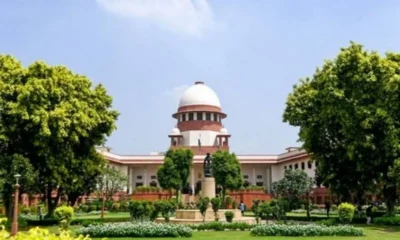
Supreme Court seizes Amrapali office building, hospital, benami Goa villa

Published

on

Amrapali Silicon City

The Supreme Court attached real estate firm Amrapali Group’s 100-bed multi-speciality hospital, bank accounts, the building which houses its office, certain firms and a ‘benami’ villa in Goa.

The top court asked the chief financial officer (CFO) Chander Wadhwa to deposit Rs. 11.69 crore with its registry within three weeks, said media reports. It also asked a statutory auditor Anil Mittal to pay Rs. 47 lakh.

The court sought the presence of CMD Anil Sharma and two directors Shiv Priya and Ajay Kumar on November 19.

A bench of Justices Arun Mishra and UU Lalit said that Amrapali Group has deliberately not complied with its earlier order and committed a “serious fraud” by diverting home-buyers’ money from one company to other.

Promoters of the group have been in police custody since October 9 in connection with the missing funds that they took from nearly 40,000 homebuyers whose flats are yet to be constructed.

“This is a serious kind of fraud,” judge Arun Misra said on Tuesday, after court-appointed auditors said the company continued to be uncooperative in efforts to trace the money given by investors.

The bench ordered that attachment of the group’s state-of-the-art, multi-speciality, 100-bed hospital situated at Greater Noida for which funds from Ultra Home Construction Pvt Ltd were utilised.

The bench also attached the bank accounts of Gauri Suta Infrastructures Pvt Ltd, its director Sunil Kumar and its assets after forensic auditors disclosed that Amrapali transferred home-buyers’ money from one firm to sister companies using it as conduit.

The top court also directed attachment of towers which housed the company’s office and ‘Aqua Fortis’ villa in Goa for no one came forward to claim ownership.

The court restrained the realty firm from alienating its companies through which it had transactions and ordered attachment of such firms. It also restrained Amrapali Group from creating any third party rights for 86 luxury cars and SUVs purchased from the company’s funds.

Forensic auditors Pawan Kumar Aggarwal and Ravi Bhatia, appointed by the court to look into the affairs of embattled firm, said that home-buyers’ money was given as advances to the tune of Rs. 442 crore to 15 companies and nine individuals from Amrapali Saphire project.

The report of forensic auditors said that Amrapali Infrastructure Pvt Ltd was the main company and around Rs. 2,000 crore were transferred from it to other sister companies.

Bhatia told the bench that a firm called ‘Stunning Construction Pvt Ltd’ did some “stunning work” as it paid income tax returns of the companies as well as directors and other individuals, for which it received Rs. 500 crore.

The bench then asked the forensic auditors to ascertain the investment of Amrapali in its projects and the “ghost” home buyers as the properties could have been sold to such benami persons to augment the value of company.

“They have created web of companies since 2010 to transfer funds from one project to another to circumvent the restrictions enforced in the Company’s Act,” the auditors told the bench, adding that promoters have also tried to avoid stamp duty by transferring the high value property to other company.

Aggarwal said that in the forensic audit they have found transactions of the Group with other 27 “dummy companies” and since last year the promoters of Amrapali have started withdrawing money from bank accounts of such companies.

Justice UU Lalit told the lawyers for Amrapali that the funds the company has spent to acquire property or create new companies will need to be refunded. “It should come back since the money belongs to the buyer. Therefore, all this (properties) have to be sold,” he said.

The court also pulled up the Group for filling 3000-4000 page affidavit with no requisite information and warned that directors may be sent behind bars for not disclosing the details sought by the court.

“We are giving one last opportunity to explain everything to the concerned directors and the Amrapali Group and comply with the orders of the court. It should also be explained as why contempt action should not be initiated against them,” the bench said.

The bench posted the matter for further hearing on November 20.

On October 31, the apex court had directed the Amrapali Group to disclose the names of all the companies with which it had any kind of transactions after forensic auditors pointed out that there may be a web of more than 200-250 such firms where home-buyers’ money was transferred.

The two forensic auditors, appointed by the court to look into the affairs of Amrapali Group had said besides 47 sister companies, they stumbled upon 31 companies whose names were never disclosed by the embattled real estate firm.

The court was also told that there may be a case of the Foreign Exchange Management Act (FEMA), as large amount of money was transferred to a multinational company based in Mauritius.

It questioned Wadhwa as to how a group company paid his income tax amounting to Rs. 2 crore, when he was earning only Rs. 50,000 per month.

It had also initiated contempt proceedings against Sharma and its directors for prima facie violating court’s order and thwarting the course of justice. The matter is listed on November 20.

The court is seized of a batch of petitions filed by home buyers who are seeking possession of around 42,000 flats booked in projects of the Amrapali Group.

India News

PM Modi assures no discrimination in women’s quota, delimitation debate intensifies in Parliament

PM Narendra Modi has assured that women’s reservation will be implemented without discrimination, amid a heated debate over delimitation in Parliament.

Published

on

PM modi

Prime Minister Narendra Modi has assured that there will be no discrimination in the implementation of women’s reservation, as Parliament witnessed a sharp debate over the proposed linkage between the quota and delimitation exercise.

During the ongoing special session, the government reiterated its commitment to ensuring fair representation while addressing concerns raised by opposition parties regarding the timing and structure of the legislation.

The proposed framework aims to reserve 33 percent of seats for women in the Lok Sabha and state assemblies. However, its implementation is tied to a fresh delimitation exercise, which is expected after the next census.

Opposition questions timing and intent

Opposition leaders have raised concerns that linking the women’s quota to delimitation could delay its implementation. They argue that the process of redrawing constituencies may push the actual rollout further into the future.

The issue has triggered a broader political confrontation, with multiple parties questioning whether the move could alter representation across states.

Some critics have also alleged that the delimitation exercise could disproportionately benefit certain regions based on population, a charge the government has rejected.

Government reiterates commitment to fair implementation

Responding to these concerns, the Centre has maintained that the reforms are necessary to ensure accurate and updated representation based on population data.

Leaders from the ruling side have repeatedly emphasized that the process will be carried out transparently and without bias. The assurance that there will be “no discrimination” is aimed at addressing fears among states and opposition parties.

The debate marks a key moment in Parliament, with both sides engaging in intense exchanges over one of the most significant electoral reforms in recent years.

Continue Reading

India News

Give all tickets to Muslim women, Amit Shah says, attacking Akhilesh Yadav on sub-quota demand

A sharp exchange between Amit Shah and Akhilesh Yadav in Parliament over sub-quota for Muslim women highlights key divisions on women’s reservation implementation.

Published

on

A heated exchange broke out in Parliament during discussions on the women’s reservation framework, with Union Home Minister Amit Shah and Samajwadi Party chief Akhilesh Yadav locking horns over the demand for a sub-quota for Muslim women.

The debate unfolded as the government pushed forward key legislative measures to implement 33% reservation for women in the Lok Sabha and state assemblies.

Akhilesh Yadav argued that the proposed reservation must ensure representation for women from marginalised communities, including Other Backward Classes (OBCs) and Muslim women. He said that without such provisions, large sections could remain excluded from political participation.

He also questioned the timing of the bill, alleging that the Centre was avoiding a caste census. According to him, a census would lead to renewed demands for caste-based reservations, which the government is reluctant to address.

Government rejects religion-based quota

Responding to the demand, Amit Shah made it clear that reservation based on religion is not permitted under the Constitution.

He stated that any proposal to provide quota to Muslims on religious grounds would be unconstitutional, firmly rejecting the idea of a separate sub-quota for Muslim women within the broader reservation framework.

The government has maintained that the existing framework already includes provisions for Scheduled Castes (SC) and Scheduled Tribes (ST) women within the overall reservation structure.

Wider political divide over implementation

The issue of sub-categorisation within the women’s quota has emerged as a major flashpoint, even as most opposition parties broadly support the idea of women’s reservation.

Samajwadi Party leaders reiterated that their support for the bill depends on inclusion of OBC and minority women, while the government continues to defend its constitutional position.

The debate is part of a broader discussion during the special Parliament session, where multiple bills linked to delimitation and implementation of the women’s quota are being taken up.

Continue Reading

India News

No state will lose a seat, Centre assures as delimitation debate takes centre stage in Parliament

Parliament’s special session begins with key focus on implementing women’s reservation and delimitation, setting the stage for major electoral changes.

Published

on

Parliament

A special session of Parliament commenced on Thursday, with the Centre set to take up crucial legislation related to women’s reservation and delimitation of constituencies. The session, scheduled over three days, is expected to witness intense debate as the government pushes forward its legislative agenda.

At the centre of discussions is the proposal to operationalise the women’s reservation law, which seeks to allocate 33 percent of seats in the Lok Sabha and state assemblies to women. The law, passed earlier, requires enabling provisions before it can be implemented.

The rollout of the reservation is closely tied to the delimitation exercise — a process that redraws parliamentary constituencies based on updated population data. The implementation is expected only after the next census and delimitation process are completed.

The government is aiming to put in place the framework so that the reservation can be enforced in future elections, likely around 2029.

Delimitation and numbers at play

Delimitation is a key aspect of the proposed changes, as it will determine how seats are redistributed and which constituencies are reserved. The exercise is expected to reflect population shifts and may also involve an increase in the total number of Lok Sabha seats.

This linkage has made the issue politically sensitive, with several opposition parties backing women’s reservation in principle but raising concerns over how and when delimitation will be carried out.

Political reactions and expected debate

The session is likely to see sharp exchanges between the government and opposition. While there is broad agreement on increasing women’s representation, disagreements remain over the timing, process, and potential political implications of the delimitation exercise.

Some leaders have argued that delimitation could significantly alter the balance of representation among states, making it a contentious issue beyond the women’s quota itself.

The government, however, has framed the move as a step toward strengthening women’s participation in governance and ensuring more inclusive policymaking.

Continue Reading

Trending

© Copyright 2022 APNLIVE.com