English हिन्दी
Connect with us

India News

Supreme Court pulls up ED over TASMAC raids in Tamil Nadu, halts further action

The Supreme Court has strongly criticised the Enforcement Directorate over its recent raids in Tamil Nadu, calling its actions excessive and pausing further investigations into TASMAC.

Published

on

Supreme Court

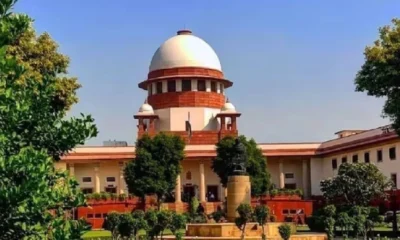
In a significant rebuke, the Supreme Court of India has come down heavily on the Enforcement Directorate (ED) for its aggressive actions targeting Tamil Nadu’s state-run liquor corporation TASMAC, cautioning the agency against breaching the federal structure of governance. The apex court directed the ED to suspend further proceedings, raising serious concerns over the agency’s conduct during its raids in the state.

SC slams ED for overreach, pauses probe

A bench led by Chief Justice BR Gavai termed the ED’s operations as “crossing all limits”, particularly its raids conducted in March and again in May at various TASMAC-run liquor outlets. The court stated that while action against individuals might be acceptable, taking sweeping actions against state corporations could not be condoned.

“You may register cases against individuals… but corporations? Your ED is passing all limits!” the bench observed. The court granted a stay on further proceedings and issued notice to the ED, returnable after the court’s vacation.

State government challenged Madras High Court order

The Tamil Nadu government and TASMAC approached the top court challenging an earlier Madras High Court decision dated April 23, which had permitted ED to proceed with its probe. The petitioners claimed that the ED’s moves were politically motivated and in breach of constitutional principles.

DMK welcomes Supreme Court order

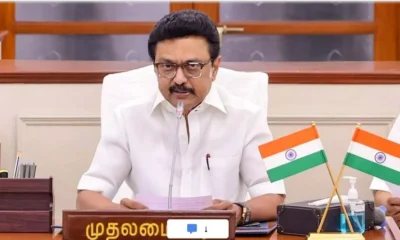
Reacting to the apex court’s intervention, senior DMK leader and former Rajya Sabha MP RS Bharathi said the ruling was a blow to the political efforts aimed at tarnishing the state government’s image. The ruling DMK has consistently maintained that the ED’s actions are part of a wider attempt to malign the state ahead of elections.

ED allegations: ₹1,000 crore unaccounted cash, irregularities in tenders

The ED, during its raids conducted under the Prevention of Money Laundering Act (PMLA), had earlier claimed to unearth significant irregularities within TASMAC operations. These included alleged manipulation in the grant of bar licences, corrupt practices in the transportation of liquor, and coordination with private distilleries and bottle suppliers to siphon off public money.

It further alleged the recovery of incriminating data related to the tender process, including overpriced surcharges imposed per bottle sold, reportedly with the involvement of TASMAC officials. The agency claimed it had evidence of manipulated financial records during the award of indent orders and tenders.

ED accused of political vendetta

Following the raids, Tamil Nadu Excise Minister S Muthusamy accused the ED of harassing state officials under the guise of investigation. He questioned the timing and motives behind the searches, asserting that no conclusive evidence was found and that the agency’s efforts were aimed at tarnishing the image of the DMK-led government.

This echoed a broader narrative often raised by opposition parties that central agencies are being misused by the ruling party at the Centre to target non-BJP ruled states, particularly in the run-up to elections.

BJP alleges ministerial involvement

Meanwhile, BJP leader and former state president K Annamalai accused Tamil Nadu minister V Senthil Balaji of being the central figure in the alleged scam. Claiming corruption to the tune of ₹1,000 crore, he alleged that Balaji was “involved in every single scam” and referred to separate court proceedings naming him.

Balaji, however, categorically denied the charges, asserting the transparency of TASMAC’s procurement and pricing mechanisms. He clarified that purchase orders were issued based on long-term average demand calculations, with no room for bias or favouritism.

India News

IndiGo flight chaos deepens as over 500 services cancelled, passengers stranded for hours

Over 500 IndiGo flights were cancelled nationwide, leaving passengers stranded without food, clarity or their luggage as airports struggled to manage the disruption.

Published

on

IndiGo flight

India’s largest airline continued to face massive operational breakdowns, triggering frustration among travellers at major airports across the country. From piles of unattended suitcases to passengers waiting over 12 hours without food or clarity, the disruption stretched into its fourth consecutive day.

Long delays, no communication leave passengers anguished

Several travellers at Delhi airport described the situation as “mental torture”, as thousands of unclaimed suitcases lay scattered across the terminal. Many slept on the floor, while others expressed anger over the lack of communication from airline staff.

One flier said he had been waiting for over 12 hours without any explanation: “Every time they say one-hour or two-hour delays. We were going to a wedding but don’t even have our luggage.”

A passenger in Hyderabad recounted a similar ordeal, saying the flight was delayed indefinitely with no food, water, or updates from the airline. At the airport, some travellers blocked an Air India flight in protest over the lack of arrangements.

Goa and Chennai airports also witnessed tense moments. Videos from Goa showed fliers shouting at IndiGo staff as police attempted to calm the situation. At Chennai, CISF denied entry to IndiGo passengers due to heavy congestion.

Major metro airports impacted; cascading cancellations nationwide

Flight cancellations and delays were reported across multiple airports:

  • Over 200 flights were cancelled in Delhi
  • More than 100 each in Mumbai and Bengaluru
  • Around 90 in Hyderabad
  • Dozens more in Pune, Vishakhapatnam, Chennai and Bhopal

Pune airport stated that parking bay congestion worsened the situation, as several IndiGo aircraft remained grounded due to lack of crew. Other airlines continued operations without disruption.

Airport authorities said they had mobilised additional manpower for crowd control and passenger support.

IndiGo admits planning lapses, says more cancellations expected

The airline acknowledged a “misjudgment” in assessing crew requirements under revised night-duty norms, which it said created planning gaps. Winter weather and airport congestion further aggravated the crisis.

IndiGo informed the aviation ministry and DGCA that some regulatory changes—such as the shift in night-duty timings and a cap on night landings—have been rolled back temporarily to stabilise operations.

The airline warned that cancellations may continue for another two to three days, and from December 8, schedules will be trimmed to prevent further disruption.

In a message to employees, CEO Pieter Elbers said restoring punctuality would not be an “easy target”.

Airline issues apology amid nationwide frustration

In a late-night statement, IndiGo apologised to customers and industry partners, acknowledging the widespread inconvenience caused by the disruptions. The airline said all teams were working with authorities to bring operations back to normal.

Continue Reading

India News

Delhi to install 305 mist sprayers across 9 major pollution hotspots

Chief Minister Rekha Gupta announced that 305 mist sprayers will be installed across nine pollution hotspots in Delhi, alongside expert-led planning and coordinated measures to reduce dust and biomass-related pollution.

Published

on

Delhi-NCR air quality

The Delhi government has announced a large-scale deployment of mist sprayer technology to tackle rising air pollution, with Chief Minister Rekha Gupta confirming that 305 mist sprayers will be installed across nine pollution hotspots in the capital.

Mist sprayers to curb dust at critical locations

During an inspection at ITO, Gupta said the mist sprayers already operational at the site are performing effectively. She noted that 35 poles at ITO have been fitted with these machines, which are helping suppress dust—a major contributor to air pollution in Delhi.

According to the Chief Minister, trials conducted in certain NDMC areas have shown promising results, reinforcing confidence in the technology.

High-level committee to guide pollution-control measures

Gupta announced the formation of a high-level expert committee that will advise the government on effective measures to reduce pollution. The panel will include senior officials from various departments as well as environmental specialists, including experts from IITs. Officials stated that the committee will receive special powers to implement pollution-mitigation strategies.

Departments directed to repair roads, add greenery

The Chief Minister said departments including PWD, DSIIDC and DDA have been instructed to fix potholes, repair and carpet roads, plant foliage along dividers and islands, and take other measures to reduce pollution sources.

She urged residents to report potholes on the government portal for quicker action.

Appeal to RWAs to prevent biomass burning

To curb winter pollution, Gupta advised Resident Welfare Associations (RWAs) to distribute electric heaters to security guards to discourage biomass burning, which significantly contributes to seasonal pollution spikes.

Continue Reading

India News

PM Modi welcomes Vladimir Putin with warm hug as Russian President begins India visit

Russian President Vladimir Putin began a high-profile visit to India on Thursday, welcomed by PM Narendra Modi as both nations prepare to discuss defence, energy and trade cooperation.

Published

on

Vladimir Putin rides in Indian PM Narendra Modi's car on India visit

Russian President Vladimir Putin arrived in New Delhi on Thursday evening for a 27-hour visit focused on strengthening defence, energy and trade cooperation. The visit, marked by a warm embrace and a brief car ride shared with Prime Minister Narendra Modi, underscores the continuity of the India-Russia strategic partnership amid shifting global geopolitics.

Putin receives ceremonial welcome and packed schedule ahead

Putin landed in Delhi around 6:35 pm, where PM Modi personally received him at Palam airport. The two leaders shared a hug before leaving together, with the Prime Minister set to host a private dinner in honour of the visiting President — a reciprocal gesture to the hospitality extended during Modi’s Moscow visit last year.

On Friday, Putin will begin his official engagements with a ceremonial welcome at Rashtrapati Bhavan, followed by a visit to Rajghat to pay homage to Mahatma Gandhi. He is also scheduled to attend the India-Russia Annual Summit at Hyderabad House, where both sides will hold a working lunch.

The Russian President will later inaugurate a new India-based channel of Russia’s state broadcaster and attend a state banquet hosted by President Droupadi Murmu, before departing India on Friday night.

Defence, energy and trade to dominate agenda

Officials have indicated that discussions will centre on defence, energy and trade — the three pillars of the bilateral relationship. Agreements are expected across sectors including shipping, healthcare, fertilisers and connectivity.

Ahead of the summit, defence ministers from both countries held extensive talks, covering additional procurement of S-400 air defence systems and delayed military hardware shipments affected by the Ukraine war. The S-400 platform, procured under a USD 5 billion deal, played a major role during Operation Sindoor.

The Kremlin has also hinted that Russia may propose the Su-57 fifth-generation fighter jet, which would put Moscow in direct competition with Western aircraft makers.

Energy ties face renewed pressure

India remains among the largest buyers of discounted Russian crude. However, fresh US sanctions on key Russian oil producers have led to a dip in purchases.

Putin’s visit also comes at a time of strain in India-US ties, with Washington recently imposing steep tariffs on Indian goods — including measures linked directly to India’s continued oil trade with Russia.

Massive security deployment in Delhi

Delhi Police have stationed over 5,000 personnel across central and New Delhi districts, supported by SWAT teams, anti-terror units, snipers, quick-reaction teams, anti-drone systems, HD-CCTV networks and layered surveillance measures for the visit.

Continue Reading

Trending

© Copyright 2022 APNLIVE.com

Left Menu Icon