English हिन्दी
Connect with us

India News

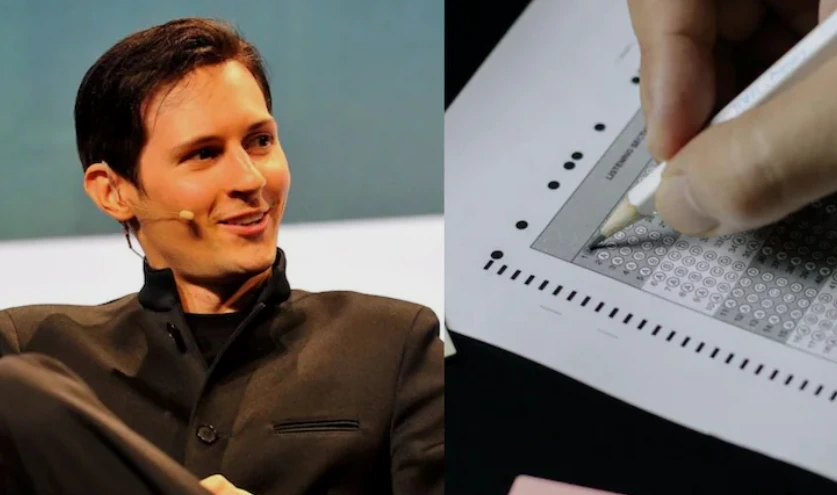
Telegram CEO Pavel Durov criticises India restriction, says leak networks shifted to other apps

Telegram founder Pavel Durov has responded to India’s temporary restriction on the platform ahead of the NEET-UG 2026 re-examination, arguing that the move affected ordinary users without stopping alleged leak networks.

Published

on

Telegram founder and CEO Pavel Durov has criticised India’s decision to temporarily restrict access to the messaging platform, arguing that the move failed to curb alleged exam leak operations and instead affected millions of legitimate users.

The restriction was imposed ahead of the NEET-UG 2026 re-examination as authorities sought to prevent the spread of leaked exam-related material and disrupt networks allegedly involved in malpractice.

In a public response, Durov said the action had inconvenienced a large number of users across India while those responsible for sharing leaked content had simply migrated to alternative platforms.

According to Durov, restricting access to Telegram did not eliminate the problem authorities were trying to address. He claimed that groups involved in distributing exam-related leaks quickly shifted their activities elsewhere, raising questions about the effectiveness of platform-specific restrictions.

The temporary curbs were announced by the government in the lead-up to the NEET-UG re-test scheduled for June 21. Officials said the move was aimed at safeguarding the integrity of the examination process following concerns about the circulation of leaked material online.

The restriction is currently expected to remain in place until June 22.

Durov also stressed that millions of Indian users rely on Telegram for communication, education, business activities and community engagement. He argued that measures targeting an entire platform can have wider consequences for users who have no connection to alleged wrongdoing.

The government’s action came amid broader efforts to prevent cheating and malpractice in competitive examinations. Authorities have been closely monitoring digital platforms and messaging services after reports that exam-related content was being circulated through online channels.

The debate has sparked discussions about how governments and technology platforms should balance examination security with access to digital communication services. While officials maintain that strong measures are necessary to protect the fairness of high-stakes examinations, critics argue that restrictions on entire platforms may not effectively stop determined offenders.

For now, Telegram remains at the centre of the discussion as authorities continue efforts to ensure a fair and secure conduct of the NEET-UG 2026 re-examination.

India News

Veeramani POCSO case: Vijay questions Stalin over earlier probe

Tamil Nadu Chief Minister Vijay has questioned MK Stalin over the handling of the Veeramani POCSO case, while Stalin has rejected allegations that the previous DMK government protected anyone.

Published

on

Actor Vijay

Tamil Nadu Chief Minister and Tamilaga Vettri Kazhagam (TVK) president C Joseph Vijay has questioned DMK president MK Stalin over the handling of the POCSO case involving Gem Granites founder R Veeramani. The political exchange follows renewed investigation into allegations involving minor girls.

Vijay’s remarks came as the ruling TVK stepped up its questions about how the case was handled during the previous DMK government. The party’s IT wing has alleged that the earlier investigation was weakened and questioned why a final report was filed.

The allegations have been rejected by the DMK. Stalin has said that no order was issued by the DMK government to protect anyone in the case and has called the allegations false and defamatory.

What did Vijay say about the Veeramani case?

Vijay questioned Stalin over the handling of the case and demanded an explanation from the former chief minister.

The TVK has specifically questioned why action was not taken against Veeramani during the previous administration and why the earlier investigation resulted in a closure report.

The party has also raised questions about the role of officials involved in the earlier investigation. These are political allegations made by the TVK and have not been established as facts.

What is the Veeramani POCSO case?

The case concerns allegations of sexual abuse of minors involving R Veeramani, the founder of Gem Granites.

The case came under renewed scrutiny after a special POCSO court rejected an earlier closure report and ordered further investigation. The expanded probe has subsequently identified additional alleged survivors who were minors at the time of the alleged offences, according to current reporting.

The investigation is also examining the circumstances surrounding the earlier probe and whether there were any lapses in how the case was handled.

What has MK Stalin said?

Stalin has rejected allegations that the previous DMK government protected Veeramani.

He has said that no order was issued by the DMK government to shield anyone in the case. Stalin has also said that everyone responsible for the alleged offences, including anyone who aided or attempted to protect the accused, should face the law.

The DMK president has further said that the focus should remain on securing justice for the affected girls rather than making political allegations.

Why has the case become a political issue?

The Veeramani case has become the subject of a political dispute between the ruling TVK and the DMK over the handling of the earlier investigation.

The TVK is questioning the previous government’s handling of the case, while the DMK has denied that it intervened to protect the accused.

At this stage, claims about political interference or deliberate weakening of the earlier investigation should be treated as allegations unless established by the ongoing investigation or judicial proceedings.

Continue Reading

India News

Women wrestlers challenge Brij Bhushan’s acquittal in sexual harassment case

Four women wrestlers have challenged the acquittal of former WFI chief Brij Bhushan Sharan Singh and co-accused Vinod Tomar in a sexual harassment case.

Published

on

Brij Bhushan Sharan Singh

Four women wrestlers have approached a Delhi court challenging the acquittal of former Wrestling Federation of India (WFI) chief and BJP leader Brij Bhushan Sharan Singh in a sexual harassment case.

The wrestlers have also challenged the acquittal of co-accused Vinod Tomar. The matter is scheduled to be heard by a Special Judge at the Rouse Avenue Courts.

The appeal challenges the order passed by an Additional Chief Judicial Magistrate on August 3, 2026, when Brij Bhushan and Tomar were acquitted in the case.

Wrestlers challenge court’s reasoning

In their appeal, the wrestlers have argued that the acquittal order is legally unsustainable and that the evidence was not assessed appropriately.

They have also alleged that the order relied on assumptions about how victims of sexual assault and harassment were expected to behave instead of assessing the evidence and circumstances of the complainants.

The challenge seeks judicial scrutiny of the findings that resulted in the acquittal of Brij Bhushan and Tomar.

Brij Bhushan was acquitted in August

The Rouse Avenue court acquitted Brij Bhushan Sharan Singh on August 3 in the sexual harassment case involving women wrestlers. The court’s decision followed consideration of the evidence and statements presented during the proceedings.

The case had emerged after several women wrestlers accused the former WFI chief of sexual harassment. The allegations had led to a major protest by wrestlers in 2023.

The latest appeal means the acquittal is now being challenged before a higher court.

Continue Reading

India News

Congress protests against Gyanesh Kumar, demands Election chief’s resignation

Congress workers took to the streets against Chief Election Commissioner Gyanesh Kumar, with protests and demonstrations held over the party’s allegations concerning the Election Commission.

Published

on

Congress stepped up its campaign against Chief Election Commissioner Gyanesh Kumar, with party workers taking to the streets and demanding his resignation amid the ongoing row over the Election Commission.

The protests followed repeated criticism by Congress leaders of the poll panel and its functioning. The party has alleged irregularities in the electoral process and has sought accountability from the Election Commission.

Congress leaders have also targeted Gyanesh Kumar personally, with Rahul Gandhi among those calling for the Chief Election Commissioner to step down.

Congress takes protest to streets

Congress workers staged demonstrations in different places as part of the party’s campaign against the Election Commission.

The protests featured sharp symbolism, including masks and handcuffs, as Congress sought to highlight its allegations against the poll panel and demand action against Gyanesh Kumar.

The demonstrations are part of a wider confrontation between the Congress and the Election Commission over issues related to electoral rolls and the conduct of elections.

Congress demands Gyanesh Kumar’s resignation

The Congress has repeatedly demanded the resignation of Gyanesh Kumar, accusing the Election Commission of failing to adequately address the concerns raised by the opposition party.

Rahul Gandhi has also stepped up his criticism of the poll panel. In a statement on Thursday, he demanded that Gyanesh Kumar resign and alleged that the Election Commission had acknowledged the issue of “vote theft”. These are allegations made by the Congress and should not be treated as an established finding unless confirmed by the relevant authority.

The dispute comes amid a broader political debate over electoral rolls, voter verification and the functioning of the Election Commission.

Election Commission under opposition scrutiny

The Congress has intensified its campaign against the poll body in recent weeks, with party leaders repeatedly questioning its decisions and procedures.

The Election Commission, meanwhile, has maintained that India’s electoral process is conducted according to the Constitution, electoral laws and prescribed procedures. Chief Election Commissioner Gyanesh Kumar has previously defended the integrity of the electoral system and rejected claims that electronic voting machines can be remotely hacked.

The latest protests add to the continuing political confrontation over the Election Commission and the opposition’s demands concerning the poll panel’s functioning.

Continue Reading

Trending

© Copyright 2022 APNLIVE.com