[vc_row][vc_column][vc_column_text]Former US President Obama says he likes Narendra Modi but adds that he was great friends with Dr Manmohan Singh who laid the foundation of modern Indian economy
Former US President Barack Obama’s address at the HT Leadership Summit in New Delhi, on Friday, comes as a mixed bag of applause and understated criticism for Prime Minister Narendra Modi and his central government.
At a time when India is witnessing a raging debate on a perceived rise in religious intolerance and communal disharmony – particularly between the Hindu and Muslim communities – Obama said that he had, during a private conversation, told Prime Minister Narendra Modi that “a country shouldn’t be divided on sectarian lines”. He, however, declined to comment on what Prime Minister Modi’s response was on the issue.
Obama was perhaps referring to his discussion with Modi during his last visit to India, in January 2015, when he was still the US President. During that visit, Obama had red-flagged the issue of religious intolerance – or the lack of it – while speaking to journalists before his departure for the US. Though Obama had not specifically said that he was speaking with regard to the situation in India, his comments had stoked a controversy as they were seen as his endorsement of the claims of rising religious intolerance that were making headlines in the country at the time.
On Friday, Obama spoke at length about the issue of religious polarisation. While his comments were, possibly, largely in the context of US politics which has seen a resurgence of Islam -bashing ever since he demitted office and was succeeded by President Donald Trump, they could just as well be juxtaposed on the Indian socio-political scenario. Perhaps, they were even meant to.
While asserting that multiculturalism was a “common bond” between the US and India, former president Obama stressed on tolerance and warned that “the distinction between ‘us’ and ‘them’ is dangerous and can wreak havoc on us all”.[/vc_column_text][/vc_column][/vc_row][vc_row][vc_column][vc_raw_html]JTNDYmxvY2txdW90ZSUyMGNsYXNzJTNEJTIydHdpdHRlci10d2VldCUyMiUyMGRhdGEtbGFuZyUzRCUyMmVuJTIyJTNFJTNDcCUyMGxhbmclM0QlMjJlbiUyMiUyMGRpciUzRCUyMmx0ciUyMiUzRSUzQ2ElMjBocmVmJTNEJTIyaHR0cHMlM0ElMkYlMkZ0d2l0dGVyLmNvbSUyRmhhc2h0YWclMkZIVExTJTNGc3JjJTNEaGFzaCUyNmFtcCUzQnJlZl9zcmMlM0R0d3NyYyUyNTVFdGZ3JTIyJTNFJTIzSFRMUyUzQyUyRmElM0UlMjAlM0NhJTIwaHJlZiUzRCUyMmh0dHBzJTNBJTJGJTJGdHdpdHRlci5jb20lMkZoYXNodGFnJTJGSFRMUzIwMTclM0ZzcmMlM0RoYXNoJTI2YW1wJTNCcmVmX3NyYyUzRHR3c3JjJTI1NUV0ZnclMjIlM0UlMjNIVExTMjAxNyUzQyUyRmElM0UlMjAlN0MlMjBGb3IlMjBhJTIwY291bnRyeSUyMGxpa2UlMjBJbmRpYSUyMHdoZXJlJTIwdGhlcmUlMjBpcyUyMGElMjBNdXNsaW0lMjBwb3B1bGF0aW9uJTIwdGhhdCUyMGlzJTIwc3VjY2Vzc2Z1bCUyQyUyMGludGVncmF0ZWQlMjBhbmQlMjBjb25zaWRlcnMlMjBpdHNlbGYlMjBhcyUyMEluZGlhbi13aGljaCUyMGlzJTIwbm90JTIwdGhlJTIwY2FzZSUyMGluJTIwc29tZSUyMG90aGVyJTIwY291bnRyaWVzLXRoaXMlMjBzaG91bGQlMjBiZSUyMG5vdXJpc2hlZCUyMGFuZCUyMGN1bHRpdmF0ZWQlM0ElMjAlM0NhJTIwaHJlZiUzRCUyMmh0dHBzJTNBJTJGJTJGdHdpdHRlci5jb20lMkZCYXJhY2tPYmFtYSUzRnJlZl9zcmMlM0R0d3NyYyUyNTVFdGZ3JTIyJTNFJTQwQmFyYWNrT2JhbWElM0MlMkZhJTNFJTIwJTNDYSUyMGhyZWYlM0QlMjJodHRwcyUzQSUyRiUyRnQuY28lMkZzZk1FRG9HV2l2JTIyJTNFcGljLnR3aXR0ZXIuY29tJTJGc2ZNRURvR1dpdiUzQyUyRmElM0UlM0MlMkZwJTNFJTI2bWRhc2glM0IlMjBIaW5kdXN0YW4lMjBUaW1lcyUyMCUyOCU0MGh0VHdlZXRzJTI5JTIwJTNDYSUyMGhyZWYlM0QlMjJodHRwcyUzQSUyRiUyRnR3aXR0ZXIuY29tJTJGaHRUd2VldHMlMkZzdGF0dXMlMkY5MzY0ODI4MTQxMDY2NDg1NzYlM0ZyZWZfc3JjJTNEdHdzcmMlMjU1RXRmdyUyMiUzRURlY2VtYmVyJTIwMSUyQyUyMDIwMTclM0MlMkZhJTNFJTNDJTJGYmxvY2txdW90ZSUzRSUwQSUzQ3NjcmlwdCUyMGFzeW5jJTIwc3JjJTNEJTIyaHR0cHMlM0ElMkYlMkZwbGF0Zm9ybS50d2l0dGVyLmNvbSUyRndpZGdldHMuanMlMjIlMjBjaGFyc2V0JTNEJTIydXRmLTglMjIlM0UlM0MlMkZzY3JpcHQlM0U=[/vc_raw_html][/vc_column][/vc_row][vc_row][vc_column][vc_column_text]In specific comments about India, Obama said: “For a country like India, where there is a Muslim population that is successful, integrated and considers itself as Indian, which is not the case in some other countries, this should be nourished and cultivated. It’s important to continue reinforcing it (sic).”
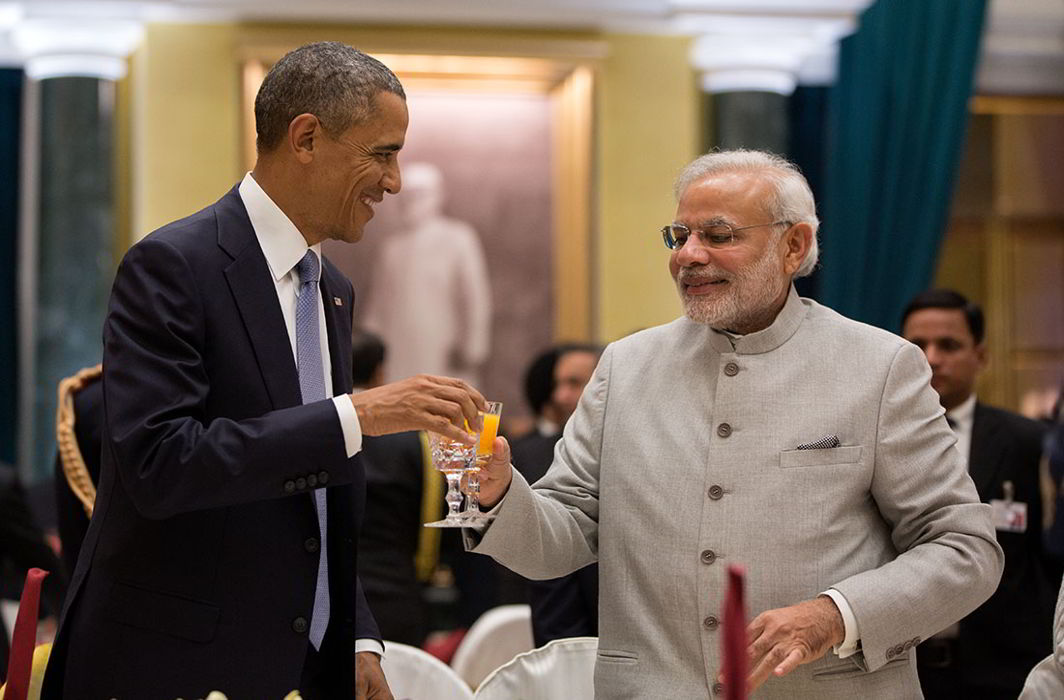
Obama, who during his eight year stint in office became the only US president to have visited India twice in the official capacity as the Head of State, had the chance of working on Indo-US ties and other issues with Prime Minister Narendra Modi as well as his predecessor Dr Manmohan Singh. And so, it was obvious for questions to be asked on his impressions of the two Indian leaders.
The former US President’s reply to an otherwise tricky question came as one that would please both Modi and Dr Singh, although it could also upset the current Indian Premier a little.
For starters, Obama said he “likes” Modi but was quick to add that he was “great friends with Dr Manmohan Singh”. On the stints of the two Indian prime ministers, Obama made a clear differentiation – one that could rile the BJP and unnerve Prime Minister Modi, who during Obama’s 2015 visit to India, had been at the receiving end of many a jokes for referring to the then US President as ‘Barack’ – a clear departure from normal diplomatic protocol.[/vc_column_text][/vc_column][/vc_row][vc_row][vc_column][vc_raw_html]JTNDYmxvY2txdW90ZSUyMGNsYXNzJTNEJTIydHdpdHRlci10d2VldCUyMiUyMGRhdGEtbGFuZyUzRCUyMmVuJTIyJTNFJTNDcCUyMGxhbmclM0QlMjJlbiUyMiUyMGRpciUzRCUyMmx0ciUyMiUzRSUzQ2ElMjBocmVmJTNEJTIyaHR0cHMlM0ElMkYlMkZ0d2l0dGVyLmNvbSUyRmhhc2h0YWclMkZIVExTJTNGc3JjJTNEaGFzaCUyNmFtcCUzQnJlZl9zcmMlM0R0d3NyYyUyNTVFdGZ3JTIyJTNFJTIzSFRMUyUzQyUyRmElM0UlMjAlM0NhJTIwaHJlZiUzRCUyMmh0dHBzJTNBJTJGJTJGdHdpdHRlci5jb20lMkZoYXNodGFnJTJGSFRMUzIwMTclM0ZzcmMlM0RoYXNoJTI2YW1wJTNCcmVmX3NyYyUzRHR3c3JjJTI1NUV0ZnclMjIlM0UlMjNIVExTMjAxNyUzQyUyRmElM0UlMjAlMjAlN0MlMjBJJTIwbGlrZSUyMGhpbSUyMGFuZCUyMEklMjB0aGluayUyMGhlJTIwaGFzJTIwYSUyMHZpc2lvbiUyMGZvciUyMHRoZSUyMGNvdW50cnkuJTIwSGUlMjBpcyUyMGltcGxlbWVudGluZyUyMGFuZCUyMGluJTIwbWFueSUyMHdheXMlMjBtb2Rlcm5pc2luZyUyMGNlcnRhaW4lMjBlbGVtZW50cyUyMG9mJTIwYnVyZWF1Y3JhY3kuJTIwQnV0JTJDJTIwSSUyMHdhcyUyMGFsc28lMjBncmVhdCUyMGZyaWVuZHMlMjB3aXRoJTIwRHIlMjBTaW5naCUzQSUyMCUzQ2ElMjBocmVmJTNEJTIyaHR0cHMlM0ElMkYlMkZ0d2l0dGVyLmNvbSUyRkJhcmFja09iYW1hJTNGcmVmX3NyYyUzRHR3c3JjJTI1NUV0ZnclMjIlM0UlNDBCYXJhY2tPYmFtYSUzQyUyRmElM0UlMjBvbiUyMHdoYXQlMjBoZSUyMHRoaW5rcyUyMG9mJTIwJTNDYSUyMGhyZWYlM0QlMjJodHRwcyUzQSUyRiUyRnR3aXR0ZXIuY29tJTJGbmFyZW5kcmFtb2RpJTNGcmVmX3NyYyUzRHR3c3JjJTI1NUV0ZnclMjIlM0UlNDBuYXJlbmRyYW1vZGklM0MlMkZhJTNFJTIwJTNDYSUyMGhyZWYlM0QlMjJodHRwcyUzQSUyRiUyRnQuY28lMkYzVzRPWUtvcHVWJTIyJTNFcGljLnR3aXR0ZXIuY29tJTJGM1c0T1lLb3B1ViUzQyUyRmElM0UlM0MlMkZwJTNFJTI2bWRhc2glM0IlMjBIaW5kdXN0YW4lMjBUaW1lcyUyMCUyOCU0MGh0VHdlZXRzJTI5JTIwJTNDYSUyMGhyZWYlM0QlMjJodHRwcyUzQSUyRiUyRnR3aXR0ZXIuY29tJTJGaHRUd2VldHMlMkZzdGF0dXMlMkY5MzY0ODY3OTU3MzAwNzU2NDglM0ZyZWZfc3JjJTNEdHdzcmMlMjU1RXRmdyUyMiUzRURlY2VtYmVyJTIwMSUyQyUyMDIwMTclM0MlMkZhJTNFJTNDJTJGYmxvY2txdW90ZSUzRSUwQSUzQ3NjcmlwdCUyMGFzeW5jJTIwc3JjJTNEJTIyaHR0cHMlM0ElMkYlMkZwbGF0Zm9ybS50d2l0dGVyLmNvbSUyRndpZGdldHMuanMlMjIlMjBjaGFyc2V0JTNEJTIydXRmLTglMjIlM0UlM0MlMkZzY3JpcHQlM0UlMEE=[/vc_raw_html][/vc_column][/vc_row][vc_row][vc_column][vc_column_text]Modi said he believes Modi “has a vision for the country” and that he “is in many ways modernising certain elements of bureaucracy” but that Dr Singh “laid the foundation of the modern Indian economy”.
Obama’s praise for Dr Singh’s contribution towards modernising the Indian economy comes at a time when the Modi-led BJP government is facing flak – domestically and by some economists in the West – for pushing the Indian economy on a downward spiral with his demonetisation move and an alleged hasty implementation of the Goods and Services Tax (GST) regime.
The former US president also underlined that he had worked closely with Dr Singh to get the US and India out of the effects of the 2008 global economic meltdown.
In a remark that almost seemed like a consolation for Prime Minister Narendra Modi, Obama added: “Both (Modi and Dr Singh) of them were sound leaders. Dr Singh was the primary partner while we were working during the financial meltdown. Modi was the primary partner during making of Paris accord.”
However, in comments that the BJP and Modi would surely be thrilled about, Obama also said: “I know PM Modi believes in unity of India…I think his impulses are to recognise Indian unity. I think he firmly believes unity is necessary for the progress of the nation.”
Of course a discussion with Obama could not be complete without his views on his successor – US President Donald Trump – with whom he is known to share a frosty, often acrimonious relationship. But the former US President dealt with these questions with a tact that has come to define his style as a world leader.
When senior journalist Karan Thapar asked Obama, “Donald Duck or Donald Trump, which represents America,” the former US President said: “The cacophony of America is what I love about the country. The political trends are a thread of life. One of the joys and frustrations about America is that it can be contradictory. We can be kind and cruel. I think it’s the same with India.”
He did, however, take a few swipes at Trump. Asked how his Twitter habits were different from the indiscriminate and often controversial tweets put out by President Trump, Obama said: “I use punctuation in my text” and added for good measure: “I have more Twitter followers than some people who use it more often.”[/vc_column_text][/vc_column][/vc_row]