English हिन्दी
Connect with us

India News

UP Medical College Scam: Chaos reigns in SC as CJI dissolves Justice Chelameswar-selected bench

Published

on

UP Medical College Scam: Chaos reigns in SC as CJI dissolves Justice Chelameswar-selected bench

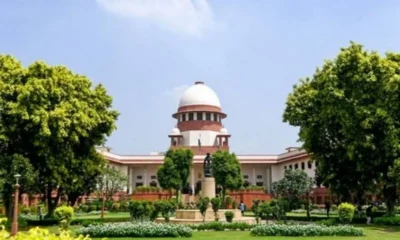
[vc_row][vc_column][vc_column_text]The simmering power struggle at the Supreme Court came to the surface on Friday (November 10) when Chief Justice Dipak Misra made it clear that it is the CJI who is the master of roster of the Supreme Court. The apex court also made it clear that neither a two-judge, nor a three-judge bench can direct the CJI to constitute any specific bench (constitution bench).

The case was about an allegation that there has been an attempt to bribe judges of the Supreme Court related to registration of an Uttar Pradesh medical college. A petition in this regard had been filed by advocate Kamini Jaiswal. Another petition, on the same lines, had been filed by advocate Prashant Bhushan.

It may be recalled that the Centre had earlier de-registered 46 medical colleges for substandard facilities. Custodians of the Prasad Education Trust in Uttar Pradesh approached the Supreme Court for relief after they were debarred in August 2017 from admitting students for academic years 2017-18 and 2018-19.

Allegations have thereafter been made regarding this bribery possibility.

In the meantime, a Supreme Court bench comprising the CJI, Justice Khanwilkar and Justice Amitava Roy who were hearing the matter, stayed the Medical Council of India’s notification and allowed five medical colleges to admit students. The FIR filed by the CBI on September 19 under the Prevention of Corruption Act alleges that these five colleges then approached former Orissa and Allahabad HC judge, Justice (retd) Ishrat Masroor Quddusi, to supposedly fix the matter. First, they approached (allegedly on the advice of Justice Quddusi) the Allahabad HC, where they got a favourable order.

After that, Prasad Trust’s functionaries approached the Supreme Court and Justice Quddusi allegedly introduced them to Biswanath Agrawal, a resident of Bhubaneswar, Odisha, who claimed he was close to “senior public officials” and would “settle the matter in the apex court”.

On September 20, Quddusi and five others were arrested by the CBI and presented before Tis Hazari Court the next day. Judge Manoj Jain of the special court handling CBI cases sent Quddusi and the others to custody after the CBI said their custodial interrogation was required to unearth the “larger nexus” in the alleged medical college scam.

JUSTICE CHELAMESWAR’S DECISION

While hearing Jaiswal’s petition, Justices Chelameswar and Abdul Nazeer decided that the case would be heard by a five-judge constitution bench on Monday (November 13). The judges selected for that bench were Justices Chelameswar, Ranjan Gogoi, Madan Lokur, Kurian Joseph and AK Sikri.

This order was passed by Justices Chelameswar and Nazeer, after hearing senior advocate Dushyant Dave, who pressed for the constitution of a Special Investigation Team (SIT) to probe allegations. Chief Justice Dipak Misra was not included on this bench, just because—as Dave pointed out—the other similar case was being heard by the CJI.

This seemed a flawed decision. The roster of the apex court, including the formation of constitution or special benches is entirely the CJI’s discretion. The No. 2 (officially) of the court will not have this power.

That was what the CJI made clear on Friday. In dealing with the petition of Bhushan, the CJI too formed a constitution bench that did not include judges from the Justice Chelameswar-constituted bench. The CJI’s bench includes the CJI and Justices RK Agrawal, Arun Mishra, Amitava Roy and A M Khanwilkar.

The Justice Chelamshwar-constituted constitution bench, therefore, stands dissolved.

TEMPERS FRAYED

On Friday, however, tempers soared. Advocate Bhushan raised his voice while replying to the CJI. Though he apologized later, he had to be removed by marshals.

Bhushan, screaming at the top of his voice, said: “CJI should not be the member of this bench. He has corruption charges against him.”

A visibly angered CJI replied: “You are not even worth contempt.”

At that SCBA president Sodi said: “The bench can’t bring any favourable order under threat of terrorism.”

Justice Agrawal then told the SCBA president: “This is the duty of bar to take care of lawyers’ conduct. This court is not duty bound to look into lawyers conduct. We are here not here to protect any.”

Justice Amitava Roy got angry and told Bhushan: “Please don’t raise your voice. You are supporting the cause of accusing a sitting Chief Justice on his face.” Another lawyer said: “People are laughing at us.” There was a suggestion that both matters (related) be listed before a full court.

Talk was on, when Bhushan lost his temper and the altercation grew. Lawyers from Prashant Bhushan’s side pleaded: “Please don’t print this in the media. Please don’t allow any media person to publish this on news channels.”

Said the CJI: “There will be no anarchy or chaos. There cannot be an order directing a matter to be placed before a particular bench. If any such order has been passed by any bench, that will not hold the field… So that takes care of Monday’s bench.”

That was the end of the Justice Chelameswar-constituted constitutional bench.

There was trouble among lawyers too. One lawyer was heard saying: “Take our oral contempt petition. He (Prashant Bhushan) pushed us (while he was being escorted by the Marshalls of the court).”

Advocate Kamini Jaiswal said: “This order (of the CJI) may be placed before the other bench. In the last month there have been six matters which were before other bench taken by CJI.”

To that the CJI replied: “Yes. That is my prerogative. The MoP matter ought not to have been heard on the judicial side (hence he took it up and ordered as he did).”

The CJI finally ordered: “The matter be placed before the CJI to be placed before appropriate bench. List after two weeks.”

PS Narasimha asked: “Can anyone say, ‘I know someone and can get it done’.  Can this be the basis for contempt?”

Justice Arun Mishra said: “It cannot be read against any judge. Can there be any FIR against a judge?”

Justice Khanwilkar said: “Are we going to put our judiciary at the disposal of an SI?”

There was a suggestion by RS Suri that contempt may be issued against all concerned, including Ms Kamini Jaiswal, Prashant Bhushan, etc.

To that the CJI said: “That’s on contempt. We are on judicial propriety.”

A senior advocate observed: “These petitions have caused a perception that the Supreme Court is worse than a political establishment.”

Asked the CJI: “What is your suggestion?”

Several voices in court said: “Contempt”.

Bhan said: “They must explain their conduct.”

CJI, asking Bhushan, who was back: “You say ‘I lost my temper’. You can lose your temper. We cannot.”

CJI asked the opinions of senior advocates present in court. Advocate RP Bhat said: “This is contempt per se. Spoiling the image of the court.”

Things rested at that.

Source: India Legal[/vc_column_text][/vc_column][/vc_row]

India News

Amit Shah counters delimitation concerns, says southern states to gain Lok Sabha seats

Amit Shah assures Parliament that southern states will gain Lok Sabha seats after delimitation, countering opposition criticism during the women’s reservation debate.

Published

on

Amit Shah

Union Home Minister Amit Shah on Thursday addressed concerns over the proposed delimitation exercise, asserting in the Lok Sabha that southern states will not lose representation but instead see an increase in their number of seats.

His remarks came during a heated debate linked to the implementation of women’s reservation, where opposition parties have raised fears that population-based delimitation could reduce the political weight of southern states.

Shah rejected these claims, calling them misleading, and said the proposed framework ensures fairness while expanding the overall strength of the Lok Sabha.

Seat count to rise with expansion of Lok Sabha

The government has indicated that the total number of Lok Sabha seats could increase significantly as part of the delimitation process. In this expanded House, the combined representation of southern states is expected to rise from 129 seats at present to around 195 seats.

Shah emphasised that no state will lose seats in absolute terms, and the exercise is designed to reflect population changes while maintaining balance across regions.

State-wise projections shared in Parliament

During his address, Shah also provided indicative figures for individual southern states, suggesting notable increases in representation. According to the projections:

  • Tamil Nadu could see its seats rise substantially
  • Kerala, Telangana, and Andhra Pradesh are also expected to gain additional seats
  • Karnataka’s representation may increase as well

These figures were presented to counter the argument that delimitation would disproportionately favour northern states.

Political debate intensifies over linkage with women’s quota

The delimitation exercise has been closely linked to the rollout of women’s reservation, which proposes one-third seats for women in Parliament and state assemblies.

Opposition leaders have questioned this linkage, arguing that tying reservation to delimitation could delay its implementation and raise federal concerns. Some leaders have also warned that the move could impact national unity if apprehensions among states are not addressed.

The government, however, maintains that the reforms are necessary to ensure equitable representation and to align the electoral system with demographic realities.

Centre dismisses ‘false narrative’ on southern states

Shah reiterated that concerns about southern states losing influence are unfounded. He said the delimitation process will increase representation across regions and described the criticism as a “false narrative” aimed at creating confusion.

The issue is expected to remain a key flashpoint as Parliament continues discussions on the women’s reservation framework and related legislative changes.

Continue Reading

India News

PM Modi assures no discrimination in women’s quota, delimitation debate intensifies in Parliament

PM Narendra Modi has assured that women’s reservation will be implemented without discrimination, amid a heated debate over delimitation in Parliament.

Published

on

PM modi

Prime Minister Narendra Modi has assured that there will be no discrimination in the implementation of women’s reservation, as Parliament witnessed a sharp debate over the proposed linkage between the quota and delimitation exercise.

During the ongoing special session, the government reiterated its commitment to ensuring fair representation while addressing concerns raised by opposition parties regarding the timing and structure of the legislation.

The proposed framework aims to reserve 33 percent of seats for women in the Lok Sabha and state assemblies. However, its implementation is tied to a fresh delimitation exercise, which is expected after the next census.

Opposition questions timing and intent

Opposition leaders have raised concerns that linking the women’s quota to delimitation could delay its implementation. They argue that the process of redrawing constituencies may push the actual rollout further into the future.

The issue has triggered a broader political confrontation, with multiple parties questioning whether the move could alter representation across states.

Some critics have also alleged that the delimitation exercise could disproportionately benefit certain regions based on population, a charge the government has rejected.

Government reiterates commitment to fair implementation

Responding to these concerns, the Centre has maintained that the reforms are necessary to ensure accurate and updated representation based on population data.

Leaders from the ruling side have repeatedly emphasized that the process will be carried out transparently and without bias. The assurance that there will be “no discrimination” is aimed at addressing fears among states and opposition parties.

The debate marks a key moment in Parliament, with both sides engaging in intense exchanges over one of the most significant electoral reforms in recent years.

Continue Reading

India News

Give all tickets to Muslim women, Amit Shah says, attacking Akhilesh Yadav on sub-quota demand

A sharp exchange between Amit Shah and Akhilesh Yadav in Parliament over sub-quota for Muslim women highlights key divisions on women’s reservation implementation.

Published

on

A heated exchange broke out in Parliament during discussions on the women’s reservation framework, with Union Home Minister Amit Shah and Samajwadi Party chief Akhilesh Yadav locking horns over the demand for a sub-quota for Muslim women.

The debate unfolded as the government pushed forward key legislative measures to implement 33% reservation for women in the Lok Sabha and state assemblies.

Akhilesh Yadav argued that the proposed reservation must ensure representation for women from marginalised communities, including Other Backward Classes (OBCs) and Muslim women. He said that without such provisions, large sections could remain excluded from political participation.

He also questioned the timing of the bill, alleging that the Centre was avoiding a caste census. According to him, a census would lead to renewed demands for caste-based reservations, which the government is reluctant to address.

Government rejects religion-based quota

Responding to the demand, Amit Shah made it clear that reservation based on religion is not permitted under the Constitution.

He stated that any proposal to provide quota to Muslims on religious grounds would be unconstitutional, firmly rejecting the idea of a separate sub-quota for Muslim women within the broader reservation framework.

The government has maintained that the existing framework already includes provisions for Scheduled Castes (SC) and Scheduled Tribes (ST) women within the overall reservation structure.

Wider political divide over implementation

The issue of sub-categorisation within the women’s quota has emerged as a major flashpoint, even as most opposition parties broadly support the idea of women’s reservation.

Samajwadi Party leaders reiterated that their support for the bill depends on inclusion of OBC and minority women, while the government continues to defend its constitutional position.

The debate is part of a broader discussion during the special Parliament session, where multiple bills linked to delimitation and implementation of the women’s quota are being taken up.

Continue Reading

Trending

© Copyright 2022 APNLIVE.com