English हिन्दी
Connect with us

India News

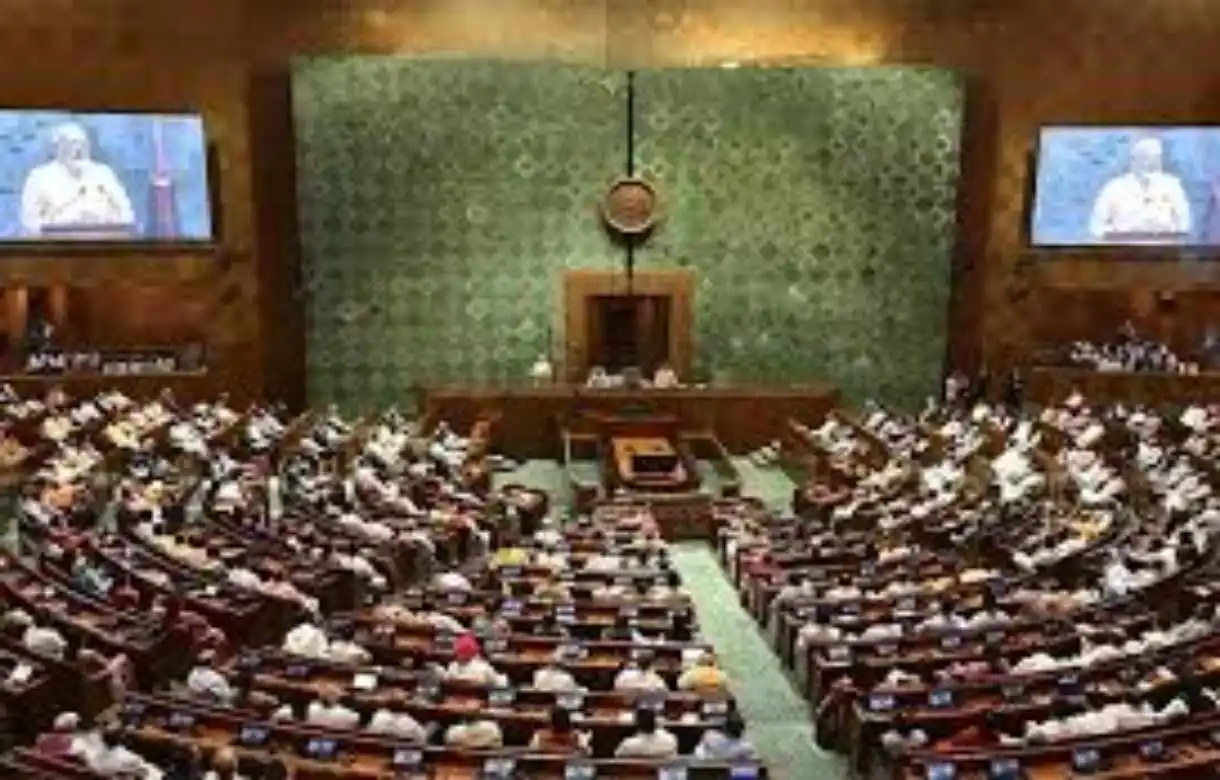
Waqf (Amendment) Bill 2025 tabled in Rajya Sabha after heated Lok Sabha debate

Published

on

Rajya Sabha

The Waqf (Amendment) Bill, 2025, was formally tabled in the Rajya Sabha on Thursday, just a day after its passage in the Lok Sabha following an intense 12-hour debate. The bill was cleared in the Lower House with 288 votes in favor and 232 against, reflecting deep divisions between the ruling BJP and the Opposition.

The bill aims to reform the management of Waqf properties by introducing a more transparent and technology-driven administrative system. The government claims the amendments will eliminate complexities, bring clarity, and ensure accountability in the handling of Waqf assets.

Union Home Minister Amit Shah defended the legislation during the Lok Sabha session, pushing back against criticism from the Congress party. Shah accused the Opposition of fear-mongering and clarified that the bill does not interfere with religious matters or property donated by the Muslim community. “That the Waqf bill is interference in Muslims’ religious matters and properties donated by them is fear-mongering for vote-bank,” Shah stated.

As the Rajya Sabha began its discussions, Leader of Opposition Mallikarjun Kharge strongly criticized Union Minister Anurag Thakur over his earlier claims regarding a scam in the Karnataka Waqf board. Kharge asserted there was no land grabbing and challenged the BJP to either prove the allegations or demand Thakur’s resignation.

BJP national president JP Nadda is scheduled to speak in the Rajya Sabha at 1 PM, a key moment in the ongoing discussion over the bill. His address is expected to reinforce the government’s position on the Waqf (Amendment) Bill and counter the Opposition’s allegations.

Meanwhile, the Lok Sabha was adjourned till Friday. Before adjournment, the House took up a statutory resolution concerning the situation in Manipur, a move questioned by Opposition MPs who argued whether it was the appropriate time to raise the matter. Congress MP Shashi Tharoor is currently addressing the issue.

India News

Air India sacks Phuket-Delhi flight pilot after failing drug test

Air India has terminated the Phuket-Delhi flight pilot after a confirmatory test found a psychoactive substance following the August 4 incident.

Published

on

Air India has terminated the employment of the pilot-in-command of a Phuket-Delhi flight after he tested positive for a psychoactive substance.

The pilot was in command of flight AI2379, which was travelling from Phuket to Delhi on August 4 when the aircraft suddenly lost altitude over Odisha. The incident left 24 passengers injured.

Air India said the termination was in line with its zero-tolerance policy regarding safety violations and regulatory requirements.

Air India terminates pilot with immediate effect

In a statement, the Tata-owned airline said the pilot-in-command had tested positive for a psychoactive substance.

The airline said that, considering its zero-tolerance approach to violations related to safety, fitness and regulatory requirements, the pilot’s employment had been terminated with immediate effect.

Air India also said it continues to cooperate fully with the investigation into the incident and has provided access to relevant operational, maintenance and technical records.

What happened on the Phuket-Delhi flight?

According to the preliminary findings of the Aircraft Accident Investigation Bureau (AAIB), the Airbus A320 was carrying 145 people when it experienced the near-simultaneous loss of all three hydraulic systems while cruising at around 36,000 feet.

The technical failure resulted in the autopilot disconnecting and triggered a brief stall warning. The aircraft subsequently lost altitude, resulting in injuries to 24 passengers.

The preliminary report also noted that the pilot tested non-negative for a psychoactive substance in a confirmatory test.

However, the report did not establish that the pilot’s drug-test result caused or contributed to the hydraulic system failure or the subsequent loss of altitude.

AAIB recommends action over psychoactive substance finding

The AAIB described the confirmation of psychoactive substance use as a serious concern and recommended that the Directorate General of Civil Aviation (DGCA) take appropriate action against the pilot on priority.

The investigation into the technical and other aspects of the incident is still underway.

The preliminary report also noted that the co-pilot was flying the aircraft when the incident occurred and attempted to bring the situation under control.

Air India said safety remains its highest priority and that its pilots undergo training, proficiency checks, medical examinations and other regulatory assessments in accordance with applicable requirements.

Continue Reading

India News

India offers forensic DNA support to identify Nepal flood victims

India will make forensic laboratory facilities available for DNA profiling of first-degree relatives of people missing after Nepal’s August 26 flash floods.

Published

on

India has offered forensic laboratory support to help identify people who remain missing after the devastating flash floods in Nepal.

The Ministry of External Affairs (MEA) said central and state forensic laboratories in India will make their DNA profiling facilities available for first-degree biological relatives of people missing after the August 26 flash floods in Nepal.

DNA samples can be provided by relatives in India

According to the MEA, first-degree biological relatives living in India can have their biological samples collected and DNA profiles prepared.

The relatives can include a person’s father, mother, son, daughter or sibling. DNA profiling can be carried out at Central Forensic Science Laboratories (CFSLs), State Forensic Science Laboratories (SFSLs), laboratories of the National Forensic Sciences University (NFSU), and NABL-accredited laboratories with DNA profiling capabilities.

The initiative is intended to support Nepal’s ongoing process of identifying mortal remains recovered after the flash floods.

DNA profiles to be compared with unidentified remains

The MEA said the DNA profiling may use Autosomal STR DNA profiling, as advised by Nepal Police, subject to the technical requirements communicated by the Nepali authorities.

Once prepared, DNA profiles and the preliminary information required by Nepalese authorities can be sent to Nepal Police by email for comparison with DNA profiles obtained from unidentified mortal remains.

The Indian Embassy in Kathmandu will also facilitate coordination, with copies of the DNA profiles to be shared with the embassy for this purpose.

Nepal flood death toll rises

The death toll from the flash floods has risen to at least 1,259, according to Nepalese authorities, after rescue workers recovered additional bodies from affected areas.

More than 12,000 people have been rescued, while around 5,000 people remain missing as search and rescue operations continue.

The flash floods, which followed an ice-rock avalanche near the Nepal-Tibet border, caused extensive destruction across towns and villages in northern and central Nepal.

Continue Reading

India News

PM Modi hails ISRO after successful GSLV-F17 launch, calls it proud moment

PM Modi congratulated ISRO after GSLV-F17 successfully launched EOS-05, calling the achievement a proud moment for India.

Published

on

Prime Minister Narendra Modi on Friday congratulated the Indian Space Research Organisation (ISRO) after the successful launch of the GSLV-F17 rocket carrying the EOS-05 Earth observation satellite, describing the achievement as a proud moment for the nation.

The GSLV-F17 lifted off at 2:55 a.m. IST from the Satish Dhawan Space Centre in Sriharikota, Andhra Pradesh. The EOS-05 satellite was subsequently placed into its designated sub-geosynchronous transfer orbit.

PM Modi praises ISRO’s growing capabilities

In a post on X, PM Modi said the successful mission reflected the excellence, innovation and expanding capabilities of India’s space sector.

He also highlighted the growing partnership between ISRO and Indian industry, saying it was strengthening India’s space programme and expanding capabilities across the wider space ecosystem.

The prime minister described the successful launch of GSLV-F17 carrying EOS-05 as another outstanding achievement by ISRO and a matter of national pride.

EOS-05 strengthens earth observation capabilities

According to the report, EOS-05 is India’s first-ever imaging satellite from geosynchronous orbit. The satellite is designed to provide continuous observation of the country from an altitude of nearly 36,000 km above Earth.

The mission is expected to strengthen India’s earth observation capabilities and support advanced imaging and observation applications.

ISRO Chairman Dr V Narayanan expressed satisfaction with the mission, saying the satellite was precisely injected into its intended orbit.

Mission Director Thomas Kurian described the launch as a significant milestone for the GSLV programme. He said it was the 19th flight of the GSLV and noted that EOS-05 is the heaviest satellite the launch vehicle has placed into a geosynchronous transfer orbit or sub-GTO orbit.

GSLV-F17 launch vehicle details

The GSLV-F17 stands 51.7 metres tall and has an approximate liftoff mass of 420.5 tonnes.

Science and Technology Minister Jitendra Singh also congratulated the ISRO team following the successful mission. He described EOS-05 as a state-of-the-art Earth observation satellite capable of advanced imaging across visible, infrared, multispectral and hyperspectral bands.

Continue Reading

Trending

© Copyright 2022 APNLIVE.com