English हिन्दी
Connect with us

India News

What Is Mental Health? Mental Health

Mental Health is a vital and fundamental part of Health. The WHO constitution states: “Health is a condition of complete physical, mental and social prosperity and not simply the nonappearance of sickness or ailment.

Published

on

mental-health

Mental Health is a vital and fundamental part of Health. The WHO constitution states: “Health is a condition of complete physical, mental and social prosperity and not simply the nonappearance of sickness or ailment.” A significant ramification of this definition is that psychological health is something beyond the nonattendance of mental problems or handicaps.

Psychological wellness is a condition of prosperity where an individual understands their own capacities, can adapt to the typical anxieties of life, can work gainfully and can make a commitment to their locale.

Mental Health is major to our group and individual capacity as people to might suspect, act out, associate with one another, procure a living and appreciate life. On this premise, the advancement, assurance and rebuilding of mental Health can be viewed as a crucial worry of people, networks and social orders all through the world.

Determinants of Mental Health

Different social, mental, and natural variables decide the degree of Mental Health of an individual anytime of time. For instance, brutality and persevering financial weights are perceived dangers to Mental Health. The most clear proof is related with sexual savagery.

Poor Mental Health is additionally connected with fast social change, upsetting work conditions, sexual orientation separation, social rejection, undesirable way of life, actual medical affliction and basic liberties infringement.

There are explicit mental and character factors that make individuals powerless against Mental issues. Organic dangers incorporate hereditary components.

Emotional wellness advancement and security

Emotional wellness advancement includes activities that improve mental prosperity. This may include establishing a climate that upholds Mental Health.

A climate that regards and ensures essential common, political, financial and social rights is major to Mental Health. Without the security and opportunity gave by these rights, it is hard to keep up a significant level of psychological well-being.

Public mental Health arrangements ought to be concerned both with mental issues and, with more extensive issues that advance emotional Mental Health. Mental Health advancement ought to be mainstreamed into administrative and nongovernmental strategies and projects. Notwithstanding the Health area, it is fundamental to include the training, work, equity, transport, climate, lodging, and government assistance areas.

Explicit approaches to advance emotional well-being include:

  • youth mediations (for example giving a steady climate that is delicate to youngsters’ Health and nourishing necessities, with security from dangers, open doors for early learning, and cooperations that are responsive, sincerely strong and formatively invigorating);
  • backing to youngsters (for example fundamental abilities projects, kid and youth advancement programs);
  • financial strengthening of ladies (for example improving admittance to schooling and microcredit plans);
  • social help for old populaces (for example get to know activities, network and day communities for the matured);
  • programs focused at weak individuals, including minorities, indigenous individuals, transients and individuals influenced by clashes and catastrophes (for example psycho-social mediations after debacles);
  • Mental Health special exercises in schools (for example programs including steady biological changes in schools);
  • Mental Health intercessions at work (for example stress counteraction programs);
  • lodging arrangements (for example lodging improvement);
  • ·violence anticipation programs (for example lessening accessibility of liquor and admittance to arms);
  • network improvement programs (for example coordinated country improvement);
  • destitution decrease and social security for poor people;
  • against separation laws and missions;
  • advancement of the rights, openings and care of people with mental issues.

Emotional Health care and treatment

With regards to public endeavors to create and actualize Mental Health strategy, it is indispensable to not just secure and advance the psychological prosperity of its residents, yet in addition address the necessities of people with characterized mental problems.

Information on what to do about the heightening weight of mental problems has improved generously over the previous decade. There is a developing group of proof exhibiting both the viability and cost-adequacy of key intercessions for need mental problems in nations at various degrees of financial turn of events. Instances of mediations that are financially savvy, attainable, and moderate include:

treatment of sadness with mental treatment and, for moderate to serious cases, stimulant drugs;

treatment of psychosis with antipsychotic drugs and psychosocial uphold;

tax collection from mixed drinks and limitation of their accessibility and showcasing.

A scope of compelling measures additionally exists for the avoidance of self destruction, counteraction and treatment of mental problems in kids, anticipation and treatment of dementia, and treatment of substance-use issues. The Mental Health Gap Action Program (mhGAP) has delivered proof based direction for non-experts to empower them to all the more likely distinguish and deal with a scope of need Mental Health conditions.

WHO reaction

WHO underpins governments in the objective of fortifying and advancing Mental Health. WHO has assessed proof for advancing psychological well-being and is working with governments to spread this data and to incorporate compelling systems into approaches and plans.

In 2013, the World Health Assembly affirmed a “Exhaustive Mental Health Action Plan for 2013-2020”. The Plan is a dedication by the entirety of WHO’s Member States to take explicit activities to improve Mental Health and to add to the fulfillment of a bunch of worldwide targets.

The Action Plan’s general objective is to advance mental prosperity, forestall mental issues, give care, improve recuperation, advance common liberties and decrease the mortality, dismalness and inability for people with mental problems. It centers around 4 key destinations to:

fortify compelling administration and administration for Mental Health;

give far reaching, coordinated and responsive Mental Health and social consideration administrations in network based settings;

actualize systems for advancement and counteraction in Mental Health; and

reinforce data frameworks, proof and examination for Mental Health.

Specific accentuation is given in the Action Plan to the security and advancement of basic liberties, the fortifying and enabling of common society and to the focal spot of network based consideration.

Read Also:What Is Health Education? Why Is Health Education Important?

So as to accomplish its goals, the Action Plan proposes and requires clear activities for governments, global accomplices and for WHO. Services of Health should play an influential position, and WHO will work with them and with global and public accomplices, including common society, to execute the arrangement. As there is no activity that fits all nations, every administration should adjust the Action Plan to its particular public conditions.

India News

PM Modi assures no discrimination in women’s quota, delimitation debate intensifies in Parliament

PM Narendra Modi has assured that women’s reservation will be implemented without discrimination, amid a heated debate over delimitation in Parliament.

Published

on

PM modi

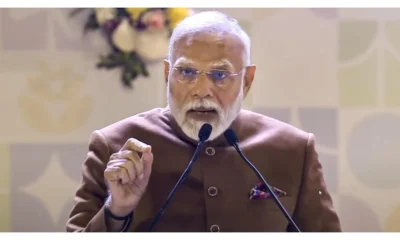
Prime Minister Narendra Modi has assured that there will be no discrimination in the implementation of women’s reservation, as Parliament witnessed a sharp debate over the proposed linkage between the quota and delimitation exercise.

During the ongoing special session, the government reiterated its commitment to ensuring fair representation while addressing concerns raised by opposition parties regarding the timing and structure of the legislation.

The proposed framework aims to reserve 33 percent of seats for women in the Lok Sabha and state assemblies. However, its implementation is tied to a fresh delimitation exercise, which is expected after the next census.

Opposition questions timing and intent

Opposition leaders have raised concerns that linking the women’s quota to delimitation could delay its implementation. They argue that the process of redrawing constituencies may push the actual rollout further into the future.

The issue has triggered a broader political confrontation, with multiple parties questioning whether the move could alter representation across states.

Some critics have also alleged that the delimitation exercise could disproportionately benefit certain regions based on population, a charge the government has rejected.

Government reiterates commitment to fair implementation

Responding to these concerns, the Centre has maintained that the reforms are necessary to ensure accurate and updated representation based on population data.

Leaders from the ruling side have repeatedly emphasized that the process will be carried out transparently and without bias. The assurance that there will be “no discrimination” is aimed at addressing fears among states and opposition parties.

The debate marks a key moment in Parliament, with both sides engaging in intense exchanges over one of the most significant electoral reforms in recent years.

Continue Reading

India News

Give all tickets to Muslim women, Amit Shah says, attacking Akhilesh Yadav on sub-quota demand

A sharp exchange between Amit Shah and Akhilesh Yadav in Parliament over sub-quota for Muslim women highlights key divisions on women’s reservation implementation.

Published

on

A heated exchange broke out in Parliament during discussions on the women’s reservation framework, with Union Home Minister Amit Shah and Samajwadi Party chief Akhilesh Yadav locking horns over the demand for a sub-quota for Muslim women.

The debate unfolded as the government pushed forward key legislative measures to implement 33% reservation for women in the Lok Sabha and state assemblies.

Akhilesh Yadav argued that the proposed reservation must ensure representation for women from marginalised communities, including Other Backward Classes (OBCs) and Muslim women. He said that without such provisions, large sections could remain excluded from political participation.

He also questioned the timing of the bill, alleging that the Centre was avoiding a caste census. According to him, a census would lead to renewed demands for caste-based reservations, which the government is reluctant to address.

Government rejects religion-based quota

Responding to the demand, Amit Shah made it clear that reservation based on religion is not permitted under the Constitution.

He stated that any proposal to provide quota to Muslims on religious grounds would be unconstitutional, firmly rejecting the idea of a separate sub-quota for Muslim women within the broader reservation framework.

The government has maintained that the existing framework already includes provisions for Scheduled Castes (SC) and Scheduled Tribes (ST) women within the overall reservation structure.

Wider political divide over implementation

The issue of sub-categorisation within the women’s quota has emerged as a major flashpoint, even as most opposition parties broadly support the idea of women’s reservation.

Samajwadi Party leaders reiterated that their support for the bill depends on inclusion of OBC and minority women, while the government continues to defend its constitutional position.

The debate is part of a broader discussion during the special Parliament session, where multiple bills linked to delimitation and implementation of the women’s quota are being taken up.

Continue Reading

India News

No state will lose a seat, Centre assures as delimitation debate takes centre stage in Parliament

Parliament’s special session begins with key focus on implementing women’s reservation and delimitation, setting the stage for major electoral changes.

Published

on

Parliament

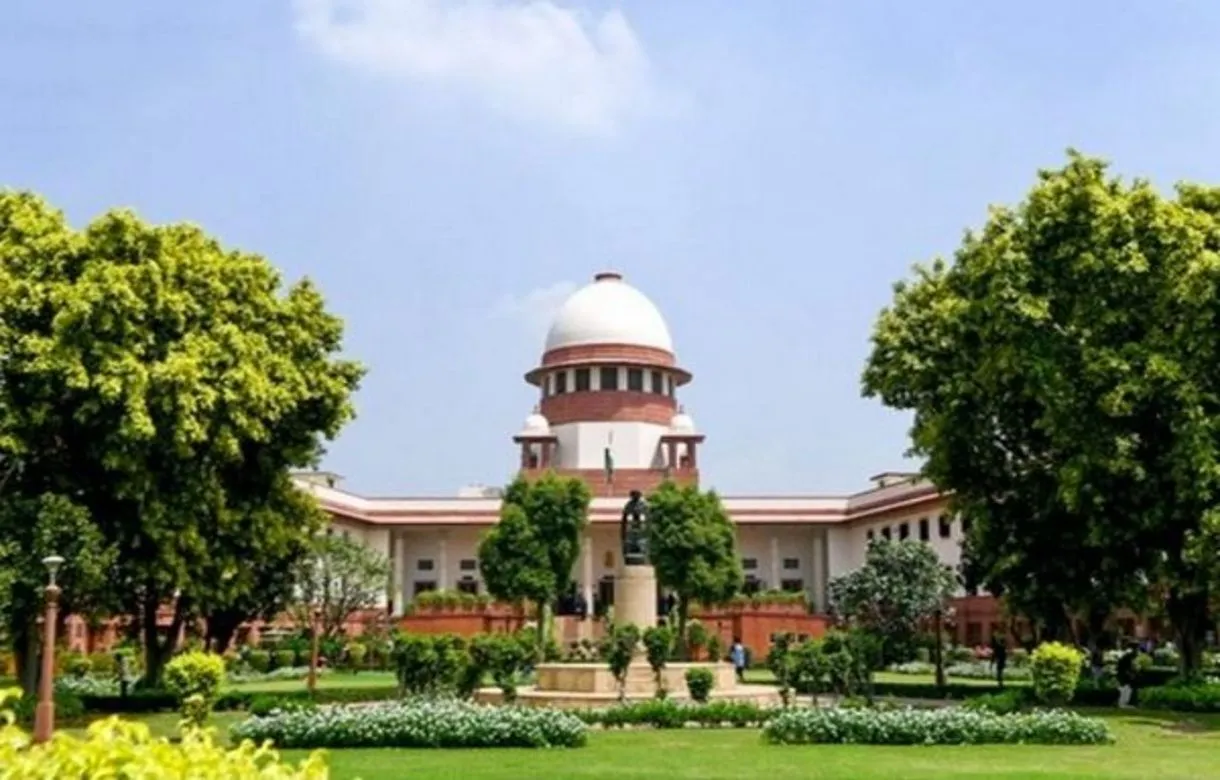
A special session of Parliament commenced on Thursday, with the Centre set to take up crucial legislation related to women’s reservation and delimitation of constituencies. The session, scheduled over three days, is expected to witness intense debate as the government pushes forward its legislative agenda.

At the centre of discussions is the proposal to operationalise the women’s reservation law, which seeks to allocate 33 percent of seats in the Lok Sabha and state assemblies to women. The law, passed earlier, requires enabling provisions before it can be implemented.

The rollout of the reservation is closely tied to the delimitation exercise — a process that redraws parliamentary constituencies based on updated population data. The implementation is expected only after the next census and delimitation process are completed.

The government is aiming to put in place the framework so that the reservation can be enforced in future elections, likely around 2029.

Delimitation and numbers at play

Delimitation is a key aspect of the proposed changes, as it will determine how seats are redistributed and which constituencies are reserved. The exercise is expected to reflect population shifts and may also involve an increase in the total number of Lok Sabha seats.

This linkage has made the issue politically sensitive, with several opposition parties backing women’s reservation in principle but raising concerns over how and when delimitation will be carried out.

Political reactions and expected debate

The session is likely to see sharp exchanges between the government and opposition. While there is broad agreement on increasing women’s representation, disagreements remain over the timing, process, and potential political implications of the delimitation exercise.

Some leaders have argued that delimitation could significantly alter the balance of representation among states, making it a contentious issue beyond the women’s quota itself.

The government, however, has framed the move as a step toward strengthening women’s participation in governance and ensuring more inclusive policymaking.

Continue Reading

Trending

© Copyright 2022 APNLIVE.com